
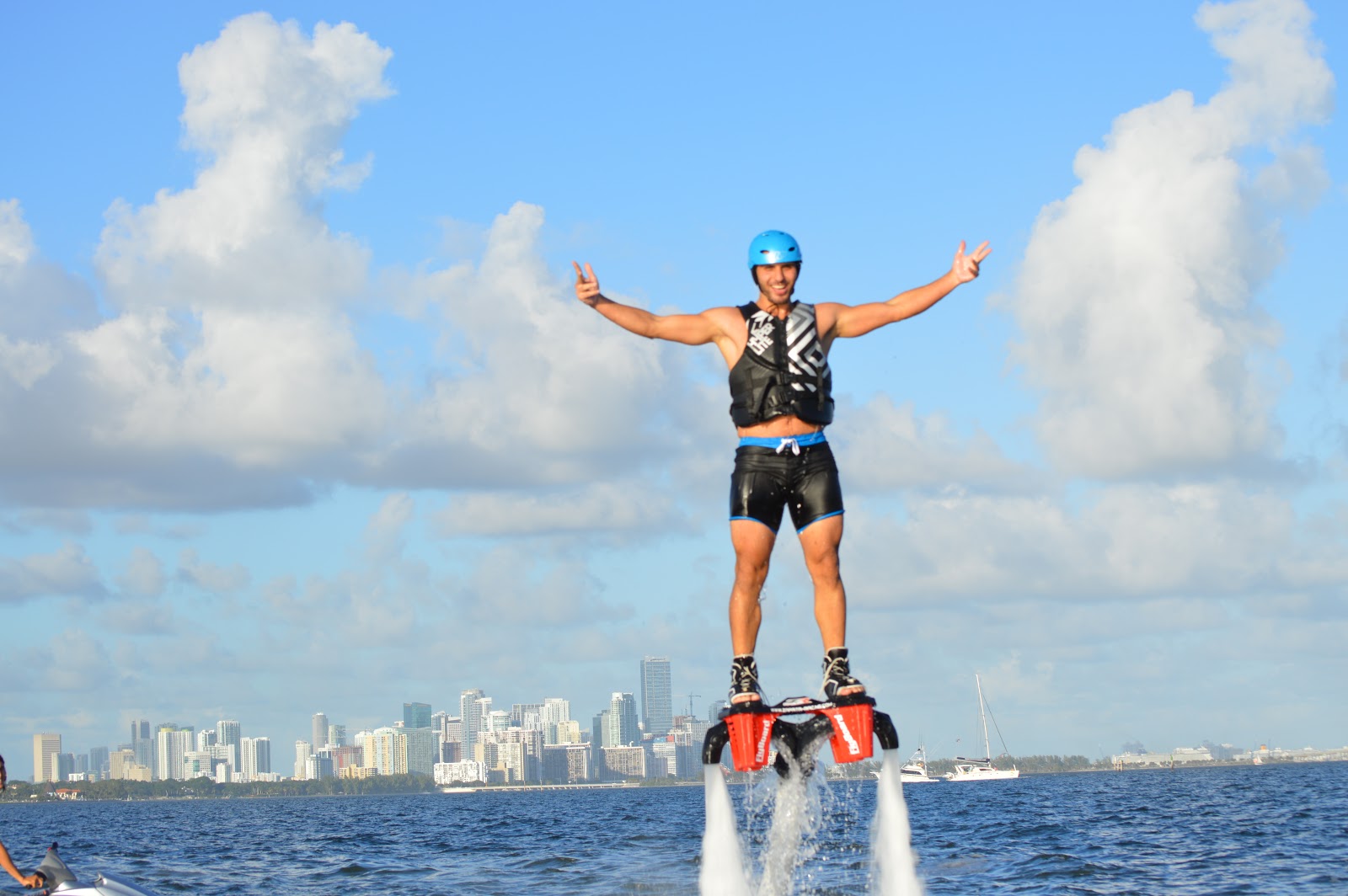
Flyboarding in Miami for beginners is far more approachable than the viral videos suggest. At Miami Watersports, your first flight is a 20-minute, one-on-one session with a dedicated instructor, launched from Pier 9 at Dinner Key Marina on the calm, protected water of Biscayne Bay in Coconut Grove. Most first-timers are hovering above the surface within their first few minutes, and the gentle bay conditions — not the choppy open ocean off South Beach — are exactly why this is the smartest place in the city to try it.
This guide walks you through what flyboarding actually is, who can do it, what a first session looks like minute by minute, how Miami's seasons and weather affect your flight, and how to book the right way. No prior experience, no athletic background, and no special gear are required — just the ability to swim and a willingness to laugh at yourself for the first ninety seconds.
Key Takeaways
- Flyboarding is a water-jet sport: water pumped from a personal watercraft propels a board-mounted rider up to roughly 30 feet above the surface, controlled by foot and body movements.
- A first-timer session at Miami Watersports runs about 20 minutes of in-water flight time with a one-on-one instructor coaching you the entire time.
- Minimum age is 8, the maximum rider weight is 225 pounds, and swimming ability is strongly recommended because the activity takes place over open water.
- Miami Watersports launches from Pier 9 at Dinner Key Marina (3400 Pan American Drive, Coconut Grove), using the sheltered, generally calm waters of Biscayne Bay rather than the rougher open Atlantic.
- Lightning always halts flights, light rain usually does not; weather or operational cancellations are covered by a marina credit that is valid for 2 years, with no cash refunds.
- Pricing is per rider, with a Member rate and a Non-Member rate; live pricing is shown on the flyboard activity page.
What Is Flyboarding, Exactly?
Flyboarding is a water-propulsion flight sport. You stand on a small board with your feet strapped in, and a long, flexible hose connects that board to a personal watercraft (PWC) idling on the water nearby. The watercraft's jet pump pushes pressurized water through the hose and out of nozzles beneath your feet. That thrust lifts you out of the water — at Miami Watersports, capable riders can reach heights of up to about 30 feet — and lets you hover, glide, and pivot above the surface.
If you have seen clips of people doing backflips and dolphin-diving in and out of the water, those are advanced maneuvers performed by experienced flyboarders. As a first-timer, your goal is simpler and far more attainable: get stable, stand up out of the water, and hold a steady hover. That alone is a genuinely thrilling sensation — the closest most people will ever come to personal flight — and it is well within reach in a single 20-minute session.
How the throttle and balance work
You do not control the throttle yourself on a first flight. Your instructor manages the water pressure remotely (or from the watercraft) while you focus entirely on balance. This is the single most important reason beginners succeed here: the instructor eases the power up slowly so you can find your footing, then gives you just enough lift to rise. Balance comes from your legs and core, not your arms. The instinct to flail with your hands is exactly what tips people over — and your instructor will tell you to keep your hands low and let your legs do the work.
Why it is easier than it looks
The board does most of the stabilizing once you keep your legs straight and your weight centered. There is no engine to start, no steering wheel, and nothing fragile to break. The water is your safety net: every fall is into soft, deep bay water, which is why a hard surface sport this is not. Within a 20-minute window, the typical progression is wobble, brief lift, splash, lift again, and then a sustained hover. That learning curve is gentle by design.
Why Biscayne Bay Is the Best Place in Miami to Learn
Where you fly matters as much as how you fly, and this is where Miami Watersports' location is a real advantage. We launch from Pier 9 at Dinner Key Marina in Coconut Grove, directly onto Biscayne Bay. The bay is a broad, shallow, protected body of water shielded from open-ocean swell — the calm, glassy conditions you often see on a Miami morning are typical here, especially compared with the open Atlantic off South Beach and Miami Beach.
For a first flight, flat water is everything. Chop and swell make it harder to stabilize the board, harder for the instructor to read your movements, and generally more intimidating. The protected bay gives beginners a forgiving surface to learn on. Biscayne Bay is also part of a remarkable natural setting; the broader ecosystem is recognized and protected, and you can read about its significance through Biscayne National Park. You are flying over genuinely beautiful, ecologically rich water — with the Coconut Grove skyline and Dinner Key on one side and open bay on the other.
The Coconut Grove launch experience
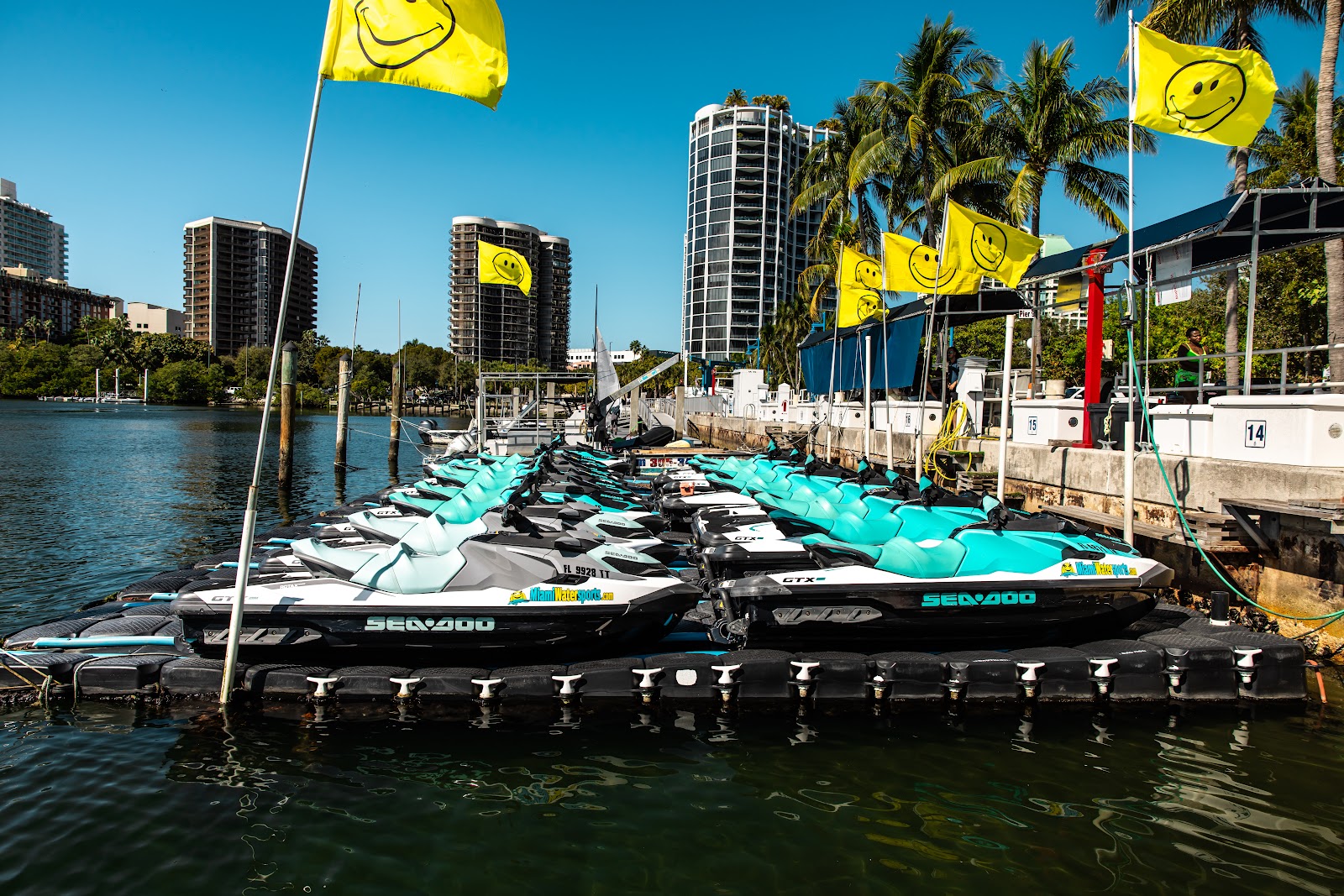
Dinner Key Marina is one of Miami's most storied waterfronts, and arriving at Pier 9 sets the tone. It is easy to reach, far calmer than the South Beach scene, and surrounded by the leafy, laid-back character of Coconut Grove. After your flight, the Grove's restaurants and shaded streets are minutes away — making a morning flyboard session an easy anchor for a full day on the water. If you want to make a half-day of it, flyboarding pairs naturally with a jet ski rental or a parasailing flight from the same marina.
Who Can Flyboard? Age, Weight, and Fitness Requirements
Flyboarding in Miami for beginners is accessible to a wide range of people, but there are a few firm requirements you should know before you book.
- Minimum age: 16. Flyboarding requires a level of strength, body awareness, and the ability to follow safety instructions under pressure, so riders must be at least 8 years old.
- Maximum weight: 225 pounds. The thrust-to-weight relationship matters for safe, controllable lift, so there is a 225-pound maximum rider weight.
- Swimming recommended. Because the entire activity takes place over open bay water and you will fall in repeatedly while learning, being a comfortable swimmer is strongly recommended.
You do not need to be an athlete. A reasonable baseline of fitness helps — you will use your legs and core, and you will pull yourself in and out of the water a few times — but flyboarding rewards balance and calm far more than raw strength. People who do yoga, surf, snowboard, or simply have good body awareness often pick it up quickly, but plenty of complete beginners with no board-sport background fly successfully on their first try.
What to wear and bring
Wear a swimsuit you can move in. We provide the flotation gear and the board; you bring yourself, swimwear, and a towel. A few practical tips for a Miami flight:
- Apply reef-safe sunscreen before you arrive, since Biscayne Bay is a sensitive marine environment and you will be exposed to strong sun.
- Leave loose jewelry, watches, and sunglasses on shore unless they are strapped securely.
- Bring a change of clothes — you will be wet, happily so.
- If you wear contact lenses, consider that you will hit the water face-first a few times; goggles or a backup plan are smart.
What to Expect: Your First Flyboard Session Step by Step
Knowing the sequence ahead of time takes most of the nerves out of a first flight. Here is how a typical 20-minute session unfolds.
1. Check-in and safety briefing
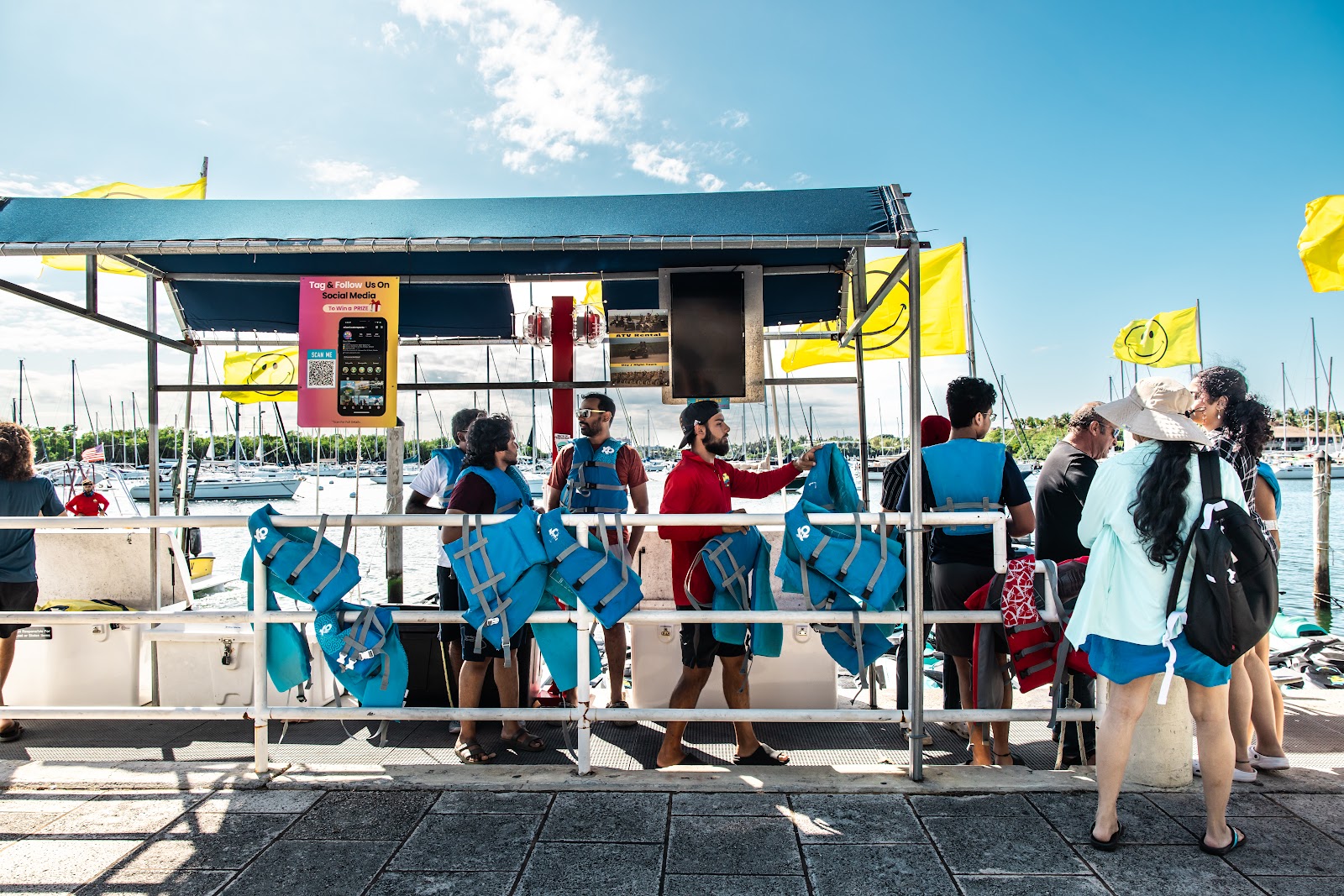
You will check in at Pier 9, sign the standard waiver, and get fitted with flotation gear. Your instructor will walk you through the basics on dry land: how to keep your legs straight, where to hold your hands, how to signal, and what to do when you fall (spoiler: relax and float — the gear keeps you up). This briefing is short but important; the riders who listen closely here are the ones who fly fastest.
2. Getting in the water and finding the board
You will enter the bay and get your feet strapped into the board with the instructor steadying you. The first task is simply lying face-down in the water with the board behind you, legs straight — a posture that feels odd at first and makes complete sense the moment the water pressure starts.
3. The first lift
Your instructor eases the throttle up. The board pushes you up onto your stomach, then — as you straighten your legs and keep your weight centered — onto your feet and out of the water. The first few attempts usually end in a splash, and that is completely normal. Each attempt teaches your body something. Most beginners are holding a stable hover a couple of feet above the surface within the first several minutes.
4. Hovering and gliding
Once you can hold a steady hover, your instructor will coach you to rise higher and to make gentle turns by shifting your hips and ankles. This is the part people fall in love with — the quiet, weightless feeling of standing on a column of water. Capable riders can climb toward the roughly 30-foot ceiling, but most first-timers are thrilled with a confident, controlled hover and a few smooth glides.
5. Wind-down
As your 20 minutes wrap up, your instructor brings you back down gently, helps you out of the board, and you swim or are assisted back. Expect to be tired in a good way — flyboarding uses muscles you forgot you had — and grinning.
Miami Weather and Seasons: When to Flyboard
Miami is a year-round watersports city, and flyboarding runs in every season, but conditions vary and it pays to plan.
Morning is your friend
In South Florida, mornings are typically calmest, with lighter wind and flatter water before the afternoon sea breeze and summer thunderstorms build. For a first flight, an early or mid-morning session on Biscayne Bay usually offers the best learning conditions. Afternoons can still be excellent, especially in the drier months, but the bay tends to be glassiest early.
Wet season vs. dry season
Roughly speaking, Miami's drier, cooler months bring more consistently calm, sunny windows, while the warmer wet season brings warmer water but a higher chance of pop-up afternoon storms. Neither season rules out flyboarding — it simply changes the timing strategy. In the wet season, booking earlier in the day reduces the odds of a storm-related delay. You can check the local forecast and any marine advisories through the National Weather Service – Miami office before you head out.
Lightning, rain, and the weather policy
Safety on the water is governed by clear rules. Lightning always halts flights — no exceptions — because being on open water during electrical storms is dangerous, a principle echoed across boating safety guidance from the U.S. Coast Guard and the BoatUS Foundation. Light rain, on the other hand, usually does not stop a session; a passing shower over warm bay water is often a non-event when you are already wet and happy.
If weather or an operational issue forces a cancellation, you are not stuck. Miami Watersports issues a marina credit that is valid for 2 years — there are no cash refunds, but your credit holds its full value for whenever you can return. That policy exists precisely because Miami weather can change in an afternoon, and we would rather you fly on a great day than a marginal one.
Safety, Regulations, and Peace of Mind
Flyboarding looks extreme, but a well-run session is a controlled, instructor-led activity, and Miami Watersports has operated on Biscayne Bay since 2007. A few things make a first flight safe.
One-on-one instruction
The single biggest safety feature is that you are never alone. Each first-timer gets a dedicated instructor who controls the water pressure and is positioned to assist immediately. Beginners do not self-throttle, which removes the most common cause of beginner accidents.
Flotation and falling technique
You wear flotation gear throughout, and the entire activity is over deep, soft water. Falling is part of learning, and the technique you are taught — relax, let go, let the gear bring you up — means a spill is a splash, not a scare. This is why swimming ability is recommended even though you are never without buoyancy.
Boating and waterway rules
Flyboarding operates within Florida's boating and waterway framework. The personal watercraft that powers your board is regulated like any vessel, and Florida maintains specific boating laws and education standards through the Florida Fish and Wildlife Conservation Commission and boater education requirements administered by the Florida Highway Safety and Motor Vehicles department. You do not need a boating license to flyboard with us — your instructor handles the watercraft — but it is reassuring to know the activity sits inside a regulated, safety-first system. We also fly responsibly within Biscayne Bay's protected waters, keeping clear of sensitive areas and other vessels.
Member Rate vs. Non-Member Rate: How Pricing Works
Miami Watersports prices flyboarding per rider, and we use a simple two-tier structure that works much like hotel pricing.
- Member rate: the lower, member-level pricing. Members pay a fuel and tax fee plus a marina fee at check-in in addition to the base member rate.
- Non-Member rate: an all-in rate with no separate fees added at the marina.
Because real pricing is served live and can change with the season and demand, we deliberately do not publish numbers in this guide — they would go stale. Always check the current figures on the flyboard activity page, which shows live Member and Non-Member pricing at the moment you book. The same live-pricing approach applies across our other activities, whether you are looking at a speed boat ride or a parasailing flight.
The practical takeaway: decide whether the Member rate or the Non-Member rate fits you, then book the live price shown online. There are no hidden surprises — the all-in Non-Member rate is exactly that, and the member fees are disclosed up front.
Tips to Nail Your First Flight
A few small things separate a frustrating first flight from a triumphant one.
- Keep your legs straight. Bent knees absorb the thrust and keep you in the water. Straight, locked legs translate the lift directly upward.
- Hands low and quiet. Resist the urge to wave your arms for balance. Stability lives in your legs and hips.
- Look at the horizon, not your feet. Where your eyes go, your body follows. Staring down tips you forward.
- Rise slowly. Do not chase height. A confident hover a few feet up is a bigger win than a quick climb followed by a tumble.
- Breathe and relax between attempts. Tension is the enemy of balance. Treat each splash as a reset, float for a moment, and go again.
- Trust your instructor. They can see your body position better than you can feel it. When they say "straighten your legs," straighten your legs.
Book a morning slot if you can, arrive a little early, hydrate, and come ready to laugh. The riders who have the most fun are the ones who stop trying to look cool and just commit to the learning process.
Conclusion: Ready to Fly Over Biscayne Bay?
Flyboarding in Miami for beginners delivers one of the most memorable rushes the city has to offer, and you do not need any experience to chase it. With a 20-minute one-on-one session, the protected calm of Biscayne Bay, and an instructor managing every variable but your balance, your first flight is set up to succeed. You will likely surprise yourself with how quickly you rise out of the water.
If you are 8 or older, weigh under 225 pounds, and can swim comfortably, you are ready. Come to Pier 9 at Dinner Key Marina in Coconut Grove, check the live Member and Non-Member pricing, and pick a calm Miami morning to fly. Book your session now on the flyboard activity page — and if the weather turns, your never-expiring marina credit means you fly on a perfect day instead. We have been getting first-timers airborne over Biscayne Bay since 2007, and your flight is next.
Book your Miami flyboard adventure
Member rates apply on every booking. Tax & marina fee added at check-in.
Frequently Asked Questions
About Miami Watersports
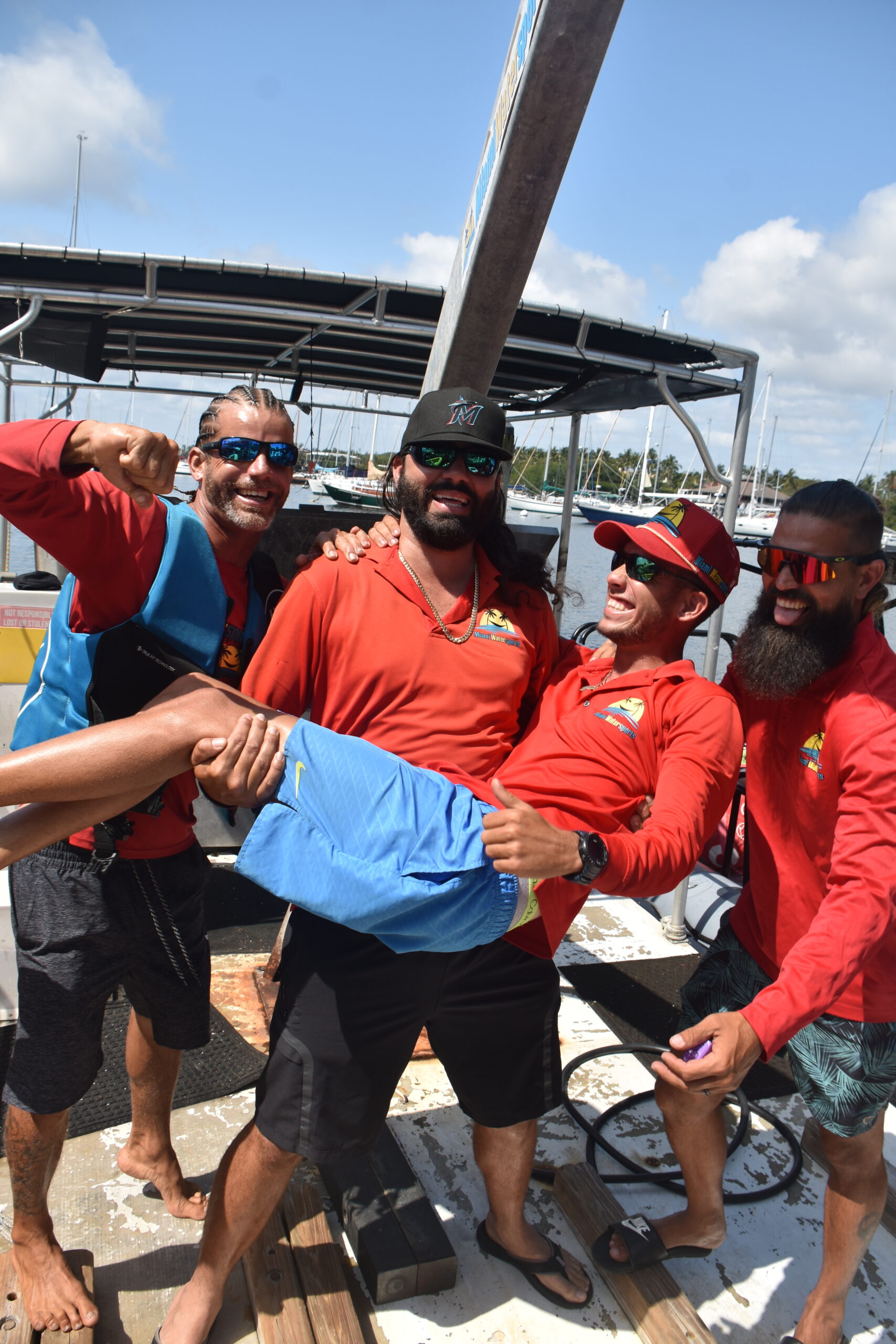
The Miami Watersports crew has run parasailing, jet ski, flyboard, and boat trips from Pier 9 at Dinner Key Marina in Coconut Grove since 2007.