
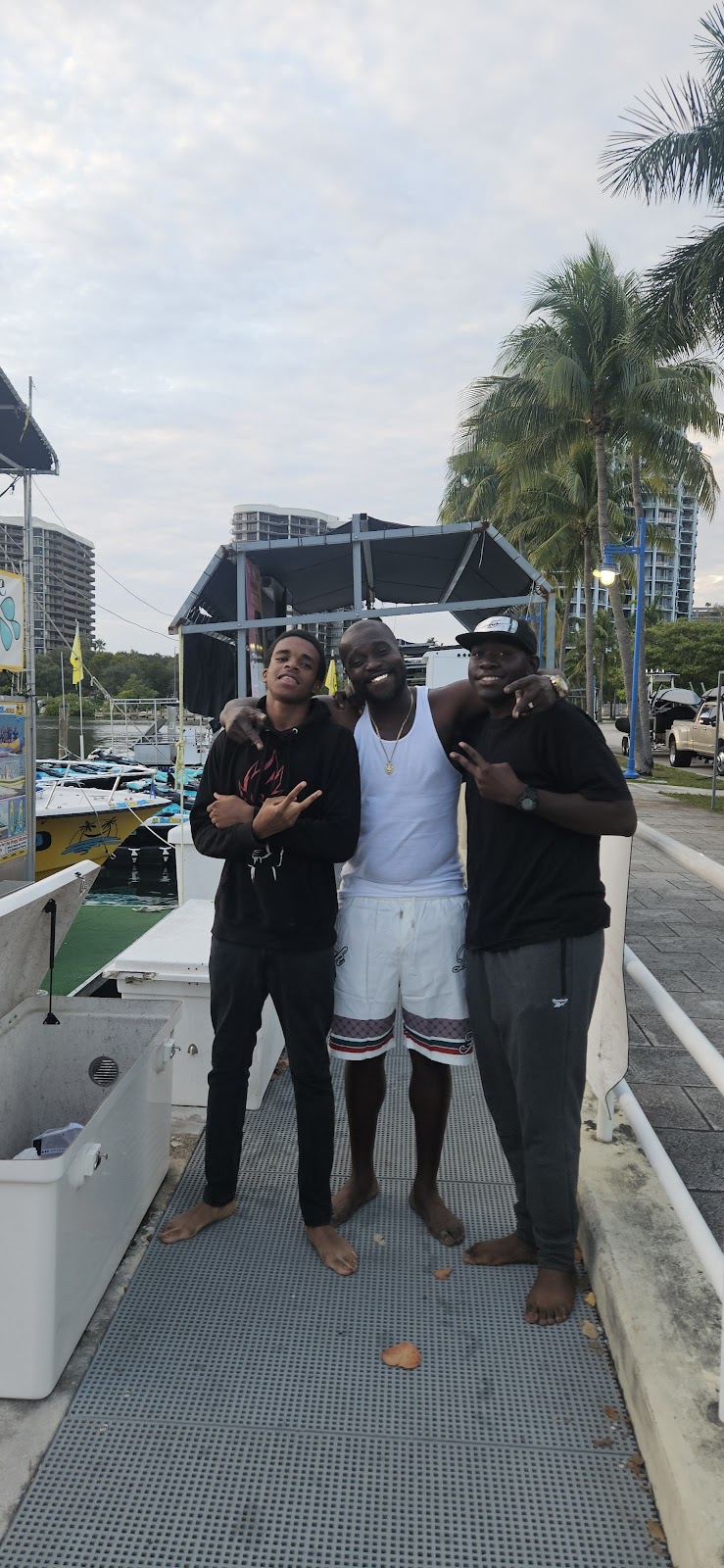
Advanced parasailing techniques in Miami are less about adrenaline tricks and more about reading the wind, controlling your body, and timing your flight to get the highest, smoothest, longest experience the conditions allow. The most effective advanced moves are subtle: relaxing your posture for a stable lift, communicating clearly with the captain to maximize altitude, choosing a tandem or triple configuration that flies better, and picking the right time of day and season over Biscayne Bay. From our flight deck at Pier 9 in Dinner Key Marina, parasailing reaches up to 400 feet, with a dry takeoff and landing right off the boat — which is exactly what makes refined, repeatable technique possible here.
If you've already done a first flight and want to fly *better* the next time, this guide is for you. We'll cover how altitude really works, how to position your body, how to handle dips and gentle splashes if you request them, and how Miami's unique geography shapes every detail of an advanced parasail.
Key Takeaways
- Parasailing over Biscayne Bay at Miami Watersports reaches up to 400 feet, with a dry takeoff and landing directly from the boat's flight deck — no swimming required and no minimum experience needed, with a minimum age of 5.
- The single most impactful "advanced technique" is body control: staying relaxed, keeping your legs together, and resisting the urge to grab the riser straps tightly produces a noticeably smoother, higher-feeling flight.
- Altitude is controlled by the captain via the towline winch, not by the rider; your job is to communicate clearly before takeoff how high you want to go and whether you'd like a gentle dip toward the water.
- Calm morning conditions on the protected Biscayne Bay side near Coconut Grove generally produce steadier, smoother flights than the choppier open-ocean water off South Beach.
- Flights run in light rain but never during lightning; if weather or operations force a cancellation, riders receive a marina credit that is valid for 2 years rather than a cash refund.
- Tandem and triple flights aren't just social — distributing weight up to a combined 450 pounds across two or three riders changes how the canopy behaves and can make the ride feel more stable.
What "Advanced" Actually Means in Parasailing
Parasailing is fundamentally a passenger sport. Unlike paragliding or kiteboarding, you are not actively steering a wing — you're suspended beneath a parachute-style canopy that's towed behind a boat, and the captain manages your altitude and speed with a hydraulic winch. So when people search for advanced parasailing techniques in Miami, what they're really after is how to get more out of a ride they don't physically pilot.
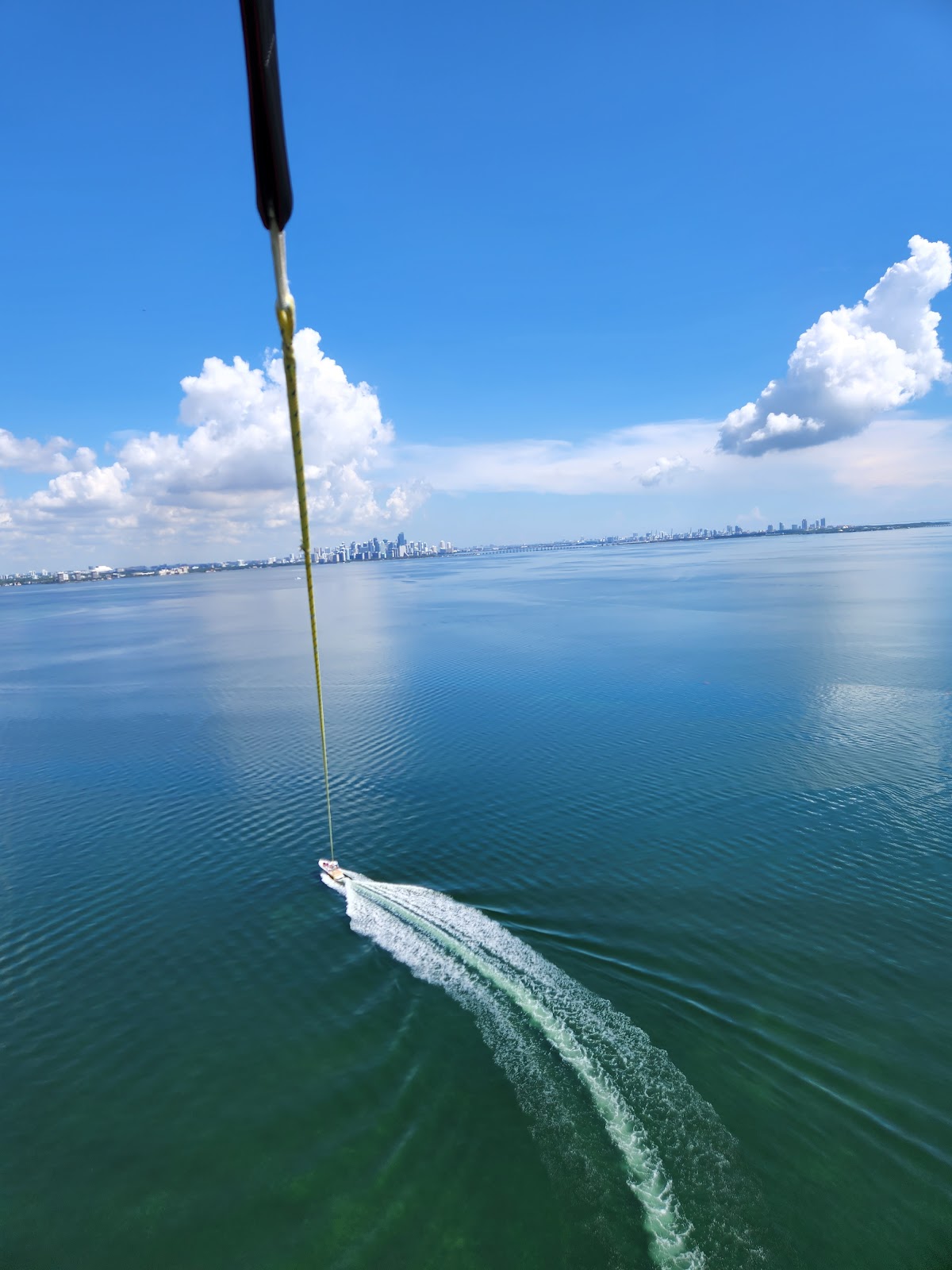
The good news: there's a real craft to it. Experienced parasailers fly higher, look calmer in photos, hold their position better in the harness, and know exactly how to ask the captain for the experience they want. They understand how wind direction affects the launch, why morning flights feel different from afternoon ones, and how to time a dip toward the bay so it's exhilarating rather than jarring.
The technique that matters most: relaxation
The number one mistake repeat riders make is tensing up. Gripping the riser straps with white knuckles, pulling your knees up, and craning your neck to look down all fight against the harness instead of working with it. The advanced move is counterintuitive — let go of the tension. Sit back into the harness as if it's a hammock, keep your hands loosely on the straps, and let your body find its natural hang point. A relaxed body sways gently and predictably; a rigid body creates small, choppy oscillations that make the flight feel less stable than it actually is.
Reading the lift-off
The smoothest takeoffs happen when you do almost nothing. As the boat accelerates and the captain pays out the towline, the canopy fills with air and lifts you cleanly off the flight deck. The advanced rider stays seated, keeps their legs together and slightly forward, and resists the instinct to "help" by jumping or kicking. Trust the deck and the harness. Because Miami Watersports uses a dry takeoff and landing from the boat, there's no wading or swimming involved — which means your launch is entirely about posture, not athleticism.
Body Position and In-Flight Control
Once you're aloft — typically 6 to 10 minutes of airtime on a roughly one-hour trip — your body position is the lever you actually control.
Legs, hands, and gaze
- Legs together, slightly forward. This keeps your center of gravity stable and prevents the spinning sensation some first-timers report. Crossed ankles work well for solo flyers.
- Hands relaxed on the risers. You don't need to hold on for safety — the harness does that. Light contact gives you feedback on the canopy without introducing tension.
- Gaze on the horizon, not straight down. Looking out toward the Miami skyline, Key Biscayne, and the open Atlantic keeps you oriented and reduces any disorientation. Save the look-straight-down moment for when you feel settled.
Managing rotation and sway
At 400 feet over Biscayne Bay, you'll feel gentle movement — that's normal and part of the appeal. If you start to rotate slightly, the fix is not to twist your torso against it but to relax and let the canopy self-correct. Tandem and triple flights naturally rotate less because the added weight and the wider attachment points stabilize the canopy. If a perfectly steady ride is your goal, flying as a pair or trio is itself an advanced choice.
Communicating with the captain
This is the most underrated advanced skill: a good pre-flight conversation. Before you leave the dock, tell the captain:
- How high you'd like to go (up to the full 400 feet, or lower for a calmer experience).
- Whether you want a dip — a controlled descent that lowers you briefly toward the bay's surface before winching you back up.
- Whether you're shooting photos or video and want a steady, level ride.
The captain controls altitude through the towline length and boat speed; you control the *request*. Clear communication up front is what separates a generic flight from one tailored exactly to what you want.
The Controlled Dip: Miami's Signature Advanced Move
If there's one technique that defines an advanced Biscayne Bay parasail, it's the toe dip — a captain-controlled maneuver where the boat slows and the winch lowers you until your feet (or a bit more) skim the warm, shallow-feeling bay water, then accelerates to lift you cleanly back to altitude.
Done well, it's the highlight of the flight. Here's how to ride it like a pro:
- Ask for it before takeoff. The captain needs to plan the run and read the water; surprise requests mid-flight are harder to execute smoothly.
- Point your toes and keep your legs together as you approach the surface so you slice in rather than slap down.
- Stay relaxed through the lift-back-up. As the boat powers forward, you'll rise quickly — let it happen rather than bracing against it.
- Decide your depth. A light toe-skim is the classic; a slightly deeper dip is available if you ask. The captain will keep it within safe, comfortable limits for the conditions.
Biscayne Bay is the ideal setting for this. Because the water on the Coconut Grove side is protected and generally calmer than the open ocean off South Beach, dips here tend to be smooth and predictable rather than chaotic. The captain's read on local conditions — chop, wind, boat traffic — is what makes the difference, which is one more reason a clear pre-flight conversation pays off.
How Miami's Geography Shapes an Advanced Flight
Where you launch matters enormously, and this is where local knowledge becomes a genuine technique of its own.
Biscayne Bay vs. the open-ocean side
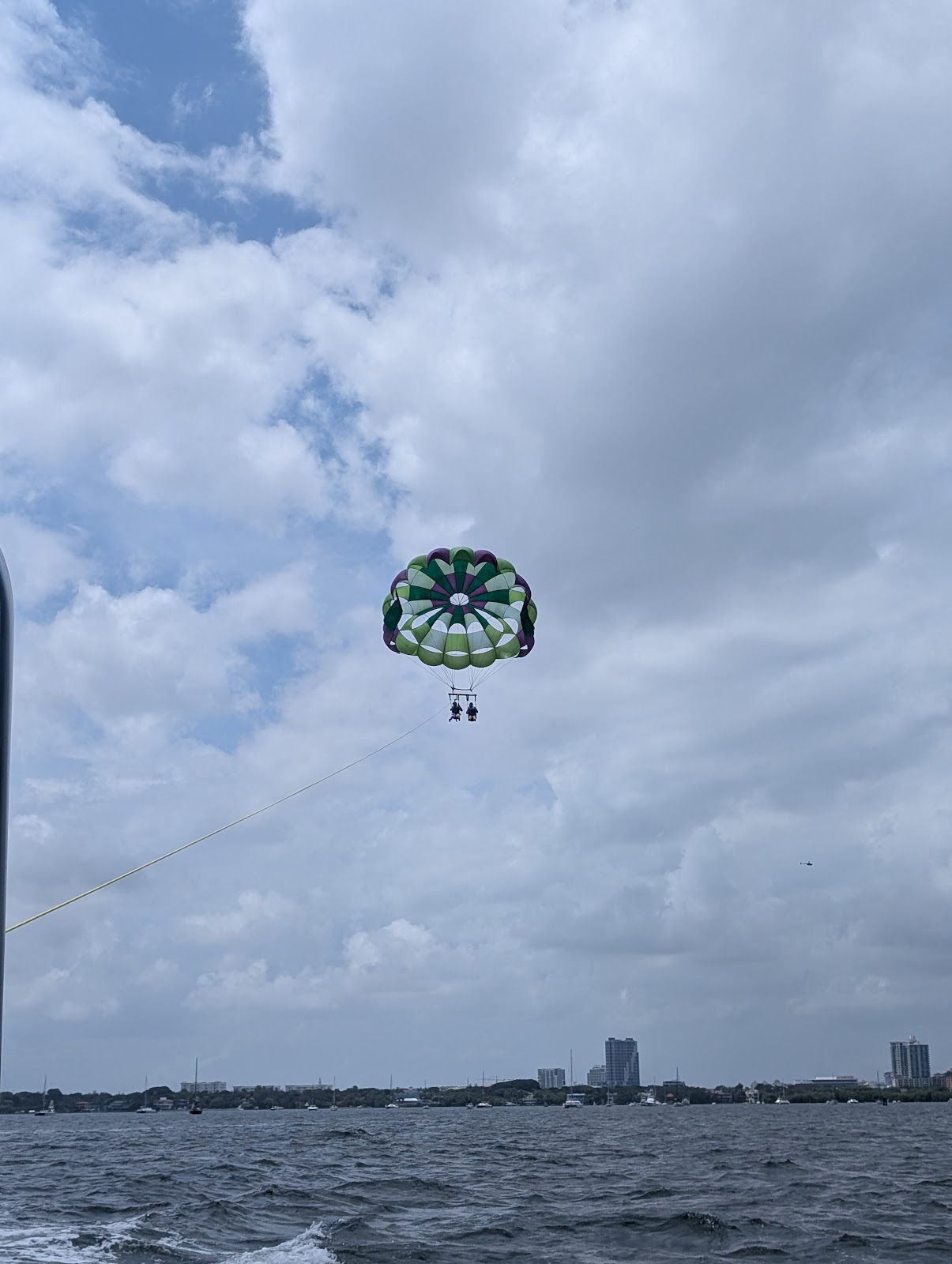
Miami Watersports flies from Pier 9 at Dinner Key Marina, 3400 Pan American Drive, in Coconut Grove — on the protected western shore of Biscayne Bay. This is a meaningfully different experience from parasailing off the crowded open-ocean side near South Beach. The bay is sheltered by Key Biscayne and the barrier islands, so it typically offers:
- Calmer surface water, which means smoother takeoffs, steadier flights, and cleaner dips.
- Less boat-wake turbulence than the busy ocean inlets.
- A spectacular, layered view — the downtown Miami skyline to the north, Key Biscayne and the Cape Florida lighthouse to the east, Stiltsville's historic houses out on the flats, and the broad green sweep of the bay below.
Much of this water sits within or adjacent to protected areas managed as part of Biscayne National Park, one of the largest marine parks in the national park system — which is part of why the water is so clear and the wildlife (rays, manatees, dolphins, seabirds) is so abundant from above.
Timing your flight: season and time of day
Advanced parasailers don't just show up — they pick their window.
- Mornings are usually calmest. Wind tends to build through the afternoon as the sea breeze strengthens, so an early flight often delivers glassier water and a steadier ride. If smoothness and clean photos are your priority, go early.
- Late afternoon offers golden light. If you're flying for the imagery, the hour before sunset paints the skyline and the bay in warm tones — accepting a bit more breeze in exchange.
- Season matters. South Florida's dry season (roughly late fall through spring) brings more consistent, drier days. The summer wet season brings warm water and dramatic skies but also fast-building afternoon thunderstorms — a reason to book earlier in the day. Checking the National Weather Service – Miami forecast the morning of your flight is a habit every seasoned rider should keep.
Safety, Weather, and the Rules That Make Technique Possible
The reason you can focus on technique at all is that the boat, the crew, and the conditions are managed to professional standards. Understanding the framework helps you fly with confidence.
Weather discipline
Parasailing is weather-dependent, and that's a feature, not a bug. Our captains fly in light rain — a passing shower over the bay is common and usually no obstacle — but we never operate during lightning, period. Wind and thunderstorm activity are monitored continuously, because safe parasailing depends on predictable air. Florida is the lightning capital of the United States, and respecting that is non-negotiable.
If weather or an operational issue forces a cancellation, you receive a marina credit that is valid for 2 years — there are no cash refunds, but you never lose the value of your booking. That policy exists precisely so the crew is never tempted to fly in marginal conditions to "save" a trip. Good weather discipline is itself the foundation of every advanced flight.
On-the-water rules and seamanship
Parasailing operates within established boating-safety and waterway rules. The towboat captain follows the navigation and safe-operation standards promoted by the U.S. Coast Guard's boating safety program and Florida's own Fish and Wildlife Conservation Commission boating and waterways guidance, which governs vessel operation, manatee-protection zones, and right-of-way on Biscayne Bay. You don't need a boating background to fly, but knowing that the operation runs by these rules is part of why it's so safe. For riders who want to understand the broader safety picture, the BoatUS Foundation's expert advice library is an excellent, plain-English resource.
Who can fly, and how weight works
- Minimum age is 5, so families with younger kids can often fly together in a tandem.
- Swimming is not required thanks to the dry boat takeoff and landing.
- The maximum combined weight is 450 pounds across the riders on a single flight. This is where configuration becomes strategy: a solo flyer, a tandem pair, or a triple all fall under that 450-pound combined ceiling, and how you distribute weight affects how the canopy flies.
Understanding the combined-weight rule is genuinely an advanced consideration. A balanced tandem often produces a more stable, less rotation-prone ride than a very light solo flight, because the canopy has a steadier load beneath it.
Solo vs. Tandem vs. Triple: Choosing Your Configuration
Picking how many people share the canopy is one of the most strategic decisions you'll make, and it's worth thinking about beyond just "who's coming."
Solo
Flying alone gives you the purest sense of freedom and the easiest path to small, playful movements. It's the most personal way to take in the bay. The tradeoff is that a lighter load can feel slightly more lively in the air — which advanced flyers actually enjoy, but newcomers sometimes find more dynamic than expected.
Tandem
A tandem flight is the sweet spot for most people. Two riders side by side under one canopy creates a stable, shared experience — ideal for couples, a parent and child, or two friends who want to point out the skyline to each other 400 feet up. The added, balanced weight tends to smooth out rotation and sway.
Triple
Three riders is the most social option and a genuinely memorable way to fly as a family or friend group, provided you stay within the 450-pound combined maximum. The conversation, the shared gasps at the view, and the group photos make it special. Coordinate your "look down" and "wave" moments before takeoff so everyone's in sync for the camera.
Whatever you choose, you can compare the full lineup and current details on the parasailing activity page, and if you're building a half-day on the water, it pairs naturally with a jet ski session or a relaxed boat tour of the bay.
Photography and Capturing the Flight Like a Pro
If your goal is the perfect shot, technique shifts toward stillness and timing.
- Request a steady, level run from the captain before takeoff. A consistent altitude makes for cleaner footage than constant up-and-down.
- Secure everything. At 400 feet, anything dropped is gone — and dropping objects over the bay isn't responsible boating. Use a wrist strap or a chest mount and keep phones zipped away.
- Shoot the skyline on the turn. As the boat arcs, you'll get sweeping pans of downtown Miami, Key Biscayne, and the open Atlantic. Anticipate the turn rather than chasing it.
- Golden hour for color, morning for clarity. Decide which you're after and book your time slot accordingly.
- Catch the dip from above first. If you're doing a toe dip, the approach shot — water rushing up toward you — is often more dramatic than the splash itself.
Member Rate vs. Non-Member Rate: How Pricing Works
Miami Watersports prices parasailing per rider, and the structure works much like a hotel's member-rate system. There are two ways to pay:
- Non-Member rate: a simple all-in price per rider — the most straightforward option for a one-time visit.
- Member rate: current member pricing per rider, with a fuel and tax & marina fee paid at check-in.
Which one is right for you depends on how often you plan to get out on the water and how you prefer to handle the at-the-marina fees. Because pricing can change with season and conditions, we don't publish numbers in articles like this — the live, current rate is always shown on the parasailing activity page. That's the single source of truth, so you're never working from a stale figure.
Putting It All Together: A Pre-Flight Game Plan
Here's how an experienced rider approaches a Miami parasail from start to finish:
- Check the forecast. Glance at the National Weather Service – Miami outlook and aim for a calmer morning window if you want the smoothest flight.
- Decide your configuration. Solo for freedom, tandem for stability and sharing, triple for the group memory — all within the 450-pound combined limit.
- Talk to the captain first. State your desired altitude, whether you want a dip, and whether you're shooting photos.
- Board and stay relaxed. Let the dry deck takeoff happen; legs together, hands loose, gaze on the horizon.
- Settle in before looking down. Give yourself 30 seconds to find your hang point, then enjoy the skyline.
- Ride the dip with pointed toes if you requested one, and stay loose through the lift back up.
- Land soft on the deck, legs together, and let the crew bring you in.
Master those steps and you've moved well beyond first-timer territory.
Conclusion: Take Your Miami Parasailing to the Next Level
The best advanced parasailing techniques in Miami come down to relaxation, communication, configuration, and timing — not daredevil stunts. Fly relaxed, talk to your captain, pick the right weight setup within the 450-pound limit, time your flight for calm morning water over protected Biscayne Bay, and you'll get the highest, smoothest, most photogenic experience this coastline can offer. Launching from Pier 9 at Dinner Key Marina in Coconut Grove gives you something the crowded open-ocean South Beach side can't: calmer water, sweeping skyline-to-lighthouse views, and the room to actually refine your flight.
Ready to put these techniques into practice up to 400 feet over the bay? Check live availability and current pricing and book your flight on the parasailing activity page — or call us at (786) 713-8006 to plan a tandem, triple, or family day on the water. See you on the flight deck.
Book your Miami parasailing adventure
Member rates apply on every booking. Tax & marina fee added at check-in.
Frequently Asked Questions
About Miami Watersports
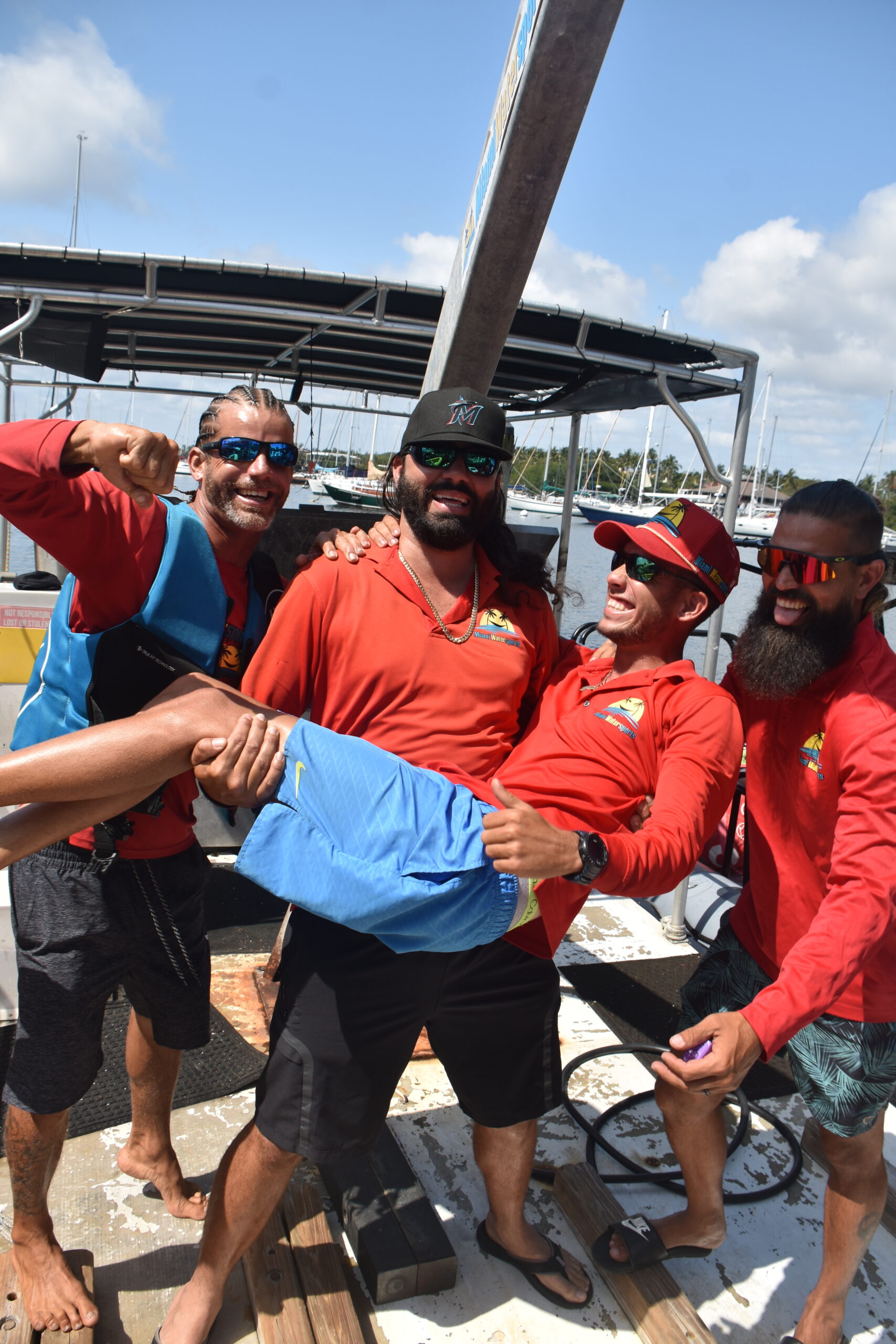
The Miami Watersports crew has run parasailing, jet ski, flyboard, and boat trips from Pier 9 at Dinner Key Marina in Coconut Grove since 2007.