
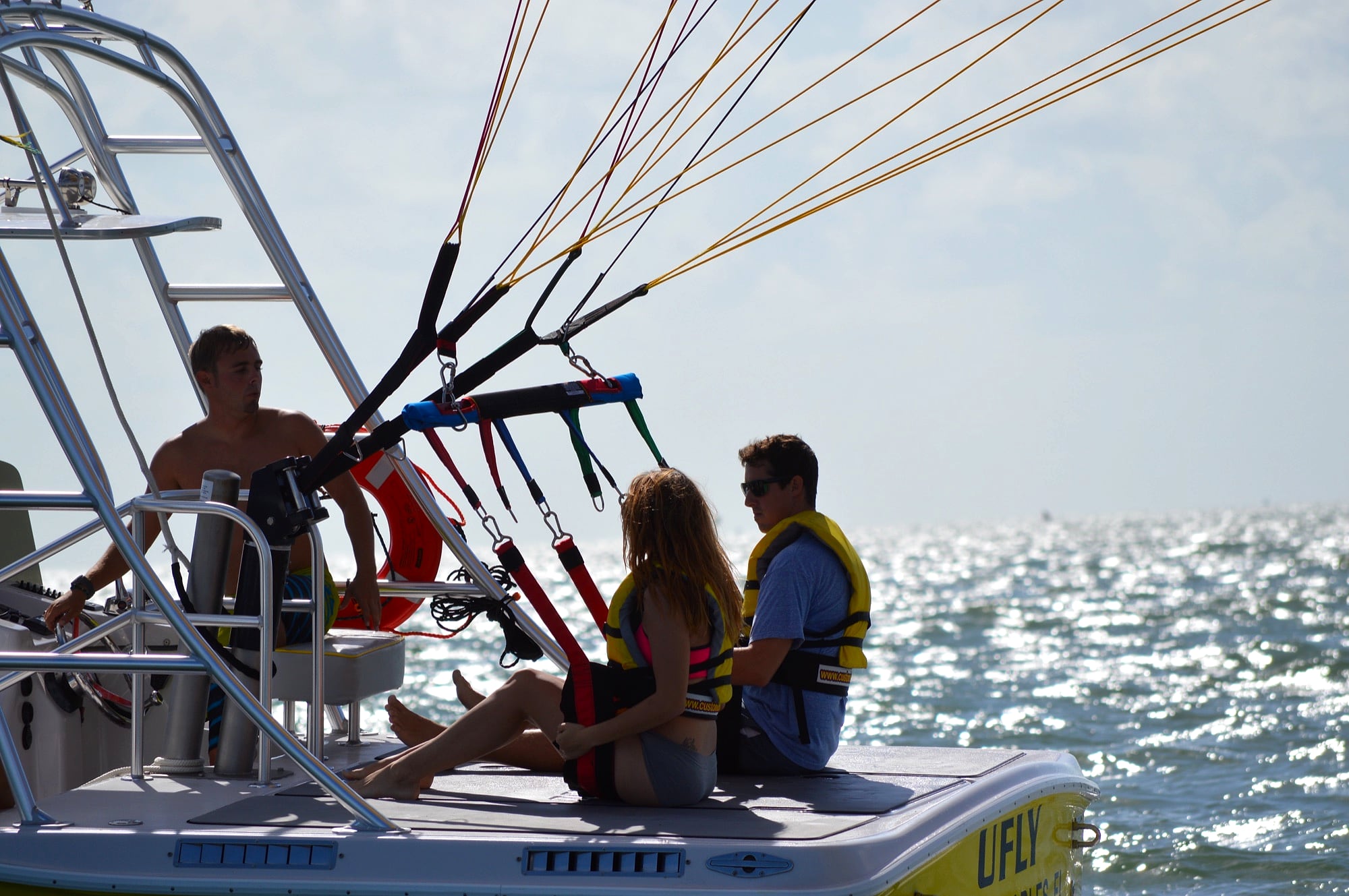
Sunset parasailing in Miami is the experience of being lifted up to 400 feet above the calm, protected water of Biscayne Bay just as the sky over Coconut Grove turns gold, orange, and pink. At Miami Watersports, we launch from Pier 9 at Dinner Key Marina, use a dry takeoff and landing straight from the boat's flight deck (no swimming, no getting wet), and keep you aloft for roughly 6 to 10 minutes during a trip that runs about an hour door to door. If you only do one thing on the water in Miami, do it at golden hour — the light, the glassy bay, and the city skyline behind you make it unforgettable.
Key Takeaways
- Sunset parasail flights at Miami Watersports launch from Pier 9 at Dinner Key Marina in Coconut Grove and reach up to 400 feet over the sheltered water of Biscayne Bay.
- Takeoff and landing happen directly off the boat's flight deck, so the ride is dry by design — swimming ability is not required and you stay on the boat the entire time you aren't aloft.
- You can fly solo, tandem (two), or triple (three), with a minimum age of 5 and a maximum combined weight of 450 pounds per flight.
- Each flier spends roughly 6 to 10 minutes in the air during a trip that lasts about an hour, including boarding, the cruise out, everyone's flights, and the return.
- Biscayne Bay sits behind barrier islands, so it is typically calmer and less crowded than the open-ocean South Beach side, which makes for smoother flights and better photos.
- Lightning always grounds flights for safety; light rain usually does not. Weather or operational cancellations earn a marina credit that is valid for 2 years (no cash refunds).
Why Sunset Is the Best Time to Parasail in Miami
Miami parasailing is gorgeous at any hour, but the last flight window before dusk is the one people remember for years. The reason is partly the light and partly the bay itself.
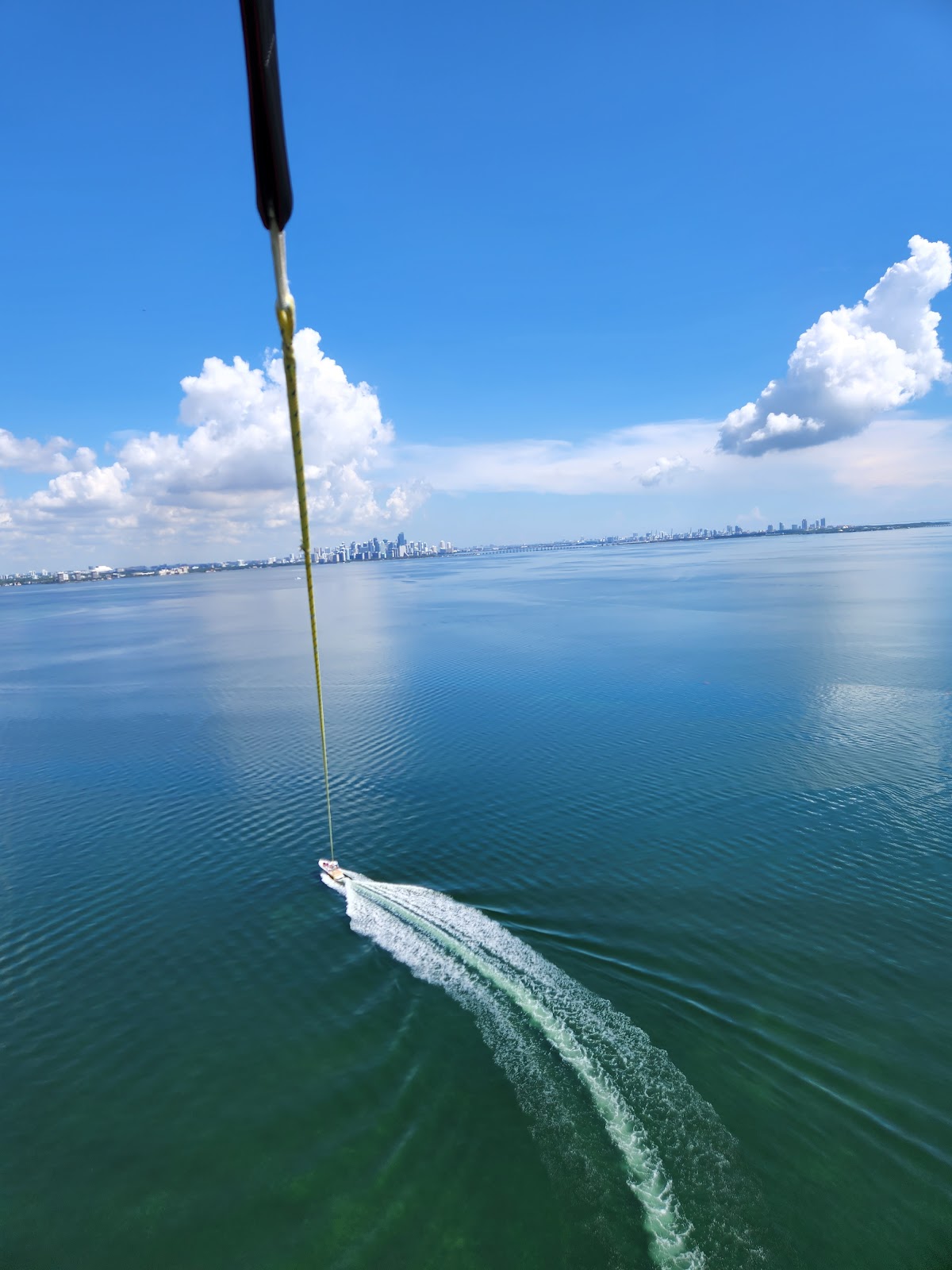
In the late afternoon, Biscayne Bay tends to settle. The sea breeze that builds through the day often eases as the sun drops, which means flatter water, a softer ride, and reflections that turn the whole bay into a mirror. From up to 400 feet, you get a panorama that simply doesn't exist from the ground: the downtown Miami and Brickell skyline catching the last sun, the green ribbon of Coconut Grove and the tree canopy below, Key Biscayne and the lighthouse to the south, and the wide blue sweep of the bay stretching toward the Atlantic.
There's also a practical reason to favor the evening. Earlier in the day, summer heat and sun are intense out on the water. Toward sunset, the temperature is friendlier, the glare is lower, and your photos won't be blown out by harsh overhead light. The colors do the work for you.
Golden Hour Over Biscayne Bay
"Golden hour" — the period shortly before sunset — bathes everything in warm, directional light. Up on the parasail, that translates to long shadows on the water, a glowing skyline, and a sky that can run through yellow, coral, and deep violet in the span of a single flight. Because you're flying over the bay rather than the open ocean, the water below stays a clean turquoise-to-navy instead of churning chop, which makes the contrast with the sky even more dramatic.
What the Experience Is Actually Like
Many first-timers picture parasailing as something frantic or extreme. It's the opposite. Once you're up, it's astonishingly quiet and calm — you're floating, not falling, gently towed behind the boat with the wind in your ears and the bay spread out beneath you.
Here's how a typical sunset trip unfolds:
- Check-in at Pier 9. You arrive at Dinner Key Marina, meet the crew, and get a quick safety briefing. This is where members add their fuel and tax & marina fee; non-members are on an all-in rate.
- Board and cruise out. The boat heads out from the marina into the open part of the bay. The ride out is part of the fun — Coconut Grove from the water is a view in itself.
- Gear up on the flight deck. The crew fits your harness and clips you into the parasail. Everything is done on the boat.
- Dry takeoff. The boat pays out the towline and you lift smoothly off the flight deck. No running, no jumping, no water entry.
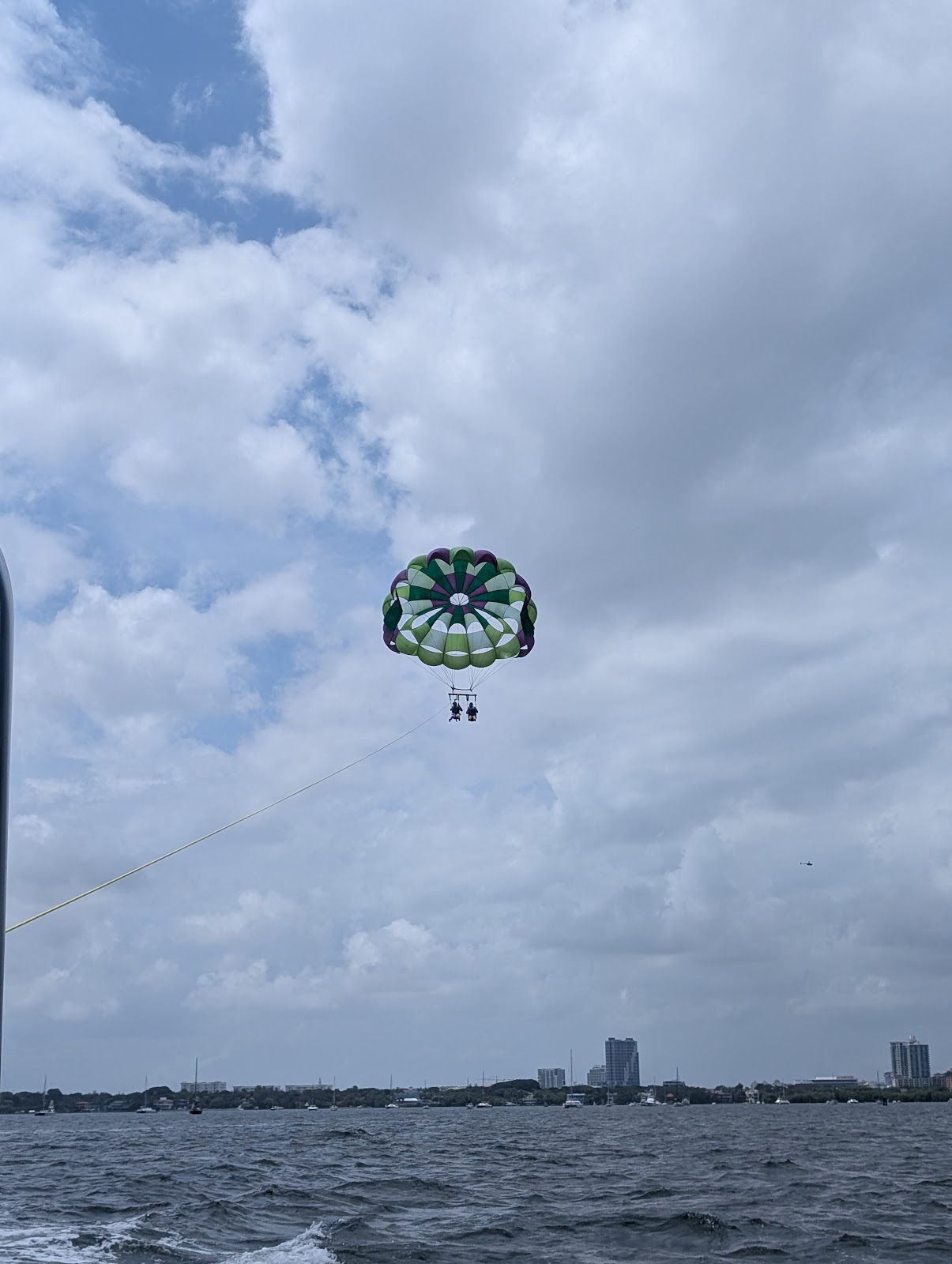
- Fly. You spend roughly 6 to 10 minutes aloft, climbing up to 400 feet depending on conditions and preference. Solo riders get the whole sky to themselves; tandem and triple fliers share the moment side by side.
- Dry landing. The crew reels you back in and you touch down softly right onto the flight deck. You're dry the entire time unless you specifically ask the crew for a quick "toe dip."
- Return. The boat cruises back to Pier 9 as the light fades, and you're back on the dock about an hour after you left.
Solo, Tandem, or Triple — Which to Choose
You can fly alone, with one other person, or as a group of three, as long as the combined weight stays at or under 450 pounds. Tandem and triple flights are the most popular for couples, friends, and families because you get to share the view in real time — the gasps and the laughs are half the experience. Solo flights, on the other hand, give you a more meditative, all-to-yourself version of the same sky. There's no wrong choice; it comes down to who you're flying with and the mood you're after.
Where We Launch: Pier 9 at Dinner Key Marina
Location matters more than people expect. Miami Watersports launches from Pier 9 at Dinner Key Marina, 3400 Pan American Drive, in Coconut Grove — right on Biscayne Bay. We've operated from this stretch of bay as a family-owned business since 2007.
Dinner Key is one of the most storied marinas in Miami, and the surrounding Grove is leafy, walkable, and packed with restaurants and cafés. That makes a sunset parasail easy to build a whole evening around: fly at golden hour, then walk to dinner. Parking and access at the marina are straightforward, which is a relief compared to the perpetual scramble for a spot on the beach side of town.
Calm Biscayne Bay vs. the Crowded Open-Ocean Side
This is the single biggest reason to parasail in the Grove rather than off South Beach. Biscayne Bay is partially protected by barrier islands and Key Biscayne, so it's sheltered from the full force of Atlantic swell. The open-ocean operators off the South Beach / Miami Beach side launch into busier, choppier water with more boat traffic.
For you, the bay-side launch means:
- Smoother flights thanks to flatter water and lighter chop.
- Cleaner sightlines — the skyline, the Grove, Key Biscayne, and the bay all in one frame, instead of just open horizon.
- Less congestion on the water and at the dock, so the pace feels relaxed rather than rushed.
Biscayne Bay is also a genuinely special ecosystem. The southern reaches connect to Biscayne National Park, one of the largest marine parks in the National Park System, and the bay is home to seagrass flats, mangroves, and abundant wildlife. It's not unusual to spot dolphins, rays, or sea turtles from the boat on the way out.
Safety: How We Keep Sunset Flights Smooth
Parasailing is a well-established commercial activity when it's run by professionals who respect the weather and the equipment, and that's exactly how we operate. Our crews handle the harnessing, the towline, and the takeoff and landing so all you have to do is enjoy the view.
A few things are worth understanding before you book.
Weather Calls Are Non-Negotiable
We watch conditions closely and make the call based on safety, not schedule. Lightning always grounds flights — no exceptions. South Florida is famous for fast-moving afternoon and evening storms, and we will never put fliers up when there's lightning in the area. Light rain, on the other hand, usually does not stop a flight; a passing sprinkle over warm water is common in Miami and generally fine.
Wind and water conditions also factor in. Because we fly over the more protected bay, we have more workable days than open-ocean operators, but we still defer to safe limits. If we cancel for weather or for any operational reason, you receive a marina credit that is valid for 2 years — we don't issue cash refunds, but your credit is always good for a future flight.
For your own planning, the National Weather Service Miami office is the best free source for the local marine forecast, and the BoatUS Foundation publishes plain-language boating-weather and safety guidance worth a read before any day on the water.
A Professional Boat and Crew
Parasailing is conducted from a U.S. Coast Guard–inspected vessel operated by a licensed captain and trained crew. If you want to understand the broader framework of recreational boating safety in U.S. waters, the U.S. Coast Guard's boating safety resources are the national standard, and Florida's own rules and waterway information are published by the Florida Fish and Wildlife Conservation Commission. You don't need a boater education card to be a passenger, but if you're curious about Florida's requirements for operating a vessel, the Florida Highway Safety and Motor Vehicles boating page lays them out.
Who Can Fly
- Minimum age is 5. Kids who meet the age minimum often love it, especially flying tandem with a parent.
- Maximum combined weight is 450 pounds per flight, across all fliers on the parasail.
- Swimming is not required. Because takeoff and landing are dry and you stay on the boat between flights, non-swimmers can absolutely participate.
If you have questions about a specific rider, mobility need, or group makeup, just call us at (786) 713-8006 before you book and we'll talk it through.
What to Bring and Wear
Sunset parasailing is low-effort, but a little preparation makes it better.
- Sunglasses with a strap. The wind aloft can grab loose glasses; a retainer strap keeps them on.
- A light layer. It can be a few degrees cooler on the bay at dusk, especially once the boat is moving and you're up in the breeze.
- Sunscreen, applied before you board. Even at golden hour, reflected light off the water adds up.
- A secured phone or camera. You can absolutely shoot from the air, but use a wrist strap or zip it into a pocket — anything dropped from up to 400 feet is gone.
- Comfortable clothes you don't mind a little spray on. The flight itself is dry, but boat rides have the occasional splash.
Leave behind anything you'd hate to lose, and don't worry about footwear — you'll be barefoot or in simple shoes on the boat.
Planning Your Sunset Parasail in Miami
A few practical pointers to get the timing and logistics right.
Timing Your Booking Around Sunset
Sunset times shift dramatically across the year in Miami — early in winter the sun is down well before dinner, while in summer it lingers into the evening. Because the golden-hour window is the most requested slot, it tends to fill first, especially on weekends and holidays. Book ahead, and aim to arrive at Pier 9 with margin so you're on the water before the light peaks rather than chasing it. Check the live availability and book your slot on the parasailing activity page.
Member Rate vs. Non-Member Rate
We price parasailing per rider, and we use a two-tier structure that works like a hotel's member vs. standard rates. Members fly at the lower member rate and add a fuel and tax & marina fee at check-in. Non-members pay a single all-in rate with nothing extra at the dock. There's no math to do at the marina either way — the current pricing for both is shown live on the parasailing page, so it's always accurate. Pick whichever path suits you; both put the same view under your feet.
Make It a Full Day on the Water
Parasailing pairs beautifully with the rest of what we run out of Dinner Key. Couples and families often stack a calmer activity earlier in the day and save the parasail for the sunset finale. If you want to add to your trip, take a look at jet ski rentals for some on-the-water adrenaline, a boat tour to explore the bay and its islands at water level, or a speed boat ride if you want speed without the height. Everything launches from the same marina, so it's easy to build a half-day or full-day around your sunset flight.
Photos You'll Actually Keep
The combination of golden light, calm water, and the Miami skyline is a photographer's dream. For the best shots, frame the skyline behind the flier so the city glows in the background, and shoot just as the sun touches the horizon for the richest color. If you're flying tandem or triple, hand a phone to the person on the boat so you're not splitting attention between the view and your camera. And again — strap it down.
Frequently Overlooked Details
A handful of things that surprise first-time fliers, in the spirit of setting expectations:
- You don't get wet unless you ask to. The "dunk" is optional, not the default.
- It's quieter than you think. Once you're up and away from the engine, it's remarkably peaceful.
- The whole group can come. Even people not flying can ride along on the boat to watch, cheer, and take photos.
- The bay can surprise you. Dolphins and rays are regulars; keep an eye on the water on the cruise out.
- The credit truly is valid for 2 years. If weather forces a cancellation, your marina credit is good whenever you can make it back.
Ready to Fly: Book Your Sunset Parasailing in Miami
Sunset parasailing in Miami is the rare experience that's calm and thrilling at the same time — a dry takeoff from the flight deck, up to 400 feet of altitude over the protected, glassy water of Biscayne Bay, and a front-row seat to the Coconut Grove skyline as the sky goes gold. Launching from Pier 9 at Dinner Key Marina, away from the crowds and chop of the open-ocean South Beach side, you get the smoothest ride and the best view in the city, whether you fly solo, tandem, or triple.
When you're ready, check live availability and reserve your golden-hour slot on our parasailing page, or call us at (786) 713-8006 with any questions. Come fly the bay at the best hour of the day — the view is waiting.
Book your Miami parasailing adventure
Member rates apply on every booking. Tax & marina fee added at check-in.
Frequently Asked Questions
About Miami Watersports
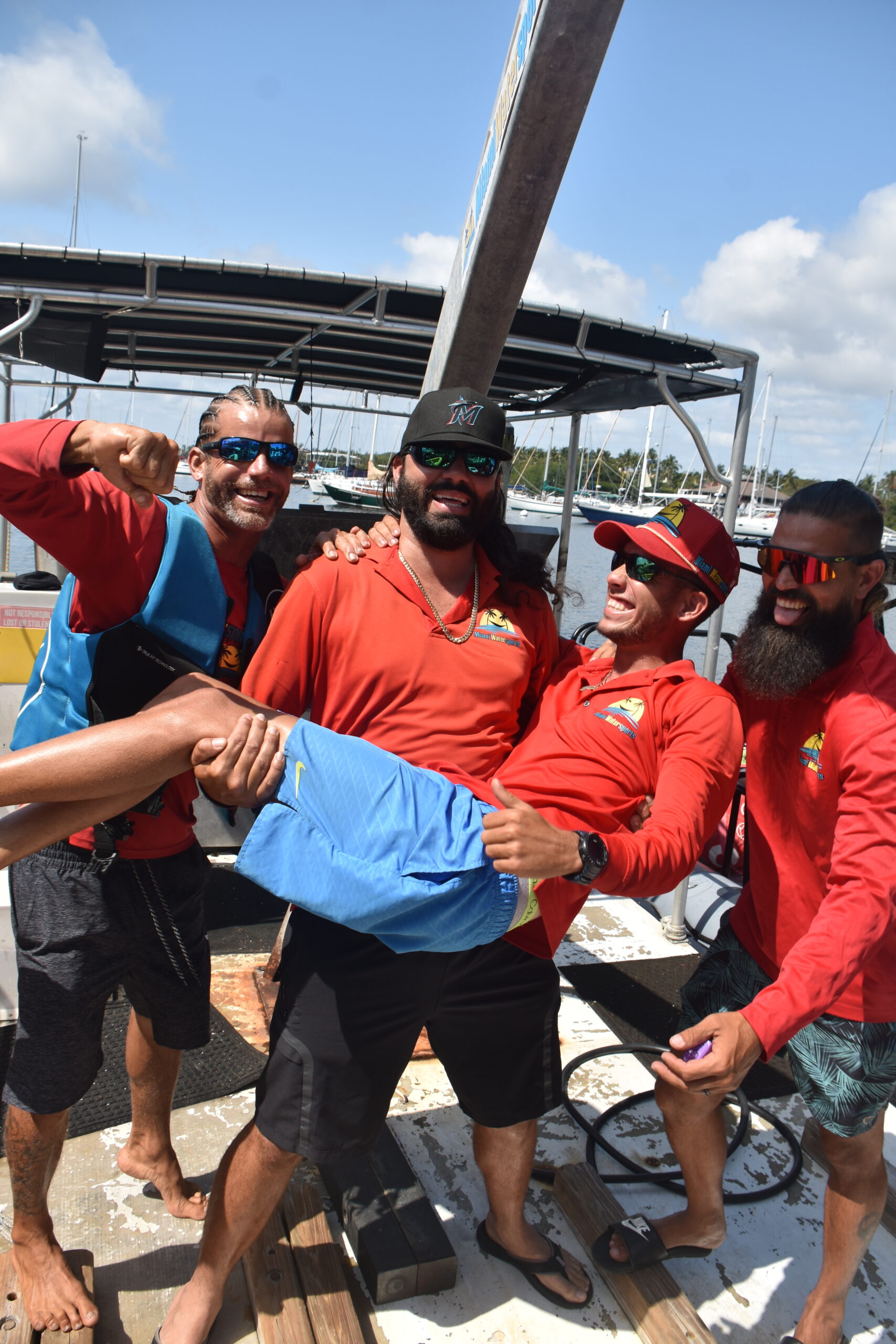
The Miami Watersports crew has run parasailing, jet ski, flyboard, and boat trips from Pier 9 at Dinner Key Marina in Coconut Grove since 2007.