
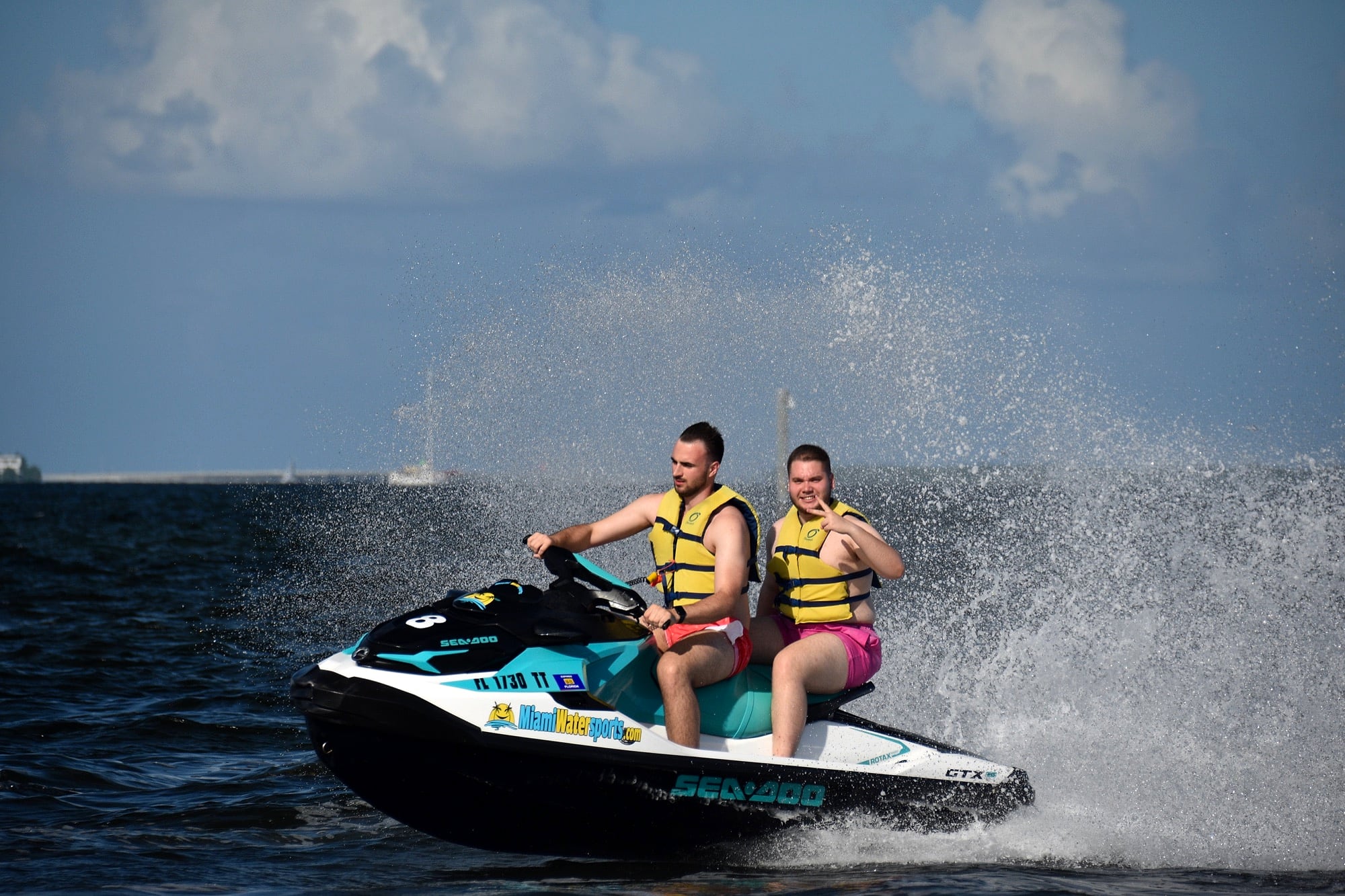
The best time to jet ski in Miami is during the dry season — roughly late fall through spring — when Biscayne Bay stays calm, humidity drops, and clear skies make for long, comfortable rides. That said, Miami is a year-round jet ski destination, and every season has a sweet spot: summer mornings deliver glassy water before the afternoon heat, while winter and spring offer the most reliable all-day conditions. From our launch at Pier 9 inside Dinner Key Marina in Coconut Grove, the protected waters of Biscayne Bay make almost any month rideable when you know how to time your trip.
This guide breaks down each season on the bay, what the weather actually does, how to time your ride around Miami's daily rhythm, and how to lock in a great experience no matter when you visit. If you already know your dates, you can jump straight to the jet ski activity page to check live availability and current pricing.
Key Takeaways
- The best time to jet ski in Miami is the dry season (roughly November through April), when Biscayne Bay is calmest, humidity is low, and rain is least likely.
- Summer offers warm water and beautiful rides, but the smart move is a morning slot before Miami's typical afternoon thunderstorms build up.
- Launching from Pier 9 at Dinner Key Marina puts you on the sheltered, flat water of Biscayne Bay rather than the choppy, crowded open ocean off South Beach.
- Lightning means a hard stop — jet skis never run during electrical storms — but light rain usually does not cancel a ride.
- Weather or operational cancellations are protected by a marina credit that is valid for 2 years, so booking ahead carries no seasonal risk.
- Jet ski rides are guided 60-minute free-rides; the driver must be at least 18 (18+ to rent solo), passengers must be 6 or older, and everyone must be able to swim.
Miami's Two Seasons: Why "Dry" Beats "Wet" for Jet Skiing
Unlike most of the country, Miami doesn't really have four seasons — it has two: a dry season and a wet season. Understanding that single distinction tells you almost everything about the best time to jet ski in Miami.
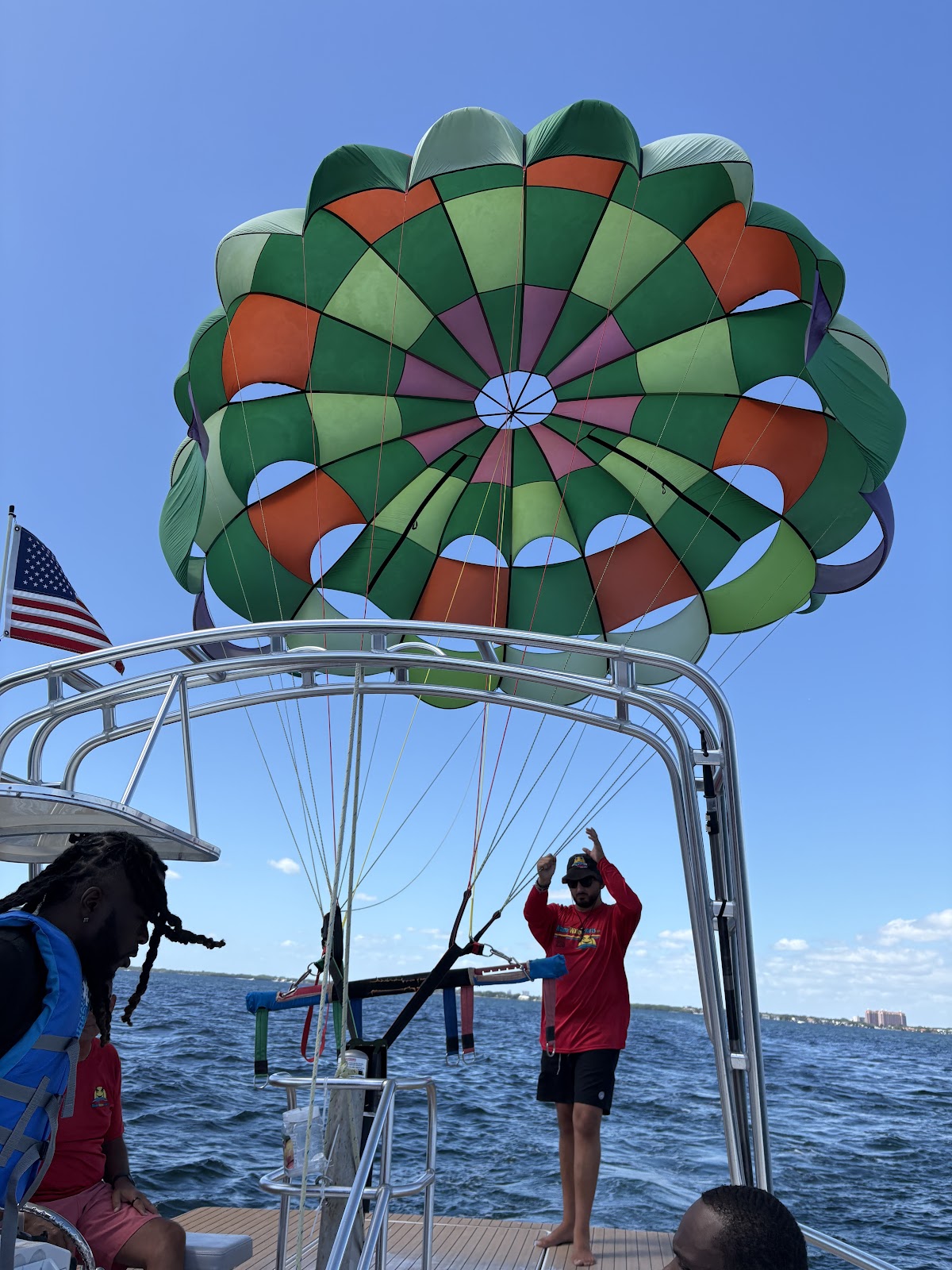
The dry season runs roughly from November through April. During these months, cooler, drier air settles over South Florida, humidity drops, and the relentless afternoon thunderstorms of summer largely disappear. Skies stay clear for longer stretches of the day, the sun is intense but not oppressive, and Biscayne Bay tends to lie flatter and calmer. For visitors who want a predictable, comfortable ride with great visibility, this is prime time.
The wet season spans roughly May through October. This is Miami's warm, humid, tropical stretch — the water is bathtub-warm, the marine life is active, and the bay can be stunning early in the day. The catch is the daily pattern of afternoon convection: heat and humidity build through the morning, and by early-to-mid afternoon, towering clouds and short, intense thunderstorms can roll through. These storms are usually brief, but lightning forces an automatic stop on the water.
None of this means summer is "bad" for jet skiing — far from it. It simply means the *timing of your ride* matters more in the wet season than in the dry season. The National Weather Service Miami office tracks these daily and seasonal patterns closely, and checking the local forecast before any water activity is always smart. You can find current South Florida conditions and marine forecasts at the National Weather Service – Miami site.
The Best Seasons for Jet Ski Rentals in Miami, Month by Month
Here's how each stretch of the calendar actually feels out on Biscayne Bay from our Coconut Grove launch.
Winter (December – February): The Calmest, Clearest Rides
Winter is Miami's quiet superpower for jet skiing. Air temperatures are pleasant rather than scorching, humidity is low, and the bay frequently sits glassy under bright blue skies. Cold fronts occasionally pass through, bringing a day or two of wind and cooler temperatures, but they clear quickly and leave behind some of the crispest visibility of the year.
The water is cooler than in summer but still very comfortable for a guided 60-minute ride — most riders are perfectly happy in a swimsuit, and a rash guard or light layer keeps you warm against the wind. Because this is also peak tourist season in Miami, weekend slots fill up, so booking ahead is the move. Winter consistently delivers the conditions people picture when they imagine a perfect Miami day on the water.
Spring (March – May): The Sweet Spot
If we had to crown a single best season for jet ski rentals in Miami, spring is the strongest all-around candidate. By March and April, the cold fronts of winter have faded, the water has warmed, and the heavy summer storm pattern hasn't fully set in yet. You get warm, comfortable water, long days, and a high percentage of clear, ridable conditions — the best of both worlds.
Spring also lands before the peak of hurricane season and before the most aggressive afternoon thunderstorm cycle, which means flexible scheduling. Mornings and afternoons both tend to work, the bay stays inviting, and visibility is excellent. For travelers who can choose their dates, late spring is hard to beat.
Summer (June – August): Warm Water, Morning Magic
Summer on Biscayne Bay is genuinely beautiful — the water is at its warmest, the days are at their longest, and early mornings can be absolutely glassy. The key to a great summer ride is timing. Heat and humidity build through the day, and Miami's classic afternoon thunderstorms typically develop in the early-to-mid afternoon, so a morning slot gives you the calmest water and the clearest sky.
Summer is also the start of the Atlantic hurricane season, which officially runs June through November. Day-to-day, this rarely affects a planned ride, but it's worth keeping an eye on the forecast for any approaching tropical systems. For general boating-weather awareness and safety guidance, the U.S. Coast Guard's boating safety resources are a reliable reference. Book a morning, watch the radar, and summer delivers warm, memorable rides.
Fall (September – November): The Transition
Early fall is the heart of hurricane season and Miami's most weather-variable stretch, so flexibility helps if you're visiting in September or October. The flip side is that the water is still warm, crowds thin out compared to summer, and you can often find excellent ride windows between systems.
By November, the dry season begins to reassert itself: humidity drops, storms become less frequent, and the bay settles down again. Late fall is an underrated time to ride — warm water, fewer crowds, and the return of those clear, calm dry-season days.
Why Biscayne Bay Beats the Open Ocean
A lot of visitors assume the best jet skiing in Miami happens off South Beach in the open Atlantic. In practice, the opposite is usually true — and the reason comes down to geography.
Our launch at Pier 9 inside Dinner Key Marina sits on Biscayne Bay, a wide, shallow, protected body of water tucked between the mainland and a string of barrier islands and keys. Because the bay is sheltered, it stays dramatically calmer than the open ocean. Where the Atlantic side off South Beach can be choppy, crowded with boat traffic, and intimidating for newer riders, the bay offers flat, forgiving water that's far more enjoyable — especially for first-timers, families, and anyone who wants to actually look around instead of fighting waves.
Biscayne Bay is also visually spectacular. You ride with the Miami skyline on one side, lush Coconut Grove shoreline nearby, and the open expanse of the bay stretching toward the protected waters of Biscayne National Park to the south. The bay is a living ecosystem — seagrass beds, mangroves, and marine life are part of the experience, which is exactly why we run guided 60-minute free-rides rather than turning riders loose. A guide keeps the group safe, points out the best routes, and helps protect the sensitive habitat that makes the bay special.
Calmer water, better scenery, less traffic, and a guided format that works in nearly every season — that's the case for the bay, and it's a big part of why timing your Miami jet ski ride is more about *time of day* than fighting rough conditions.
How to Time Your Ride: Reading Miami's Daily Rhythm
Season sets the backdrop, but the time of day you choose often matters just as much — particularly in the wet season.
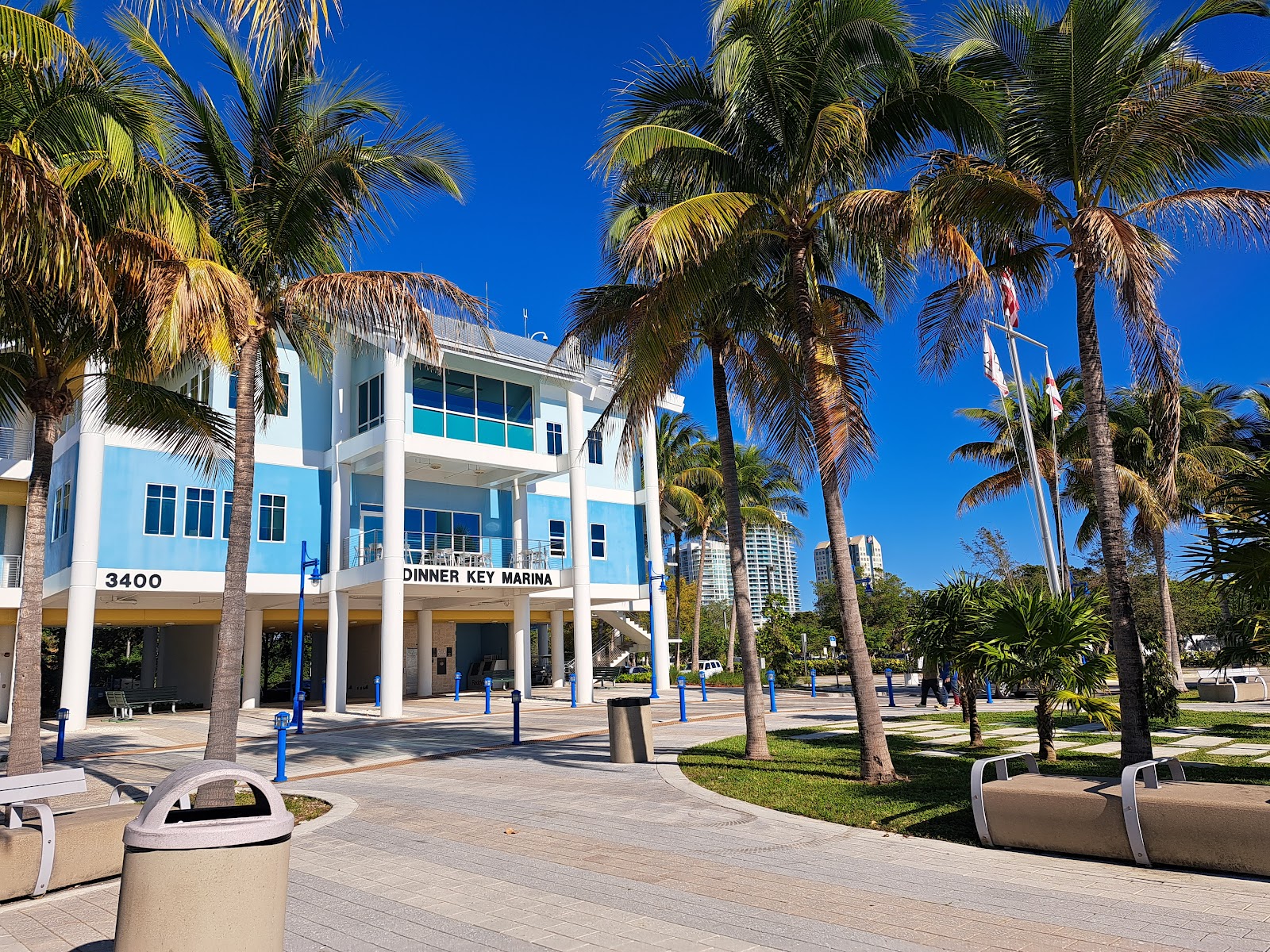
Mornings: Glassy Water, Cooler Air
Across every season, mornings tend to offer the calmest water of the day. Overnight, the wind usually drops and the bay settles, so an early ride means flatter conditions and softer light. In summer especially, a morning slot beats the afternoon storm cycle entirely. If you want the smoothest possible ride, book early.
Midday: Bright, Warm, Lively
Midday brings full sun and warm water, which many riders love. In the dry season, midday is reliably excellent. In the wet season, it's the window where you want to start watching the sky and radar, because afternoon storms can build with little warning.
Late Afternoon: Golden Light, Watch the Sky
Late-afternoon rides can be magical — the light turns golden over the skyline and the heat eases. In the dry season, this is a gorgeous, low-risk window. In the wet season, late afternoon carries the highest chance of running into a thunderstorm, so it's the slot most likely to be affected by weather.
A simple rule covers all of it: lightning means we don't run, period. Electrical storms are a hard stop for everyone's safety. Light rain, on the other hand, usually doesn't cancel a ride — a passing shower on warm water is often a non-event. If conditions force a cancellation, you're protected (more on that below).
Weather, Safety, and What Actually Cancels a Ride
Knowing what does and doesn't stop a ride takes the anxiety out of booking in any season.
Lightning is the only true hard stop on the water. When an electrical storm is in the area, jet skis don't run — there's no judgment call to make, and no season changes that. Light rain usually does not cancel a ride; warm summer showers in particular tend to pass quickly and are part of the tropical experience.
Wind and sea state matter too, especially on the rare windy winter cold-front day, but the protected nature of Biscayne Bay means the bay stays rideable far more often than the open ocean would.
Safety is built into every ride regardless of season. Florida has specific boating and vessel-operation rules, including education requirements for many operators, which is one more reason our rides are guided. For the official state framework, see the Florida FWC boating and waterways resources and the Florida boater education information from FLHSMV. For broader skills and safety education, the BoatUS Foundation offers excellent free guidance.
The ride rules are straightforward and apply year-round:
- The driver must be at least 18 years old, and 18 or older to rent solo.
- Passengers must be at least 6 years old.
- All riders must be able to swim.
- A single (1-seater) holds one rider up to a 250-pound limit; a double (2-seater) holds two riders up to a combined 400-pound limit.
- A refundable security hold is placed at check-in and released after your ride.
Crucially for seasonal planning: if we have to cancel for weather or any operational reason, you receive a marina credit that is valid for 2 years. There are no cash refunds, but that credit holds its full value indefinitely, so a rainy-season booking carries no real downside — if Mother Nature interferes, you simply ride another day. That policy is what makes booking ahead, even in summer, completely low-risk.
Choosing Your Ride: Single vs. Double, Member vs. Non-Member
Once you've picked your season, two quick decisions shape your day.
Single or Double
A single jet ski is a 1-seater built for one rider — ideal if you want full control of the throttle and the freedom to carve your own line across the bay. A double jet ski is a 2-seater that fits two riders, perfect for couples, a parent riding with an older child who meets the age and swim requirements, or two friends who want to split a machine and trade off. Both run the same guided 60-minute free-ride format on Biscayne Bay. You can compare options and see live availability on the jet ski page.
If you're traveling with a group that wants variety, it's easy to pair jet skis with our other water activities — many visitors add on a parasailing flight for the aerial view of the bay or a boat tour to take in the skyline at a slower pace. Mixing activities is a great way to build a full day on the water, especially in the calm dry-season months.
Member vs. Non-Member Pricing
Pricing on jet skis works a bit like a hotel's room rates. There's a Non-Member rate, which is an all-in price, and a member rate, where members pay current member pricing plus a fuel and a tax & marina fee at check-in. Both get you the same great ride; the structure simply differs, much like a hotel's standard rate versus a loyalty rate.
Because pricing can change and is always shown live, we don't publish numbers here — the current member and Non-Member rates are displayed in real time on the jet ski activity page. Pricing is per rider, so it's easy to see exactly what your group's ride will cost before you commit. Whatever the season, checking the live page is the most accurate way to plan your budget.
Planning Tips for Each Type of Visitor
A few quick recommendations based on who's riding and when.
Visiting in winter or spring? You're in the prime window. Book a little ahead, since these are Miami's busiest months, and pick whatever time of day suits your schedule — conditions are reliably good throughout the day.
Visiting in summer? Book a morning slot to beat the afternoon storm cycle, keep an eye on the NWS Miami forecast, and remember that the never-expires marina credit means a weather day costs you nothing but a reschedule.
First-time riders or families? Any dry-season day is forgiving, and the calm water of Biscayne Bay makes the guided format approachable. Just confirm everyone meets the age and swim requirements before you arrive.
Traveling during hurricane season (June–November)? Build in a little flexibility, watch for any tropical systems, and lean on the marina-credit policy. Day-to-day rides are rarely affected, and the warm water and thinner shoulder-season crowds can make for fantastic conditions.
Want the postcard shot? Aim for early morning glass or late-afternoon golden light in the dry season, with the skyline behind you and the open bay ahead.
Conclusion: When to Ride and How to Book
So, what's the best time to jet ski in Miami? If you want the single safest bet, ride during the dry season — late fall through spring — when Biscayne Bay is calmest, the air is comfortable, and clear skies are the norm. Spring is the all-around sweet spot, winter brings the crispest visibility, and summer rewards early risers with glassy morning water before the afternoon storms. Thanks to the protected waters off Pier 9 at Dinner Key Marina and a marina credit that is valid for 2 years, there's truly no wrong season to plan your ride — only smarter timing within each one.
Ready to get on the water? Check live availability and current pricing, choose your single or double, and lock in your slot on the jet ski activity page. Pick your season, pick your time of day, and we'll see you out on Biscayne Bay.
Book your Miami jet ski adventure
Member rates apply on every booking. Tax & marina fee added at check-in.
Frequently Asked Questions
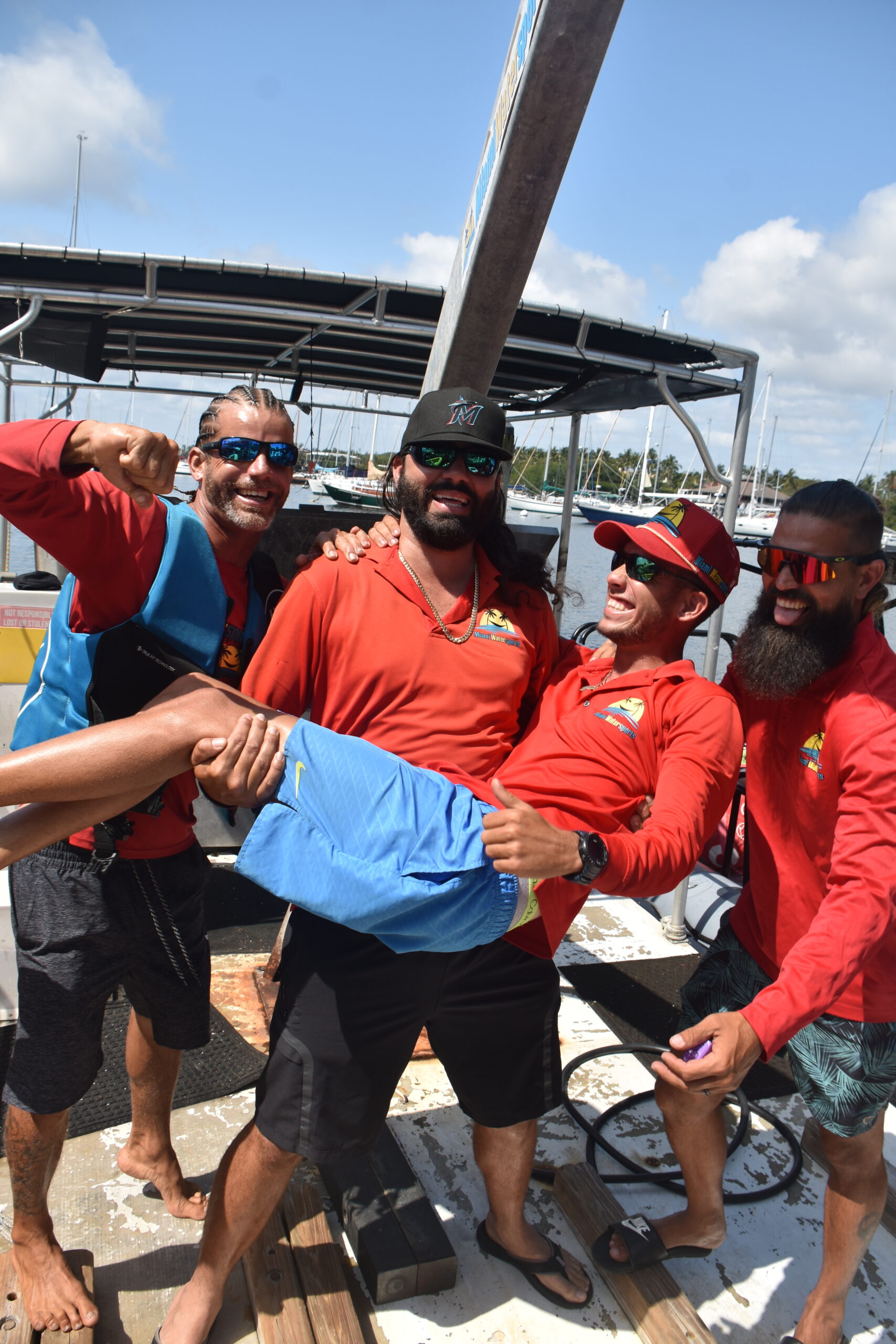
About Miami Watersports
The Miami Watersports crew has run parasailing, jet ski, flyboard, and boat trips from Pier 9 at Dinner Key Marina in Coconut Grove since 2007.