
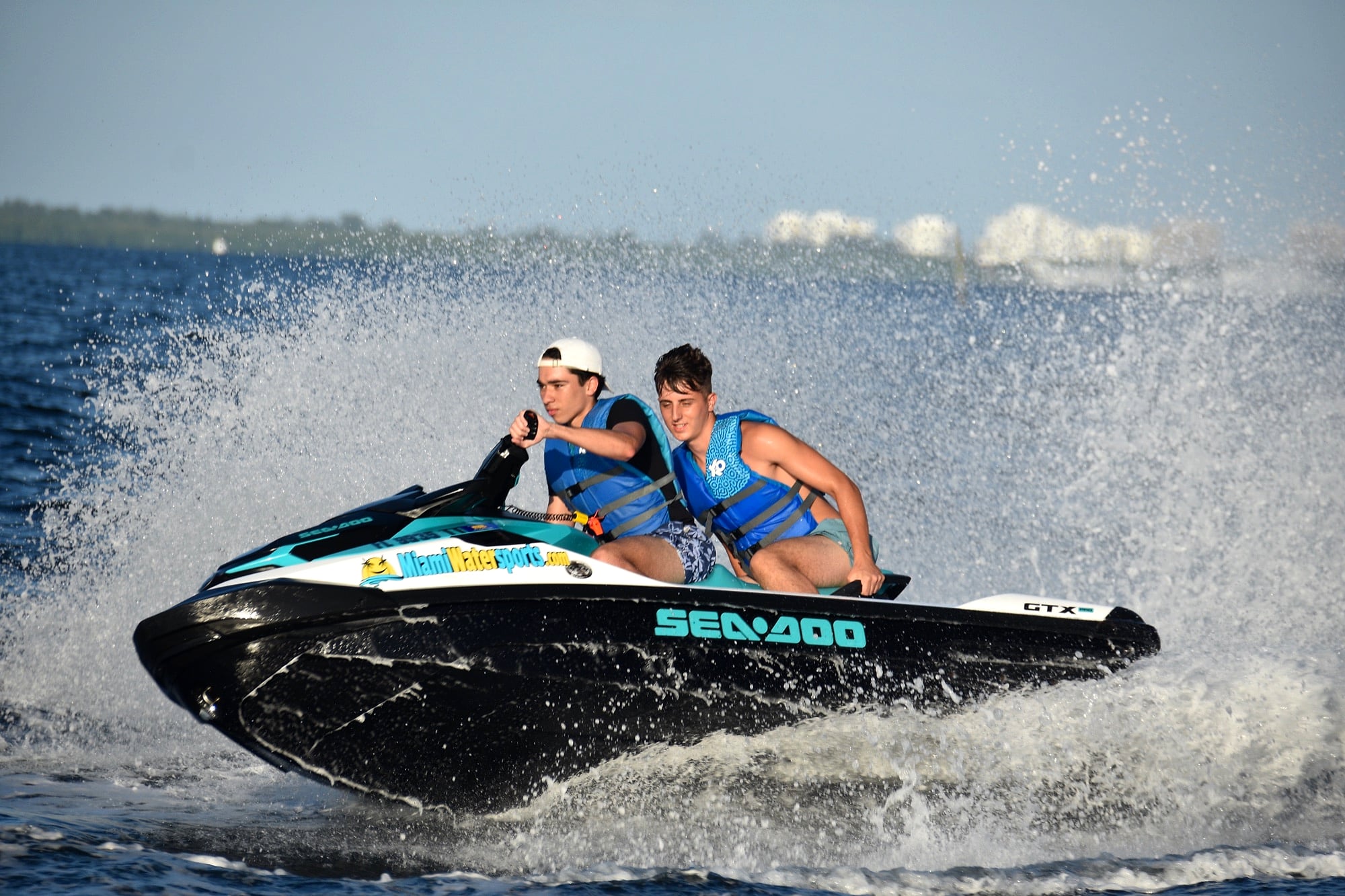
If you're searching for jet ski tips for beginners in Miami, the short answer is this: book a guided ride that launches from the calm, protected waters of Biscayne Bay (not the crowded open ocean off South Beach), wear a life jacket the whole time, start slow until you're comfortable with the throttle and turning, and let your guide handle navigation while you focus on the fun. A first-time rider doesn't need any prior experience to ride a jet ski in Miami — you need a driver who's at least 18, a willingness to listen during the safety briefing, and a sense of adventure. This guide walks you through everything a first-timer should know before, during, and after your ride.
Key Takeaways
- Miami's safest place for first-time jet ski riders is the protected, generally calmer water of Biscayne Bay, launched from Pier 9 at Dinner Key Marina in Coconut Grove — not the open-ocean, high-traffic waters off South Beach.
- A guided 60-minute free-ride lets beginners ride alongside an experienced guide who handles the route, so you can learn the controls at your own pace within a safe area.
- The minimum age to drive a jet ski is 18, and passengers must be at least 6; all riders must be able to swim and wear a life jacket.
- Single jet skis (1-seater) carry one rider up to a weight limit, while doubles (2-seater) carry a driver and passenger up to a combined limit — choose based on whether you want to ride solo or share.
- Lightning always cancels rides for safety, but light rain usually does not; weather or operational cancellations are covered by a marina credit that is valid for 2 years rather than a cash refund.
- Booking direct gives you a Member rate versus the Non-Member rate, similar to how hotels offer member pricing — the live price is always shown on the activity page.
Why Biscayne Bay Is the Best Place in Miami for First-Timers
The single most important decision a beginner makes isn't which jet ski to pick — it's *where* they ride. Miami has two very different jet ski environments, and they are not equally beginner-friendly.
On the Atlantic side, off Miami Beach and South Beach, you're dealing with open-ocean swells, boat wakes from heavy marine traffic, and wind that builds up over miles of unbroken water. That's exhilarating for an experienced rider, but for a first-timer it can be intimidating and genuinely harder to control a watercraft.
Biscayne Bay is a different world. The bay sits between the mainland and the barrier islands, which means the islands and shoreline knock down a lot of the wind and chop before it ever reaches you. The water is typically flatter, the sightlines are open, and there's room to spread out. For a beginner learning how a jet ski accelerates, turns, and slows down, that protected water is exactly what you want under you the first time.
Launching from Pier 9 at Dinner Key Marina
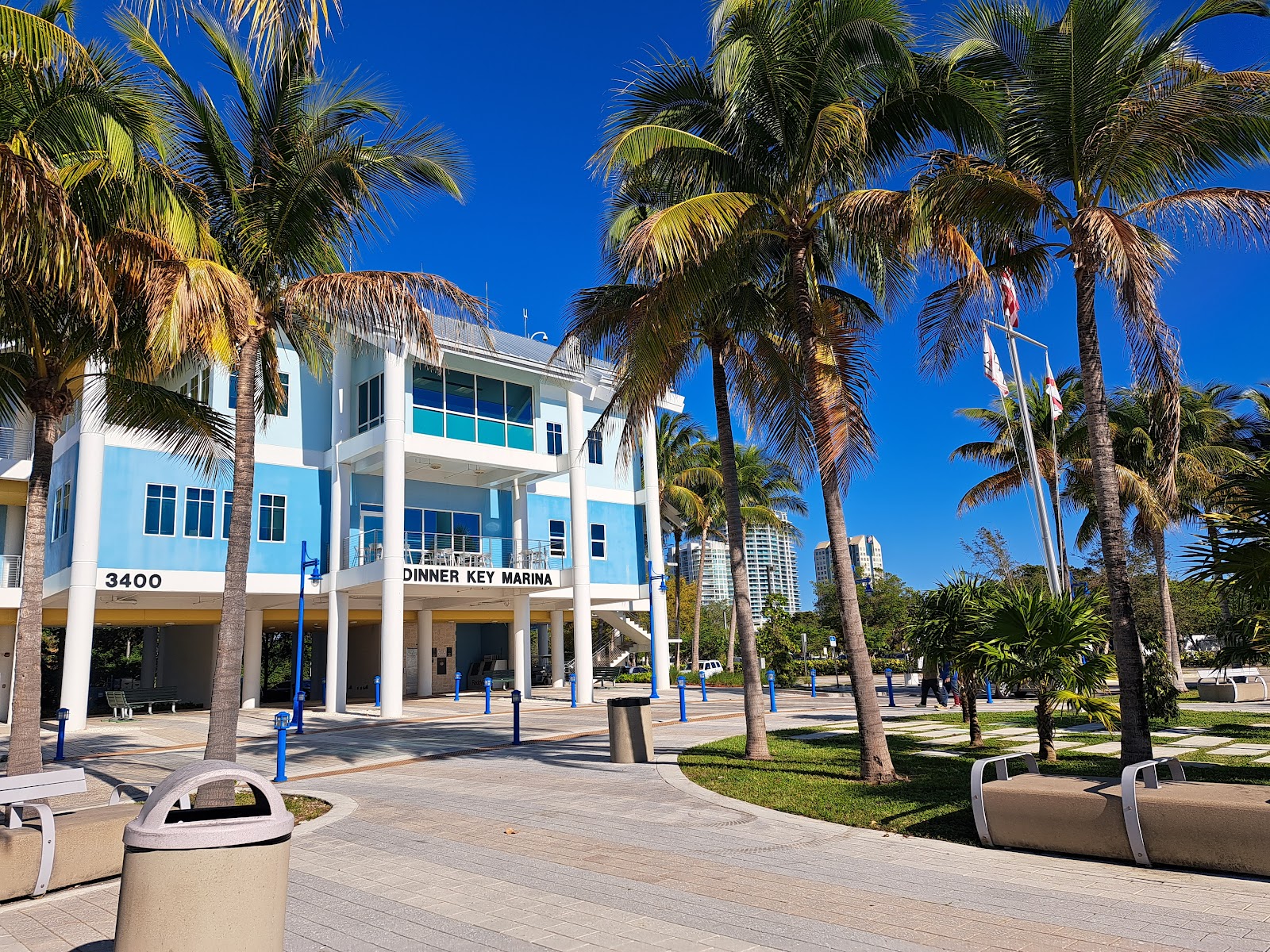
Miami Watersports launches from Pier 9 at Dinner Key Marina, 3400 Pan American Drive in Coconut Grove — a historic, sheltered marina on the western edge of Biscayne Bay. Coconut Grove is one of Miami's oldest and most scenic neighborhoods, lined with banyan trees and sailboats, and the marina puts you on the water within minutes of the dock. From here you're riding past the Coconut Grove skyline, with stilt houses, anchored sailboats, and the wide green-blue expanse of the bay in every direction.
Because the launch point is inside a protected marina basin, your first few minutes on the water — usually the most nerve-wracking part for a beginner — happen in slow, controlled conditions before you ever open up the throttle on the open bay. That gentle on-ramp is one of the underrated reasons the Coconut Grove launch works so well for first-timers.
A note on Biscayne National Park and the wider bay
The southern reaches of Biscayne Bay flow into Biscayne National Park, one of the largest marine parks in the National Park System, protecting shallow seagrass flats, mangrove shoreline, and coral reefs. You won't be riding inside the park on a 60-minute guided ride, but it's worth knowing you're sharing a living ecosystem. Seagrass beds in the bay are home to manatees and other wildlife, which is one more reason guided rides keep you in appropriate areas and at sensible speeds — protecting both you and the habitat.
Guided Free-Ride: How It Actually Works for Beginners
A guided jet ski free-ride is the format built for people who've never done this before. Here's what to expect.
You'll get a 60-minute ride on Biscayne Bay led by an experienced guide. "Free-ride" means you're not stuck in a single-file line crawling behind a tour boat — you're actually operating your own watercraft, opening up the throttle, carving turns, and feeling the machine respond. But you do it within a defined area alongside a guide who knows the water, the conditions, and the traffic patterns. That combination — real riding freedom inside a safe, supervised envelope — is ideal for a first-timer.
Before you ever touch the throttle, you'll get a safety briefing covering the basics: how to start and stop, how steering works (this is the part that surprises everyone — more on that below), the hand signals your guide will use, and the boundaries of your riding area. Listen closely. Five minutes of attention here is the difference between a smooth ride and a frustrating one.
Single vs. Double: which jet ski should a beginner pick?
You've got two choices:
- Single (1-seater): Just you. You're in full control, which many first-timers actually prefer because there's no second person to balance. The single carries one rider up to its weight limit.
- Double (2-seater): A driver plus a passenger, up to a combined weight limit. Great if you want to share the experience with a partner, friend, or family member — or if a nervous first-timer wants to ride behind a more confident driver before taking the controls themselves.
For a true beginner riding alone, the single is wonderfully intuitive. For couples or a parent riding with an older child, the double is the social choice. Pricing is per rider on either option, and you can see live availability and current pricing on the jet ski activity page.
Age, swimming, and who can ride
The rules exist for good reason, and they're simple:
- The driver must be at least 18 to operate on a guided ride, and 18 or older to rent solo.
- Passengers must be at least 6 years old.
- All riders must be able to swim — this is non-negotiable, because even with a life jacket you need to be comfortable in the water.
- Everyone wears a U.S. Coast Guard-approved life jacket for the entire ride.
If you're bringing kids, a parent or qualifying adult drives and the child rides as a passenger on a double. Florida takes boater safety seriously, and you can read more about state requirements through the Florida FWC boating and waterways program and the Florida boater education resources from FLHSMV.
Master the Controls: What Every First-Timer Gets Wrong
Jet skis (personal watercraft) don't drive like cars or boats, and the learning curve is short but real. Knowing these things in advance puts you ahead of nearly every other beginner on the water.
You steer with the throttle, not against it
This is the big one. A jet ski turns by directing a jet of water out the back. You need throttle to steer. If you panic, chop the throttle to zero, and try to turn the handlebars, the ski won't respond the way you expect — with no water being pumped, there's nothing to push you in the new direction. New riders instinctively let off the gas when they get nervous and then can't understand why the watercraft won't turn. Keep a little throttle on through your turns and the ski will go exactly where you point it.
There are no brakes — plan your stops
A jet ski has no brake pedal. To slow down, you ease off the throttle and let the water drag you to a stop, or use the brake/reverse function if the model has one (your guide will explain). The practical takeaway for beginners: leave plenty of space. Don't ride up close behind your guide or another rider expecting to stop on a dime. Give yourself room and slow down early.
Lean into your turns
At low speed, a jet ski feels tippy; at speed, it feels planted. Lean your body slightly into turns the way you would on a bicycle, look where you want to go, and let the ski carve. Smooth inputs beat jerky ones every time. Within ten minutes most first-timers go from white-knuckled to grinning.
Mind the wake and chop
When you cross a boat wake, approach it at an angle and with steady throttle rather than hitting it dead-on or backing off suddenly. Biscayne Bay is calmer than the open ocean, but you'll still encounter wakes from passing boats. Anticipating them keeps the ride smooth and keeps you firmly seated.
What to Wear and Bring
Miami sun is no joke, and you'll be on the open water for an hour with reflection coming off the bay in every direction.
- Swimsuit or quick-dry clothing. You will get wet — that's part of the fun. Cotton t-shirts stay soggy; rash guards and board shorts are ideal.
- Reef-safe sunscreen, applied before you arrive. Reapply isn't easy mid-ride, so go on heavy. Reef-safe formulas matter in a sensitive marine environment like Biscayne Bay.
- Secured sunglasses with a strap. Anything not strapped down can end up in the bay. The same goes for hats.
- A way to secure your phone, or leave it ashore. Many riders bring a waterproof pouch on a lanyard for photos; otherwise, leave valuables in your vehicle.
- Water and a towel for afterward.
Skip loose jewelry, leave the flip-flops behind (water shoes or going barefoot is better), and tie back long hair. The marina has facilities, but the less you have to manage on the dock, the smoother your check-in.
Weather, Tides, and the Best Time of Day to Ride
South Florida weather is part of the experience, and understanding it makes you a smarter rider.
Mornings are often the calmest
In Miami, the wind frequently builds through the afternoon as the land heats up and the sea breeze kicks in, and summer afternoons are prone to fast-developing thunderstorms. That makes morning rides a great call for first-timers — the water tends to be glassier, the light is beautiful for photos, and you're less likely to run into an afternoon storm. Always check the local forecast through the National Weather Service Miami office before heading out.
Lightning stops everything — and that's a good thing
Here's the firm rule: lightning never runs. If there's lightning in the area, rides do not go out, full stop — no exceptions, because being on open water in an electrical storm is genuinely dangerous. Light rain, on the other hand, usually does run — a passing Miami shower while you're already wet isn't a problem, and it can be a fun part of the experience.
If weather or operations force a cancellation, you're protected: cancellations get a marina credit that is valid for 2 years rather than a cash refund. That means a storm doesn't cost you your adventure — you simply rebook when conditions are right. The U.S. Coast Guard and BoatUS both publish excellent plain-language guidance on weather awareness and on-water safety; see the U.S. Coast Guard boating safety site and the BoatUS Foundation expert advice library if you want to read up before your ride.
Seasons on Biscayne Bay
Miami is a year-round watersports town. Winter and spring bring drier air, lighter humidity, and steady conditions — fantastic riding weather, which is also why those months are popular. Summer is warm and lively with the warmest water, balanced against those afternoon storm patterns, so morning slots are especially valuable. Whatever the season, the protected geometry of Biscayne Bay keeps conditions more rider-friendly than the open Atlantic on the same day.
Safety Etiquette Every Beginner Should Know
A confident, courteous beginner is a safe beginner. A few habits to adopt from minute one:
- Stay with your guide and inside the riding area. The boundaries exist for traffic, depth, and wildlife reasons. Don't wander.
- Keep distance from other watercraft, boats, swimmers, and the shoreline. Distance is your best safety margin since there are no brakes.
- Use the engine cut-off lanyard. It clips to your life jacket so the engine stops if you fall off — wear it correctly and the ski won't motor away from you.
- Watch for divers-down flags and manatee zones. Slow down and steer clear. The bay's seagrass flats are sensitive habitat.
- No horseplay near other riders. Spraying, cutting people off, or chasing might look fun in videos, but it's how collisions happen.
Florida law and Coast Guard regulations govern all of this, and a reputable operator builds them into the briefing. If you want the full regulatory picture, Florida's FWC boating pages lay out the rules for personal watercraft operation in state waters.
Building Your Day on the Bay
A jet ski ride pairs beautifully with the rest of what Coconut Grove and Biscayne Bay offer, and many first-timers turn a single ride into a half-day on the water.
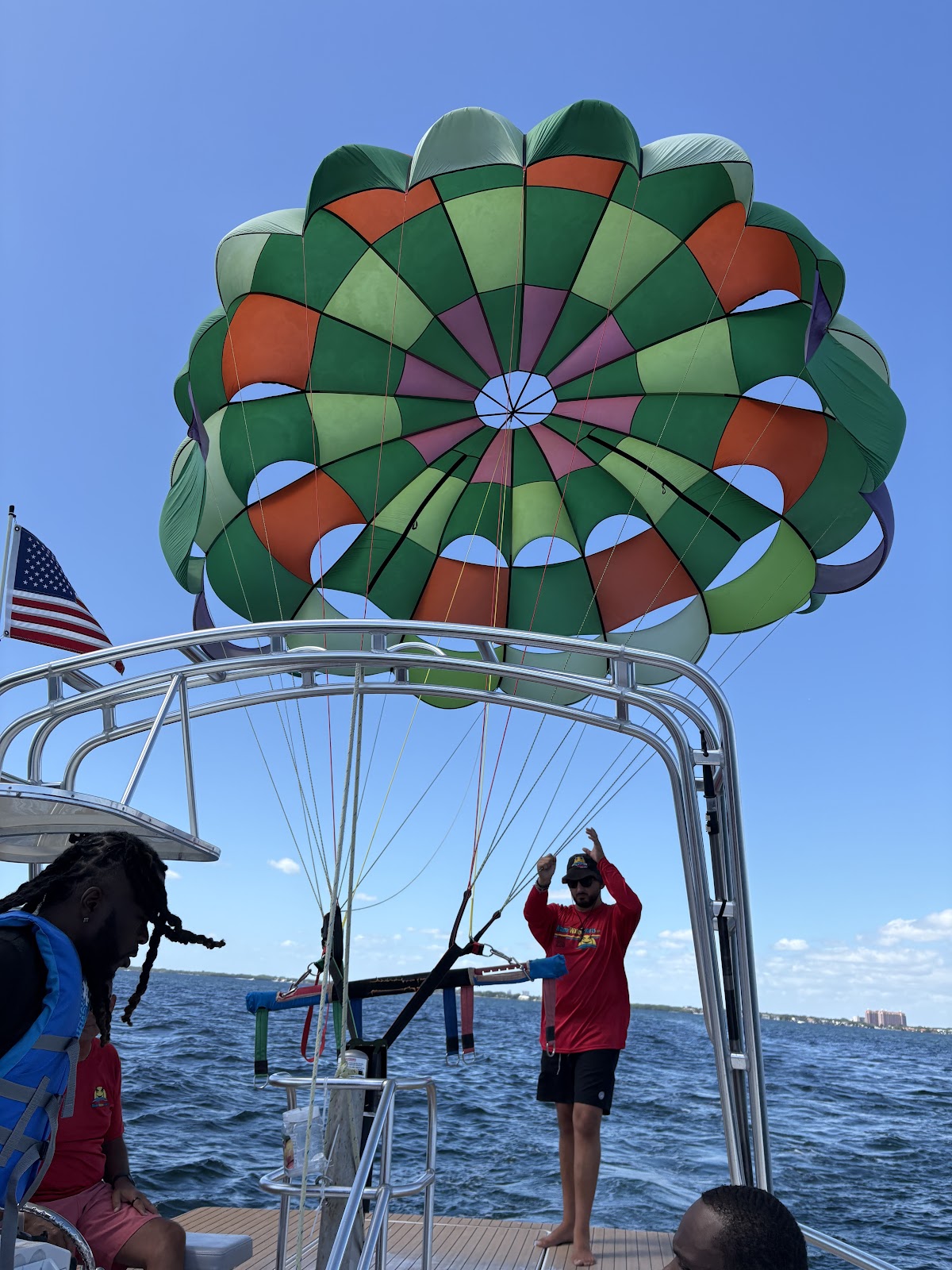
If your group has a range of comfort levels, consider mixing activities. Some folks want the adrenaline of the jet ski while others prefer something gentler — a parasailing flight lets you drift hundreds of feet above the bay for the view, while a boat tour gives everyone a relaxed cruise past the Grove's stilt houses and skyline. Groups celebrating a birthday or just wanting more time on the water often combine a jet ski ride with one of these. Browse the full lineup of Miami watersports activities to build the day that fits your crew.
For first-timers specifically, the winning formula is simple: start with a guided jet ski free-ride to get your confidence on the water, then decide whether you want to come back for more throttle next time or trade up to the view from above.
Booking Smart: Member Rate vs. Non-Member Rate
Pricing on jet ski rides works a lot like hotel pricing. There's a Non-Member rate — the straightforward all-in rate — and a Member rate that direct bookers get, similar to how a hotel offers a member price to guests who book through the brand directly. Pricing is per rider, so each person on the water is priced individually.
A couple of practical notes on how charges work:
- Members pay the member rate plus a fuel and tax/marina fee that's collected at check-in at the marina.
- Non-members pay an all-in rate with everything bundled.
- There's a refundable security hold placed before your ride, which is released afterward — standard practice for any watercraft rental.
Because prices move with season and demand, the live, current number is always shown on the activity page rather than printed here. Check the jet ski activity page for today's pricing and real-time availability.
When you book, you'll choose your watercraft (single or double), your time slot, and the number of riders. Booking earlier in the day not only tends to get you calmer water — it also gives you the best slot selection during busy stretches of the season.
Frequently Asked Beginner Concerns
"I've genuinely never done this — will I be okay?" Yes. The guided format on calm Biscayne Bay is built for exactly this. Most first-timers feel comfortable within the first ten minutes.
"What if I fall off?" It happens, and it's usually a non-event — you're wearing a life jacket, the engine cut-off lanyard stops the ski, and your guide is right there. Falling off, climbing back on, and laughing about it is practically a rite of passage.
"Is the bay really that much calmer than the ocean?" On most days, noticeably so. The barrier islands and shoreline shelter Biscayne Bay from the open-ocean swell and wind that make the Atlantic side off South Beach more challenging for beginners.
Conclusion: Your First Ride Starts in Coconut Grove
The best jet ski tips for beginners in Miami all point the same direction: ride the protected water of Biscayne Bay, launch from the sheltered basin at Pier 9 in Coconut Grove, listen to your guide, keep throttle on through your turns, leave room since there are no brakes, and respect the weather — lightning never runs, but a passing shower usually won't stop the fun. Do those things and your first time on a jet ski in Miami won't just be safe; it'll be the highlight of the trip.
Family-owned and operating from Dinner Key Marina since 2007, Miami Watersports puts beginners on the water with the guidance and the location that make a first ride feel easy. When you're ready, check live pricing and book your guided ride on the jet ski activity page — or call (786) 713-8006 and we'll help you pick the right setup for your crew. The bay is waiting.
Book your Miami jet ski adventure
Member rates apply on every booking. Tax & marina fee added at check-in.
Frequently Asked Questions
About Miami Watersports
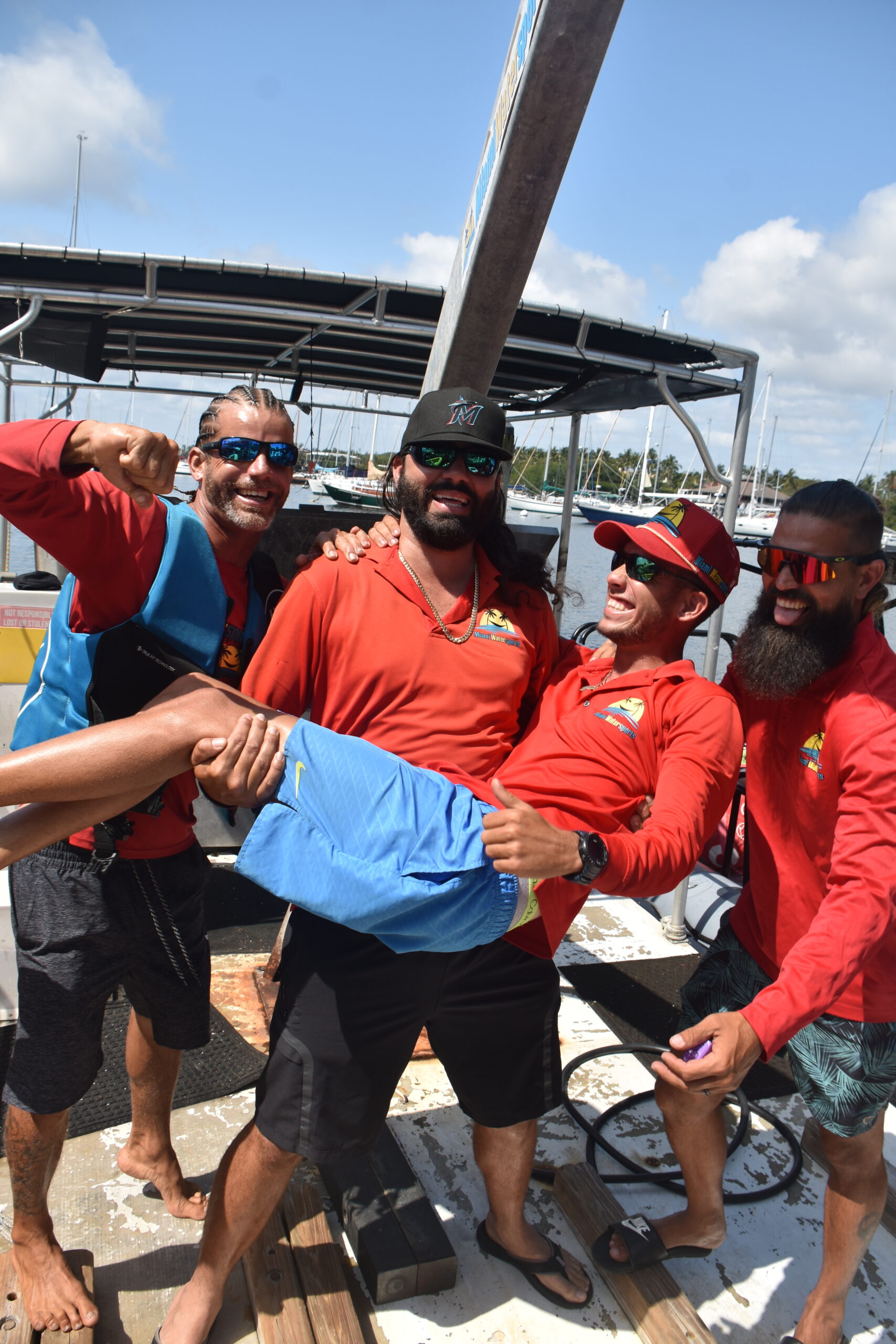
The Miami Watersports crew has run parasailing, jet ski, flyboard, and boat trips from Pier 9 at Dinner Key Marina in Coconut Grove since 2007.