
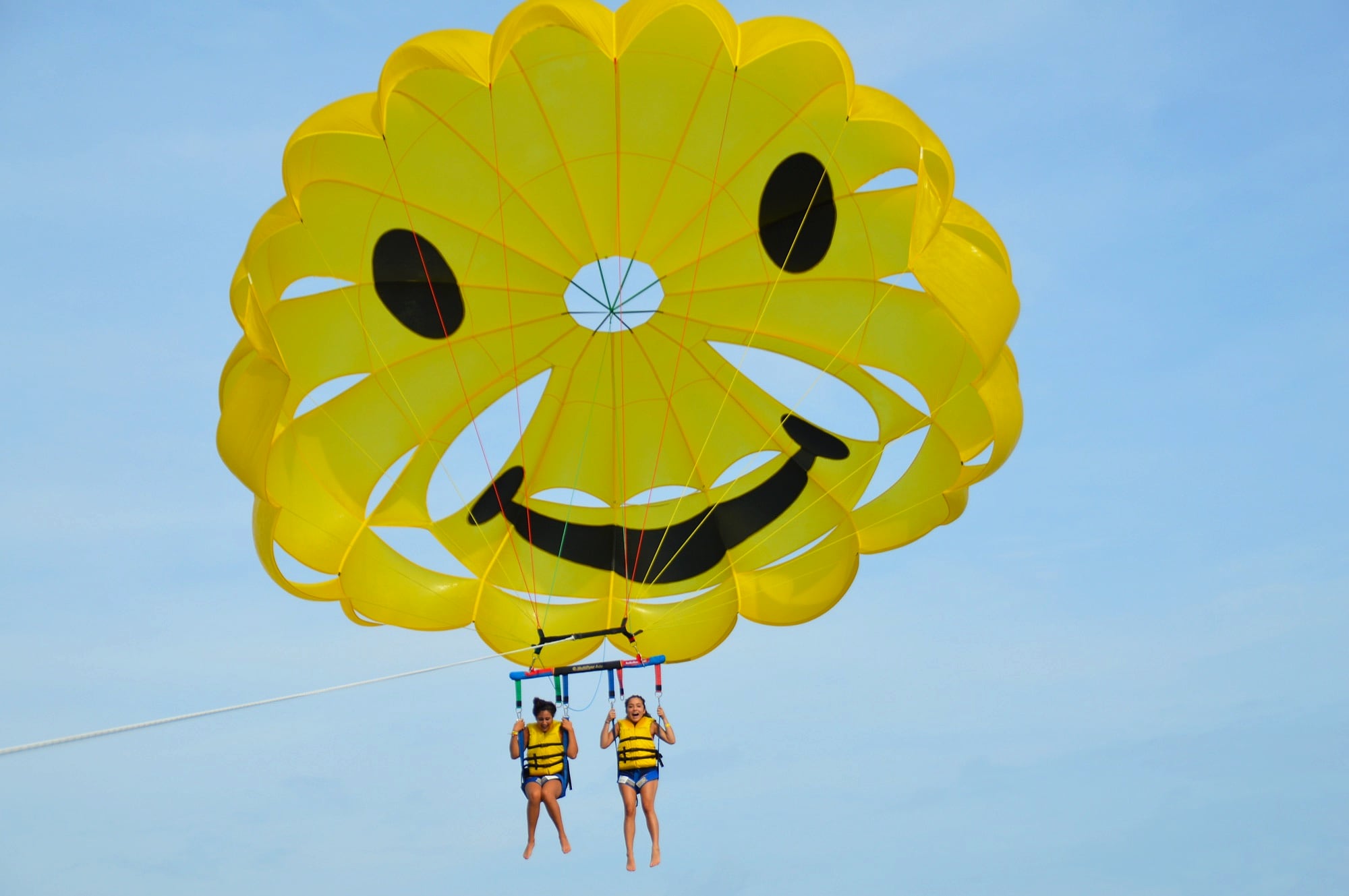
Eco-friendly parasailing in Miami is a wind-powered, low-impact way to see Biscayne Bay from up to 400 feet in the air — you ride a parachute that's lifted by the breeze behind a single boat, so the experience produces no wake near sensitive shorelines and almost no noise once you're aloft. At Miami Watersports, every flight launches and lands dry from the boat's flight deck at Pier 9, Dinner Key Marina in Coconut Grove, which keeps foot traffic off the bay's seagrass flats and shallows entirely. If you're looking for a Miami adventure that's gentle on the water it floats above, eco-friendly parasailing over Biscayne Bay is about as light a footprint as a thrill ride gets.
Key Takeaways
- Eco-friendly parasailing in Miami uses a wind-lifted parachute and a single tow boat, so the activity itself is quiet and creates no shoreline wake or in-water disturbance while you're flying.
- Miami Watersports parasailing flies up to 400 feet over Biscayne Bay, with riders aloft for roughly 6 to 10 minutes during a trip that runs about an hour.
- Takeoff and landing happen dry from the boat's flight deck, so passengers never enter the water and never set foot on the bay's seagrass beds, sandbars, or mangrove edges.
- Parasailing here is available solo, tandem, or triple; the minimum age is 5, the maximum combined weight is 450 pounds, and swimming is not required.
- Flights launch from Pier 9 at Dinner Key Marina in Coconut Grove, on the calmer, more protected Biscayne Bay side rather than the crowded open-ocean South Beach corridor.
- Lightning always grounds flights and light rain usually does not; weather or operational cancellations convert to a marina credit that is valid for 2 years, with no cash refunds.
What Makes Parasailing One of Miami's Greener Water Activities
Most motorized watersports put a powered craft directly on or under the water for the entire ride. Parasailing flips that equation. Once the parachute fills and you lift off, the only thing in the water is a single tow boat moving in a steady, straight line — and you're not in the water at all. You're suspended in the air, carried by the same wind that powers a sailboat, watching Biscayne Bay roll out beneath you.
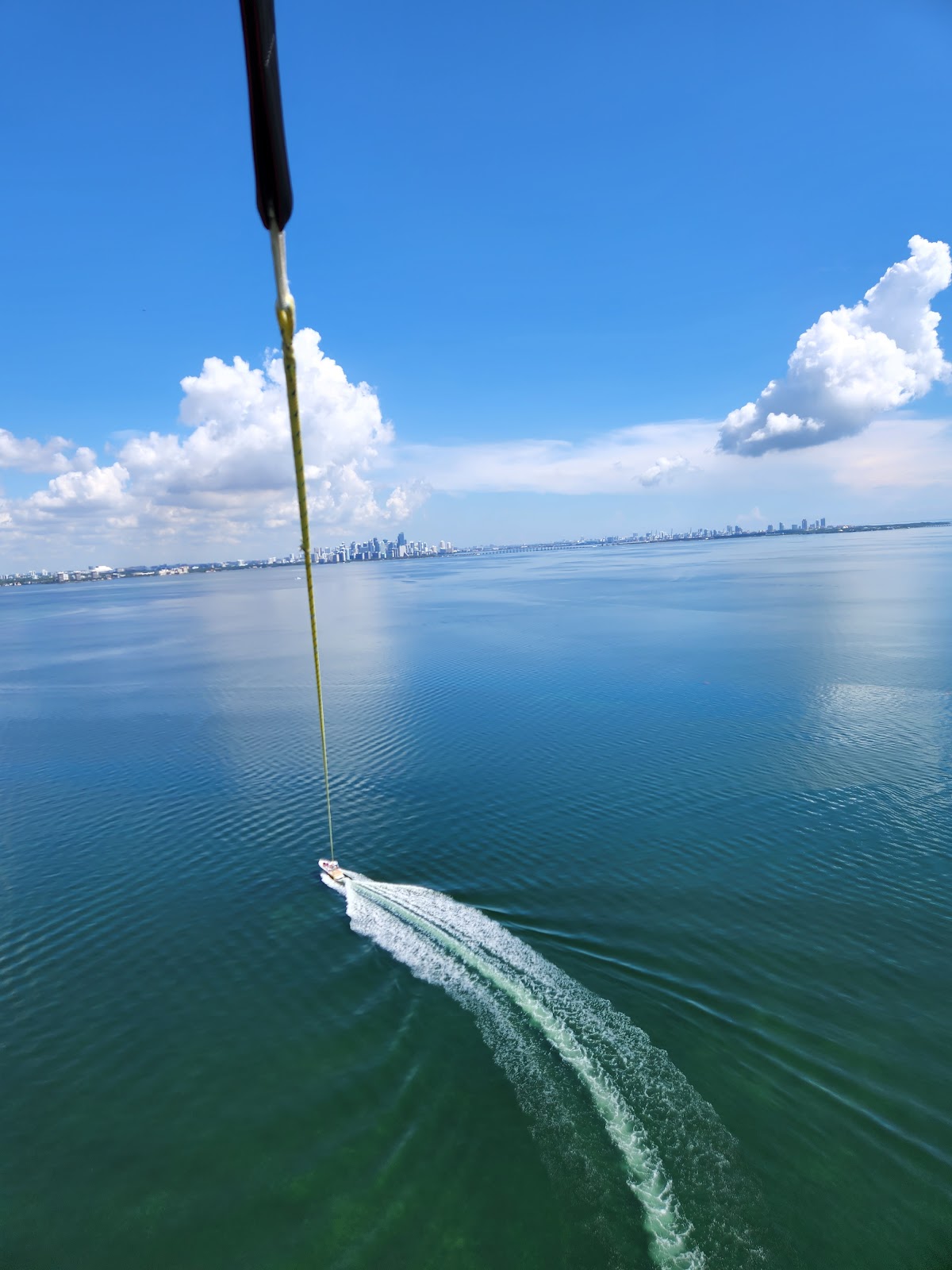
That single difference is the heart of why so many visitors search for eco-friendly parasailing in Miami. Compared with activities that idle, circle, or churn close to shore, a parasail flight spends most of its duration with the rider hundreds of feet up and the boat tracking a clean, predictable path over open, deep water away from the bay's most sensitive zones.
A wind-powered ride, not a water-churning one
The lift comes from your parachute catching the breeze, the same physics that has moved vessels across Biscayne Bay for centuries. The tow boat provides forward motion, but the spectacle — the height, the float, the silence — is delivered by the wind. There's no jet pump cutting through shallows, no repeated high-speed passes near the mangroves, and no need to anchor on a reef or seagrass flat. For travelers trying to keep their vacation footprint light, that matters.
Dry takeoff and landing keeps people out of the water
At Miami Watersports, you board the boat at the dock, ride out to the flight zone, and launch directly from the boat's flight deck. When your time aloft ends, the crew winches you back down to the same deck for a dry landing. You never wade in, never stand on a sandbar, and never disturb the bottom. Keeping passengers on the boat is good for guests who'd rather not swim — and it's good for the bay, because the most fragile habitats here live in exactly the shallow, near-shore areas that dry boarding avoids. Swimming is not required, so the activity stays self-contained from dock to dock.
Why Biscayne Bay Is the Right Place to Fly
Miami has two very different faces on the water. There's the open Atlantic and the South Beach corridor — busy, exposed, and crowded with traffic on a nice weekend. And then there's Biscayne Bay, the broad, sheltered lagoon between the mainland and the barrier islands, where Coconut Grove sits. Miami Watersports launches from the bay side, and for parasailing that's a meaningful advantage.
Calmer, more protected water than the open-ocean side
Biscayne Bay is partly shielded from open-ocean swell, so on a typical day the surface is flatter and the air over it is more predictable. Calmer water means smoother boat handling under your parachute and a more comfortable launch and landing. It's the difference between flying over a protected lagoon and flying over open chop. For first-timers, families, and anyone who wants the view without the white-knuckle bounce, the bay is the friendlier choice.
A front-row seat to a living bay
Biscayne Bay is a remarkable ecosystem hiding in plain sight next to a major city. Its seagrass meadows, shallow flats, and mangrove fringes feed and shelter an enormous amount of marine life, and the southern reaches of the bay fall within Biscayne National Park, one of the few national parks that's almost entirely underwater. From 400 feet up you get a perspective on this system that's impossible from a boat deck: the color gradients where deep channels meet shallow grass beds, the islands strung along the horizon, and on a clear day the curve of the bay running south. Flying over it — rather than dragging gear through it — is exactly the kind of look-don't-touch encounter that keeps the bay healthy for the next visitor.
The view from Pier 9 and Coconut Grove
Dinner Key Marina is one of Miami's most storied harbors, tucked into leafy Coconut Grove. From the launch point at Pier 9 you swing out over the bay with the Grove's tree canopy behind you, the downtown Miami skyline to the north, Key Biscayne and the Stiltsville houses off to the east, and open bay stretching south. It's a distinctly different panorama from the high-rise wall of South Beach, and a quieter place to start your flight. You can see the full activity details on the parasailing page.
How Eco-Friendly Parasailing Works at Miami Watersports
The experience is built to be simple, dry, and accessible, while keeping the boat's time near sensitive water to a minimum.
The flight, step by step
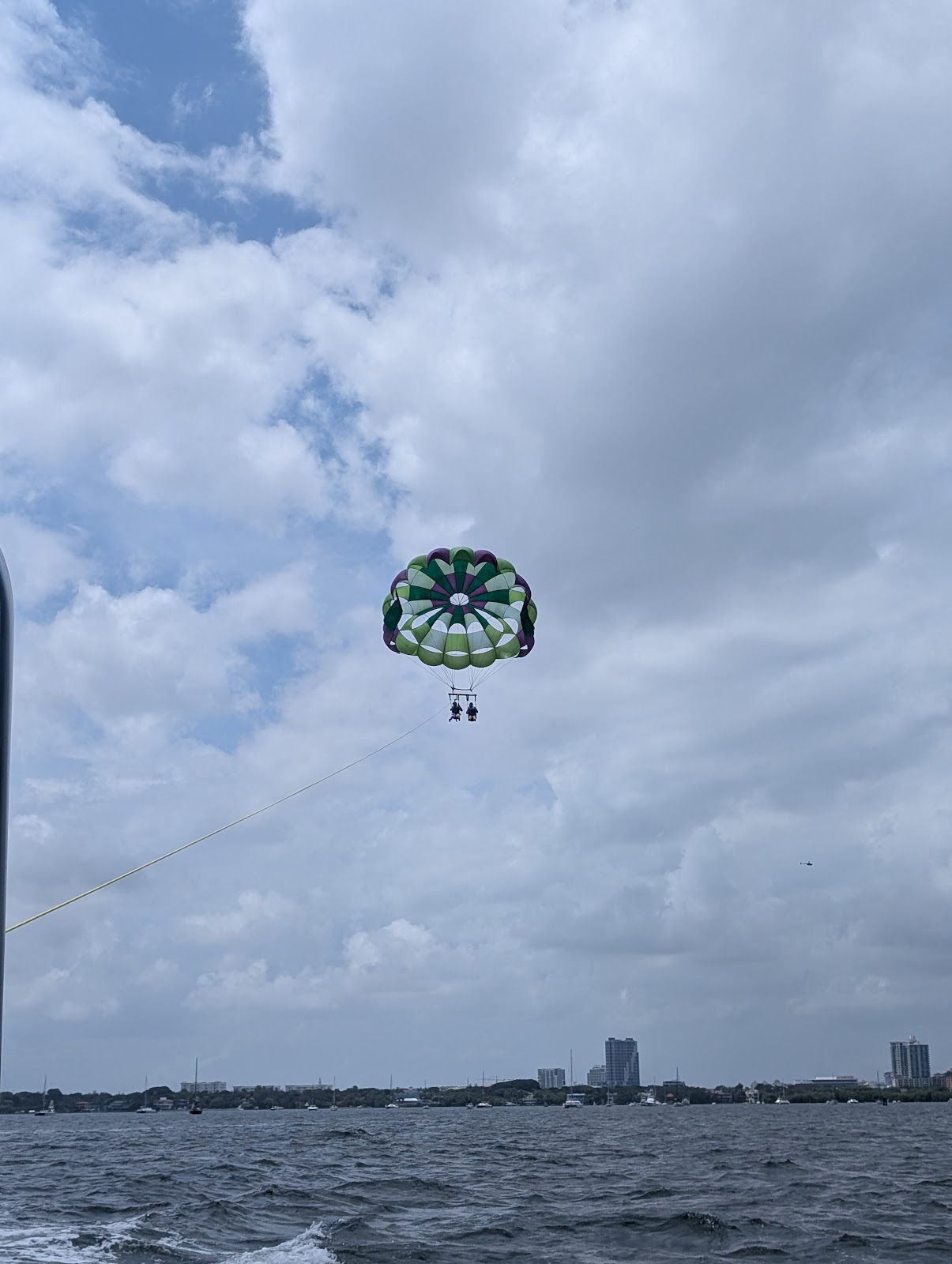
You'll check in at the marina, get a quick safety briefing, and board the boat with your group. The captain runs out to the flight zone over deeper, open bay water. There, the crew clips you into the harness, the parachute is paid out behind the boat, and the wind does the rest — you rise smoothly off the flight deck and up to as much as 400 feet. You'll spend roughly 6 to 10 minutes aloft, floating in near silence with the whole bay beneath you, before the crew reels you back to a gentle, dry landing on the deck. Plan for the full outing to take about an hour, which includes the ride to and from the flight zone and time for everyone in your party to fly.
Fly solo, tandem, or as a triple
Parasailing here is offered as a solo flight, a tandem (two riders side by side), or a triple. Tandem and triple flights are popular with couples, friends, and families because you share the moment — and the same parachute and the same boat trip — which also means fewer trips out for the same number of people. The minimum age is 5, so it's genuinely a family activity, and the maximum combined weight per flight is 450 pounds. Because boarding and landing are dry, swimming is not required for any configuration.
Who can fly
If you're 5 or older and your group fits within the 450-pound combined limit, you can fly. Riders don't need any prior experience, special fitness, or swimming ability. The crew handles all the technical work; your job is to enjoy the view. If you have questions about whether a specific group works as a tandem or triple, the team can walk you through the options when you book.
Pricing: Member Rate vs Non-Member Rate
Miami Watersports uses a hotel-style pricing structure, and the live, current numbers are always shown on the activity page rather than baked into an article that could go stale.
Here's how the two tracks work, without quoting any figures:
- Member rate. Members pay the current member pricing for the flight itself, and then add a fuel surcharge plus tax and a marina fee at check-in. It's similar to how a hotel quotes a room rate and then applies resort and tax line items at the front desk.
- Non-Member rate. Non-members pay a single all-in rate with the fees already folded in, so what you see is what you pay.
Pricing is set per rider. To see the exact, up-to-the-minute member rate and Non-Member rate for your flight configuration, check the live price on the parasailing activity page. Because those numbers update on the backend, the activity page is always the source of truth.
Safety, Weather, and Responsible Flying
A genuinely eco-friendly operation is also a safe and well-run one — the two go together, because a careful crew that respects the conditions also respects the water. Florida's bay weather can turn quickly, and Miami Watersports flies by the conditions, not the calendar.
When flights run and when they don't
The hard rule is lightning: flights never run when there's lightning in the area, full stop. Light rain, on the other hand, usually doesn't stop a trip — a passing shower is a normal part of South Florida afternoons and rarely affects a flight. The crew watches the sky and the radar before and during every outing.
Afternoon thunderstorms are a defining feature of Miami's warm season, and they tend to build in the late day. The National Weather Service Miami office is the authoritative local source for current marine conditions, lightning risk, and the daily forecast — it's worth a glance the morning of your flight. Florida's marine forecasts and boating-weather guidance are also reflected in the safety resources from the U.S. Coast Guard's boating program, which sets the national baseline for recreational-vessel safety that every responsible operator follows.
What happens if the weather cancels your flight
If Miami Watersports cancels a flight for weather or any operational reason, you receive a marina credit that is valid for 2 years. There are no cash refunds — instead, your value is preserved indefinitely so you can come back and fly when conditions cooperate. That policy takes the pressure off both the guest and the crew: nobody is tempted to push into marginal weather to avoid losing a booking, which keeps the decision firmly on the side of safety.
Florida boating safety and the rules of the bay
Parasailing operators in Florida run under state vessel and waterway regulations, and the broader framework for safe, legal boating on Biscayne Bay is maintained by the Florida Fish and Wildlife Conservation Commission, which oversees boating and waterways across the state. Florida's boater-education and vessel rules are administered through the FLHSMV safety center. If you want to understand the conditions and courtesies of sharing a busy waterway — speed zones, right-of-way, and weather awareness — the BoatUS Foundation's safety library is a good, plain-language primer. None of this is something you have to study before you fly; the captain handles navigation and compliance. But it's reassuring to know the activity sits inside a well-defined safety system.
Protecting Biscayne Bay While You Enjoy It
Choosing parasailing is already a low-impact decision, but a few simple habits make your visit even gentler on the bay — and they're the same habits that keep Miami's waters beautiful for the next person who comes to fly.
Keep the bay clean from the air and the deck
Secure your loose items before you fly — hats, sunglasses straps, phone lanyards — so nothing blows off and ends up in the water. Bring reef-safe sunscreen; the same chemicals that can harm coral and seagrass wash off swimmers and boaters and accumulate in shallow, sun-warmed lagoons like Biscayne Bay. Pack out whatever you bring on board, and resist the urge to feed any wildlife you spot from above. These are small things, but on a bay that sees this much traffic, small things add up.
Look for the wildlife below
One of the quiet rewards of parasailing over Biscayne Bay is the wildlife you can spot from altitude without disturbing anything. The bay supports manatees, dolphins, sea turtles, rays, and large schools of fish, and the seagrass beds that feed them are visible as dark patches in the otherwise clear shallows. From hundreds of feet up you're a silent observer — no engine noise reaching the animals, no wake washing over a flat. It's a reminder of why the protected, shallow parts of the bay are worth keeping people and propellers out of, and why an aerial activity is such a good fit for this water.
Pair it with other low-touch ways to see the bay
If parasailing whets your appetite for more time on Biscayne Bay, the rest of the Miami Watersports lineup includes other ways to explore that range from gentle to adrenaline-fueled. A scenic boat tour is the most laid-back way to learn the bay's geography and history at water level, while a jet ski rental lets you cover more ground under your own throttle. Whatever you add, the same etiquette applies: stay in the channels, mind the speed zones around shallows and wildlife, and treat the bay as the living system it is.
Planning Your Eco-Friendly Parasailing Trip in Miami
A little planning makes the day smoother and the flight better.
Best time of day and year to fly
Mornings tend to be calmest on Biscayne Bay, before the afternoon sea breeze builds and before the warm-season storms have a chance to develop. If you're booking in the summer months, an earlier flight is the safer bet for clear skies. Light and visibility are gorgeous on a clear morning, and the water often has its best color. Winter and spring bring drier, breezier days that are excellent for flying, with cooler air up top, so a light layer isn't a bad idea even in Miami.
What to bring and wear
Wear comfortable clothes and a swimsuit or quick-dry layer if you like, though remember you won't get wet on a standard dry flight. Bring a hat and sunglasses with a strap, reef-safe sunscreen, and a secured camera or phone if you want photos — the view from 400 feet is worth capturing, but a leash or zippered pocket keeps it out of the bay. Soft-soled shoes or sandals are fine for the boat.
How to book
You can reserve your flight on the parasailing activity page, where the live member rate and Non-Member rate are displayed for each configuration. Miami Watersports is family-owned and has operated from Coconut Grove since 2007, so if you have questions about timing, group size, or conditions, you can call (786) 713-8006 and talk to someone who actually runs the boats. Booking ahead is smart on weekends and holidays, when the bay is busiest.
Conclusion
Eco-friendly parasailing in Miami delivers the best of both worlds: a genuine, heart-in-your-throat thrill at up to 400 feet, paired with one of the gentlest footprints in motorized recreation. You fly on the wind, you launch and land dry without ever touching the water, and you take in the full sweep of Biscayne Bay from a vantage point that disturbs nothing below. Launching from Pier 9 at Dinner Key Marina, on the calm, protected bay side rather than the crowded open ocean, makes the whole experience smoother, safer, and more scenic. If you've been waiting for a Miami adventure that's as kind to the water as it is exhilarating, eco-friendly parasailing over Biscayne Bay is it. Check the live pricing and reserve your flight on the parasailing activity page, or call (786) 713-8006 — then come watch the bay unroll beneath you.
Book your Miami parasailing adventure
Member rates apply on every booking. Tax & marina fee added at check-in.
Frequently Asked Questions
About Miami Watersports
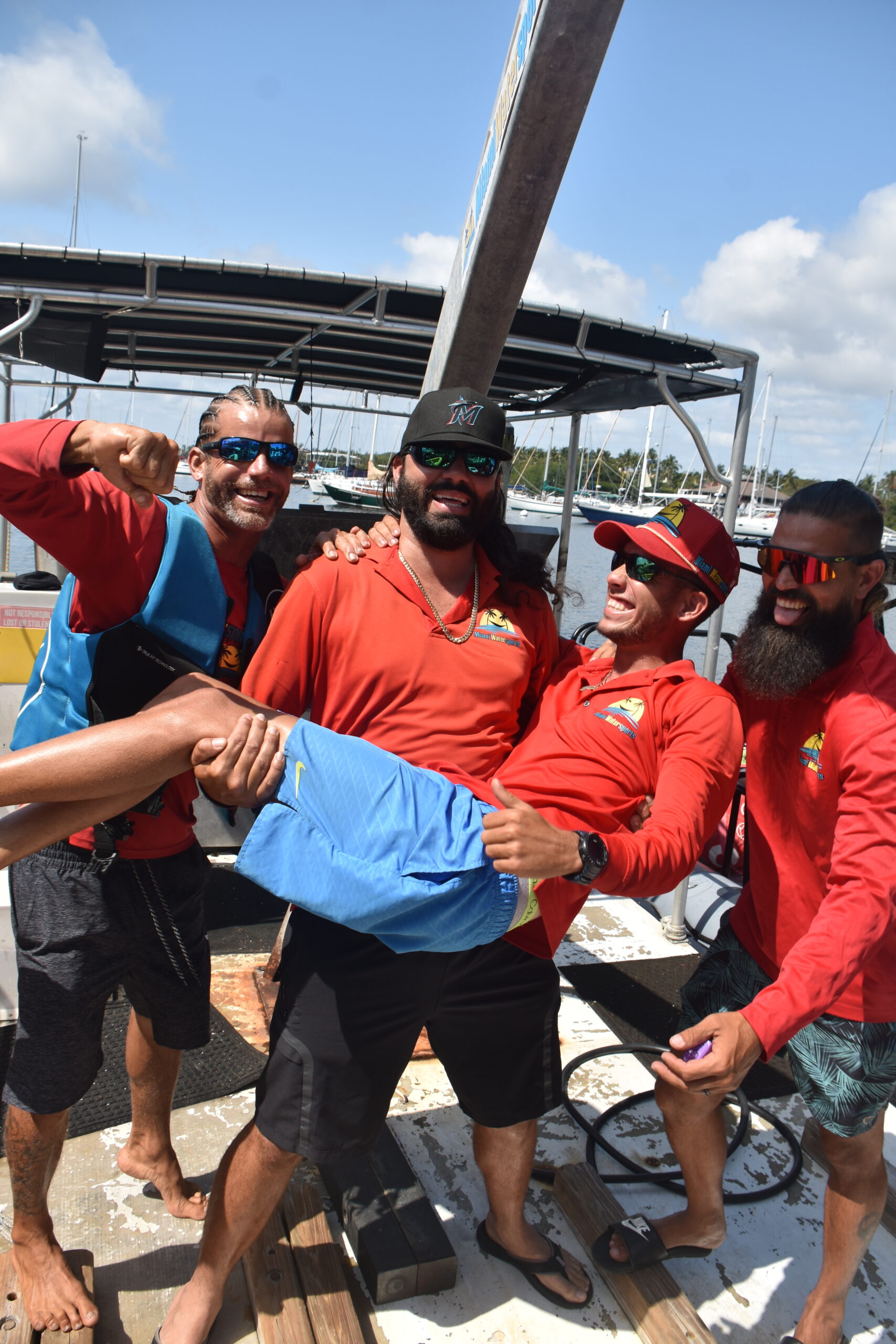
The Miami Watersports crew has run parasailing, jet ski, flyboard, and boat trips from Pier 9 at Dinner Key Marina in Coconut Grove since 2007.