
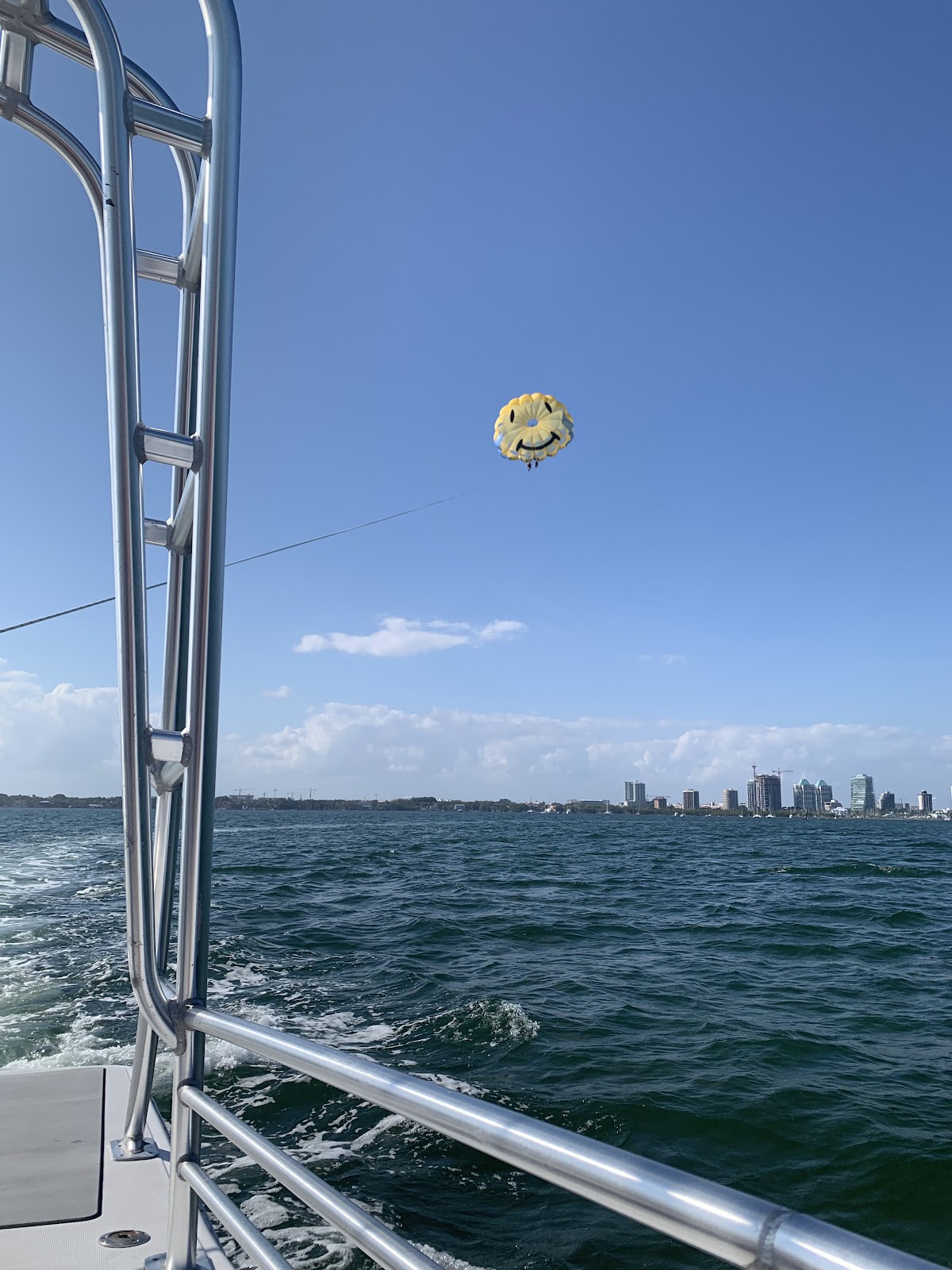
Family parasailing in Miami for groups is best experienced from the calm, protected waters of Biscayne Bay, where you launch from a boat at Pier 9 in Dinner Key Marina rather than fighting the crowded open-ocean lineups off South Beach. At Miami Watersports, you ride up to 400 feet above the bay with a dry takeoff and landing straight from the boat's flight deck, and you can fly solo, tandem, or triple — which is exactly why family parasailing in Miami groups choose this side of the city. Kids as young as five can fly with an adult, swimming isn't required, and the whole outing fits inside about an hour on the water.
Key Takeaways
- Miami Watersports launches parasailing trips from Pier 9 at Dinner Key Marina in Coconut Grove, on the calm, sheltered waters of Biscayne Bay rather than the choppier open ocean off Miami Beach.
- Riders can fly solo, in tandem (two), or in a triple (three) harness, with a maximum combined weight of 450 pounds per flight and a minimum rider age of five.
- Takeoff and landing happen dry, directly from the boat's flight deck — you do not need to know how to swim to participate.
- A typical parasailing trip runs about one hour total, with roughly 6 to 10 minutes spent aloft at altitudes reaching up to 400 feet over the bay.
- Operations are weather-dependent: lightning always grounds flights, while light rain usually does not stop a trip; weather or operational cancellations earn a marina credit that is valid for 2 years.
- Pricing is per rider, with a Member rate and a Non-Member rate; live pricing is shown on the parasailing activity page.
Why Biscayne Bay Is Built for Family and Group Parasailing
The single biggest factor in a good family parasailing day is the water you fly over, and this is where Miami's geography quietly does families a favor. Most first-time visitors picture parasailing off the Atlantic side near South Beach, where swell rolls in unbroken from the open ocean and afternoon boat traffic stacks up. Biscayne Bay is a different environment entirely. It's a broad, shallow estuary tucked behind a string of barrier islands and Key Biscayne, which means the wind has far less open water to build chop across. The result is a flatter, more forgiving ride — the kind of conditions that turn a nervous first-timer into someone grinning at 400 feet.
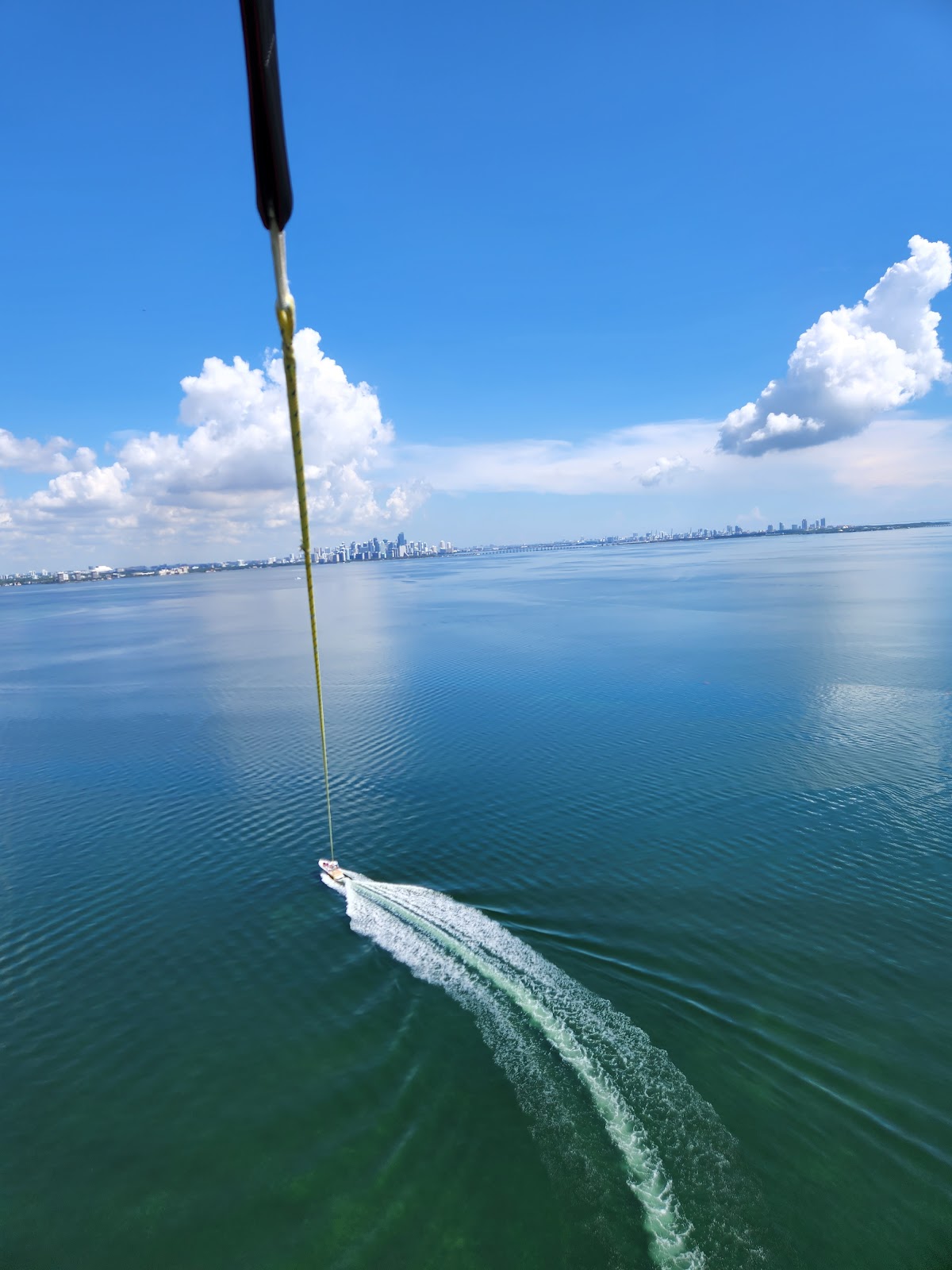
For families and groups, calmer water matters in practical ways. A steadier boat makes the deck easier for kids and grandparents to move around on. A smoother launch and a gentle descent reduce the queasy moments that can sour a child's first flight. And because the bay is protected, the operating window tends to be more reliable through the day than the exposed ocean side, where conditions can deteriorate fast in the afternoon. Biscayne Bay's ecological and recreational significance is well documented by the National Park Service through Biscayne National Park, the largest marine park in the system, which sits just to the south — the same protected, shallow-water system that makes this corner of Miami so pleasant to fly over.
The View From the Harness
From up high, the payoff is uniquely Miami. You look down on the turquoise shallows and seagrass flats that give the bay its color, the downtown skyline rising to the north, the green canopy of Coconut Grove behind you, and the channel markers and sailboats threading toward Key Biscayne. On clear days the visibility across the bay is striking — a panorama you simply don't get from the beach. For a group flying in shifts, the riders waiting on the boat get a front-row seat to watch their family and friends sail overhead, which is half the fun.
The Launch Point: Pier 9 at Dinner Key Marina
Miami Watersports operates from Pier 9 at Dinner Key Marina, 3400 Pan American Drive, in Coconut Grove. Dinner Key is one of Miami's most storied waterfronts — a former seaplane base turned into the city's largest municipal marina — and it sits in a leafy, walkable part of the Grove with parking, restaurants, and shade nearby. For a group, that's a meaningful convenience: people can arrive, regroup, grab a coffee, and settle in without the parking chaos and congestion of the Miami Beach marinas.
The Coconut Grove location also keeps the boat ride to the flight zone short and scenic. You're not burning your trip motoring out through an inlet against ocean swell; you ease out into the bay and you're flying. That efficiency is part of why a complete outing fits comfortably into about an hour, which is ideal for families managing kids' attention spans and for groups trying to cycle several people through flights in a single booking.
Getting There and What to Bring
Arrive a little early so the crew can get everyone checked in and briefed without rushing. Bring sunglasses with a strap, reef-safe sunscreen, a hat you can secure, and a phone or camera if you want your own shots — though the best photos usually come from the boat looking up. Light, comfortable clothing is fine; you won't get soaked on a standard flight since takeoff and landing are dry, but a little spray is part of being on the water. Leave loose valuables in the car or a zipped bag.
How Parasailing Works at Miami Watersports
Parasailing here is a boat-based, winch-controlled flight. You're strapped into a harness attached to a large canopy (the parasail), and the canopy is connected to the boat by a long towline fed off a powered winch on the flight deck. As the boat moves forward, the crew lets out the line and you rise gently off the deck into the air. To bring you down, they simply reel the line back in until you settle softly onto the deck again. This is what "dry takeoff and landing" means — you start and finish standing on the boat, not in the water.
That mechanism is the heart of why parasailing is so family-friendly compared to many watersports. There's no paddling, no balancing, no swimming, and no real athletic skill required. You sit back in the harness and enjoy the ride. Because of the winch system, the crew controls your altitude precisely and can keep you lower for a more relaxed flight or send you toward the full height for the big-view experience.
Solo, Tandem, and Triple Flights
One of the things that makes this such a natural fit for family parasailing Miami groups is the flexibility in how you fly:
- Solo — one rider in the harness, for the independent flyer who wants the experience to themselves.
- Tandem — two riders side by side, the most popular choice for couples, a parent and child, or two friends who want to share the moment.
- Triple — three riders together, great for a small family flying as a unit or three friends who don't want to split up.
The right configuration often comes down to weight and comfort. The maximum combined weight per flight is 450 pounds, so the crew will help you sort out who flies with whom to keep each flight within that limit and balanced well. For a younger child, flying tandem or triple with a parent is reassuring and keeps the family together in the air.
Altitude, Time Aloft, and the Overall Trip
On a standard outing you'll spend roughly 6 to 10 minutes aloft, reaching up to 400 feet above Biscayne Bay, inside a complete trip of about an hour. That hour includes boarding, the safety briefing, the ride out to the flight zone, cycling riders through their flights, and the trip back to the dock. It's a tidy, well-paced experience — long enough to feel like a real adventure, short enough that it doesn't eat your whole day or wear out the kids.
Is Parasailing Safe for Kids? Ages, Weights, and Requirements
For families, the safety questions come first, so here are the firm facts. The minimum age to participate is five years old. The maximum combined weight per flight is 450 pounds. Swimming is not required, because you take off and land dry on the boat. Those three rules — age five and up, 450 pounds combined, no swimming needed — are the boundaries that define who can fly, and they're what make this accessible to most families.
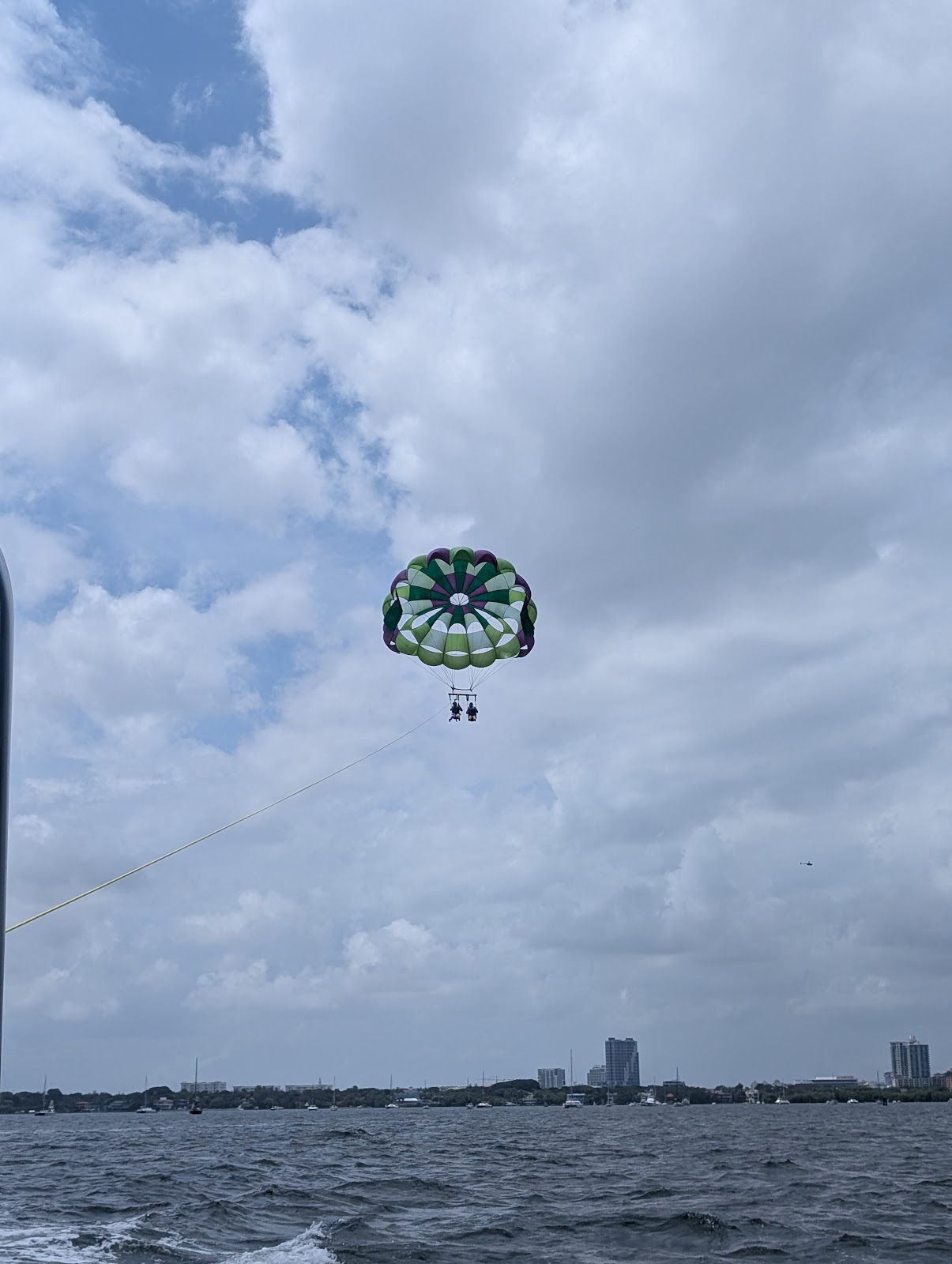
Beyond the numbers, the experience is designed to be calm and controlled. The crew runs a safety briefing before anyone flies, fits and checks every harness, and controls the towline and altitude from the boat the entire time. A nervous first-timer — child or adult — can start lower and stay there, and the crew is right there on the deck the whole flight.
It's worth understanding the broader safety context of being out on the water in Florida. Recreational boating safety standards and the equipment carried on passenger vessels are guided by the U.S. Coast Guard's boating safety program and Florida's own rules through the Florida Fish and Wildlife Conservation Commission's boating and waterways division. The boater education and safe-vessel-operation resources published by the Florida Highway Safety and Motor Vehicles boating safety center are a good primer for anyone curious about how vessel operation is regulated in the state. You don't need to study any of this to fly — the crew handles the operation — but it's part of why a professionally run, boat-based parasail trip on calm water is a sensible choice for a family outing.
Pregnancy, Mobility, and Medical Considerations
Parasailing is gentle, but it isn't right for everyone on every day. Anyone who is pregnant, recovering from a recent surgery or injury (particularly back, neck, or shoulder), or who has a heart condition should sit a flight out or check with a doctor first. The harness supports your body well, but takeoff and landing still involve a small lift and settle. If a member of your group can't fly, they can still ride along on the boat and be part of the day — which is one more reason groups gravitate to this setup.
Planning a Group Parasailing Trip in Miami
Groups are where this experience really shines, because the boat becomes the gathering point and everyone shares the same trip. Whether you're organizing a birthday, a bachelorette or bachelor outing, a family reunion, a corporate team day, or just a big crew of friends, a few planning habits make the day smooth.
Cycle Your Flyers Smartly
Since each flight holds up to three riders within the 450-pound combined limit, plan in advance who flies together. Pairing a lighter child with an adult, or grouping friends by size, lets the crew move efficiently and keeps everyone's time on the boat fun. While one group is aloft, the rest are cheering and shooting photos from the deck — the waiting is genuinely part of the experience, not dead time.
Book Together and Book Ahead
Reserve as one party so the crew can plan the trip around your group's size and timing. Miami is busiest on weekends, holidays, and through the spring and summer high season, so popular morning slots fill first. Booking ahead also locks in your window before the daily schedule tightens. You can see availability and start a reservation on the parasailing activity page.
Combine Activities for a Bigger Day
Many groups turn parasailing into the centerpiece of a half-day on the water and add another activity around it. If your crew wants more time on the bay, pairing parasailing with jet ski rentals or a relaxed boat tour gives everyone something to do and suits mixed groups where not everyone wants to fly. It's an easy way to keep a large, varied group — different ages, different appetites for adventure — happy on the same outing.
Member Rate vs. Non-Member Rate: How Pricing Works
Pricing at Miami Watersports works a bit like a hotel, with two tiers. There's a Member rate and a Non-Member rate, and pricing is charged per rider. Members fly at the lower member pricing and add a fuel charge plus a tax and marina fee that's paid at check-in at the marina. Non-Members pay a single all-in rate with nothing additional to settle at the dock.
Because rates and fees can change with season and conditions, we don't publish numbers in this article — they'd go stale. Instead, the live, current pricing for both tiers is always shown on the parasailing activity page, so you're seeing today's real numbers when you book. For a group, the per-rider structure makes it easy to total up your party, and choosing the right tier for how often your family gets on the water is part of planning the trip.
Weather, Seasons, and the Best Time to Fly
Miami's flying conditions are genuinely good year-round, but the rhythm of the day and the seasons is worth understanding so you can pick a great window.
Reading the Day
Mornings are often the sweet spot. Winds tend to be lightest early, the bay is at its glassiest, and the light is beautiful for photos. As the day warms, Florida's sea-breeze pattern can build afternoon clouds and, in summer, pop-up thunderstorms. That's not a reason to avoid afternoons — plenty of trips run beautifully all day — but if you have flexibility, a morning slot stacks the odds in your favor for the calmest ride.
Our operating policy is simple and safety-first: lightning always grounds flights, no exceptions. Thunderstorms move through Miami quickly in summer, so a morning storm often clears to a perfect afternoon, and vice versa. Light rain usually does not stop a trip — a passing shower is part of life on the bay. The crew makes the call based on real conditions on the water. Before you head out, it's smart to glance at the local forecast from the National Weather Service's Miami office, which is the authoritative source for marine and thunderstorm outlooks in South Florida. The BoatUS Foundation's safety and education resources are another solid reference for understanding how weather shapes a day on the water.
Seasons on Biscayne Bay
Winter and spring (roughly November through May) bring drier air, lower humidity, fewer afternoon storms, and comfortable temperatures — a fantastic stretch for first-time and family flyers. Summer is warm and lively with the best water temperatures and longer daylight, balanced against the daily chance of brief afternoon thunderstorms. There isn't a bad season to parasail in Miami; there are just different flavors of a great day, and the calm bay setting keeps conditions workable when the open ocean might not cooperate.
If Weather Cancels Your Trip
Here's the part families appreciate most: if a trip is canceled for weather or for operational reasons on our end, you receive a marina credit that is valid for 2 years. There are no cash refunds, but that credit holds its value indefinitely, so a rained-out day simply becomes a flight on another visit. For travelers planning around a tight itinerary, that no-expiration credit takes the gamble out of booking — you're never out your trip because the sky didn't cooperate.
What to Expect on the Day: A Walk-Through
To set expectations for a first-time group, here's how a typical outing flows from arrival to dock.
You'll check in at Pier 9, where the crew confirms your party, sorts out flight groupings by weight, and collects any member fuel-and-marina fee due at the marina. Everyone gets a safety briefing covering how takeoff and landing work, the simple hand signals, and what to do up top (mostly: relax and enjoy it). The boat heads out into the bay — a short, pretty ride — to the flight zone.
Then the flying starts. The crew harnesses up the first riders, feeds out the towline from the winch on the flight deck, and you lift off dry and smooth. After your 6 to 10 minutes aloft, they reel you back down to a soft landing on the deck, and the next group goes up. Once everyone has flown, the boat cruises back to the dock. From start to finish, plan on about an hour. It's relaxed, well-paced, and designed so that even the most anxious member of the family steps off the boat wanting to do it again.
Why Families and Groups Choose This Side of Miami
Put it all together and the case for family parasailing Miami groups making the trip to Coconut Grove is clear. You fly over the calm, protected, beautifully colored waters of Biscayne Bay instead of battling open-ocean chop. You launch from Pier 9 at Dinner Key Marina, an easy, scenic, parking-friendly part of the city. You can fly solo, tandem, or triple, with kids as young as five flying alongside a parent, no swimming required, dry takeoff and dry landing. The trip is a tidy hour, the crew runs it safety-first, and a weather cancellation turns into a marina credit that is valid for 2 years rather than a loss.
That combination — calm water, flexible flights, family-friendly rules, and a fair weather policy — is exactly what large, mixed-age, first-time-friendly groups are looking for in Miami.
Ready to Fly Over Biscayne Bay?
If you're planning a family outing, a group celebration, or a first-time adventure, parasailing from Pier 9 in Coconut Grove is one of the most memorable hours you can spend in Miami. Gather your party, pick a morning slot for the calmest ride, decide who's flying solo, tandem, or triple, and book together so the crew can plan the trip around your group. Whether you're booking at the Member rate or the Non-Member rate, you'll see today's live pricing and current availability on our parasailing activity page — and if the weather turns, your marina credit is valid for 2 years. Come fly with us over Biscayne Bay, and bring the whole crew.
Book your Miami parasailing adventure
Member rates apply on every booking. Tax & marina fee added at check-in.
Frequently Asked Questions
About Miami Watersports
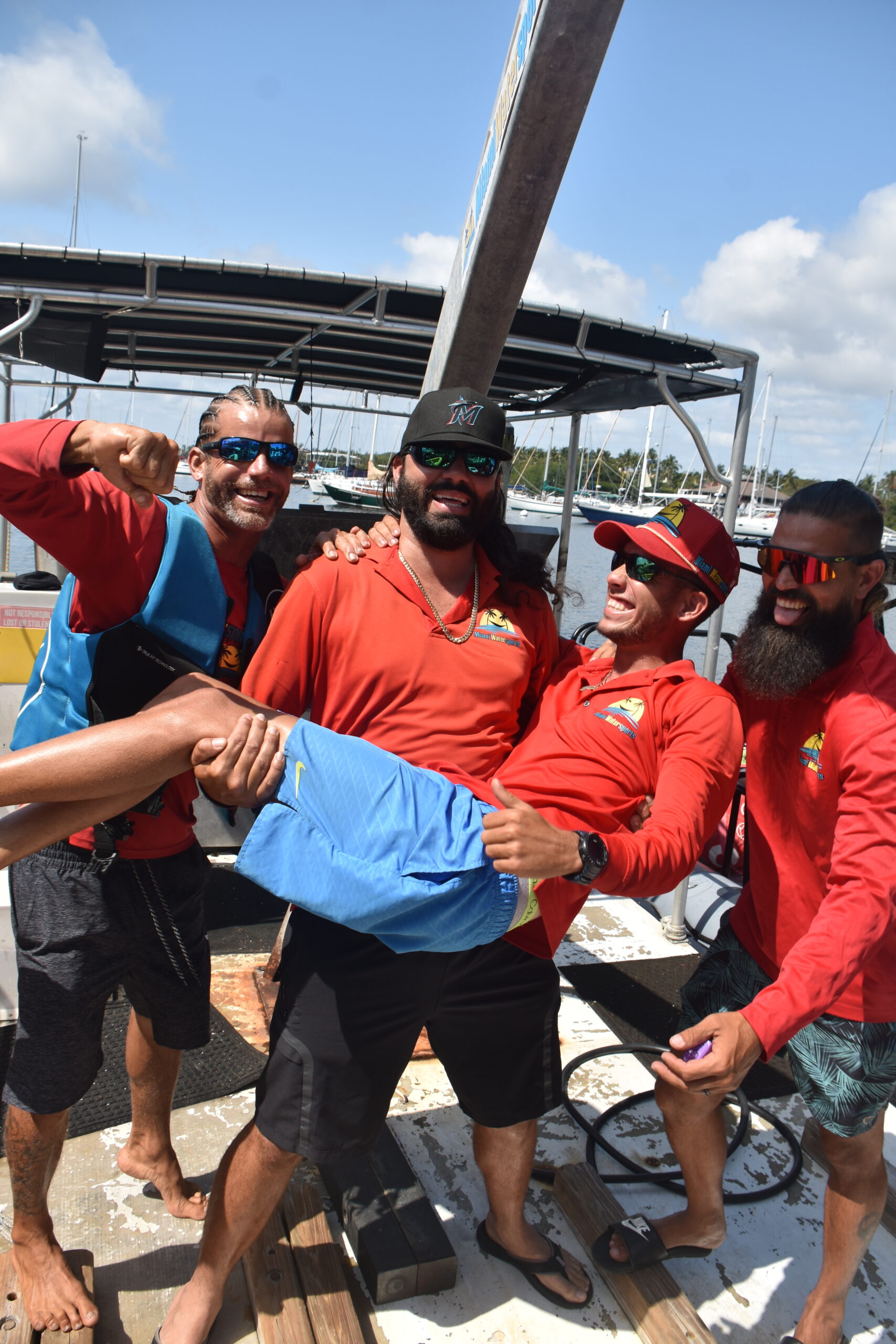
The Miami Watersports crew has run parasailing, jet ski, flyboard, and boat trips from Pier 9 at Dinner Key Marina in Coconut Grove since 2007.