
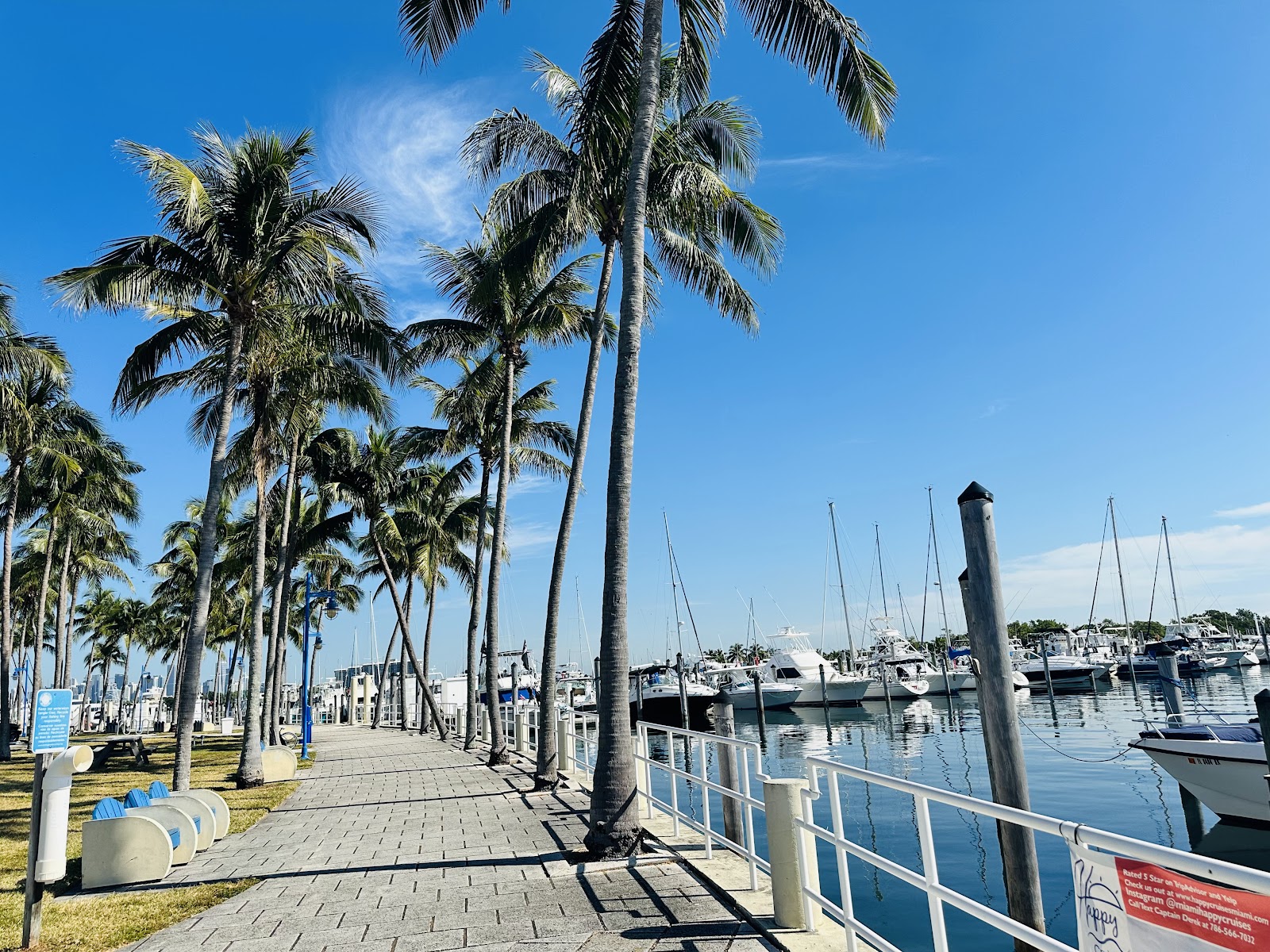
If you want the short version of jet ski rules and etiquette in Florida: keep your distance from other vessels and swimmers, ride at idle speed in marked zones, always know who has the right of way, never run in lightning, and treat the seagrass and wildlife of Biscayne Bay like they belong to everyone — because they do. On the calm, protected water off Pier 9 at Dinner Key Marina in Coconut Grove, good etiquette is what separates a relaxed Miami ride from a tense one. This guide covers the written law, the unwritten courtesies, and the specific local detail that makes a guided free-ride on Biscayne Bay feel effortless.
Whether it's your first time on a personal watercraft or your fiftieth, the bay rewards riders who read the water and respect the people on it. Here is everything you need to ride like a local.
Key Takeaways
- In Florida, anyone born on or after January 1, 1988 must have a Boating Safety Education ID card to legally operate a personal watercraft, and you must carry photo ID alongside it on the water.
- The "give-way" vessel must yield, but the practical rule of thumb on a jet ski is simple: assume you are the one who must avoid everyone else, because you are the most maneuverable craft out there.
- Florida law requires a U.S. Coast Guard–approved life jacket worn at all times on a personal watercraft, plus the engine cut-off lanyard attached to the rider's wrist or vest.
- Idle, "no-wake" speed means the slowest speed at which you can still steer — this applies near marinas, swimmers, anchored boats, manatees, and within a set distance of shore and other vessels.
- Biscayne Bay is a shallow, seagrass-rich estuary and part of a protected national park system; running aground in grass or chasing wildlife can damage the ecosystem and carry penalties.
- Miami Watersports jet ski rides launch from Pier 9 at Dinner Key Marina on the protected Coconut Grove side of Biscayne Bay — calmer and friendlier for new riders than the crowded open-ocean South Beach side.
Why Biscayne Bay Is the Right Place to Learn the Rules
Most people picture Miami jet skiing as carving through choppy ocean swells off South Beach, dodging cruise ships and a hundred other rental skis. That's one version of it — crowded, wavy, and unforgiving of mistakes. The Coconut Grove side of the city is a different world.
Biscayne Bay is a broad, shallow estuary sheltered from the open Atlantic by a string of barrier islands and the Florida Keys to the south. The water off Dinner Key Marina sits inside that protection, so it stays flatter and more predictable than the ocean side, especially in the mornings before the afternoon sea breeze builds. That calm is exactly why it's the best classroom for jet ski etiquette: when the water cooperates, you can actually focus on the things that matter — spacing, right of way, and reading other vessels — instead of just hanging on.
Launching from Pier 9 puts you minutes from open riding water without the bottleneck of inlet traffic. You'll share the bay with sailboats out of the Coconut Grove anchorage, kayakers, paddleboarders, the occasional commercial tour, and other watersports riders. That mix is precisely why courtesy isn't optional here. The bay is communal, and the riders who understand that are the ones invited back.
If you want to see how a guided ride here works, the jet ski activity page lays out the format: a 60-minute guided free-ride with a lead rider who sets the route and pace.
The Legal Foundation: Florida Jet Ski Rules You Must Follow
Etiquette starts with the law. In Florida, a personal watercraft is legally a Class A motorized vessel, and that means real rules apply — not suggestions. Here's the framework every rider should know before they touch the throttle.
Boater Education and Age Requirements
Florida requires that anyone born on or after January 1, 1988 complete an approved boating safety course and carry a Boating Safety Education ID card to operate any motorized vessel, including a jet ski. You can read the official requirement directly from the Florida Highway Safety and Motor Vehicles boating page and the Florida Fish and Wildlife Conservation Commission, which administers boating law and enforcement statewide.
On a Miami Watersports guided ride, age rules are built into how we run the activity: the driver must be at least 18, you must be 18 or older to rent and ride solo, and passengers must be at least 6. Because the ride is guided rather than a self-serve rental, a lead rider handles navigation and keeps the group inside legal and safe zones — but knowing the underlying law makes you a sharper, more confident operator.
Life Jackets and the Engine Cut-Off Lanyard
Two pieces of safety equipment are non-negotiable on a personal watercraft in Florida. First, every person aboard must wear a U.S. Coast Guard–approved life jacket — not stowed, worn. Second, the engine cut-off switch lanyard must be attached to the operator (wrist or life jacket). If you fall off, the lanyard kills the engine so the ski doesn't circle back at you or run loose into traffic.
The U.S. Coast Guard's boating safety program is the national authority on this equipment, and its guidance is the baseline every reputable operator follows. We supply approved life jackets and brief every rider on the cut-off lanyard before launch, so you're never guessing.
Reckless Operation Is a Real Offense
Florida treats reckless jet ski operation as a citable — and in serious cases, criminal — offense. That includes weaving through congested traffic, jumping the wake of another vessel within a set distance, chasing or harassing wildlife, and operating at high speed near swimmers or anchored boats. The point isn't to scare you; it's to underline that the courtesies below aren't just polite. Many of them are codified, and Florida wildlife officers patrol Biscayne Bay.
Right of Way on the Water: Who Yields to Whom
The single most useful concept in jet ski etiquette is right of way — what boaters call the "rules of the road" on water. Memorize a few principles and most on-water tension disappears.
The Core Right-of-Way Hierarchy
In general terms, the less maneuverable a vessel is, the more right of way it has. That puts you, on a nimble jet ski, near the bottom of the priority list — which is good, because it makes your job simple. In practice:
- Sailboats under sail, paddlers, and anchored vessels generally have the right of way over a powered jet ski. Give them a wide berth.
- Larger commercial and tour vessels are slow to turn and stop. Never cut in front of one; pass well behind it.
- When two powered vessels approach head-on, both should alter course to starboard (turn right) and pass port-to-port, like cars on a two-way road.
- When crossing paths, the vessel on your right (your starboard side) is the "stand-on" vessel and holds course; you give way.
- When overtaking another vessel, you are always the give-way craft — pass at a safe distance and don't throw a wake across their bow.
The BoatUS Foundation publishes accessible explainers on these navigation rules in its expert advice library, and they're worth a read before any day on the water.
The Practical Jet Ski Rule
Here's how locals actually think about it: assume you must avoid everyone. A jet ski accelerates, turns, and stops faster than almost anything else on the bay, so the smart, safe, and courteous move is to be the one who adjusts. Yielding early and obviously — a clear course change well in advance — tells other captains you've seen them. Ambiguous, last-second maneuvers are what cause near-misses and bad blood on the water.
No-Wake Zones, Safe Distances, and Speed Etiquette
Speed is where most jet ski etiquette violations happen, and where the law is most specific.
Understanding Idle and No-Wake Speed
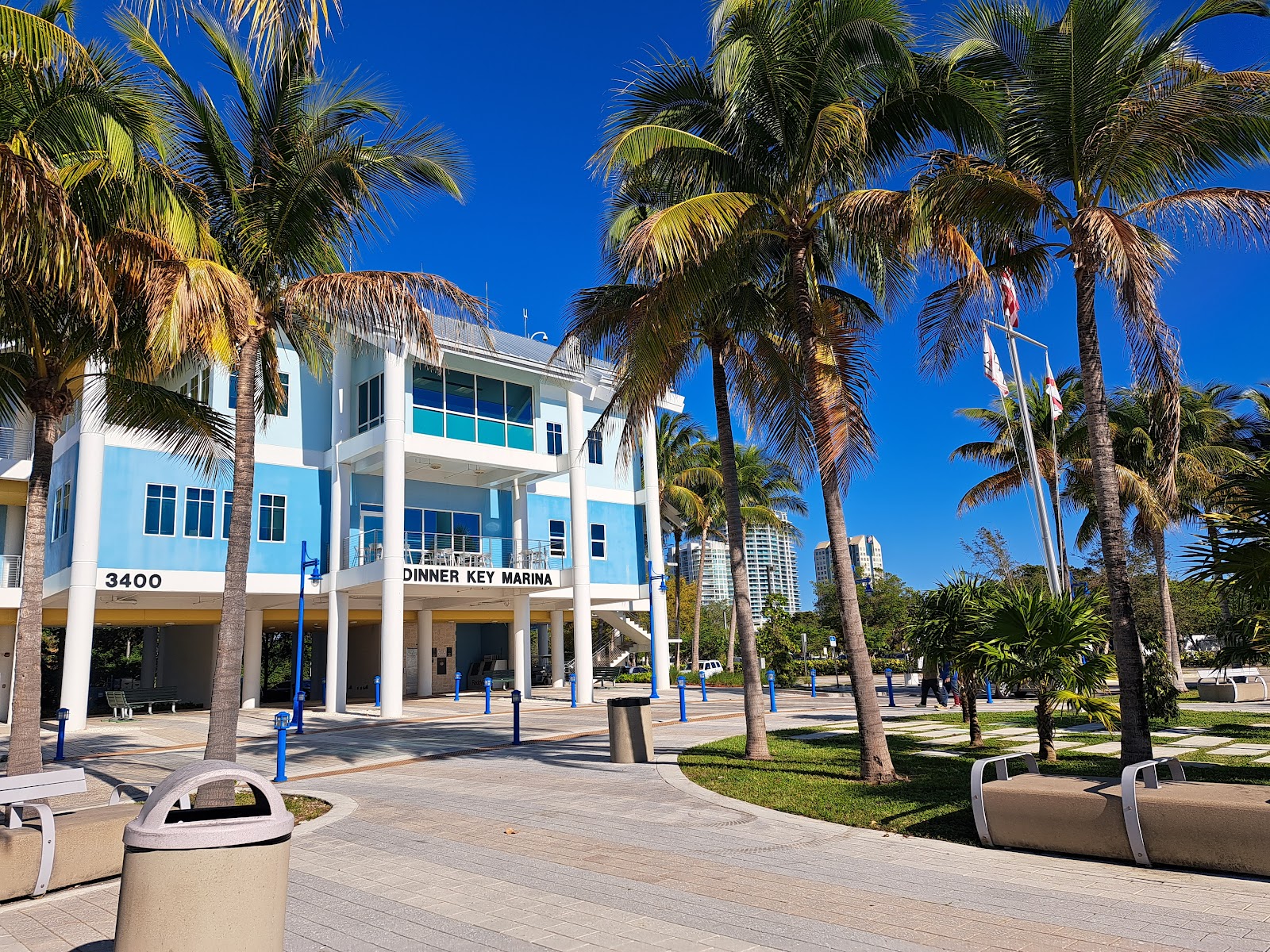
"No-wake" or "idle speed" means the slowest speed at which your craft can still maintain steering — essentially, no wake behind you. Florida applies it near marinas, mooring fields, bridges, narrow channels, swimming areas, and within posted distances of shore and other vessels. As you leave Dinner Key Marina, the area around the docks and the Coconut Grove anchorage is exactly this kind of slow zone. Idle out, get clear of moored boats and paddlers, and only then open up where it's legal and safe.
The Distance Buffer
Florida law sets minimum distances you must keep from other vessels, persons in the water, and structures when operating above idle speed. The exact figure is part of the boater education curriculum, but the etiquette is even simpler: more space is always better. On a jet ski, your wake is your signature. Throwing a wall of water at a kayaker, a paddleboarder, or a family on an anchored boat is the fastest way to earn a reputation — and possibly a citation. Pass anchored boats and swimmers at idle, and resume speed only once you have open water.
Wake Awareness
Your wake keeps traveling long after you've passed. Near the marina, where boats are rafted and people are stepping between docks and dinghies, even a moderate wake can rock a vessel hard enough to spill coffee — or a person. Be the rider who slows down before it's a problem. Veteran captains notice, and on a bay this social, your reputation rides with you.
Wildlife and the Bay: Riding in a Protected Ecosystem
Biscayne Bay isn't just scenery; it's a living estuary and part of a protected national park system. How you ride directly affects it.
Manatees and the Seagrass Beds
The bay's shallow flats are carpeted with seagrass — the foundation of the whole ecosystem and the primary food source for manatees. Running a jet ski through shallow grass can scar the beds with prop and hull damage that takes years to heal, and it puts you at risk of running aground. Stay in deeper, marked water, and if you see a manatee — a dark, slow shape just under the surface — cut to idle and give it room. Manatees are protected, and harassing or striking one carries serious penalties. The National Park Service explains the bay's habitat and protections at the Biscayne National Park site.
Birds, Boaters, and the Anchorage
The Coconut Grove anchorage and the bay's mangrove edges are full of life — wading birds, diving pelicans, and the liveaboard community on anchored sailboats. Don't buzz the anchorage, don't chase birds for a photo, and keep noise and wake down near shorelines. The Florida Fish and Wildlife Conservation Commission enforces wildlife protections on these waters, and rangers do patrol. Riding gently here isn't just legal compliance; it's what keeps the bay worth riding on.
On a guided ride, your lead rider already knows where the grass flats and protected zones are and routes the group around them. That local knowledge is one of the underrated benefits of going guided rather than renting blind.
Weather, Conditions, and Knowing When Not to Ride
Part of good etiquette — and good judgment — is recognizing when the bay is telling you to wait.
Reading Miami's Weather Rhythm
South Florida weather follows a daily pattern, especially from late spring through early fall. Mornings are often glassy and calm; by early afternoon, the sea breeze and convective storms can build fast. That's why morning rides on Biscayne Bay are frequently the smoothest of the day. Before any ride, it's worth a glance at the National Weather Service Miami forecast, which tracks the marine conditions specific to Biscayne Bay.
The Hard Line on Lightning
This one is absolute: jet skis never run in lightning. Open water is the worst place to be in an electrical storm, and no ride is worth the risk. Light rain is usually fine — Miami gets brief, passing showers constantly, and they often clear within minutes — but lightning grounds everyone, no exceptions. We watch the radar, not the clock.
How Weather Cancellations Work
If we have to cancel or cut a ride short for weather or operational reasons, you're protected. Weather and operational cancellations earn a marina credit that is valid for 2 years, so your ride simply moves to a better day. We don't issue cash refunds for weather, but the credit is yours to use whenever conditions cooperate. That policy exists so no one feels pressured to ride in marginal conditions just to "use it or lose it." For anyone weighing a backup, calmer-water option, the boat tour is a gentle alternative on lighter days.
What to Expect on a Guided Biscayne Bay Ride
Knowing the format takes the mystery out of your first ride and lets the etiquette become second nature.
Single vs. Double, and Who Rides
A Miami Watersports jet ski ride is a 60-minute guided free-ride on Biscayne Bay. You can choose a Single (1-seater, with a maximum weight of 250 pounds) or a Double (2-seater, with a maximum combined weight of 400 pounds). The driver must be 18 or older, you must be 18 or older to rent and ride solo, and passengers must be at least 6. Every rider must be comfortable in the water, because swimming ability is required — you'll be wearing a life jacket, but the open bay is not a pool.
A refundable security hold is placed at check-in and released after the ride, standard practice that simply covers the watercraft while it's in your hands.
How the Guided Format Helps You Ride Right
Because the ride is guided, a lead rider sets the route, controls the pace, and keeps the group inside safe, legal water — away from grass flats, anchored boats, and slow zones. New riders get the confidence of structure; experienced riders get local knowledge of where the bay opens up. Either way, the etiquette in this guide gets demonstrated in real time, which is the best way to learn it.
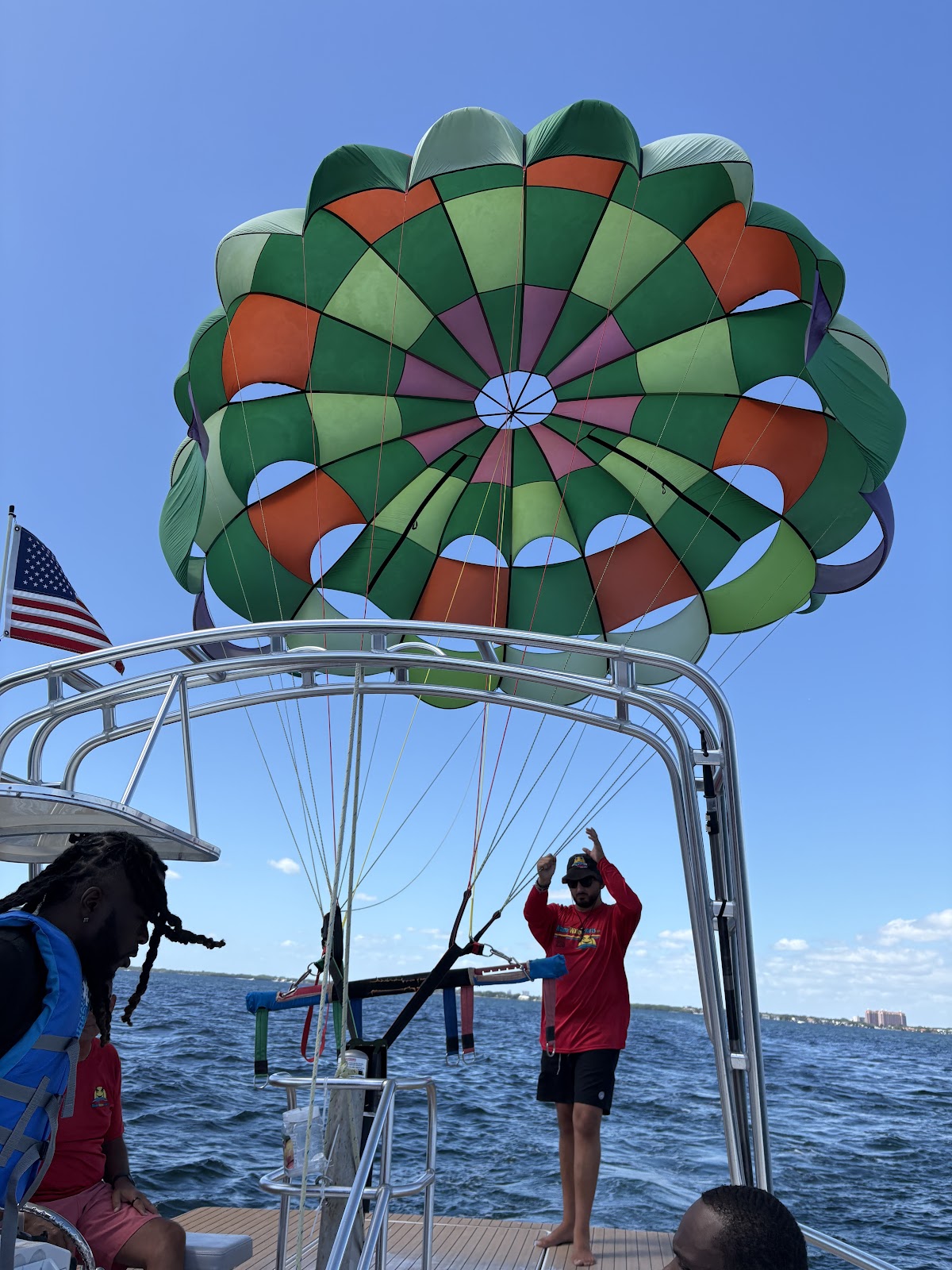
If a jet ski feels like a lot for a first outing, the calmer parasail experience gives you the bay views with none of the throttle, and many guests pair the two over a single visit.
Member Rate vs. Non-Member Rate: How Pricing Works
Miami Watersports prices its jet ski rides the way a good hotel prices rooms: there's a member rate and a Non-Member rate, and which one applies to you depends on your status — not on which booking site you used.
Here's the simple version. Non-Members pay an all-in rate — one transparent price for the ride. Members get current member pricing, and at the marina add a fuel charge plus a tax and marina fee at check-in. Pricing is per rider, so each person on the water is priced individually rather than as a flat "boat" charge. Both paths get the same guided 60-minute experience on the same bay; the difference is purely in how the rate is structured.
We don't publish dollar figures in articles like this one, because rates can change and we never want you working from stale numbers. The live, current price always shows on the jet ski activity page — that's the single source of truth. Check there for today's member and Non-Member pricing before you book.
Putting It All Together: Ride Like a Local
Master jet ski rules and etiquette in Florida and the whole experience changes. You stop white-knuckling the handlebars and start reading the bay — anticipating that crossing sailboat, idling past the anchorage without a second thought, cutting your speed near a paddleboarder before anyone has to wave you down. That's the difference between someone who's renting a machine and someone who actually belongs on the water.
It all comes down to a few habits: carry your boater education card if Florida law requires it, wear your life jacket and clip the lanyard, assume you're the one who yields, respect no-wake zones and your own wake, give wildlife and the seagrass beds a wide berth, and never, ever ride in lightning. Do those things on the protected Coconut Grove side of Biscayne Bay, launching from Pier 9 at Dinner Key Marina, and you'll have one of the best rides in Miami — calm water, big views, and the quiet confidence of a rider who knows the rules of the bay.
Ready to Ride? Book Your Biscayne Bay Jet Ski
Good etiquette is a lot more fun when you're actually out on the water. Miami Watersports has run guided rides from Coconut Grove since 2007, and our lead riders know every flat, channel, and open stretch of Biscayne Bay. Pick your Single or Double, choose your time, and we'll handle the briefing, the gear, and the route.
Book your 60-minute guided ride on the jet ski activity page, where you'll find today's live member and Non-Member pricing and open times. Questions before you go? Call us at (786) 713-8006, and we'll get you set up. See you on the bay.
Book your Miami jet ski adventure
Member rates apply on every booking. Tax & marina fee added at check-in.
Frequently Asked Questions
About Miami Watersports
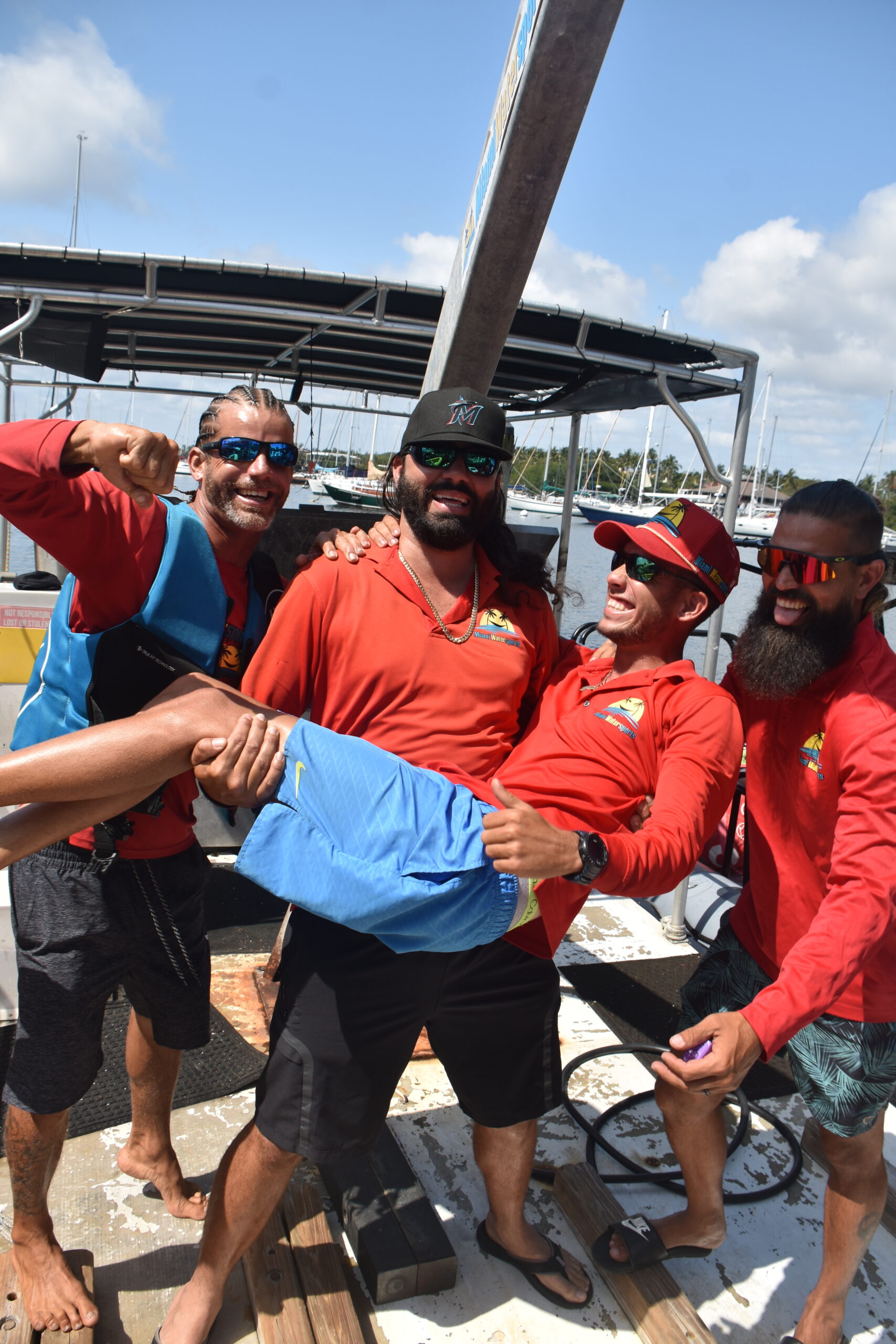
The Miami Watersports crew has run parasailing, jet ski, flyboard, and boat trips from Pier 9 at Dinner Key Marina in Coconut Grove since 2007.