
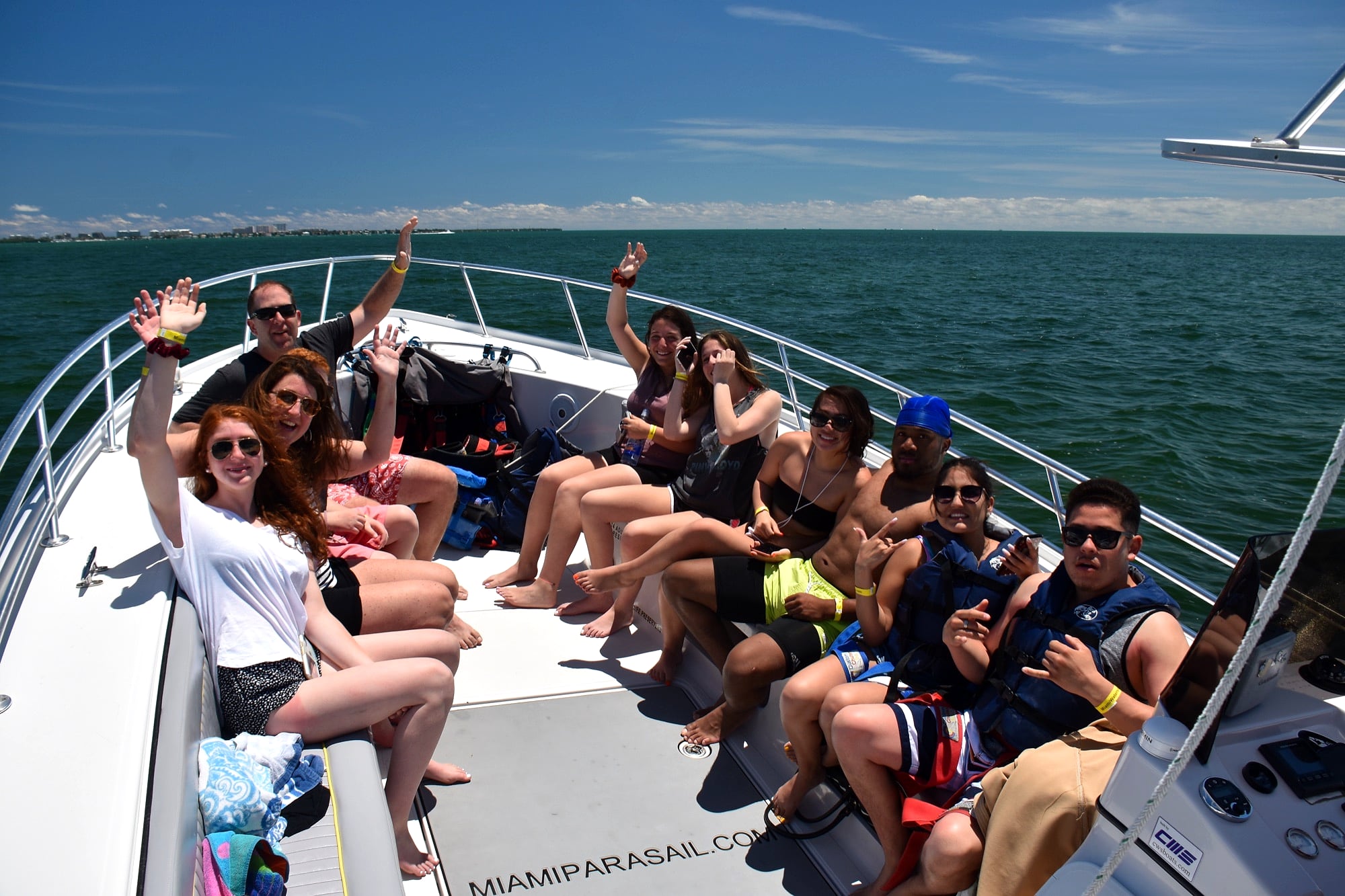
Making the most of your Miami parasailing trip comes down to a few things: pick a calm morning on Biscayne Bay, launch from the protected Dinner Key Marina side rather than the crowded open ocean, dress light and bring polarized sunglasses, and understand how Miami's weather and tides shape your time aloft. These Miami parasailing trip tips will help you fly higher, see more, and stay relaxed for the full ride.
At Miami Watersports, we've been launching parasail flights from Pier 9 at Dinner Key Marina in Coconut Grove since 2007. We take off and land dry, right from the boat's flight deck, so you can fly solo, as a tandem pair, or as a triple up to 400 feet over the bay. This guide is everything we tell guests before they arrive — the local knowledge that turns a good flight into a great one.
Key Takeaways
- Miami parasailing from Dinner Key Marina launches over calm, protected Biscayne Bay rather than the choppy open ocean off South Beach, which makes for smoother takeoffs, gentler landings, and clearer views.
- Flights reach up to 400 feet above the water, with roughly 6 to 10 minutes aloft during an approximately one-hour trip that includes the boat ride out and back.
- Takeoff and landing happen dry from the boat's flight deck, so you do not need to know how to swim, and you can choose to fly solo, tandem, or as a triple.
- The minimum age to parasail is 5, and the maximum combined weight per flight is 450 pounds across all riders on the harness.
- Lightning always grounds flights, but light rain usually does not; if weather or operations cancel your trip, you receive a marina credit that is valid for 2 years rather than a cash refund.
- Morning trips on Biscayne Bay typically offer the calmest water and lightest wind, which is why experienced flyers book early in the day.
Why Biscayne Bay Beats the Open Ocean for Parasailing
The single biggest factor in how much you enjoy parasailing in Miami is where you launch from — and most visitors don't realize there's a meaningful difference.
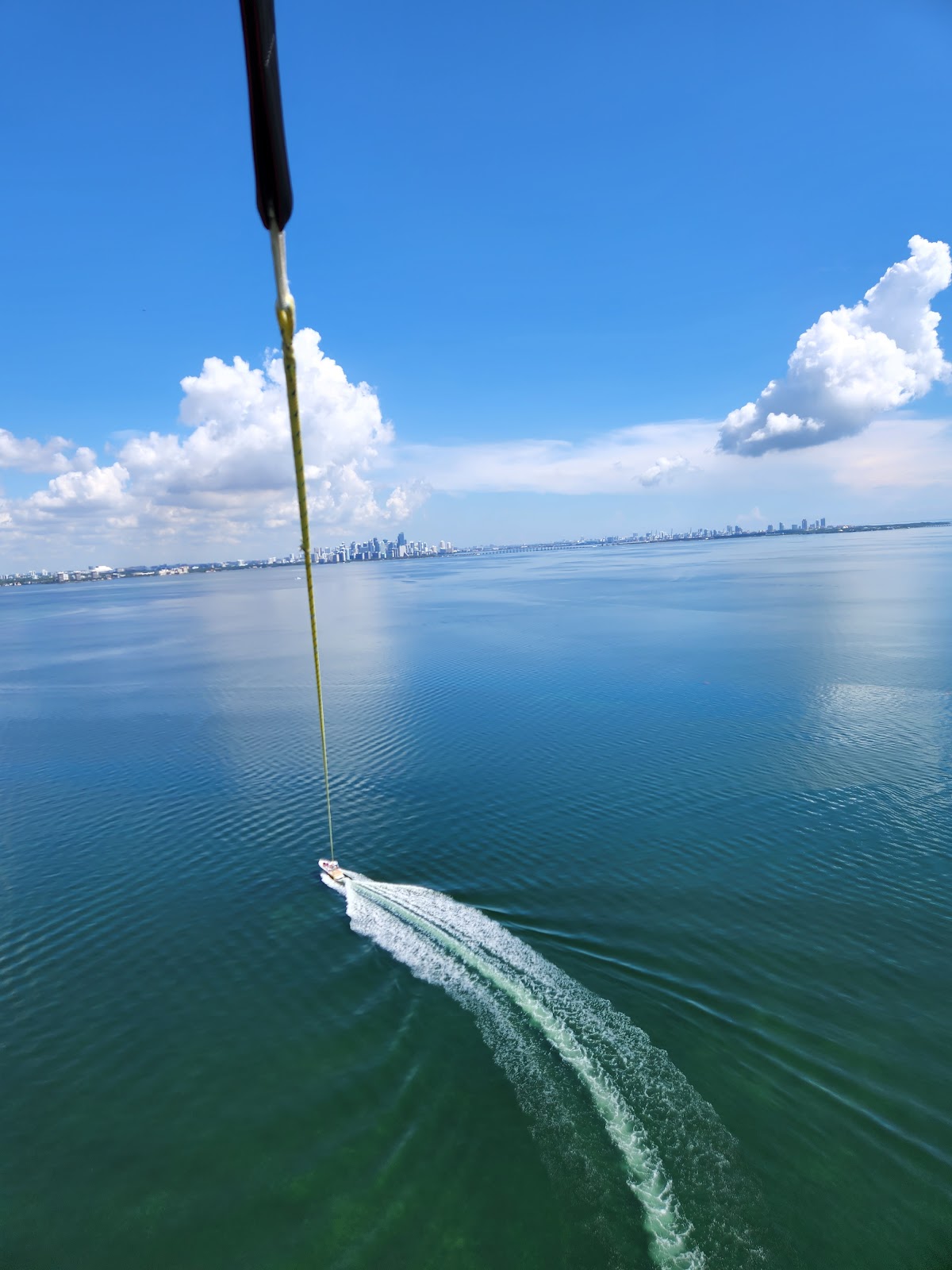
Operators on the South Beach and open-Atlantic side launch directly into ocean swell. That means bouncier boat rides, wind-driven chop, and takeoffs and landings that can feel abrupt. Biscayne Bay, by contrast, is a large, shallow, semi-enclosed body of water sheltered by the barrier islands and Key Biscayne to the east. The result is consistently flatter water, more predictable wind, and a calmer overall experience.
When you fly from our Pier 9 flight deck at Dinner Key Marina, the boat motors out across protected bay water before lifting you into the air. From up high you get sweeping views of the Coconut Grove skyline, Key Biscayne, the Miami downtown towers in the distance, and the turquoise-to-deep-blue color bands of the bay's varying depths. On clear days you can sometimes spot rays, manatees, or dolphins moving through the shallows below.
The Coconut Grove launch advantage
Dinner Key Marina sits in Coconut Grove, one of Miami's oldest and most walkable neighborhoods. That's a practical bonus: parking and access are straightforward compared to the gridlock of South Beach, and there are cafes and shaded green space steps from the dock if you arrive early or want to linger after your flight. The marina itself is a working, historic harbor — it was Miami's original seaplane base — so the setting has character that a generic beach launch simply doesn't.
If you're weighing options, our parasailing activity page shows current availability and the live member rate and Non-Member rate so you can plan around the calmest part of the day.
When to Go: Best Time of Day and Season
Timing is where local knowledge pays off most. Biscayne Bay's conditions change predictably through the day and across the seasons, and aligning your trip with the calm windows makes everything better.
Best time of day
Mornings are almost always the best time to parasail in Miami. Overnight and early-morning winds tend to be lightest, the bay is glassiest, and the air is cooler before the midday sun peaks. As the day warms, Miami's classic sea-breeze cycle kicks in — onshore winds build through the afternoon, and on many days a brief pop-up thunderstorm rolls through in late afternoon. Booking a morning flight stacks the odds in your favor for smooth water and an on-time launch.
If mornings don't fit your schedule, late afternoon near sunset can be spectacular for the light, but it carries more weather risk during the summer storm season. We watch conditions closely and will always tell you honestly what the bay is doing.
Best season
Miami parasailing runs year-round thanks to the subtropical climate, but the character of each season differs:
- Winter and early spring (roughly December through April): Drier air, lower humidity, fewer storms, and excellent visibility. Occasional cold fronts can bring a windy day or two, but overall this is the most reliably calm and comfortable stretch.
- Late spring (May): A sweet spot — warm water, long daylight, and the summer storm pattern not yet in full swing.
- Summer (June through September): Warmest water and air, beautiful mornings, but the highest chance of afternoon thunderstorms. Fly early.
- Fall (October and November): Warm, often calm, and less crowded as the high tourist season winds down.
Because South Florida weather can shift fast, it's worth checking the National Weather Service Miami forecast the morning of your trip. We make the final call on the water based on real-time conditions, but a quick glance helps set your expectations.
How Miami Watersports Parasailing Actually Works
Knowing the mechanics ahead of time removes the nervousness and lets you focus on the experience.
Dry takeoff and landing from the flight deck
Our boats are purpose-built with a hydraulic winch and a spacious flight deck at the stern. You sit on the deck, get clipped into the harness by the crew, and the winch gently lets the line out — the parasail canopy lifts you smoothly off the boat and up into the air. To come down, the crew simply winches you back in until you settle softly onto the deck. Your feet never have to touch the water unless you specifically ask for a "toe dip." This dry launch is why you do not need to know how to swim to parasail with us.
Solo, tandem, or triple
You can fly alone for a more personal, weightless experience, or share the harness as a tandem pair or a triple. Flying together is the most popular choice for couples, friends, and families — there's something about the shared quiet, hundreds of feet up, that people remember for years. The configuration you choose has to fit within the 450-pound maximum combined weight across everyone on the harness, and our crew confirms this at check-in to keep the flight safe and balanced.
How high and how long
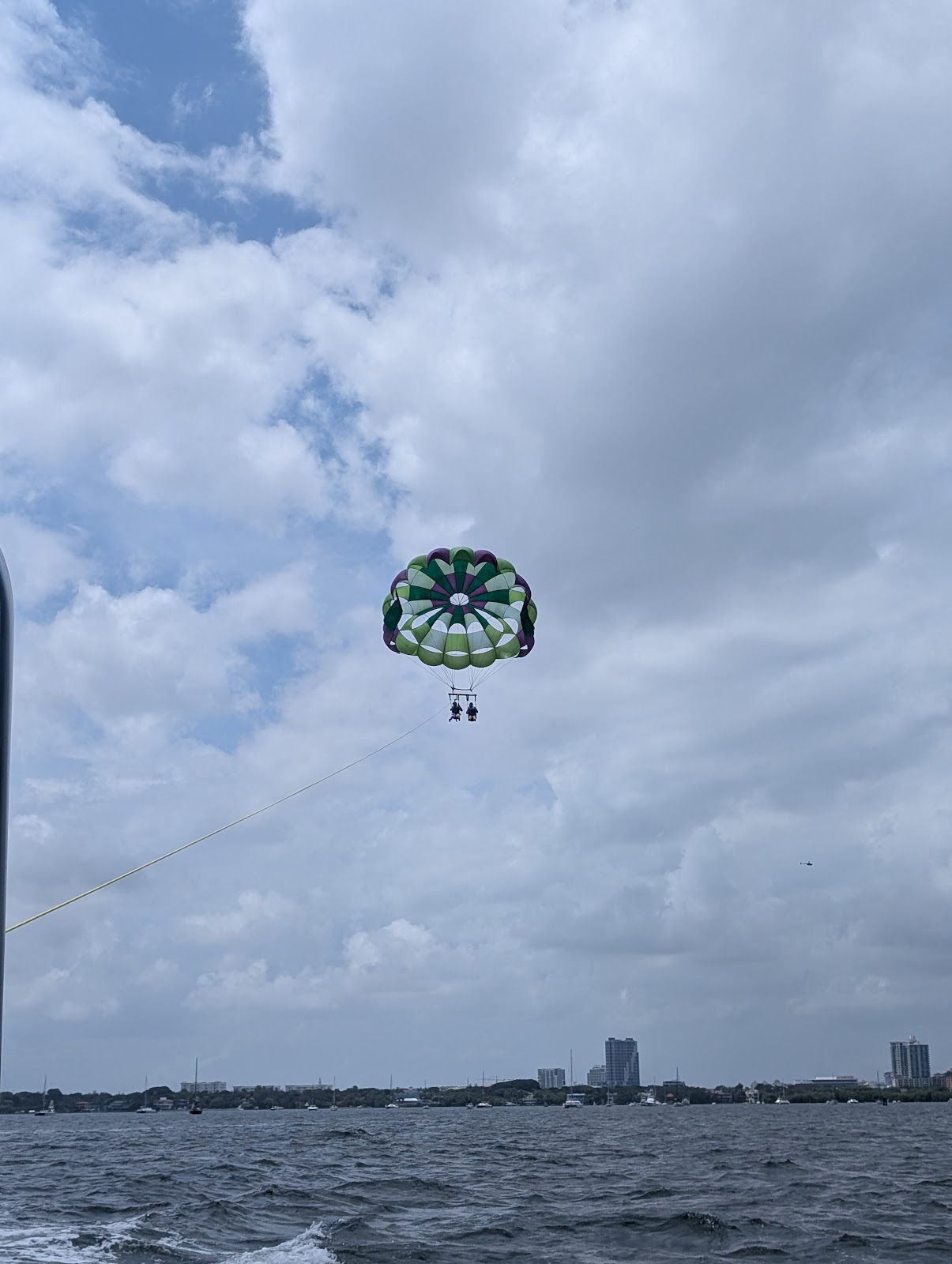
Our flights reach up to 400 feet above Biscayne Bay. The total trip runs about an hour, which includes boarding, the boat ride out to the flight zone, your time aloft, and the cruise back to the dock. Actual airborne time is typically 6 to 10 minutes — long enough to fully soak in the views and the surprising calm, since at altitude the wind noise drops away and the bay spreads out beneath you.
Who can fly
The minimum age to parasail is 5, which makes it one of the more family-friendly watersports in Miami. Kids almost always fly tandem with a parent or older sibling. There's no swimming requirement, and the harness system supports riders of a wide range of sizes within that combined-weight limit.
What to Wear and Bring
A little preparation makes the trip far more comfortable. Here's what we recommend based on thousands of flights.
What to wear
- Swimwear or quick-dry clothing. Even on a dry flight, the bay throws spray and you may want a toe dip. Lightweight, fast-drying layers are ideal.
- A secured hat and polarized sunglasses. Polarized lenses cut the glare off the water and dramatically improve what you can see below — rays and seagrass beds pop out. Use a strap or croakies; loose items can blow away at altitude.
- Reef-safe sunscreen, applied before you arrive. You'll be in direct sun on the open deck. Biscayne Bay borders Biscayne National Park, and choosing reef-safe sunscreen helps protect the marine ecosystem you're flying over.
- Water shoes or sandals you can remove easily. Bare feet are fine on the flight deck.
What to bring
- A camera or phone with a secure strap or case. The photos from 400 feet are unbeatable, but a dropped phone is gone for good. A floating wrist strap is cheap insurance.
- Water and a light snack. Staying hydrated in the Miami sun matters, especially in summer.
- A towel and a change of clothes if you plan to do other activities afterward.
What to leave behind
Loose jewelry, unsecured hats, and anything you'd hate to lose to the wind or water should stay in the car or a zipped bag. The crew can stow small items, but the simplest approach is to bring only what's secured.
Safety, Weather, and the Marina-Credit Policy
Safety is the foundation of everything we do, and being upfront about how we handle weather is part of that.
How we handle weather
Florida's weather is dynamic, and we never gamble with it. Lightning grounds all flights, every time — no exceptions. If there's lightning in the area, we wait it out or reschedule. Light rain, on the other hand, usually doesn't stop a flight; a passing sprinkle on a warm Miami morning is part of the experience and rarely affects safety or visibility much.
Wind is the other key factor. Parasailing needs a workable wind range — too little and the canopy won't lift well, too much and conditions get unsafe. Our captains assess wind, visibility, and water state in real time and make the final call on the water. This is exactly why we recommend morning trips: the wind is typically most cooperative early.
For the bigger picture on boating safety and how conditions are evaluated on the water, the U.S. Coast Guard's boating safety resources and the BoatUS Foundation's expert advice are excellent reading. Florida's own FWC boating and waterways guidance covers the rules and stewardship expectations for navigating Biscayne Bay responsibly.
Our crew and your role
Our captains and deckhands are experienced watersports professionals who run these flights day in and day out. Your job is simple: listen to the crew's briefing, keep secured items secured, and relax. The harness, winch, and canopy do the work; you enjoy the ride.
The marina-credit policy
Here's the part we want you to understand clearly before booking, because it's different from many operators and it's designed to be fair: if weather or an operational issue forces us to cancel your trip, you receive a marina credit that is valid for 2 years. We don't issue cash refunds for weather cancellations — instead, your value is preserved indefinitely so you can come back and fly when conditions cooperate. South Florida weather can be unpredictable, and a credit that is valid for 2 years means you never lose out. You can use that credit toward any of our activities whenever you return.
Making It a Full Day on Biscayne Bay
Parasailing pairs beautifully with the rest of what Coconut Grove and Dinner Key Marina offer, and many guests build a half- or full-day around their flight.
Combine with other watersports
Because your parasail trip is about an hour, there's plenty of time to add another activity. A few natural pairings:
- Jet skiing** is the high-energy counterpoint to parasailing's serenity. Skim across the same protected bay water you just flew over, solo or two-up.
- A **boat tour** is a relaxed way to see the bay, the Coconut Grove waterfront, and the islands from water level after seeing it all from the air.
- For families, alternating a calm parasail flight with a livelier ride keeps everyone in the group happy.
You can see all of our options and current pricing on the individual activity pages, where rates are always live.
Around Coconut Grove
After your flight, the Grove is a great place to decompress. The neighborhood's tree-lined streets, waterfront parks, marina views, and casual dining make it easy to turn a morning on the water into a full Miami day. Arriving a bit early to find parking and settle in — and budgeting time to relax afterward — is one of the simplest Miami parasailing trip tips that visitors consistently thank us for.
Member Rate vs Non-Member Rate: How Our Pricing Works
We price parasailing the way good hotels price rooms: there's a member rate and a Non-Member rate, and which one applies depends on your status — not on which third-party site you happened to find us through.
- Members pay the current member rate for the flight, then add a fuel charge plus a tax and marina fee at check-in. These small additional charges cover the boat's fuel and the marina's required fees, and they're collected on-site when you arrive.
- Non-Members pay a single all-in rate with nothing extra at the dock — the price you book is the price you pay.
Both options are straightforward, and the current numbers for each are always shown live on our parasailing activity page rather than quoted in articles like this one, so you're never looking at a stale figure. Pricing is per rider, which keeps it simple whether you fly solo, tandem, or triple.
A Few Final Pro Tips for Your Miami Parasailing Trip
To pull it all together, here are the things our most satisfied flyers do — distilled into quick, actionable Miami parasailing trip tips:
- Book the earliest flight that fits your schedule. Calmest water, lightest wind, lowest storm risk, and the best light for photos.
- Check the morning forecast, then trust the captain's call. We make the real decision on the water, but knowing what the day looks like helps you plan.
- Secure everything. Strap your sunglasses, leash your phone, and leave loose valuables behind.
- Fly together if you can. Tandem and triple flights are the ones people talk about for years.
- Don't stress about swimming. Dry takeoff and landing mean it genuinely isn't required.
- Think of bad weather as a postponement, not a loss. The never-expiring marina credit means a canceled day is just a rain check, literally.
- Arrive a little early. Parking, check-in, and a relaxed start make the whole hour more enjoyable.
Ready to Fly Over Biscayne Bay?
A Miami parasailing trip done right — calm morning, protected bay, the right gear, and realistic weather expectations — is one of the most memorable things you can do on the water in South Florida. Flying up to 400 feet over Biscayne Bay from our historic Pier 9 flight deck at Dinner Key Marina, with the Coconut Grove and Miami skyline spread out beneath you, is the kind of experience guests remember long after the rest of the trip fades.
Use these Miami parasailing trip tips to pick your window, then let our crew handle the rest. Check live availability and current member and Non-Member pricing, and reserve your flight on our parasailing booking page. If you'd rather talk it through, call us at (786) 713-8006 — we're happy to help you plan the perfect day on Biscayne Bay. We'll see you on the flight deck.
Book your Miami parasailing adventure
Member rates apply on every booking. Tax & marina fee added at check-in.
Frequently Asked Questions
About Miami Watersports
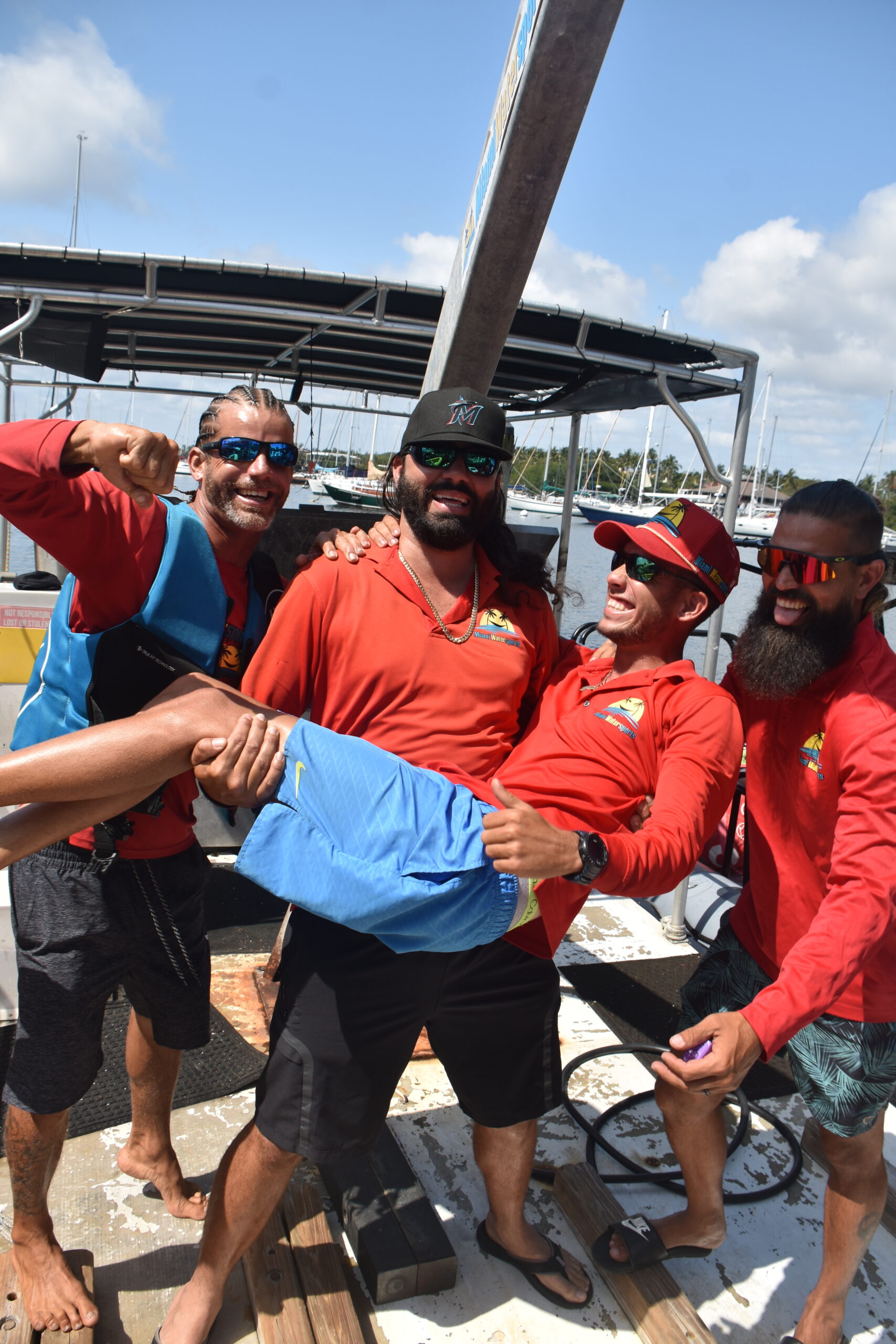
The Miami Watersports crew has run parasailing, jet ski, flyboard, and boat trips from Pier 9 at Dinner Key Marina in Coconut Grove since 2007.