
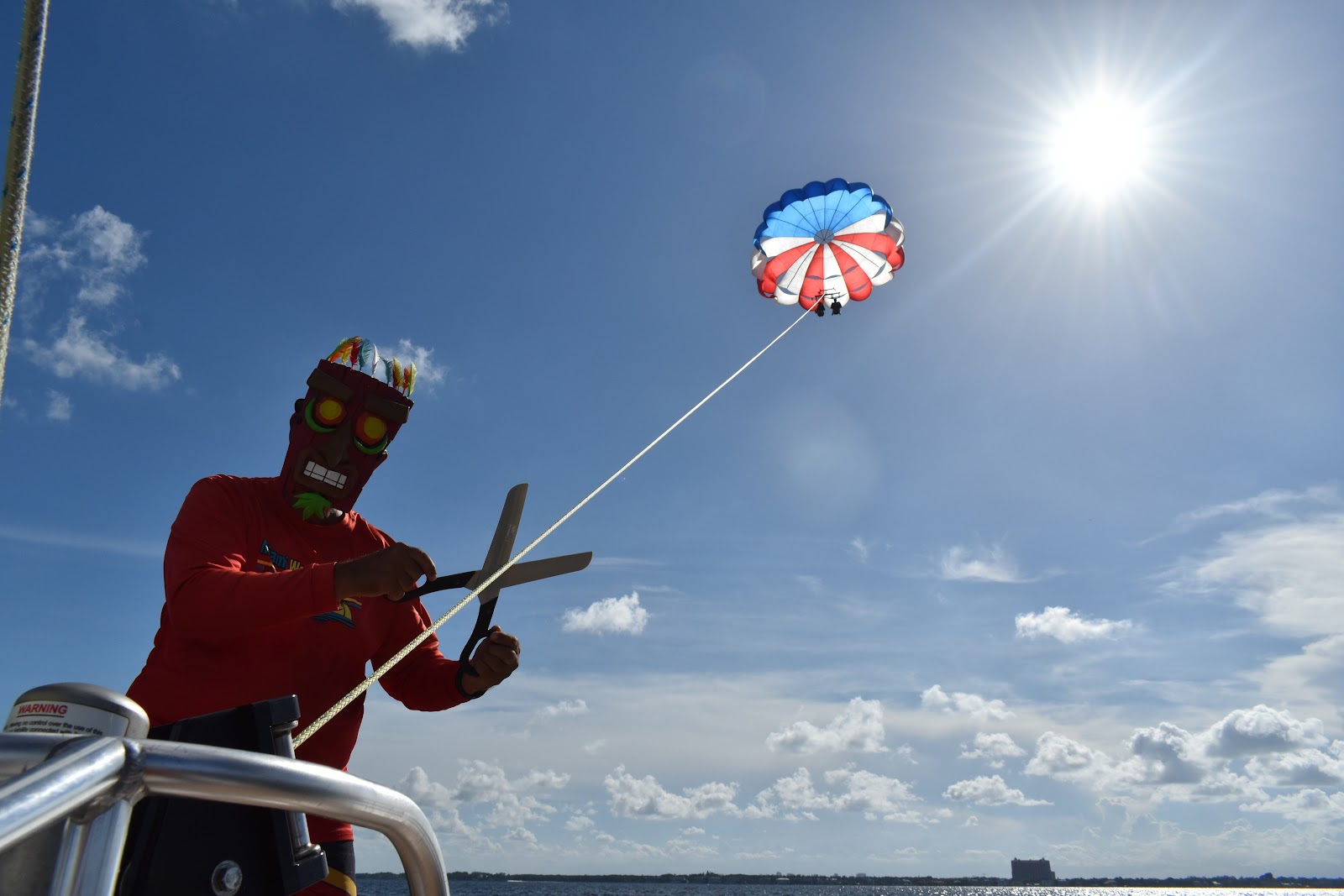
Parasailing gear and equipment is the connected system of a wing-shaped parachute (the parasail), a body harness, a high-strength towline, and a winch-equipped boat that together lift you safely up to 400 feet above the water and reel you back down. At Miami Watersports, launching from Pier 9 at Dinner Key Marina in Coconut Grove, the modern flight-deck setup means you take off and land dry, right from the back of the boat — no swimming required, no soaked clothes, just a smooth ride over calm Biscayne Bay. If you've ever wondered what actually holds you up there and why the experience feels so secure, this guide breaks down every piece of parasailing gear and equipment, how it works together, and what to expect on the water in Miami.
Key Takeaways
- Parasailing gear centers on four connected systems: the parasail canopy (the wing), the body harness that holds the rider, the towline that links you to the boat, and the boat's hydraulic winch that controls ascent and descent.
- Modern parasailing in Miami uses a "dry takeoff and landing" method — riders launch and land directly from a flight deck on the boat, so swimming is not required.
- Riders can go up to 400 feet over Biscayne Bay and stay aloft roughly 6 to 10 minutes during an approximately one-hour trip; you can fly solo, tandem (two), or triple (three).
- The minimum age for parasailing at Miami Watersports is 5, and the maximum combined rider weight per flight is 450 pounds — these limits exist because the gear is rated for specific load ranges.
- Weather drives parasailing safety: lightning means flights never run, while light rain usually does, and the U.S. Coast Guard and National Weather Service set the conditions that responsible operators follow.
- Calm, protected Biscayne Bay on the Coconut Grove side offers smoother, more sheltered flying conditions than the crowded open-ocean water off South Beach.
What Parasailing Gear and Equipment Actually Is
When people picture parasailing, they usually focus on the colorful parachute floating in the sky. But that canopy is just one component of an integrated system engineered to lift, suspend, and recover a rider safely. Understanding parasailing gear and equipment means understanding how these parts work as a unit rather than in isolation.
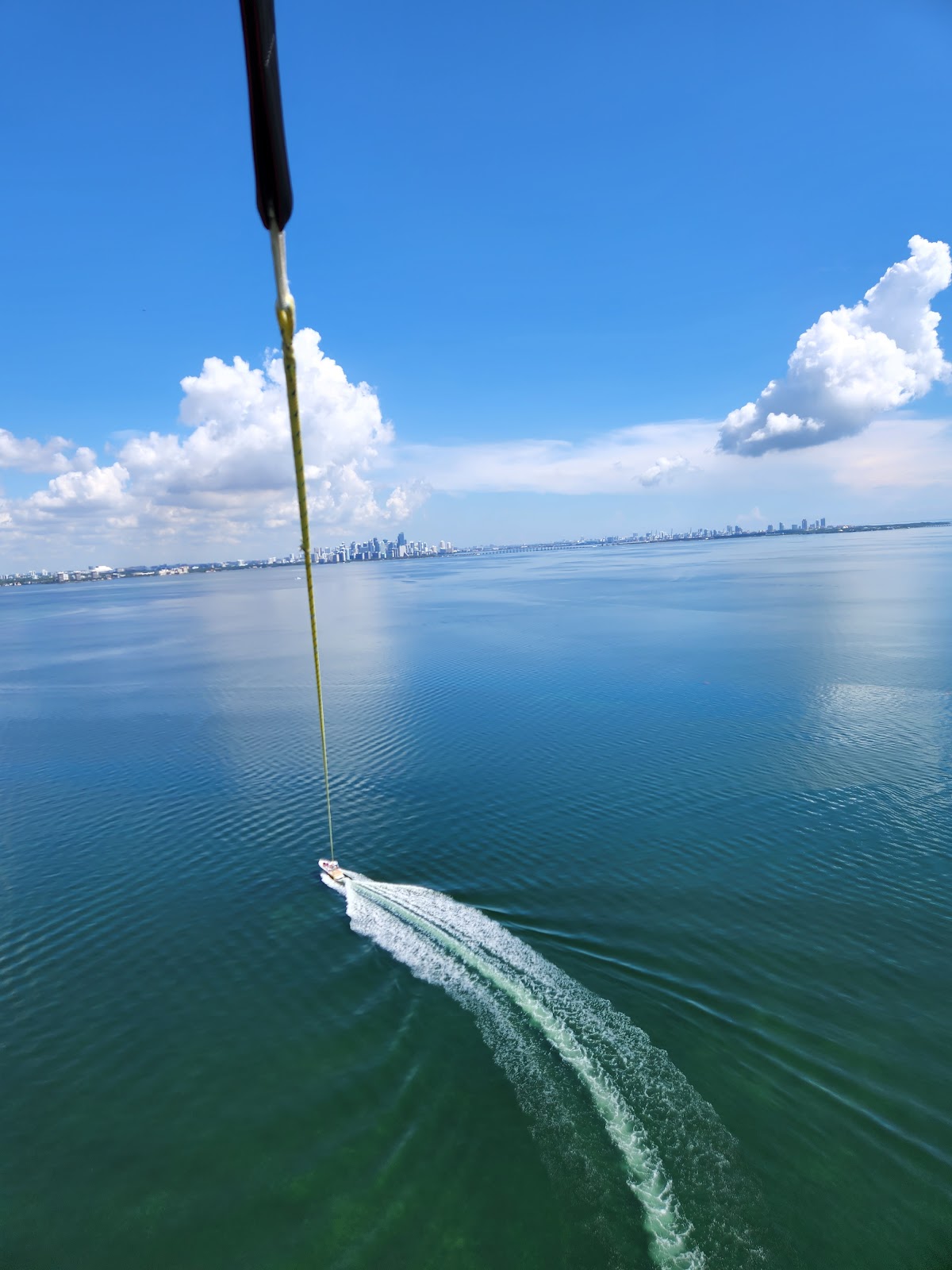
At its core, parasailing combines elements of parachuting and boating. A specially designed parachute-style wing catches the wind. A boat provides forward motion and acts as the anchor point. A winch system pays out and reels in a towline, raising and lowering the rider in a controlled way. A harness keeps the rider secure beneath the canopy throughout the flight. Every piece is selected and rated to handle the loads it will see, which is exactly why operators publish weight and rider-count limits.
The big shift in the sport over the past two decades is the move from "beach" or "water" launches to boat-based "dry" launches. On older setups, riders sometimes started and finished in the water. The modern flight-deck approach used at Miami Watersports lets you take off and land directly from the back of the boat, dry and dressed, which is gentler, more controlled, and far more comfortable — especially for first-timers and families.
The Parasail Canopy: Your Wing in the Sky
The parasail itself — often just called the "chute" or "wing" — is the most visible piece of equipment. It is not a free-flying skydiving parachute; it is a captive wing designed to generate lift while tethered to a moving boat.
How the canopy generates lift
As the boat moves forward, air flows across and into the canopy, inflating it and creating lift in much the same way air over an airplane wing does. The faster and steadier the airflow, the more stable and predictable the lift. This is one reason calm, consistent conditions matter so much: a steady breeze and smooth water make for a steady, gentle ascent. On Biscayne Bay, the protected geography on the Coconut Grove side tends to deliver exactly that kind of smooth, reliable airflow compared with the choppier open-ocean conditions farther out.
Canopy shapes and rider capacity
Parasail canopies come in different sizes and are rated for different load ranges, which is part of why a single flight can carry one, two, or three riders. The canopy chosen for a flight has to match the combined weight of the riders within the equipment's rated range. This is the practical reason behind the maximum combined weight of 450 pounds per flight at Miami Watersports — it keeps every flight comfortably inside what the wing and rigging are built to handle. Whether you go up solo for the full open-sky feeling, tandem to share the moment, or as a triple for a small group, the canopy and rigging are matched to the load.
You can see how solo, tandem, and triple flights are arranged on the parasailing activity page, where current member and Non-Member pricing is shown live.
The Harness and Bar: How You Stay Secure
If the canopy is what lifts you, the harness is what holds you. The parasailing harness is a padded, body-fitting assembly that the crew helps you into on the boat before takeoff. It distributes the lifting forces across your body comfortably and connects you to the spreader bar — a horizontal bar that links the harness to the canopy's lines.
Getting fitted on the flight deck
Before any flight, the crew fits and double-checks each rider's harness on the boat's flight deck. This is a hands-on, deliberate process: straps are adjusted, buckles are confirmed, and the connection points to the bar are inspected. Because takeoff and landing happen on the boat, riders are fully harnessed and ready before they ever leave the deck. There's no scramble in the water and no need to know how to swim — swimming is not required for parasailing at Miami Watersports.
Why the harness setup matters for comfort
A properly fitted harness is the difference between a flight that feels effortless and one that feels awkward. When the straps are snug and balanced, you simply sit back into the harness as the canopy lifts you, and the bar above keeps everything aligned. Tandem and triple riders sit side by side, sharing the bar, which is part of why parasailing is such a popular shared experience for couples, friends, and families with kids age 5 and up.
The Towline and Winch: Controlling the Ascent
The towline is the high-strength rope that connects you and the canopy to the boat. It is the literal lifeline of the operation, and it works in tandem with the boat's hydraulic winch system to control every foot of your flight.
Paying out and reeling in
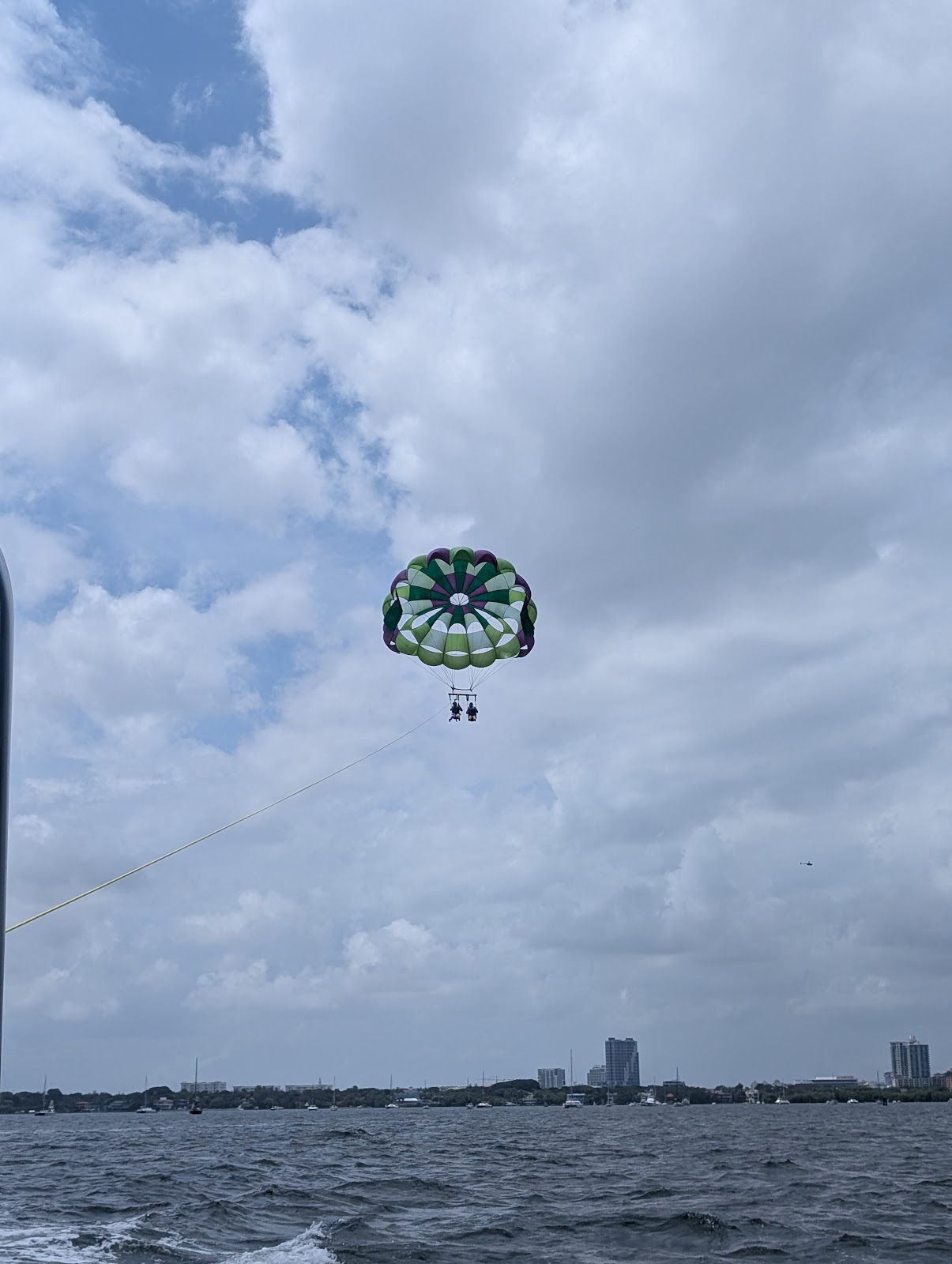
When it's time to fly, the captain throttles the boat forward and the winch slowly pays out the towline, letting you rise smoothly into the air. To bring you back, the winch reels the line in, gently lowering you back onto the flight deck. This winch-controlled method is what makes the dry takeoff and landing possible — the crew controls your altitude precisely rather than relying on the wind alone. It's a smooth, gradual motion, not a sudden drop or yank.
How high you go and how long you fly
At Miami Watersports, the towline lets riders reach up to 400 feet above Biscayne Bay. From that height the views stretch across the bay, the Miami skyline, Coconut Grove's tree-lined shore, and on clear days far out toward the barrier islands. You'll typically be aloft for roughly 6 to 10 minutes, set within an overall trip of about an hour that includes boarding, the safety briefing, harnessing, the flight itself, and the relaxed cruise back to the dock. The boat ride out and back across the bay is part of the experience, not just transit.
The Boat: Your Launch Platform on Biscayne Bay
The boat is the unsung hero of parasailing gear and equipment. Purpose-built parasail boats are designed around the winch, the flight deck, and the seating, with the engine power and stability to tow a fully loaded canopy safely. The flight deck at the stern is where you take off and land, and the captain and crew run the entire operation from on board.
Crew roles and the safety briefing
A parasail crew typically includes a captain operating the boat and winch and a mate handling harnessing, the launch, and the landing. Before you fly, the crew delivers a safety briefing covering how the launch works, what to do with your hands, and what to expect on the way up and down. This briefing isn't a formality — it's a core part of the equipment-and-procedure system that keeps the experience safe and relaxed. The U.S. Coast Guard's boating safety resources outline the broader framework of vessel safety and operator responsibility that licensed captains work within; you can read more at USCG Boating Safety.
Launching from Pier 9 at Dinner Key Marina
Miami Watersports launches from Pier 9 at Dinner Key Marina, 3400 Pan American Drive in Coconut Grove. This is one of the most scenic and protected launch points in Miami. Instead of fighting the crowds and surf off South Beach, you head out onto the calm, sheltered waters of Biscayne Bay — part of a region the National Park Service protects just to the south as Biscayne National Park. The result is a smoother boat ride, more stable flying conditions, and unobstructed views that the open-ocean side simply can't match.
Safety Systems and How Conditions Affect Your Flight
The most important piece of "equipment" in parasailing isn't a physical object at all — it's the decision-making framework the crew uses to read conditions and decide whether, when, and how to fly. Gear keeps you secure once you're up; good judgment keeps the whole operation safe.
Weather is the deciding factor
Wind and weather dictate everything in parasailing. A steady, moderate breeze is ideal; too little wind and the canopy won't generate clean lift, too much and conditions become unsafe. Thunderstorms are an absolute no-go: at Miami Watersports, flights never run during lightning, full stop. Light rain, on the other hand, usually doesn't stop a flight — a passing Miami shower is part of life on the bay. South Florida's weather can shift quickly, especially during the summer afternoon thunderstorm season, which is why crews monitor live conditions closely. The National Weather Service – Miami office is the authoritative source for local marine and storm forecasts that operators watch.
Boating regulations and waterway safety
Parasailing operators work within Florida's boating and waterway rules, which govern licensed captains, vessel safety equipment, and safe operation on the water. Florida's Fish and Wildlife Conservation Commission oversees boating and waterways statewide; you can review the state's framework at Florida FWC Boating & Waterways. These regulations are the backdrop to every commercial flight, and reputable operators treat them as the baseline, not the ceiling.
What happens if weather cancels your flight
Because weather is unpredictable, it's worth knowing the policy up front. If Miami Watersports has to cancel for weather or operational reasons, you receive a marina credit that is valid for 2 years. There are no cash refunds for weather cancellations, but your credit stays good until you're ready to come back and fly — so a stormy day never means losing your spot for good. This is standard practice for water-dependent activities and reflects how tightly the sport is tied to conditions on the bay.
Solo, Tandem, and Triple: Matching Gear to Your Group
One of the best things about parasailing equipment is its flexibility. The same core system — canopy, harness, towline, winch, boat — adapts to carry one, two, or three riders, so you can tailor the flight to your group.
Flying solo
Going up alone gives you the purest version of the experience: total quiet, the open sky, and an uninterrupted panorama of Biscayne Bay and the Miami skyline. Solo flights use a canopy and harness setup rated for a single rider's weight.
Tandem and triple flights
Tandem (two riders) and triple (three riders) flights are the most popular choice for couples, friends, and families. Riders sit side by side beneath the same canopy, sharing the spreader bar, which makes for a wonderful shared moment — and means kids age 5 and up can fly alongside a parent. The only firm rule is the equipment's load rating: the combined weight of all riders on a flight must stay within the 450-pound maximum. The crew helps you figure out the best configuration for your group when you check in.
If parasailing is part of a bigger day on the water, many guests pair it with other Biscayne Bay activities. You can browse options like a jet ski rental for a faster, hands-on thrill, or a relaxed boat tour to take in the bay from the water — all launching from the same Coconut Grove home base.
Member Rate vs. Non-Member Rate: How Pricing Works
Miami Watersports uses a membership-style pricing structure, similar to how a hotel offers member and standard rates. It's worth understanding before you book so there are no surprises at check-in — and note that all pricing is per rider.
How the two rates differ
There are two ways to pay. The Non-Member rate is an all-in price: what you see is what you pay, with no add-ons at the marina. The member rate is a lower base rate, with a fuel plus tax and marina fee paid at check-in. Both get you the same flight, the same gear, and the same crew — the difference is purely in how the total is structured. Because pricing is served live and can change, exact figures aren't listed here; the current member and Non-Member rates are always shown on the parasailing activity page.
Why we don't list prices in this guide
Live pricing keeps you from booking against a stale number. Rather than risk quoting something out of date, we point you to the activity page where the current rates display in real time. When you're ready to compare, just open the parasailing page and you'll see exactly what applies to your flight.
What to Wear and Bring (and What the Boat Provides)
Part of preparing for parasailing is knowing what's on you versus what's on the boat. The technical gear — canopy, harness, bar, towline, winch — is all provided and maintained by Miami Watersports. Your job is just to show up ready for a comfortable ride.
What to wear
Dress for a boat ride and a breezy flight. A swimsuit or quick-drying shorts and a light top work well, even though you won't be getting in the water on a dry takeoff and landing. Bring a hat or visor and sunglasses with a strap, and apply reef-safe sunscreen before you board — the Florida sun on the open bay is strong. A light layer can be nice on cooler or windier days. Secure any loose items, since you'll be up to 400 feet in the breeze.
Sun, sea life, and the local environment
Biscayne Bay is a living estuary, home to seagrass beds, manatees, dolphins, and seabirds, and the waters just south are protected as a national park. Using reef-safe sunscreen and stowing trash securely helps keep the bay healthy for the wildlife you'll often spot from the air. For boater safety education and a deeper look at responsible time on the water, the BoatUS Foundation is an excellent free resource, as is Florida's official boater education hub at the FLHSMV Boating Safety Center.
What the crew handles
Everything that lifts you is the crew's responsibility: inspecting and fitting the harness, attaching it to the bar, managing the canopy, operating the winch and towline, and piloting the boat. You don't need any prior experience, special gear, or swimming ability — just the willingness to sit back and enjoy the view.
Frequently Misunderstood: Common Questions About the Gear
A few points about parasailing equipment trip people up regularly, so it's worth clearing them up directly.
First, parasailing is not the same as paragliding or skydiving. You are always tethered to the boat by the towline, and the winch controls your altitude the whole time — you never free-fall and you're never disconnected from the vessel. Second, you do not pull cords or steer the canopy; the captain and the winch manage your flight, so all you do is relax. Third, the dry takeoff and landing means you stay on the boat for launch and recovery — there's no jumping into the water and no climbing back aboard. These three facts are what make parasailing one of the most accessible thrill activities on Biscayne Bay, suitable for ages 5 and up and for people who don't swim.
Ready to Fly? Book Your Miami Parasailing Adventure
Now that you understand parasailing gear and equipment — the canopy that lifts you, the harness that holds you, the towline and winch that carry you up to 400 feet, and the boat and crew that run it all — the only thing left is to experience it for yourself. Launching from Pier 9 at Dinner Key Marina in Coconut Grove, you'll trade the crowded open-ocean chaos for the calm, sheltered beauty of Biscayne Bay, with the Miami skyline spread out beneath you and a smooth dry takeoff and landing from the comfort of the flight deck. Whether you fly solo, tandem, or as a triple, the gear is matched to your flight and the crew handles everything but the smile.
Check live availability and current member and Non-Member rates, then reserve your spot on the Miami Watersports parasailing page. Have a question about your group, weight limits, or the day's conditions? Call us at (786) 713-8006 and we'll get you in the sky over Biscayne Bay.
Book your Miami parasailing adventure
Member rates apply on every booking. Tax & marina fee added at check-in.
Frequently Asked Questions
About Miami Watersports
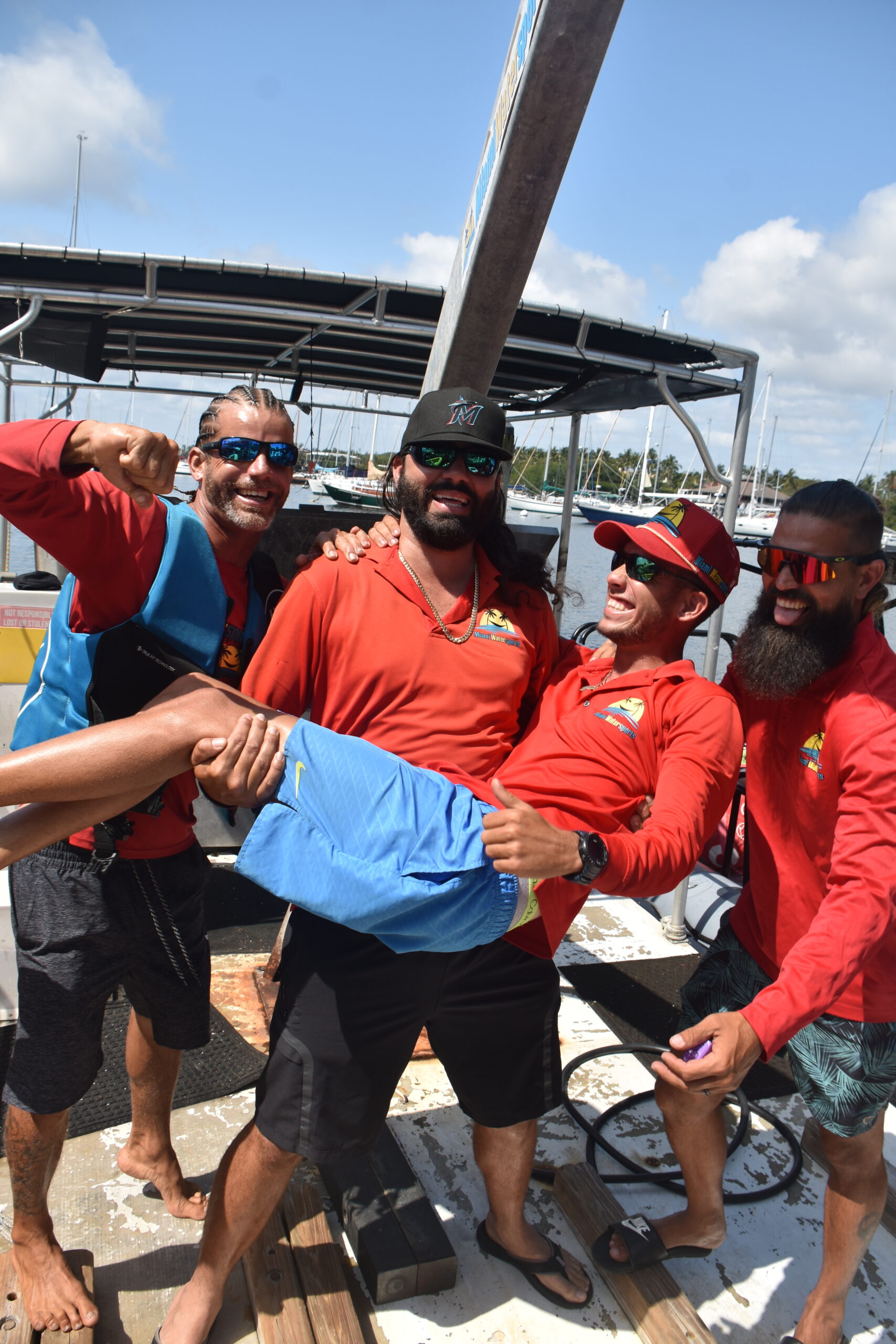
The Miami Watersports crew has run parasailing, jet ski, flyboard, and boat trips from Pier 9 at Dinner Key Marina in Coconut Grove since 2007.