
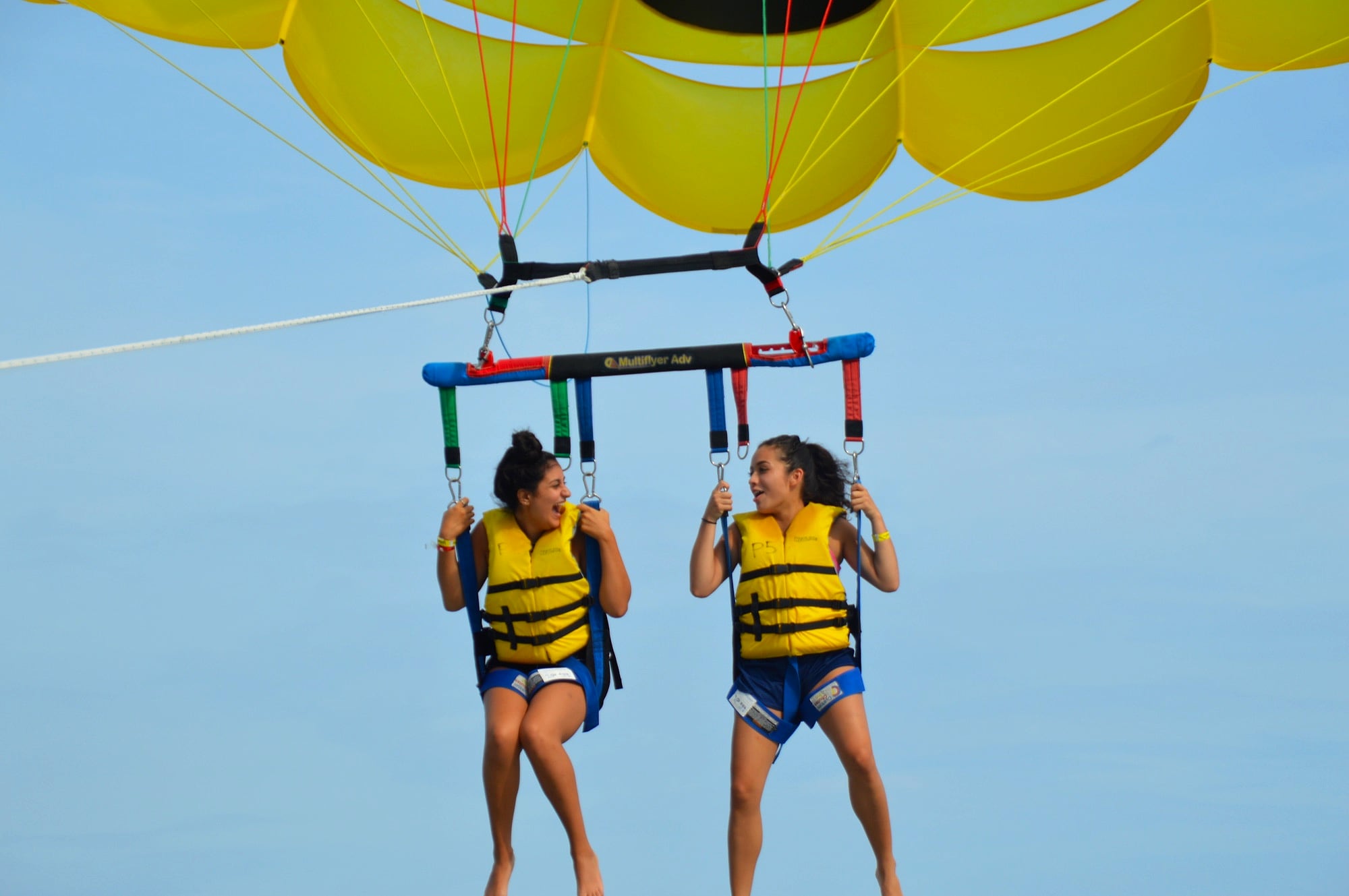
Parasailing in Miami for beginners is easier and far more relaxing than most first-timers expect: you take off and land dry from the back of the boat, glide up to 400 feet over the calm, protected waters of Biscayne Bay, and spend roughly 6 to 10 minutes floating quietly above one of the most beautiful skylines in the country. No swimming is required, no experience is needed, and you don't even have to get wet. If you've been curious about trying it on your Miami trip, this is the gentlest possible introduction to flight over the water.
This guide walks you through everything a first-time flyer needs to know — how the experience actually works, who can fly, what to wear, when to go, how Miami's weather affects the day, and how to book a flight launching from Pier 9 at Dinner Key Marina in Coconut Grove. We'll keep it honest and specific, because the difference between a magical first flight and a stressful one usually comes down to knowing what to expect.
Key Takeaways
- Parasailing in Miami involves a dry takeoff and landing directly from the boat's flight deck, so first-timers never have to enter the water or know how to swim.
- Flyers reach altitudes of up to 400 feet over Biscayne Bay and spend roughly 6 to 10 minutes aloft during a trip that lasts about one hour, most of which is the scenic boat ride out and back.
- You can fly solo, tandem (two people), or as a triple (three people), with a minimum age of 5 and a maximum combined harness weight of 450 pounds.
- Miami Watersports launches from Pier 9 at Dinner Key Marina in Coconut Grove, on the protected, calmer side of Biscayne Bay rather than the crowded open-ocean South Beach side.
- Lightning always grounds flights, but light rain usually does not; weather or operational cancellations are covered by a marina credit that is valid for 2 years rather than a cash refund.
- Pricing is per rider, with a member rate and a Non-Member rate, so first-timers should check the live price on the parasailing activity page before booking.
What Parasailing in Miami Actually Feels Like
Forget any mental image of being yanked off a beach or splashing into the ocean. Modern parasailing from a purpose-built boat is calm, controlled, and surprisingly peaceful.
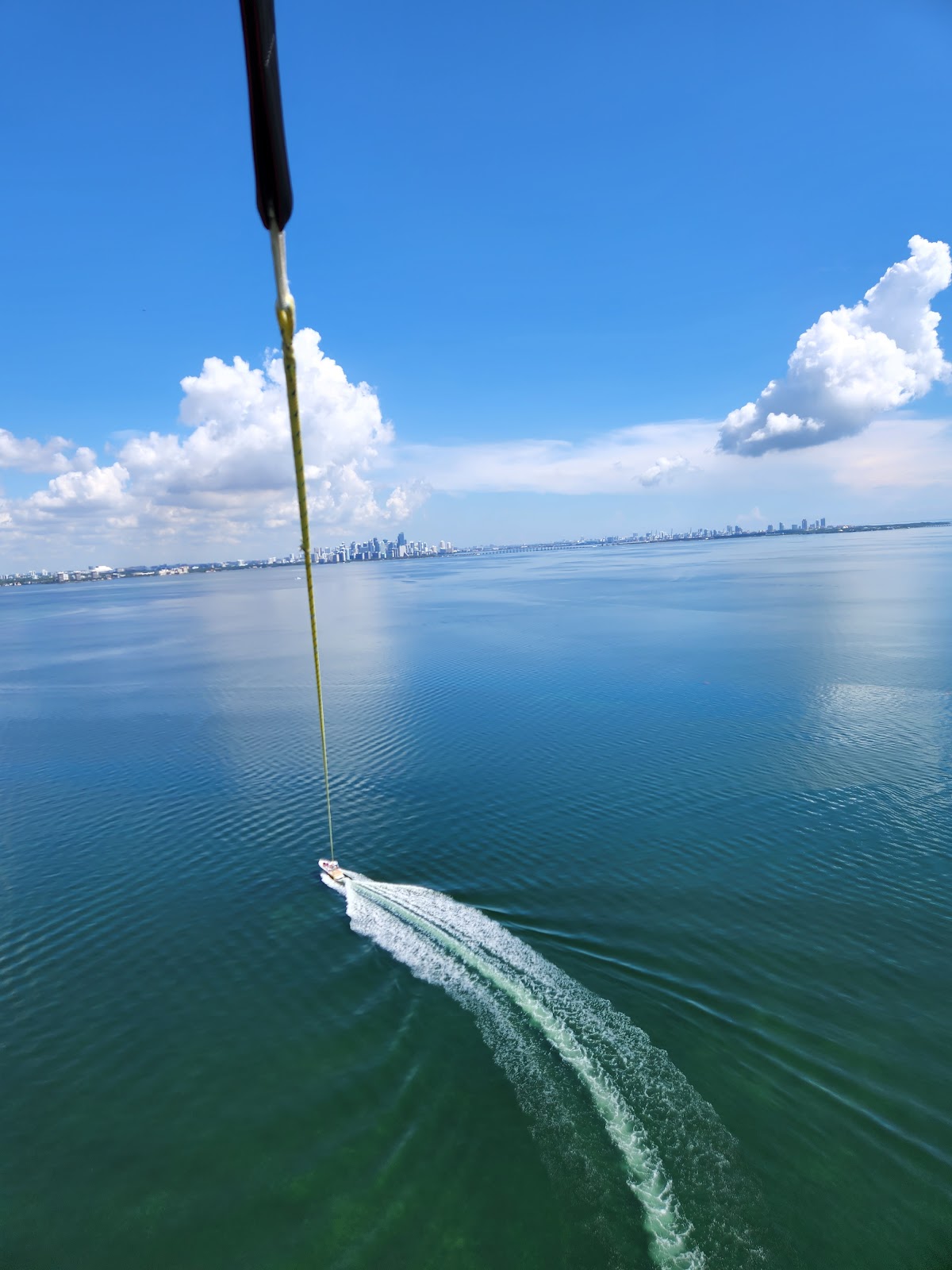
Here's how a typical flight unfolds. The captain motors out from the marina into open water on Biscayne Bay, finds a clear stretch, and slows the boat. You sit on the elevated platform at the stern — the flight deck — where a crew member clips you into a harness attached to the parasail (the large, wing-shaped canopy). The boat eases forward, the canopy fills with air, and the winch line gently pays out. Rather than a sudden jolt, you feel a smooth, steady lift as the boat's speed does all the work. Within seconds you're rising above the wake, and the noise of the engine fades into a quiet rush of wind.
At the top of the line you can be as high as 400 feet above the water. From there, the view opens up: the downtown Miami and Brickell skyline to the north, the green canopy of Coconut Grove and the historic homes along the shoreline, the wide turquoise sweep of the bay, and — on clear days — the distant ribbon of Key Biscayne and the barrier islands. The sensation up top is more "floating" than "flying." There's no engine vibration, no freefall feeling, just a slow drift and the occasional gentle sway as the canopy catches the breeze.
After your time aloft, the crew winches you back down toward the boat and you settle right back onto the flight deck — dry, the same way you left. The whole outing runs about an hour, but only 6 to 10 minutes of that is spent at altitude. The rest is the ride: motoring out, watching the previous flyers, and cruising back in with the wind in your hair.
Solo, Tandem, or Triple?
One of the nicest things about parasailing for beginners is that you don't have to do it alone. You can fly:
- Solo — just you under the canopy, for the most personal, untethered-feeling flight.
- Tandem — two flyers side by side, ideal for couples, a parent and child, or two friends who want to share the moment.
- Triple — three flyers together, great for families or small groups who'd rather go up as one.
For nervous first-timers, flying tandem with someone you trust takes a lot of the edge off. Kids who meet the minimum age of 5 almost always feel braver buckled in next to a parent. Just remember the harness has a maximum combined weight of 450 pounds, so the crew will help you choose a flight configuration that fits everyone safely.
Who Can Parasail? Beginner Requirements
Parasailing is one of the most accessible watersports available, which is exactly why it's such a popular first activity in Miami.
- Age: The minimum age to fly is 5 years old. Younger children typically fly tandem or triple with an adult.
- Swimming: Swimming is not required. Because takeoff and landing happen on the boat's flight deck, flyers don't enter the water as part of a normal flight.
- Weight: The harness system supports a maximum combined weight of 450 pounds per flight. The crew uses combined weight to decide whether you fly solo, tandem, or triple, and how high to let the line out.
- Experience: None whatsoever. The crew handles all the technical work — rigging, launching, and landing. Your only job is to relax and enjoy the view.
If you have a heart condition, a recent surgery, or are pregnant, it's smart to check with your doctor before any aerial activity, just as you would before other physical excursions. Otherwise, parasailing places very little physical demand on the body — you're seated in a harness, not climbing or paddling.
Why Biscayne Bay and Dinner Key Marina Make the Difference
Not all Miami parasailing is created equal, and the launch location matters more than most visitors realize.
Many operators run flights off the open Atlantic on the South Beach side, where ocean swell, boat traffic, and wind off the open water can make for a choppier ride out and a bouncier landing. Miami Watersports launches from Pier 9 at Dinner Key Marina, at 3400 Pan American Drive in Coconut Grove, on the western, protected shoulder of Biscayne Bay. The bay here is shielded by Key Biscayne and the barrier islands to the east, which tames the swell and keeps the water noticeably calmer than the open ocean.
For a first-timer, that calmer water translates directly into a smoother, less intimidating experience: a steadier boat ride, gentler takeoff and landing, and views that lean toward postcard-pretty rather than white-knuckle. Biscayne Bay is also a genuinely special stretch of water — its southern reaches form part of Biscayne National Park, one of the largest marine parks in the National Park System, protecting mangrove shoreline, clear shallows, and the northernmost Florida Keys. You're flying over a living, protected ecosystem, not just a parking lot for boats.
Coconut Grove itself adds to the appeal. It's Miami's oldest neighborhood — leafy, walkable, and full of cafes and waterfront restaurants — so it's easy to build a half-day around your flight. Park at the marina, fly in the morning, and have lunch in the Grove afterward.
Getting to Pier 9
Dinner Key Marina sits just off South Bayshore Drive in Coconut Grove, a short drive from downtown Miami, Brickell, and Coral Gables. Give yourself extra time on weekends and holidays, when Grove parking fills up. Plan to arrive ahead of your scheduled flight so the crew can complete check-in, fit your harness, and brief your group without rushing — flights run on a tight rotation, and arriving early keeps your whole party on the same boat.
Best Time of Year and Time of Day to Go
Miami is a year-round parasailing destination, but conditions shift with the seasons, and the smartest first-timers plan around them.
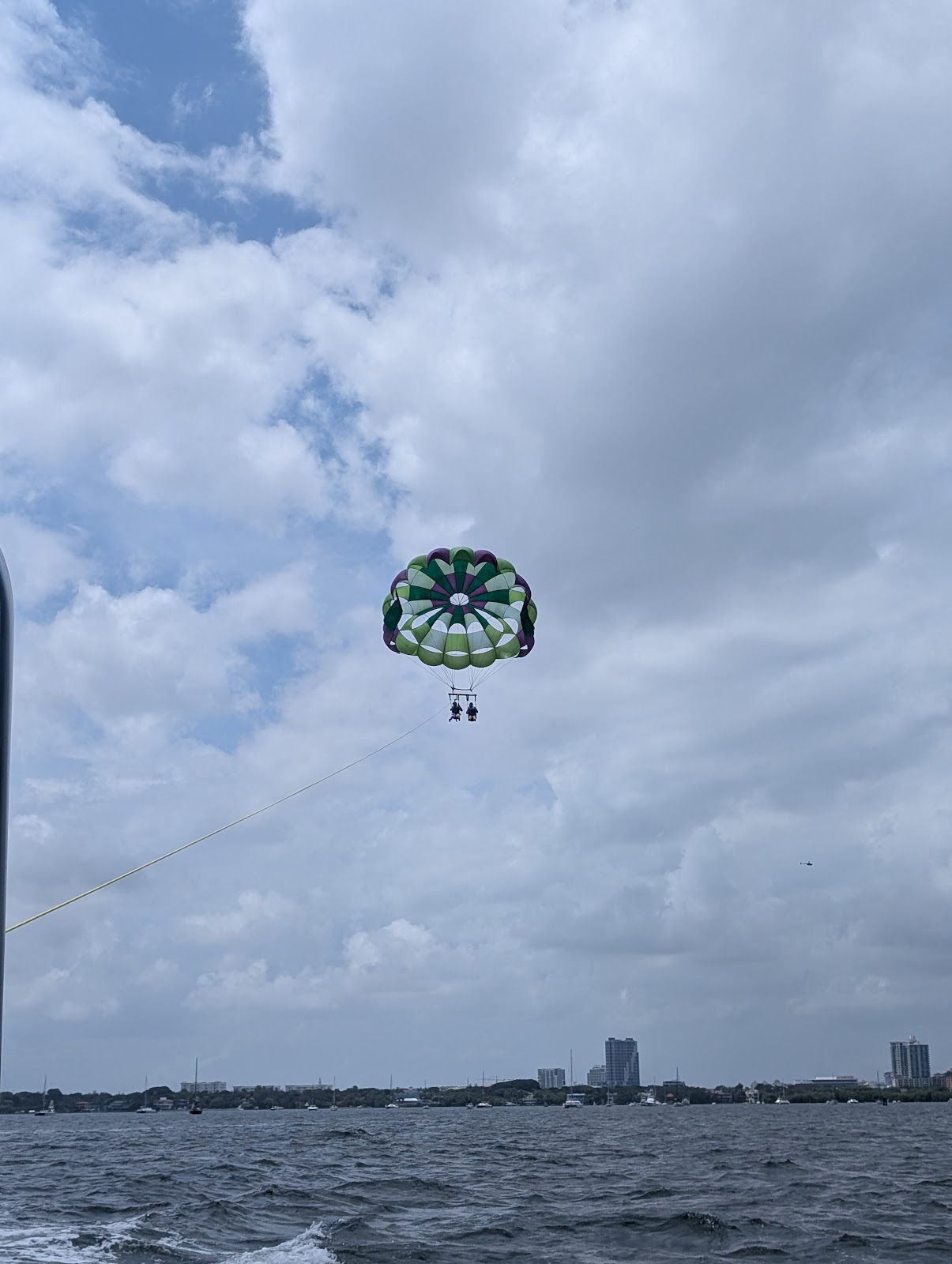
Seasons on Biscayne Bay
- Winter and early spring (roughly December through April): This is Miami's dry season — lower humidity, fewer storms, and reliably sunny skies. Winds can pick up after the occasional cold front passes through, but overall this is the most consistent stretch for flying, and visibility tends to be excellent.
- Late spring (May): A lovely shoulder window with warm water, long days, and storm season not yet in full swing.
- Summer and early fall (June through October): This is Miami's wet season and overlaps with Atlantic hurricane season. Mornings are often glassy and gorgeous, but afternoon thunderstorms build up over the mainland with real regularity. Flying earlier in the day dramatically improves your odds.
Regardless of season, morning is almost always the best time to parasail in Miami. Winds are typically lighter, the bay is calmer, the light is soft and flattering for photos, and you beat the afternoon storm pattern that defines a Miami summer. A morning flight also gives you flexibility — if weather pushes your time, there's still daylight left in the day to rebook.
Before any water day, it's worth a quick look at the National Weather Service – Miami forecast for wind and thunderstorm chances. The crew makes the final call on whether it's safe to fly, but knowing the outlook helps you pick the right slot and pack accordingly.
Safety: What Keeps Your First Flight Smooth
Parasailing has an excellent safety profile when it's run by an experienced crew on well-maintained equipment in appropriate weather — and that last part, weather judgment, is everything.
Miami Watersports has operated from Coconut Grove since 2007, and the crew's first job every day is reading conditions on the bay. Wind speed, wind direction, gust patterns, and storm activity all factor into whether flights run and how high the line goes out. This is the same conservative mindset that underpins all responsible boating: the U.S. Coast Guard's boating safety guidance and the Florida Fish and Wildlife Conservation Commission boating and waterways resources both emphasize checking conditions, respecting weather, and following the captain's direction on the water. A reputable parasail operation lives by those same principles.
A few things that contribute to a safe, comfortable first flight:
- Dry takeoff and landing from the flight deck. Launching and recovering on the boat removes the most variable, accident-prone parts of older beach-launch methods.
- Proper harness fitting. The crew adjusts every harness individually and checks combined weight against the 450-pound limit before anyone leaves the deck.
- Conservative weather calls. If conditions are marginal, the crew will adjust altitude, delay, or scrub the flight. That's a feature, not an inconvenience.
- A thorough pre-flight briefing. You'll be told exactly what to do during takeoff, while aloft, and on landing — there's very little to remember, and the crew handles the rest.
If you want to go in feeling even more confident, the BoatUS Foundation's safety and education resources are a great general primer on being a calm, prepared participant on any boat.
Weather, Lightning, and the Cancellation Policy
Miami's weather is the single biggest variable in any on-the-water plan, so it's worth understanding clearly before you book.
The hard rule is simple: lightning never flies. If there's lightning in the area, flights do not run, full stop — no exceptions, regardless of how nice the sky looks elsewhere. This is non-negotiable and exactly what you want from a responsible operator. Light rain, on the other hand, usually still runs. A passing shower or light drizzle won't necessarily ground your flight; in fact, flying through a light Miami sprinkle with sun breaking through can be unexpectedly beautiful. The crew makes the call based on safety, not just appearances.
Because weather can change fast on Biscayne Bay, here's how cancellations work. If a flight is canceled for weather or operational reasons, you receive a marina credit that is valid for 2 years — there are no cash refunds. That credit is yours to use whenever you come back, with no deadline hanging over it. It's a fair, customer-friendly approach to an inherently weather-dependent activity: nobody loses out, and you're never pressured to fly in conditions that aren't right.
The practical takeaway for first-timers: book a morning slot, build a little flexibility into your day, and treat a weather hold as a reschedule rather than a loss.
What to Wear and Bring
Parasailing is low-effort, but a few smart choices make the experience better.
Wear:
- Comfortable, casual clothes you don't mind getting a little sea spray on. A swimsuit under shorts and a t-shirt is a popular choice, even though you won't be swimming.
- Secure footwear or none at all — many flyers go barefoot on the boat. Avoid loose flip-flops that can blow off at altitude.
- A hat and sunglasses with a strap or retainer, since anything loose can fly off the moment you lift.
Bring:
- Reef-safe sunscreen, applied before you board. The Florida sun is strong on the water even on cloudy days, and the bay's protected ecosystem appreciates the reef-safe choice.
- A light layer if you're going in winter, when the wind at altitude can feel cooler than on shore.
- A secured phone or camera if you want your own shots, ideally on a wrist strap. The view from 400 feet is the kind of thing you'll want to capture — just make sure it's tethered.
Leave behind anything loose, heavy, or irreplaceable in your pockets. Once you're aloft, anything that isn't strapped down is gone for good.
How Pricing Works (Member vs. Non-Member)
Miami Watersports prices parasailing per rider, and it works a lot like a hotel's room rate. There's a member rate and a Non-Member rate for the same flight, the way a hotel might quote a loyalty rate alongside its standard rate.
A couple of details first-timers should know:
- Members add a fuel charge plus a tax and marina fee, paid at check-in at the marina.
- Non-Members pay a single all-in rate with no separate fees added at the dock.
Because pricing is served live and can change with season and demand, this guide intentionally doesn't quote numbers — you'll always see the current, accurate price on the booking page itself. Check the live member and Non-Member rates on the parasailing activity page before you book so there are no surprises at the marina.
Making a Day of It: Other Activities on the Bay
Parasailing pairs beautifully with the rest of Miami Watersports' lineup, and many first-timers turn a single flight into a half-day on the water.
If the view from above leaves you wanting more time on the bay, consider adding a jet ski rental to feel the speed at water level, or a relaxed boat tour to take in the Coconut Grove shoreline and the skyline at a slower pace. Families and groups often pair a calm activity with a more adventurous one so everyone gets their preferred kind of thrill. Because parasailing only takes about an hour, it slots easily into a morning, leaving the afternoon open for whatever's next — or for lunch in the Grove before the storms roll in.
Frequently Asked Beginner Questions, Answered
A few final pointers for getting the most out of your first flight:
- Reserve ahead, especially in peak season and on weekends. Flights run on a rotation and popular morning slots fill up.
- Arrive early so the crew can check you in and fit your harness without the clock running.
- Trust the captain. If they adjust your altitude or time based on wind, it's because conditions called for it. The best flights happen when you let the crew do their job and you focus on the view.
- Go in relaxed. The hardest part of parasailing in Miami for beginners is the anticipation. Once the canopy fills and you lift off the deck, almost everyone's nerves melt into a grin.
Whether you're a visitor checking a bucket-list item off in Coconut Grove or a local who's somehow never looked down on Biscayne Bay from 400 feet, that first flight has a way of becoming the highlight of the trip.
Ready for Your First Flight?
Parasailing in Miami for beginners is about as forgiving and rewarding as adventure activities get: a dry takeoff from the flight deck, up to 400 feet of altitude over the calm, protected waters of Biscayne Bay, and 6 to 10 unforgettable minutes floating above the Coconut Grove shoreline and the Miami skyline — no swimming, no experience, and very little to be nervous about. Launching from Pier 9 at Dinner Key Marina puts you on the gentler, more scenic side of the bay, away from the crowded open ocean.
When you're ready to fly, check the live member and Non-Member rates and reserve your spot on the parasailing activity page. Pick a morning slot, bring your sense of wonder, and let the crew handle the rest. Your first look at Miami from the sky is waiting.
Book your Miami parasailing adventure
Member rates apply on every booking. Tax & marina fee added at check-in.
Frequently Asked Questions
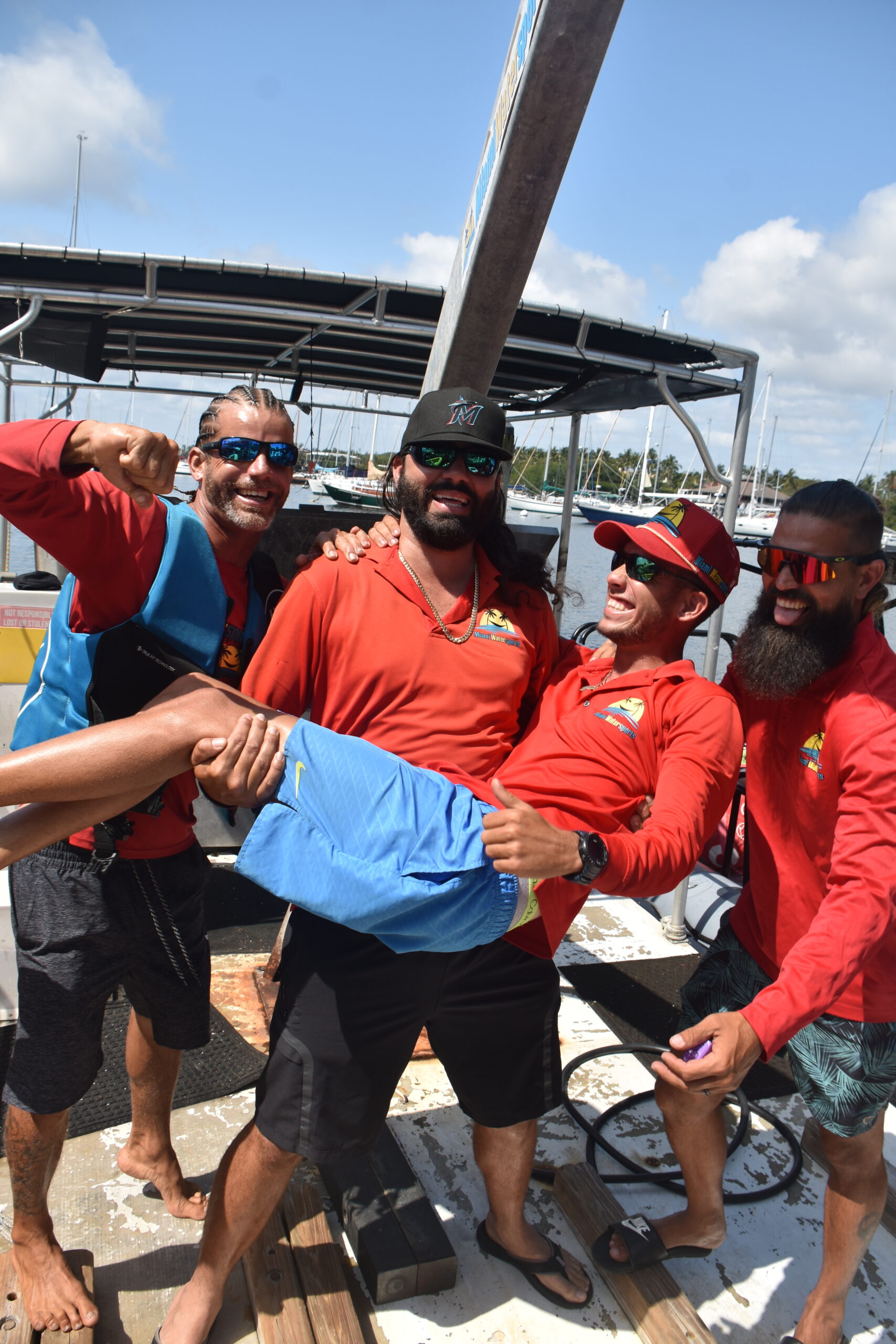
About Miami Watersports
The Miami Watersports crew has run parasailing, jet ski, flyboard, and boat trips from Pier 9 at Dinner Key Marina in Coconut Grove since 2007.