
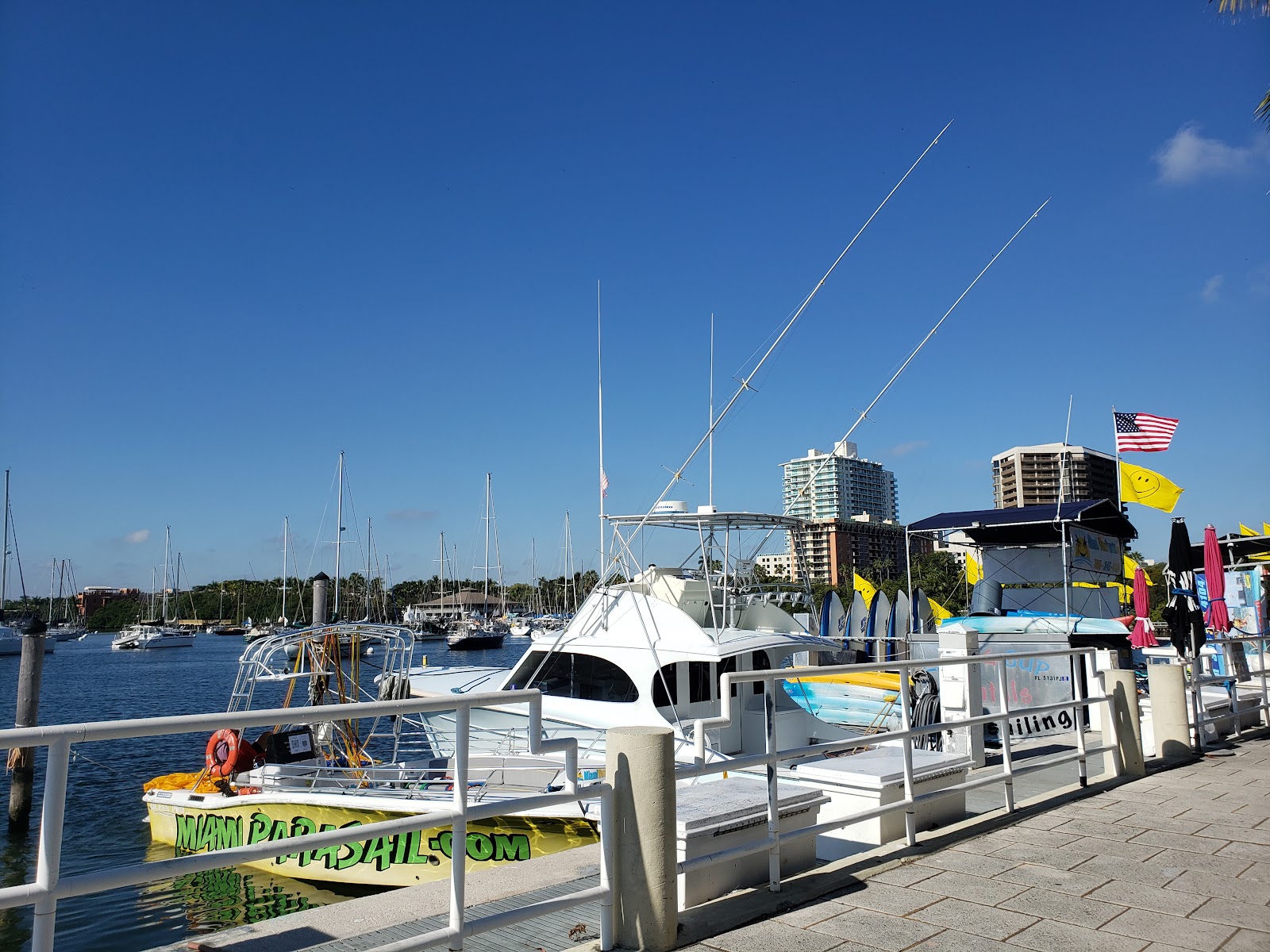
Parasailing safety in Miami starts with where you fly and who you fly with. At Miami Watersports, parasailing launches from Pier 9 at Dinner Key Marina in Coconut Grove and stays over the calm, sheltered water of Biscayne Bay — not the crowded, choppy open ocean off South Beach. You take off and land dry from the boat's flight deck, rise up to 400 feet for roughly 6 to 10 minutes aloft, and never have to be a strong swimmer to participate. Below is the complete, honest picture of how it works, what keeps you safe, and what to expect from the moment you step on board.
Key Takeaways
- Parasailing in Miami with Miami Watersports launches from Pier 9 at Dinner Key Marina in Coconut Grove and flies over Biscayne Bay, a sheltered bay that is typically calmer than the open Atlantic off South Beach.
- Takeoff and landing are dry — you are clipped in and lifted directly from the boat's flight deck and reeled back down to it, so you usually never touch the water.
- Riders fly up to 400 feet and spend about 6 to 10 minutes aloft during a trip that lasts roughly one hour, with the rest of the time spent boarding, briefing, and motoring out and back.
- The activity accepts riders from age 5 and up, supports solo, tandem (two), or triple (three) flights, and caps the combined weight at 450 pounds per flight; swimming ability is not required.
- Operations follow the weather: flights never run during lightning, while light rain usually does not stop a trip. The captain has final say based on real-time conditions on the bay.
- If weather or an operational issue cancels your flight, you receive a marina credit that is valid for 2 years rather than a cash refund, so your money is protected for a future visit.
Why Biscayne Bay Is a Safer Place to Parasail
Not all Miami parasailing is the same, and the launch point matters more than most visitors realize. Miami Watersports flies out of Dinner Key Marina in Coconut Grove, sending riders up over Biscayne Bay. This is a fundamentally different environment from the open-ocean operations that depart from the South Beach and Government Cut side of the city.
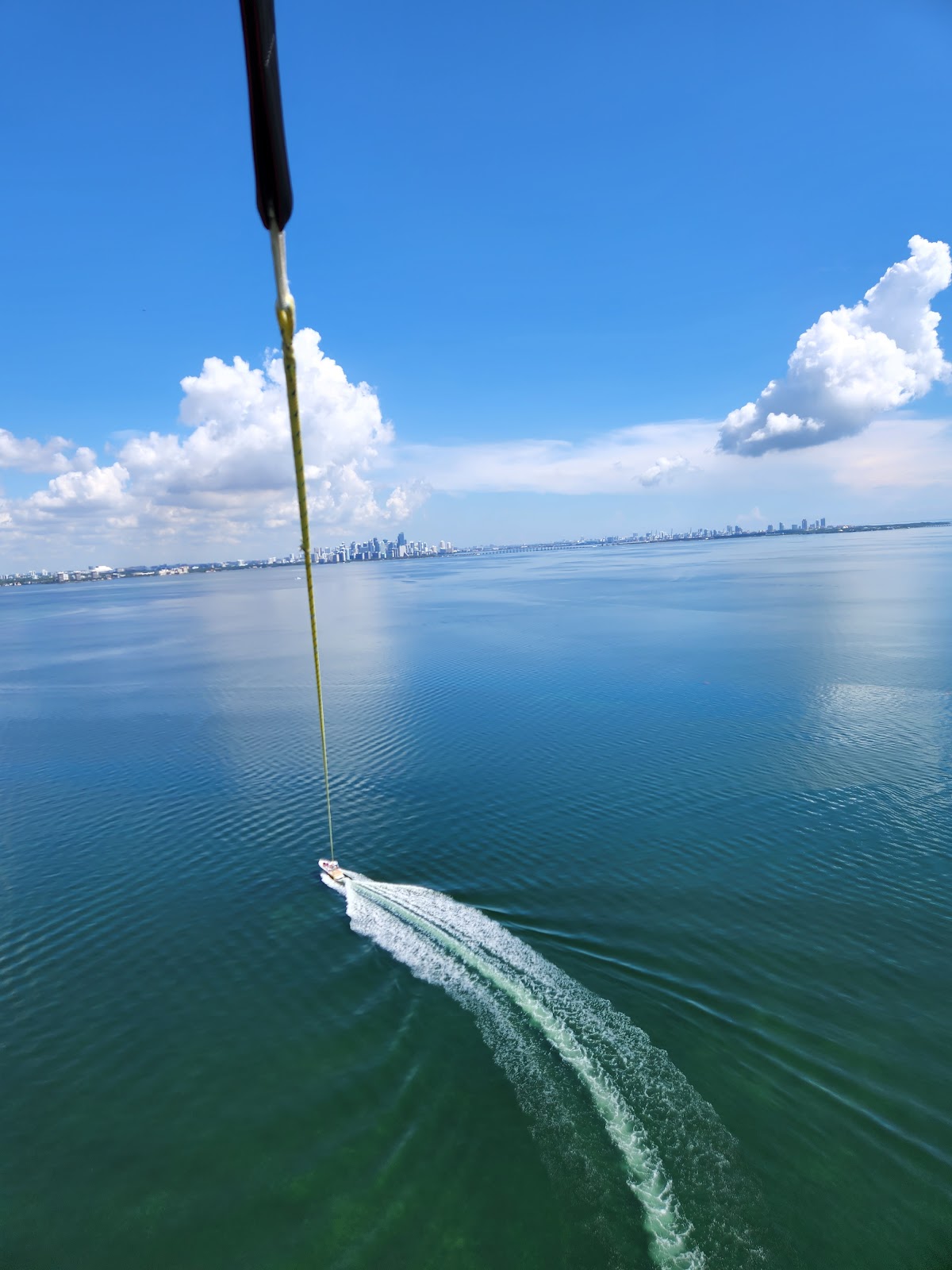
Biscayne Bay is a partially enclosed body of water tucked behind barrier islands and Key Biscayne. That geography matters for safety. The bay is shielded from the long-period ocean swell that rolls in off the Atlantic, so the water is generally flatter and the wind is more predictable. A calmer surface means a steadier boat, a smoother takeoff and landing, and a more controlled descent — the exact conditions that make parasailing comfortable rather than jarring.
Calm Water vs. the Open-Ocean Side
On the South Beach side, parasail boats often work in heavier boat traffic, bigger chop, and the wakes of cruise ships and large vessels transiting Government Cut. Those forces translate directly into a bouncier ride and a trickier landing. Over Biscayne Bay, the protected fetch and lighter traffic let the captain pick a clean line, keep the boat tracking smoothly, and reel you down gently onto the flight deck. The bay also gives you a far prettier view: from up to 400 feet, you can take in the Coconut Grove skyline, Key Biscayne, the Miami waterfront, and the green expanse of Biscayne National Park to the south.
Local Knowledge of the Bay
A captain who runs the same stretch of Biscayne Bay every day knows where the sandbars sit, how the afternoon sea breeze typically builds, where boat traffic concentrates near the marina entrance, and how the water behaves on an outgoing tide. That accumulated local knowledge is itself a safety feature. It is the difference between an operator reacting to conditions and one anticipating them before you ever leave the dock.
How a Modern Parasail Flight Actually Works
The single most common misconception about parasailing is that you have to launch from the water or splash down at the end. With Miami Watersports' dry takeoff and landing system, that is not how it works at all.
Dry Takeoff and Landing from the Flight Deck
The boat is purpose-built with a flight deck — a raised platform at the stern — and a hydraulic winch that controls a single towline. You are fitted with a harness, clipped into the parasail, and seated on the flight deck. When the captain is ready, the boat eases forward, the winch lets the line out, and you lift smoothly off the deck and into the air. There is no running start, no jumping, and no swimming.
At the end of the flight, the process reverses. The winch reels the line back in, drawing you down toward the boat until you settle right back onto the flight deck. Because everything is controlled by the winch and the captain, you typically stay completely dry from start to finish. (Many operators will, on request and only when conditions allow, give riders a quick, controlled "toe dip" in the water — but a dry, deck-to-deck flight is the standard.)
What the Hour Looks Like
A parasailing trip runs about an hour door to door, but you are only aloft for roughly 6 to 10 minutes of that. The rest is the experience around the flight: boarding at the marina, the safety briefing, harnessing up, motoring out to the launch zone over the bay, watching other riders go up if you are in a group, and cruising back to the dock afterward. That cadence is deliberate. It gives the crew time to brief everyone properly, check every harness and clip, and read the conditions before anyone leaves the deck.
Solo, Tandem, and Triple Flights
You can fly alone, in a tandem pair, or as a triple — three riders side by side on the same bar. Tandem and triple flights are popular with couples, families, and friends who want to share the moment and hear each other react in real time. The crew sets the configuration based on your group and the day's conditions. The governing limit is the combined weight of 450 pounds across everyone on the bar, which the crew confirms before you board so the parasail and winch are loaded correctly for a safe, stable flight.
Parasailing Safety in Miami: Equipment, Crew, and Procedures
Good parasailing safety is unglamorous and repetitive on purpose. The same checks happen on every trip, regardless of how routine the day feels.
The Pre-Flight Briefing and Harness Check
Before you board, the crew walks the group through the briefing: how to sit, where to hold, what the hand signals mean, what the takeoff and landing will feel like, and what to do if you have any concern in the air. Then comes the harness fitting. Each harness is adjusted to the individual rider and physically checked, and on tandem or triple flights the crew confirms how riders are positioned and balanced on the bar. None of this is rushed. If a harness needs re-adjusting or a rider has a question, the launch waits.
Single-Line Systems and the Winch
The boat uses a winch-controlled towline to let riders out and reel them back in, which is what makes the smooth, dry deck-to-deck launch and recovery possible. The captain controls altitude and the rate of ascent and descent throughout the flight, so you are never simply "let out" and forgotten. The line, harness, and parasail are inspected as part of normal operations, because the gear is the operator's livelihood and the first line of defense.
The Captain's Authority and U.S. Coast Guard Standards
The captain has the final call on whether a flight launches, full stop. Parasail vessels carry the safety equipment required of commercial passenger boats, and operators are expected to follow the boating-safety practices promoted by the U.S. Coast Guard and the Florida Fish and Wildlife Conservation Commission, which oversees boating and waterways across the state. If the captain looks at the wind, the radar, the chop, or the traffic and decides conditions are not right, the flight is delayed or scrubbed — and that decision is a feature of a safe operation, not a disappointment to argue with.
Miami Weather, Wind, and the Rules of the Sky
Weather is the variable that most affects parasailing safety in Miami, and it deserves a clear, honest explanation because Miami's weather is famously fast-moving.
Lightning Never Runs; Light Rain Usually Does
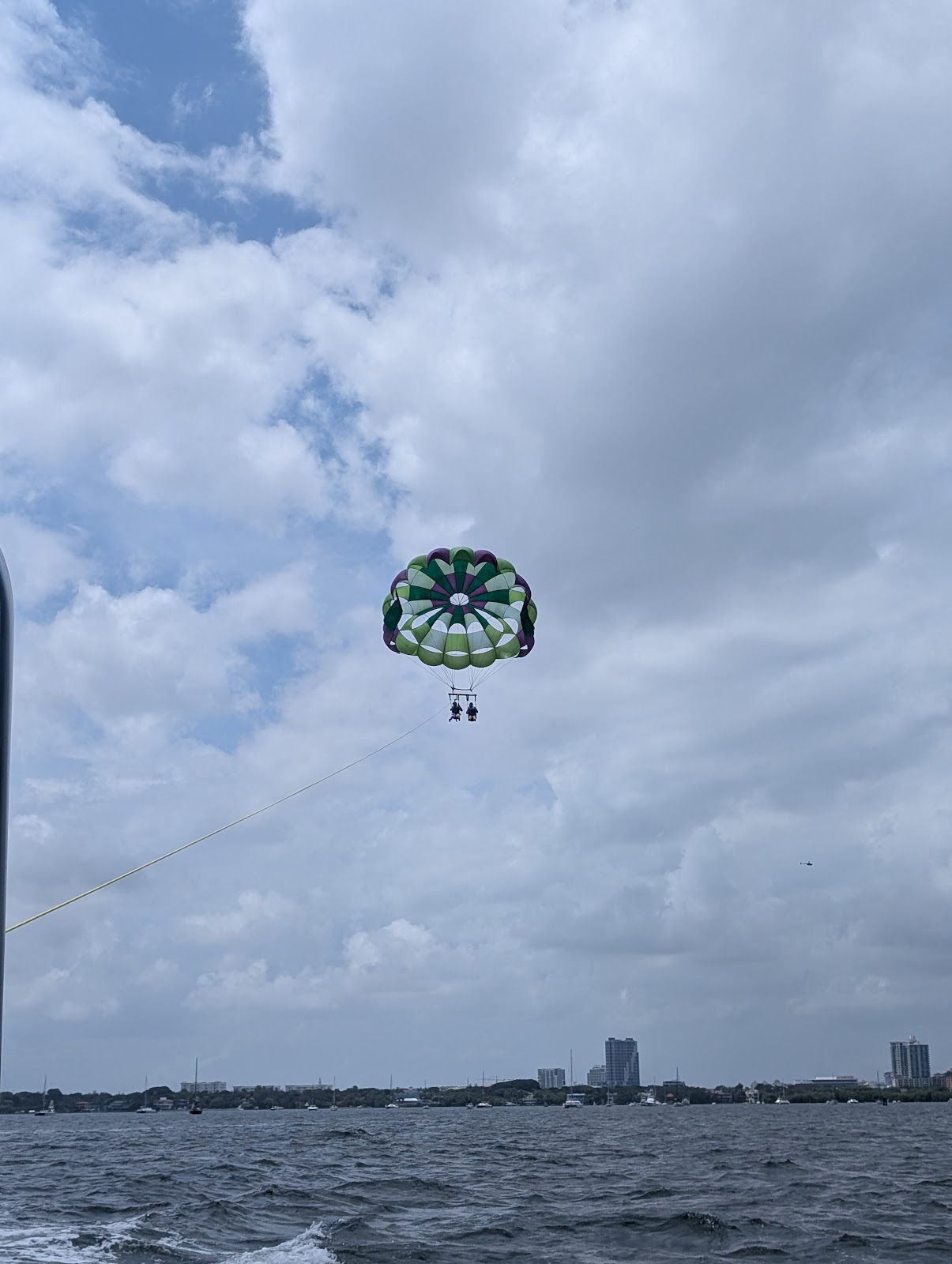
The firm rule is simple: flights never run during lightning. South Florida is one of the most lightning-prone regions in the country, and a parasail rider at altitude on a towline has no place in a thunderstorm. If there is lightning in the area, you do not fly — there is no exception and no judgment call to be made.
Light rain, on the other hand, usually does not stop a trip. A passing shower over Biscayne Bay is common and is generally not a safety concern on its own. So a gray sky does not automatically mean a cancellation. What matters is whether there is electrical activity, how hard the wind is blowing, and how the bay is behaving — not whether a few drops are falling.
Wind and Conditions on the Bay
Wind is the other major factor. Too little wind and the parasail will not fly well; too much, especially gusty or shifting wind, and conditions become unsafe for a controlled launch and recovery. The captain monitors wind speed and direction continuously and will hold or cancel if it moves outside safe limits. Because Biscayne Bay is sheltered, it often stays flyable when the open ocean is already too rough — but the bay has its limits too, particularly when afternoon thunderstorms build over the Everglades and push toward the coast.
Seasons, Sea Breezes, and Timing Your Trip
Miami's parasailing season runs year-round, but the rhythm changes with the calendar. The cooler, drier months from late fall through spring tend to bring steadier, clearer days and the best visibility from altitude. Summer brings warm water and long daylight, but also the classic South Florida pattern of calm mornings giving way to building afternoon thunderstorms — which is why morning flights are often the smartest choice in summer. Checking the forecast from the National Weather Service in Miami the day of your trip will tell you whether the afternoon looks stormy, and the marina will always make the final call based on what is actually happening on the bay. For deeper preparation on reading marine conditions, the BoatUS Foundation publishes accessible boating and weather-safety education.
Who Can Parasail — and Who Should Think Twice
Parasailing is one of the most accessible adrenaline activities on the water, but a few honest guidelines help you decide if it is right for you or your group.
Age, Weight, and Swimming
The minimum age is 5 years old, which makes parasailing a genuine family activity — younger kids typically fly tandem with a parent or adult so they are never alone on the bar. The combined weight limit is 450 pounds per flight across all riders on the bar, and the crew confirms this before boarding so the equipment is loaded within its safe range. Crucially, swimming is not required. Because takeoff and landing are dry and you wear a flotation-capable life jacket as part of the standard gear, non-swimmers can fly with confidence.
Health Considerations
Parasailing is gentle on the body — there is no impact, no sudden G-force, and the ascent and descent are smooth and winch-controlled. That said, anyone with a serious back or neck condition, a recent surgery, a heart condition, or who is pregnant should consult their doctor and let the crew know in advance. The harness sits against the body and the gentle lift still applies pressure, so it is worth a conversation before you book if you have any doubt.
Families and First-Timers
If you have never parasailed, Biscayne Bay is an ideal place to start. The calmer water, the dry deck-to-deck flight, the short and supervised time aloft, and the steady winch control all combine into a first experience that feels exciting rather than frightening. Families especially appreciate that everyone — kids from age 5, grandparents, and nervous first-timers — can share the same flight or watch each other go up from the boat. If you want to round out the day, pair parasailing with one of our calmer-water options like a boat tour of the bay, or add a higher-energy jet ski session for the thrill-seekers in the group.
Protecting Your Bay and Your Booking
Parasailing safety in Miami is not only about your flight — it is also about the environment you fly over and the way your reservation is handled when nature does not cooperate.
Respecting Biscayne Bay's Wildlife
Biscayne Bay is a living ecosystem with seagrass beds, manatees, dolphins, and migratory birds, much of it adjoining the protected waters of Biscayne National Park. Responsible operators run their routes to avoid sensitive shallows and to keep a respectful distance from wildlife. From up to 400 feet you often get the best view of all — dolphins cutting through the water, rays gliding over the flats, and the color gradient of the bay shifting from turquoise to deep blue. Following the boating and waterway guidance from Florida's FWC helps keep both riders and marine life safe.
Marina credit that is valid for 2 years
Because the weather makes the final decision, it is worth knowing exactly what happens if your flight is canceled for weather or an operational reason. Miami Watersports does not issue cash refunds in that situation; instead, you receive a marina credit that is valid for 2 years. That credit holds the full value of what you paid and can be applied to a future flight or another activity whenever you come back. The benefit of this policy is that you are never pressured to fly in marginal conditions just to "use" your reservation — the safe call and the financially sensible call are the same call.
Member Rate vs. Non-Member Rate
Like a hotel that offers a member rate alongside its standard rate, Miami Watersports prices parasailing in two tiers. The Non-Member rate is an all-in price with nothing added at check-in. The member rate is a lower base price, with a fuel charge plus tax and a marina fee collected at check-in. Pricing is per rider and is shown live on the activity page so it is always current — see the up-to-date numbers on the parasailing activity page. We never publish stale prices in articles like this one precisely because rates can change; the activity page is always the source of truth.
What to Bring and How to Prepare
A little preparation makes the day smoother and safer.
- Sun protection. You will be exposed at the marina, on the boat, and at altitude. Reef-safe sunscreen, a hat you can secure or stow, and sunglasses with a strap are smart on Biscayne Bay's open water.
- Secured belongings. Anything that can fly out of a pocket at 400 feet should stay on the boat. Phones and cameras are best left in a zipped bag unless they are firmly tethered.
- Appropriate clothing. A swimsuit or quick-dry clothing is ideal. Even on a dry flight, sea spray on the boat ride out and back is part of the experience.
- Arrive early. Getting to Pier 9 at Dinner Key Marina with time to spare means an unhurried check-in, briefing, and harness fitting — never rush the safety steps.
- Check the forecast, then trust the crew. Glance at the National Weather Service Miami forecast, but remember that the captain's real-time read of the bay is what ultimately decides whether you fly.
Following the same core boating-safety habits encouraged for all Florida boaters by the Florida Department of Highway Safety and Motor Vehicles — knowing the weather, respecting the water, and listening to the captain — keeps every trip on the bay safe and enjoyable.
Conclusion: Fly Smart Over Biscayne Bay
Parasailing safety in Miami comes down to a few things done consistently: launching from the sheltered, calmer water of Biscayne Bay rather than the crowded open ocean; using dry deck-to-deck takeoffs and landings; running thorough briefings and harness checks every single time; and treating the weather — especially lightning — as the non-negotiable authority it is. With a minimum age of 5, no swimming requirement, and solo, tandem, or triple flights up to 400 feet, it is one of the most accessible and breathtaking ways to see Miami from above. And because a weather cancellation simply becomes a marina credit that is valid for 2 years, the safe decision is always the easy one.
When you are ready to fly, check today's live pricing and reserve your spot on the parasailing activity page. We launch from Pier 9 at Dinner Key Marina in Coconut Grove, seven days a week — come see Biscayne Bay the way it is meant to be seen.
Book your Miami parasailing adventure
Member rates apply on every booking. Tax & marina fee added at check-in.
Frequently Asked Questions
About Miami Watersports
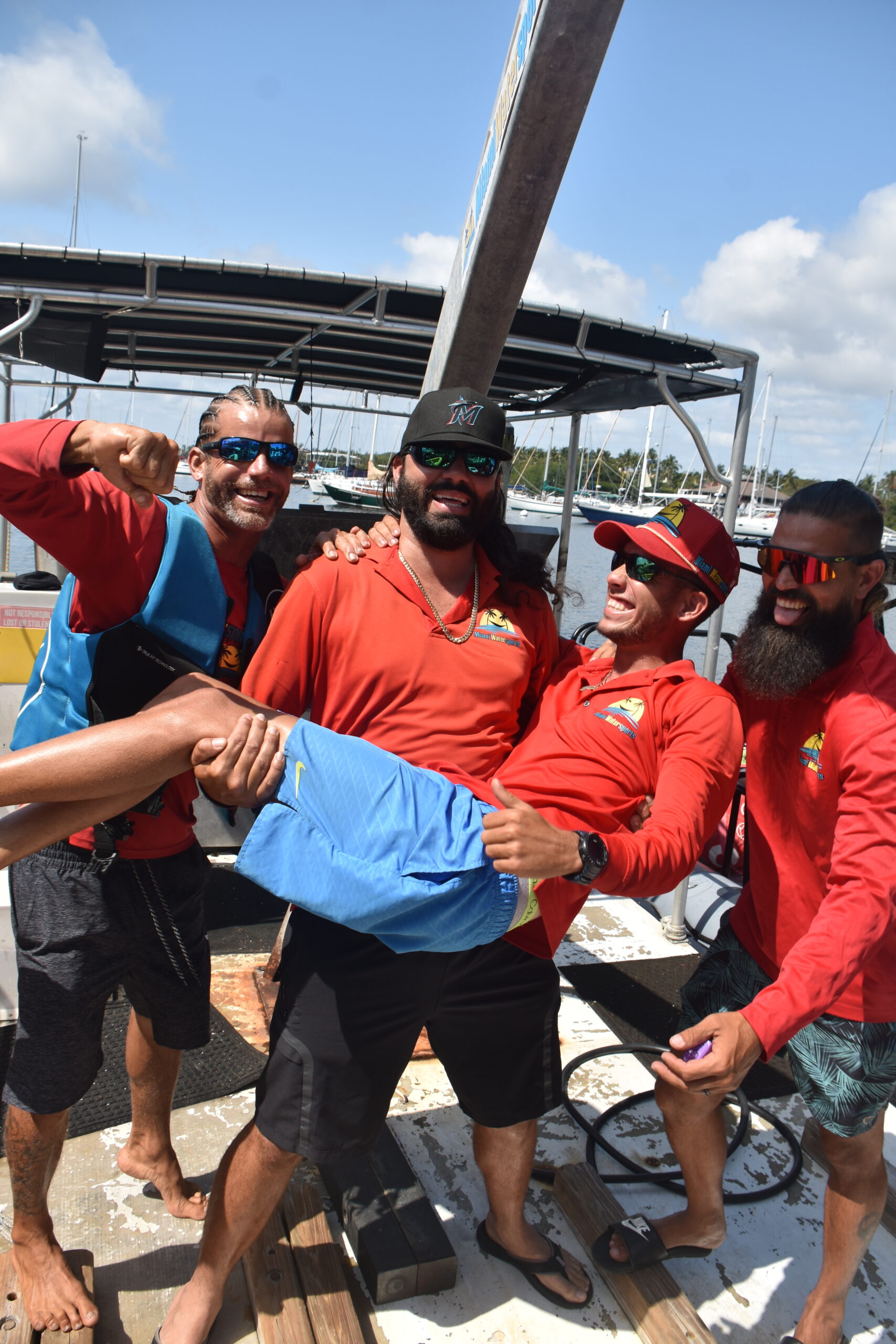
The Miami Watersports crew has run parasailing, jet ski, flyboard, and boat trips from Pier 9 at Dinner Key Marina in Coconut Grove since 2007.