Parasailing and paragliding: the short answer
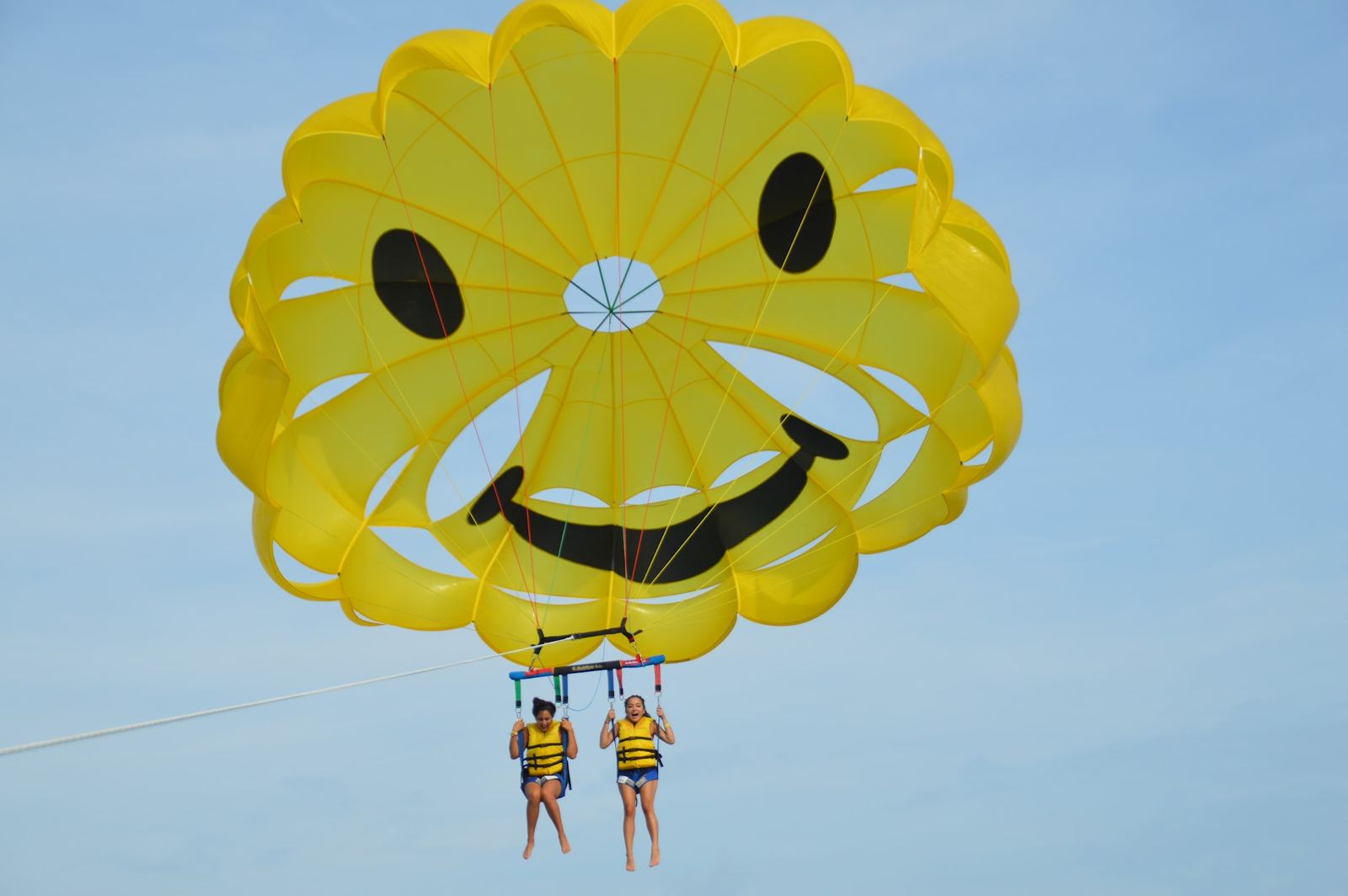
Parasailing and paragliding both put you under a fabric canopy in the air, and that is where the likeness ends. A parasail stays tied to a boat by a towline the whole time, and the crew controls the climb and the trip back down. A paraglider is a free-flying glider without an engine or a towline: the pilot launches on foot, steers it, finds rising air and picks a landing spot.
That one difference decides almost everything else. Parasailing needs no training, because you are a passenger. Paragliding is a sport you learn over days of instruction, or you fly tandem as the passenger of a trained pilot. Our parasailing happens over the water behind a boat. Paragliding happens from hills, ridges and open fields.
At Dinner Key we run parasailing only. Our Miami parasailing flights from Pier 9 take up to three people at a time up to 400 feet over Biscayne Bay, with takeoff and landing on the boat's flight deck. We do not offer paragliding, and this guide says so plainly so you book the right thing.
People also search "paragliding boat" when they mean a boat that lifts you under a canopy. That ride is parasailing, and it is what the rest of this guide walks through: how each one works, who can do which, real group examples and what check-in looks like on the dock.
How a parasail flight works at Dinner Key
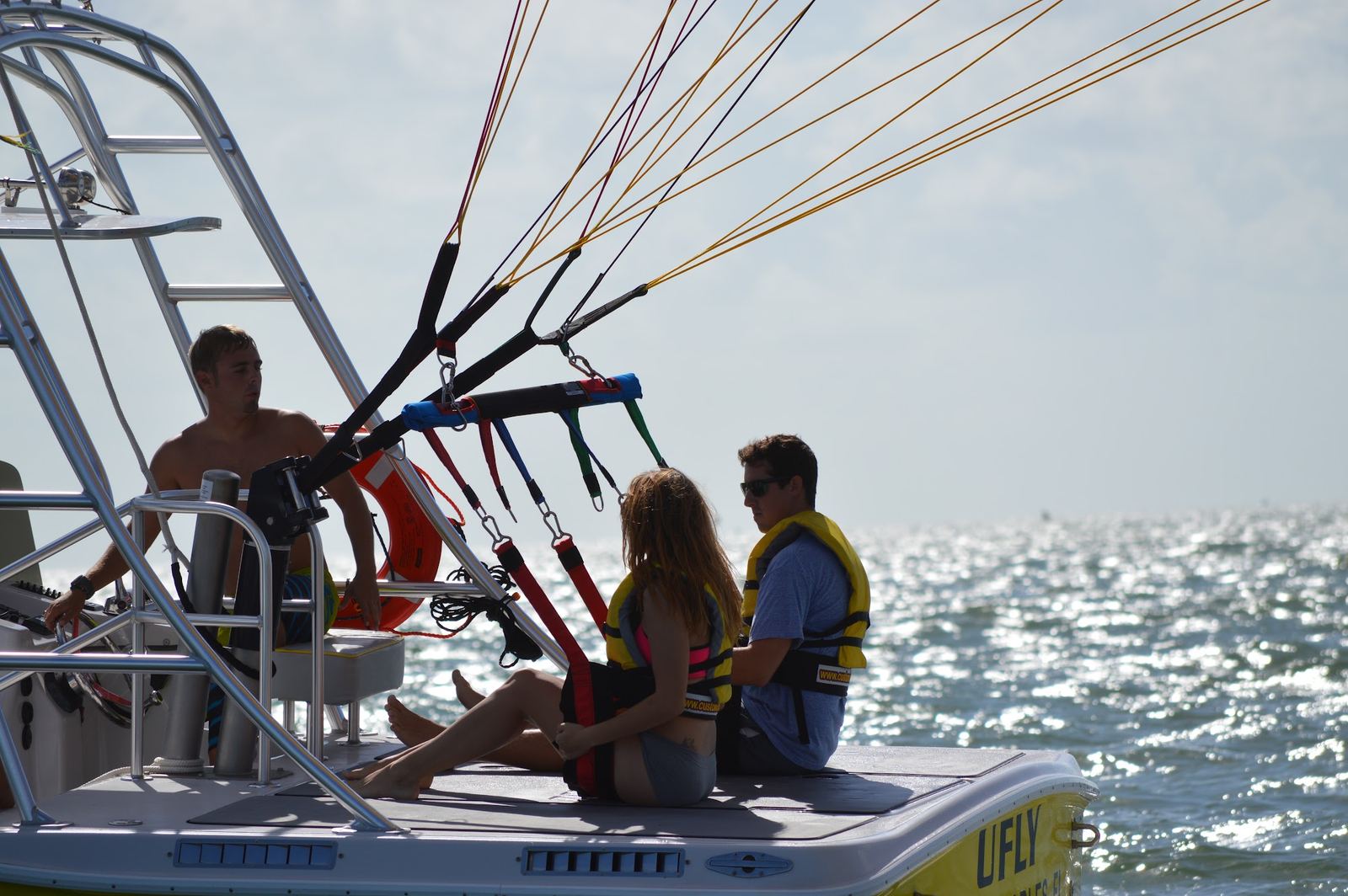
Our parasail trips leave from Pier 9, Slip 4-5, at Dinner Key Marina, 3400 Pan American Drive in Coconut Grove. Look for the yellow flags. We fly seven days a week from 10am to sunset, year-round, weather permitting, and a Coast Guard licensed captain runs every boat.
The setup is simple. A boat carries a group out onto the bay, and each flight takes one, two or three people up on a line from the back of the boat to as much as 400 feet. You start on the flight deck and you finish on the flight deck. In between, the captain and crew control the speed, the climb and the reel-in.
Your job is small. You sit, hold on, listen to the crew and look around. You never steer, and you never need to know anything about wind or wings. That is the core of the parasailing and paragliding difference: on our boat, the flying is done for you.
How long you spend in the air depends on how the trip runs that day. Our own pages state the flight time in two slightly different ways, so check the current figure on the parasailing page before you go. For more on the height itself, see how high you go parasailing.
How paragliding works
Paragliding is a different animal. A paraglider is a lightweight glider with no rigid frame, launched on foot. The pilot sits in a harness hung from a fabric wing, and air entering vents in the front of the wing keeps it inflated in its airfoil shape.
“Pierre and Alex were the best. Amazing parasail.”
There is no engine and no towline once you are flying. A pilot usually takes off by running down a slope into the wind until the wing lifts them. Flatter areas use a winch tow to get the pilot up, and then the pilot releases the line. From there the pilot steers with brake lines held in each hand and by shifting weight in the harness.
Because a paraglider glides, it is always slowly coming down unless it finds rising air. Skilled pilots use wind pushed up by ridges, or rising columns of warm air called thermals, to gain height. Flights can last hours and climb to a few thousand meters, which is a world away from a parasail ride on a line behind a boat.
The sport takes training. Schools teach ground handling first, then short low flights on gentle hills, then longer flights, turns and landings, with radio instructions from the ground. Around 10 days of instruction to a basic certification is common. People who want a taste without the course usually book a tandem flight, where an instructor flies the wing and the guest rides along.
These background points come from the general reference articles listed in the sources at the end of this guide. They are here to explain the sport, and none of our own rules depend on them.
Parasailing vs paragliding, side by side
The two tables put them next to each other. The first covers how each one flies; the parasailing column describes our flights at Dinner Key, from our own pages. The paragliding column describes the sport in general, from the background sources.
| Question | Parasailing at Dinner Key | Paragliding in general |
|---|---|---|
| What holds you up | A canopy on a towline from our boat | A free-flying fabric wing |
| Who controls the flight | The captain and crew | The pilot, with brakes and weight shift |
| Engine or tow | The boat pulls you the whole time | No engine; a launch run or a winch tow, then free flight |
| Where it happens | Over Biscayne Bay, from Pier 9 | Hills, ridges and open fields |
| Takeoff | Seated on the boat's flight deck | Running down a slope into the wind |
| Landing | Reeled back onto the flight deck | The pilot flies to a landing zone |
The second half of the comparison covers the practical side: training, group size, height and age.
| Question | Parasailing at Dinner Key | Paragliding in general |
|---|---|---|
| Training needed | None; the crew briefs you | Days of instruction, or a tandem with an instructor |
| How many fly together | Solo, tandem or triple | Usually one pilot, or a pilot and one passenger |
| Height | Up to 400 feet | Can climb to a few thousand meters in rising air |
| Minimum age | 5 | Set by each school |
Two rows matter most for a first-timer. "Who controls the flight" tells you how much you have to know, and "Training needed" tells you how much time it takes before you are in the air. For parasailing at our dock, the answers are the crew and none.
The height row surprises people. A parasail flyer stays on the line behind the boat, at a height the crew controls. A paraglider pilot can go much higher, and can also end up lower than planned if the air stops rising. That freedom is the point of paragliding, and it is also why it takes training.
Who can parasail with us
Every rule here comes from our parasailing trip details and our policies page. If a rule is not on those pages, it is not in this table.
| Rule | What our pages say | Page |
|---|---|---|
| Minimum age | 5 years old | Parasailing page, policies |
| Weight | 450 lb at most per flight, combined | Parasailing page, policies |
| Pairing | Single flyers may be paired by weight | Parasailing page, policies |
| Swimming | Not required if you are comfortable in the water | Parasailing page, policies |
| Pregnancy | No pregnancy on the parasail | Parasailing page |
| Minors | A parent or guardian signs the waiver | Parasailing page, policies |
| Experience | None needed; the crew gives instructions | Parasailing page, FAQs |
A few notes the table cannot hold. The weight limit is per flight, so it is the total of everyone in the harness bar together. If you come alone, the crew may pair you with another flyer to make the weight work. Our policies also ask everyone to skip drugs and alcohol before and during activities, to wear the safety gear we provide and to be comfortable in water without panic.
If you have a medical condition, our FAQs ask you to check with your doctor first and to tell our staff before your flight. For the age rule in more depth, read how old you have to be to parasail.
Paragliding schools set their own rules for age, weight and fitness, and those vary from school to school. Ask the school directly; nothing on our pages covers them.
Real groups: who should book what
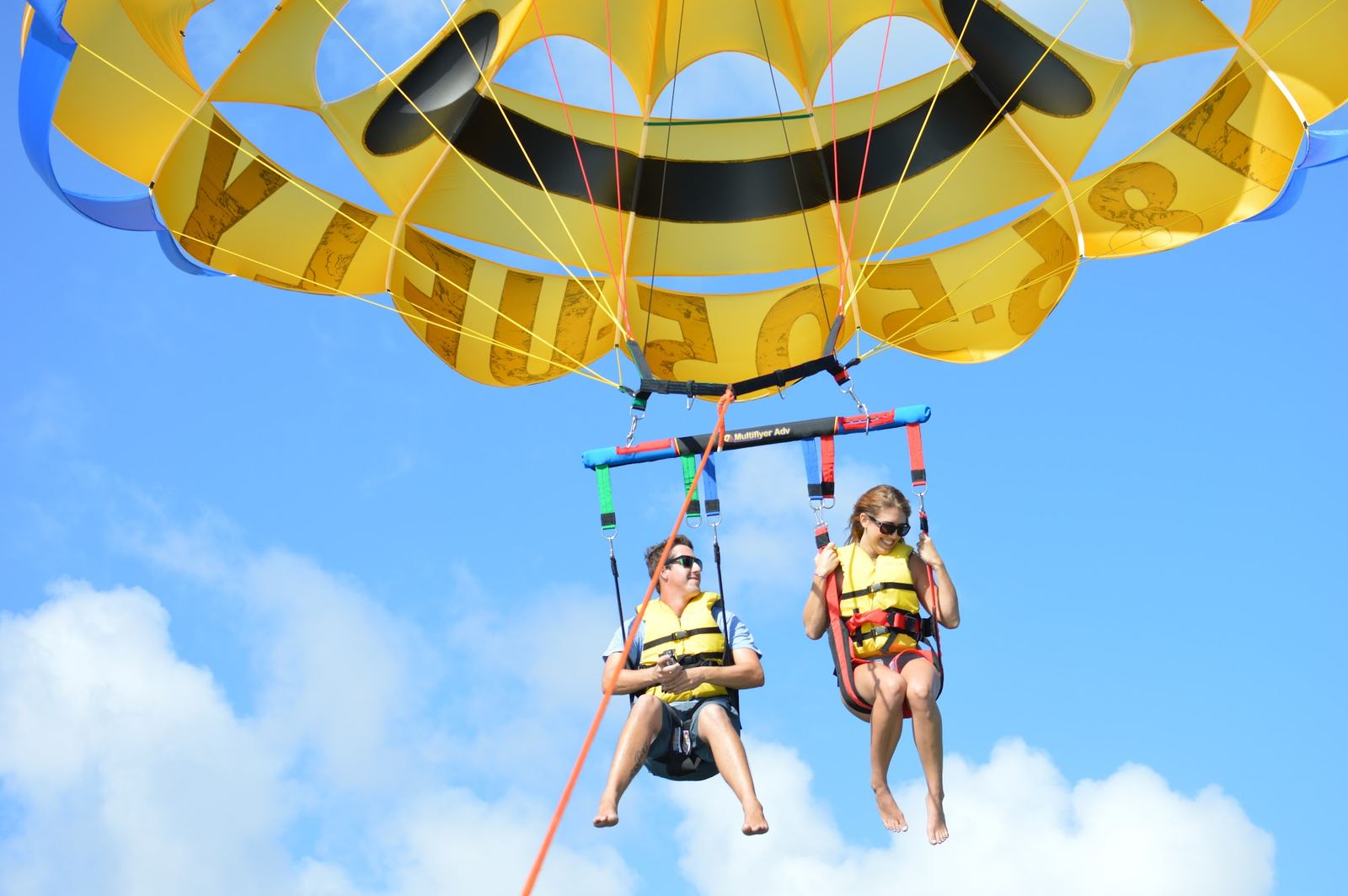
“I can't swim and I'm scared of heights, but I enjoyed Tom and Tommy's jokes even more than the parasail itself.”
Here is how the choice plays out for a few typical groups. Each example uses only the rules above.
A couple on vacation. You want to fly together and you have one afternoon. Parasailing fits: book two seats and ask for a tandem flight so you go up side by side. Your combined weight has to be within the 450 lb flight limit. Paragliding would mean finding a school with tandem pilots, and each of you would fly with a separate instructor, so you would not share the wing.
A parent and a seven-year-old. Our minimum age is 5, so a seven-year-old can fly. The parent or guardian signs the waiver for the child, and the two of you can go up together as a tandem if your combined weight fits the limit. Swimming is not required as long as the child is comfortable in the water. For a paragliding tandem, the school's own rules on age decide it.
A family of five. A boat carries up to 12 people, so the whole family rides out together and takes turns. Split into flights that keep each one within 450 lb: two parents in one tandem and three children in a triple, for example, or any mix the crew can make work on the day. Anyone who would rather not fly can ride along as a spectator, which is paid at check-in and not booked online.
Four friends, one nervous about heights. Book the flyers, and let the nervous friend decide on the boat. Our FAQs say to tell the crew about any fear before your flight, and to tell staff if you change your mind before the session begins. Your friend can watch the first flight from the deck before deciding.
Someone who wants to learn to fly a wing. If the goal is to pilot something yourself, parasailing will not get you there, because you never steer. That person wants a paragliding school, and we are honest about that.
One flight of each, step by step
The quickest way to see the difference is to follow one flight of each from start to finish. The first list is our parasail trip, taken from our parasailing page and FAQs. The second is a typical tandem paragliding flight, from the background sources.
A parasail flight from Pier 9
- 1You check in at the dock. Arrive 15 minutes before departure; the ID, payment and parking details are on our policies page.
- 1You board and ride out. Up to 12 people ride out onto Biscayne Bay together and take turns in the air.
- 1The crew seats you on the flight deck. They clip you in for a solo, tandem or triple flight and brief you on what happens next.
- 1The boat lifts you. Our FAQs describe it simply: the boat's speed gradually lifts you off the deck and into the air.
- 1You climb and look around. You rise to as much as 400 feet over the bay. You do not steer, so your hands stay on the harness and your eyes on the view.
- 1You choose the dip, or not. On the way down the crew can lower you into the water if you asked for it.
- 1The crew reels you back onto the deck. The next flyers go up, and the whole boat trip lasts up to an hour.
A tandem paragliding flight, in general
- 1The pilot reads the wind and picks a launch on a slope, because launching and landing are done into the wind.
- 1The wing is laid out on the ground, and the pilot and passenger are clipped into their harnesses.
- 1The wing comes up. Running, a tow or a strong enough breeze fills the wing, it rises overhead, and you are lifted off the ground.
- 1The pilot flies. Brakes in each hand and weight shift in the harness steer the wing, and the pilot looks for rising air to stay up.
- 1The pilot brings you down. Pilots usually lose height over the landing zone, line up into the wind and flare the wing just before touchdown to slow the landing.
Read the two lists again and look at who does the work. In ours, the crew acts and you ride. In paragliding, the pilot makes every decision from the launch to the flare, which is why the solo version takes training and the tandem version needs a trained pilot.
What holds you up: the gear in each sport
The equipment explains a lot of the difference, so here is what is above and around you in each one.
Parasailing. A parasail is a canopy towed behind a moving boat so that the wind against it creates lift, and the flyer has little or no steering control. Commercial operators fly from winch boats, a design with a hydraulic winch that launches and retrieves the canopy and its flyers from the flight deck. Larger canopies, around 30 to 40 feet across, let operators lift heavier loads in lighter winds, and a side-by-side bar lets two or three harnesses fly at once. Those points come from the general parasailing reference. On our side, the parasailing page says you fly from a USCG-rated parasail vessel run by a Coast Guard licensed captain.
Paragliding. A paraglider wing is made of two layers of fabric joined into a row of cells, open at the front so incoming air keeps it inflated. Lines run from the wing to risers clipped to the pilot's harness, and most harnesses have foam or other protection under the seat and behind the back. Typical wings cover about 20 to 35 square meters and weigh 3 to 7 kilograms, and with the harness, a reserve parachute, instruments and a helmet, the whole kit comes to around 12 to 22 kilograms, usually carried in a backpack to the launch.
The practical upshot for you: with parasailing, everything you fly on stays on the boat and the crew handles it. With paragliding, the pilot owns, carries, lays out and checks the kit before every flight.
What you bring for a parasail ride is just clothing and a few small things. Our guide to what to wear parasailing covers clothes for the dip and the sun, and our guide to parasailing pictures covers cameras and phones.
Wind and weather: two different jobs
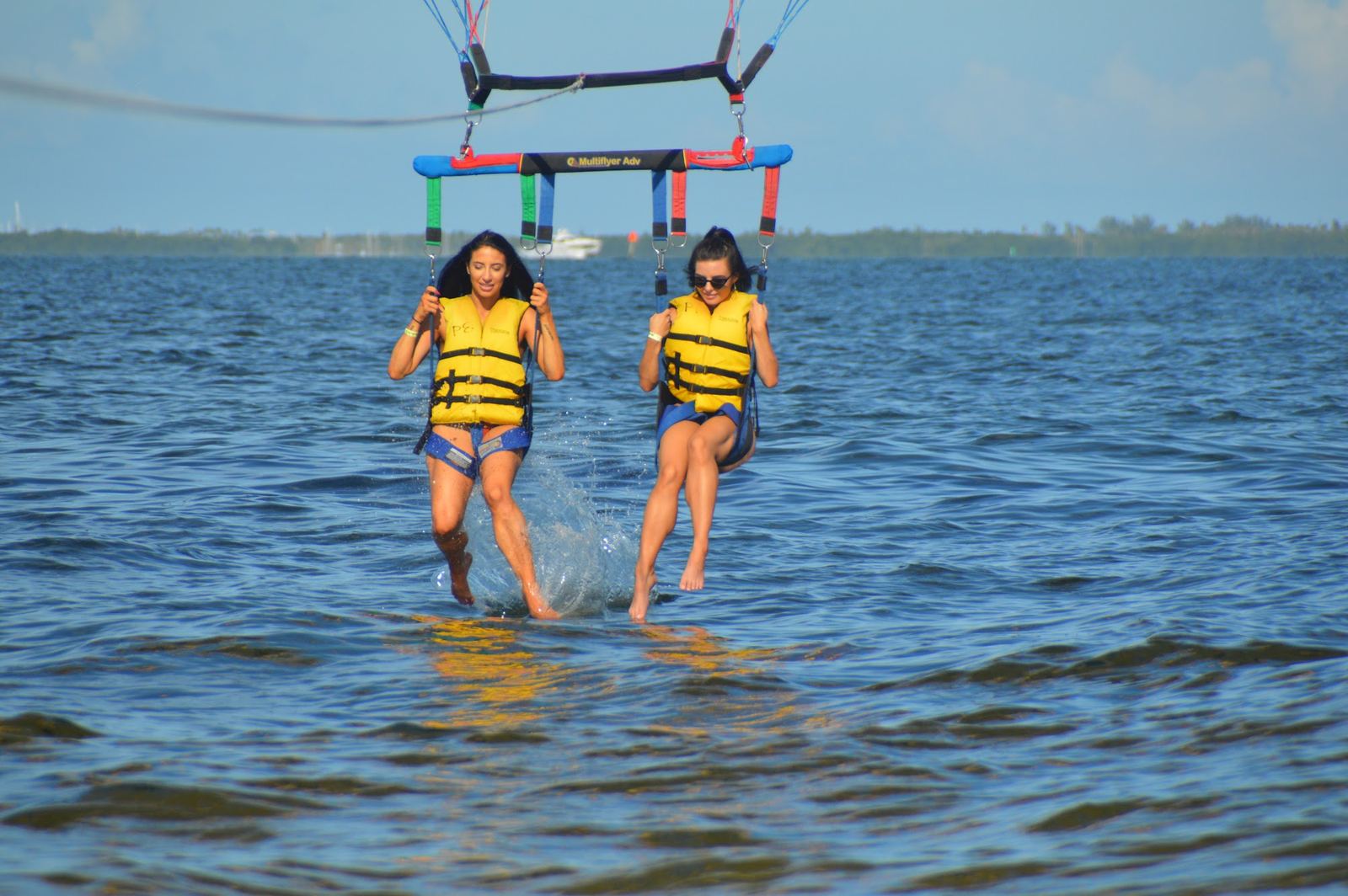
Wind matters to both sports, and who deals with it is one more place they split apart.
For a paraglider pilot, the wind is part of the flying. Launches and landings are made into the wind, training sites for beginners look for a steady light wind, and pilots gain height from wind pushed up by ridges or from thermals. Turbulent air can make part of a paraglider wing deflate, so choosing the right day and reading the air is a skill pilots train for.
For a parasail passenger, the call is made for you. Commercial parasailing has had its own weather standards since the ASTM set the first ones in April 2013, according to the general reference. At our dock, certified staff watch the radar and decide if it is safe to fly, and if weather stops your trip you get a credit valid for 2 years; the full terms are on our policies page.
About the dip: on the way down, the crew can lower you into the water for a quick dip before reeling you back to the deck. Our parasailing page calls it optional but recommended, and our FAQs say getting wet is your choice. If you plan on it, wear a swimsuit and bring a towel. If not, you can stay dry from takeoff to landing.
What a parasail flight includes
Prices change, so the live number is always on our Miami parasailing booking page. What we can tell you is what that price covers, straight from the page.
The price includes the flight up to 400 feet, a Coast Guard licensed captain, takeoff and landing from the flight deck, and fuel. Tax and the marina fee are added at check-in for every booking. People riding along to watch pay the spectator rate at check-in; it is not booked online.
Paragliding pricing is set by each school or tandem operator, and we have no figures for it.
Which one is right for you
Put simply, you are choosing between being flown and learning to fly.
Pick parasailing if you want to be in the air the same day, with no training, alongside a partner, a child or a friend, and to land back where you started. It suits first-timers, families with kids aged 5 and up, and anyone who wants the view without the responsibility of steering.
Pick paragliding if you want to pilot a wing yourself and are ready to put in days of instruction, or if you specifically want a long free flight over land as a tandem passenger. Look for a school with recognized instructors, and expect the plan to depend on the wind.
Nothing stops you from doing both. Parasailing is a ride that fits into a single afternoon; paragliding is a sport you build up to over days of lessons. Our part is the boat ride, the line and the view over the bay.
If you want to understand the equipment on our boat in more detail, read parasailing gear and equipment, explained.
Book your parasail flight at Dinner Key
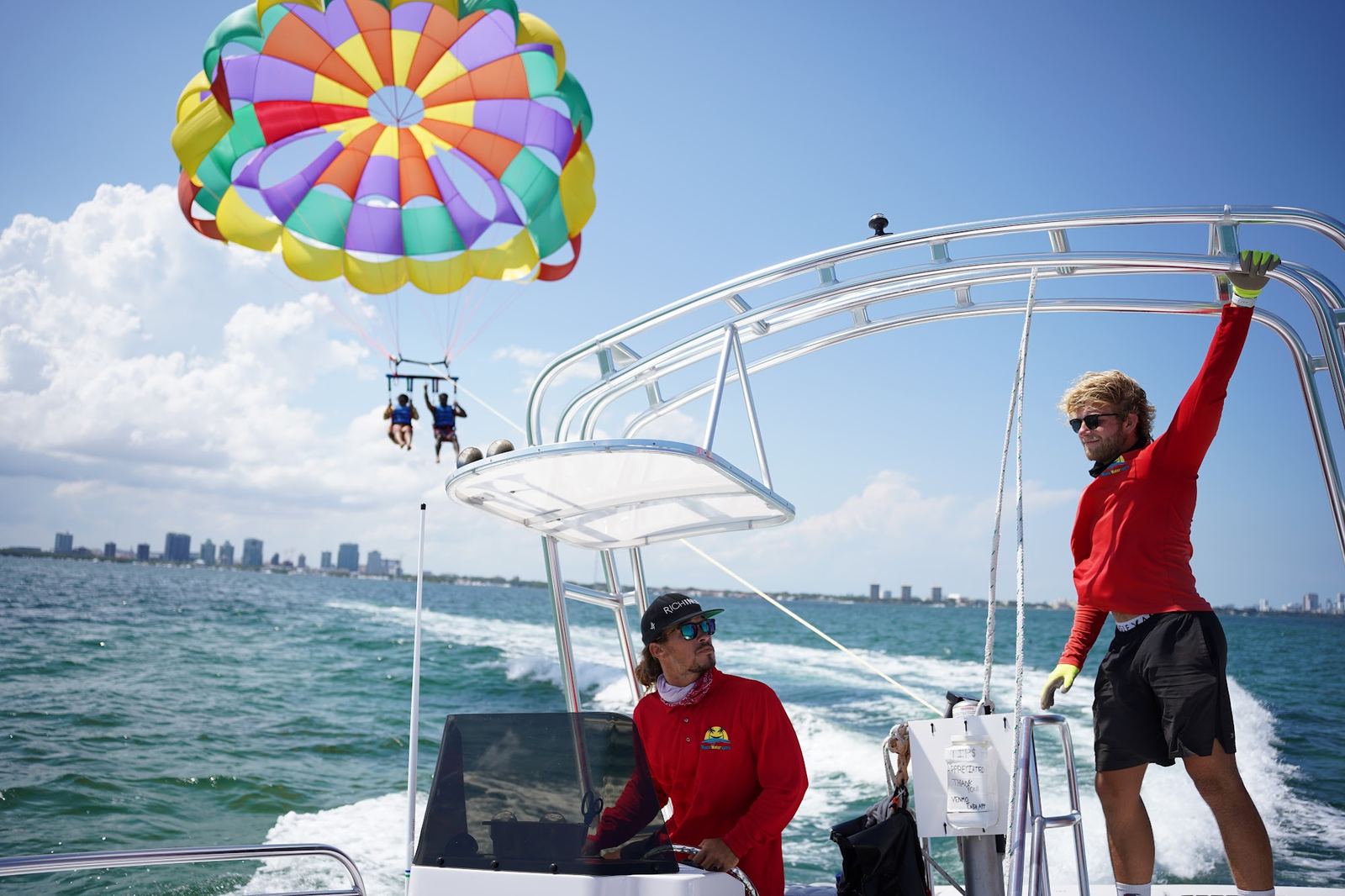
If what you were picturing is a canopy over the bay with a boat below you, that is parasailing, and it is what we run seven days a week from Pier 9. Ages 5 and up, up to three flyers at a time, up to 400 feet, and a crew that does all the flying for you.
Sign the waiver before you come, check in 15 minutes early, and bring ID and the card you booked with. The rest happens on the boat.
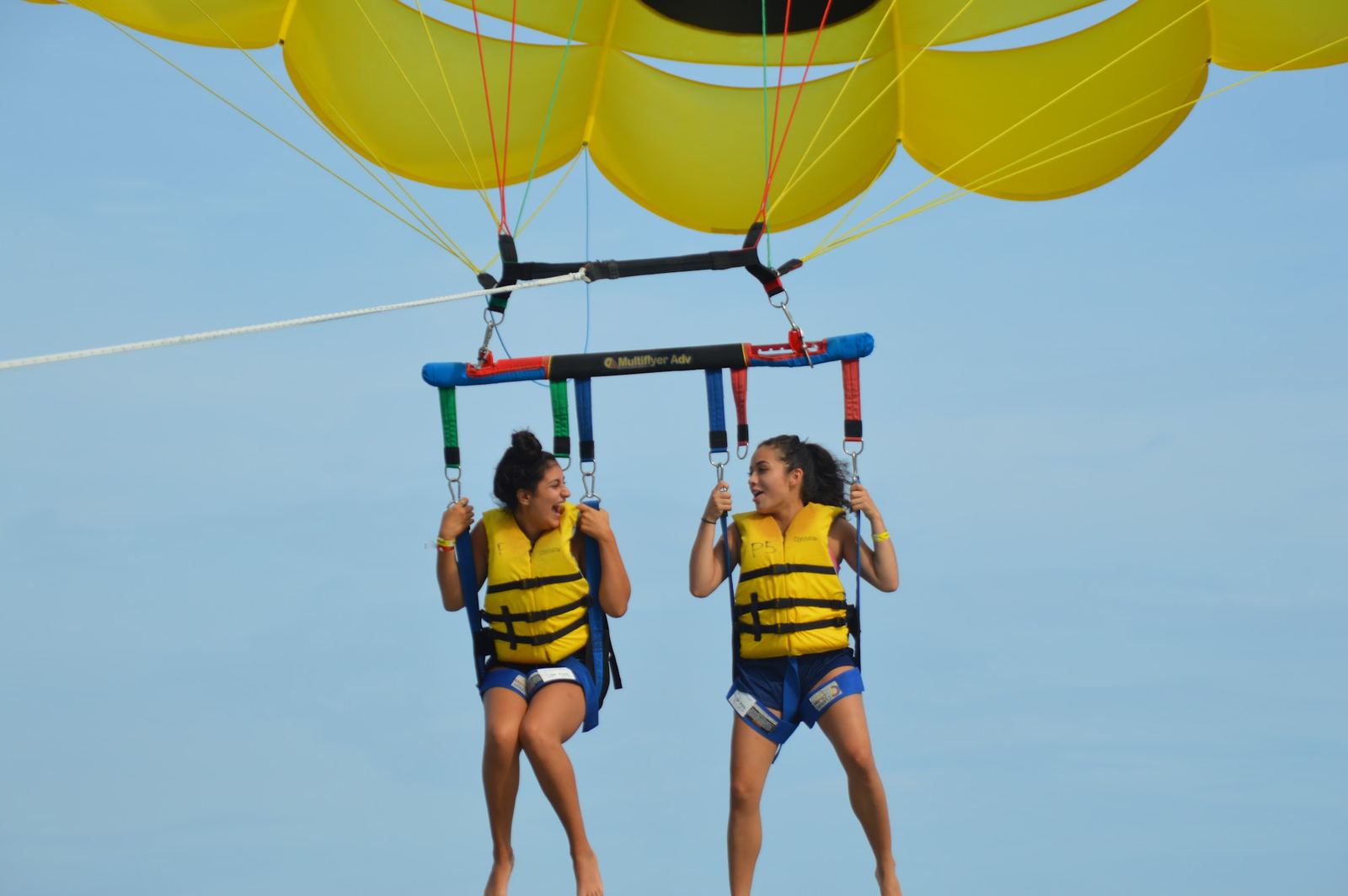
Book your Miami parasailing
Member rates apply on every booking. Tax & marina fee added at check-in.
Frequently asked questions