
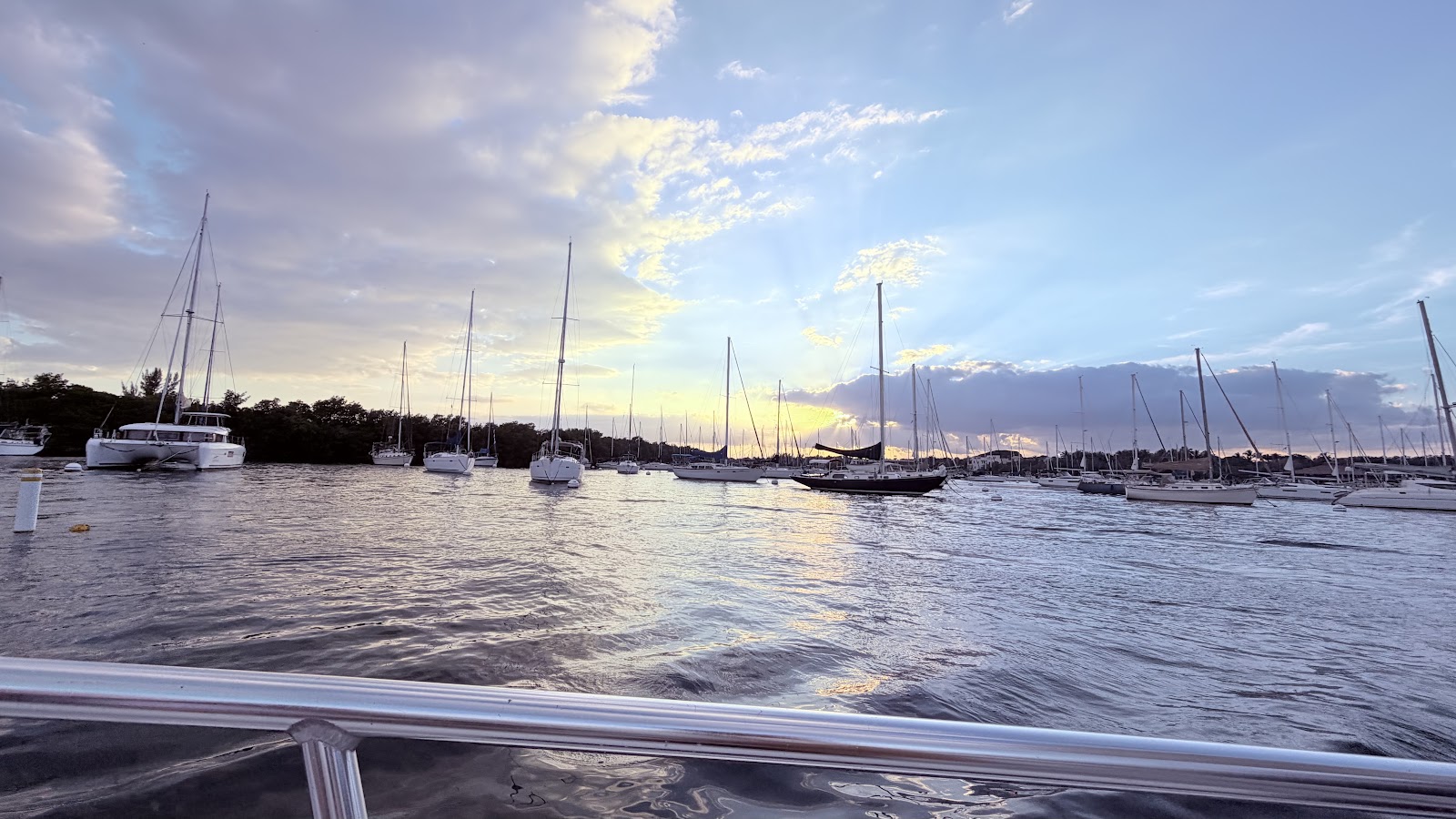
Miami Beach parasailing beats every other Florida destination because it pairs the calm, protected water of Biscayne Bay with one of the most dramatic skylines in the country, all reachable on a single relaxed boat trip. From our flight deck at Pier 9, Dinner Key Marina in Coconut Grove, you take off and land completely dry, climb up to 400 feet, and float for 6 to 10 minutes over turquoise flats while Downtown Miami, Key Biscayne, and the Atlantic stretch out beneath you. It is the rare Florida parasail that is gentle enough for a five-year-old and stunning enough to leave seasoned travelers speechless.
Key Takeaways
- Miami Beach parasailing with Miami Watersports launches from Pier 9 at Dinner Key Marina, 3400 Pan American Drive in Coconut Grove, on the protected waters of Biscayne Bay rather than the open Atlantic.
- Flights reach up to 400 feet above the water, with riders aloft for roughly 6 to 10 minutes during an approximately one-hour boat trip.
- Takeoff and landing happen dry, directly from the boat's flight deck — you do not need to swim, and swimming ability is not required to fly.
- The activity welcomes a wide range of guests: minimum age is 5, the maximum combined weight per flight is 450 pounds, and you can ride solo, tandem, or as a triple.
- Operations follow strict weather rules: flights never run during lightning, while light rain usually does not stop a trip; the National Weather Service – Miami forecast guides daily decisions.
- If weather or operational conditions force a cancellation, guests receive a marina credit that is valid for 2 years; the company does not issue cash refunds.
Why Biscayne Bay Is the Best Water in Florida to Parasail Over
Most people picture parasailing as an open-ocean activity, and along much of Florida's coast, that is exactly what it is — a boat punching through Atlantic or Gulf swells with you bouncing along behind it. Miami Beach parasailing from Coconut Grove is different because we operate inside Biscayne Bay, a wide, shallow, largely protected body of water shielded from the open ocean by Key Biscayne, Virginia Key, and a chain of barrier islands.
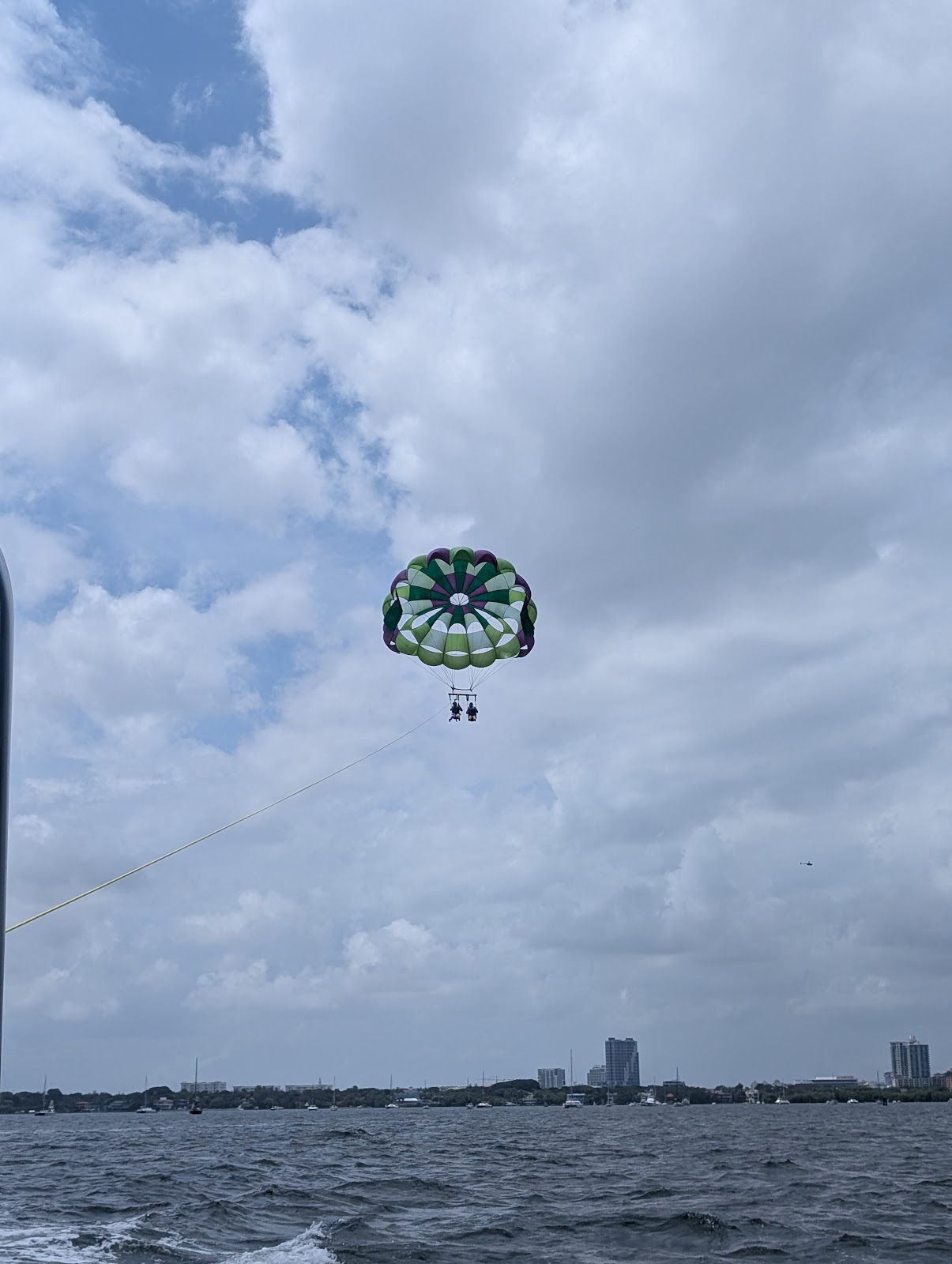
That geography matters more than almost anything else when you are 400 feet in the air. Protected water means smaller chop, gentler boat wakes, and a steadier, more predictable ride. The takeoff is smooth, the canopy fills cleanly, and the descent back to the flight deck is soft rather than jarring. For first-timers, nervous flyers, and families with young children, that calm is the difference between an experience they cherish and one they merely survive.
The View You Cannot Get Anywhere Else
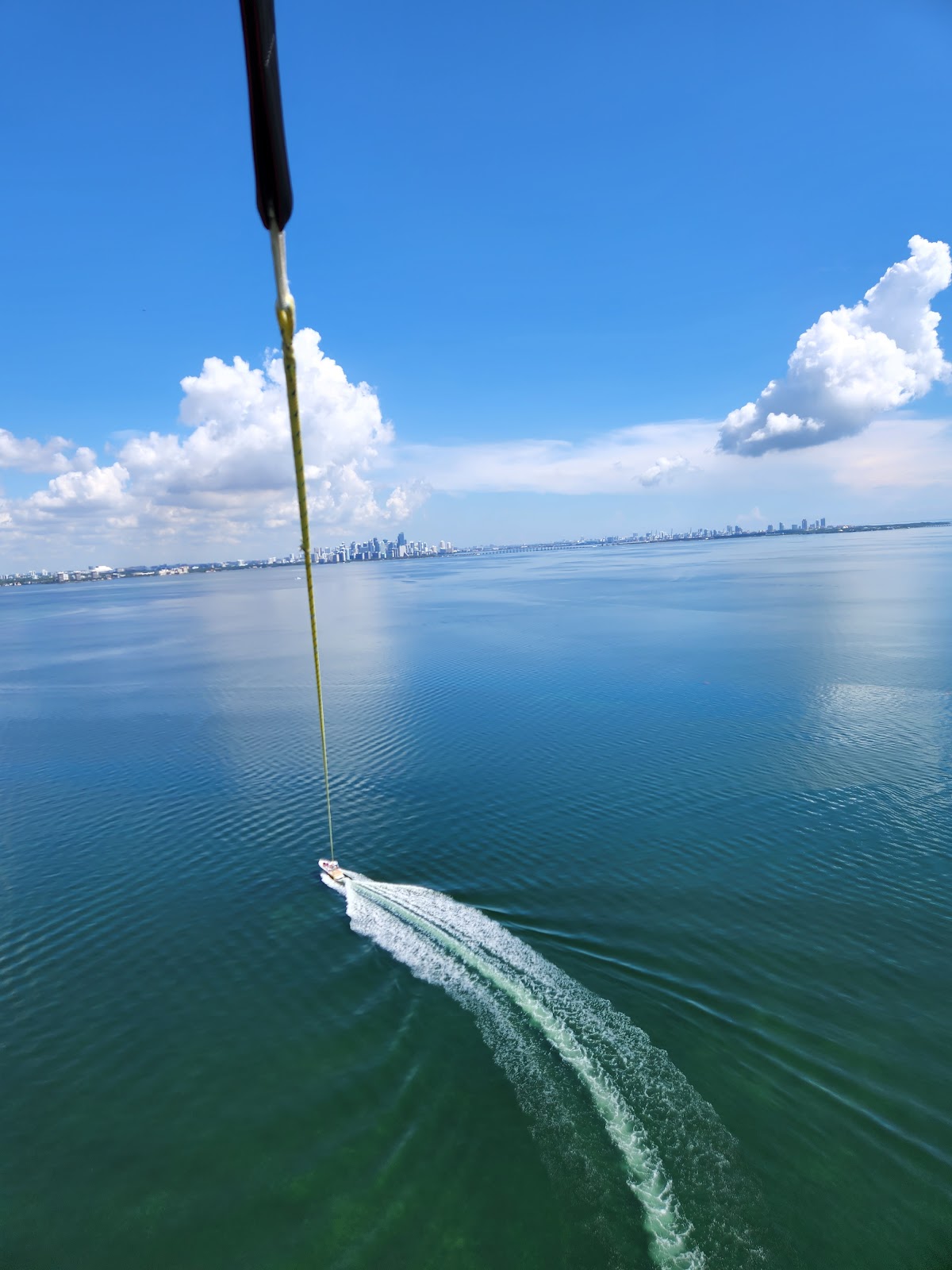
Biscayne Bay also delivers a panorama no other Florida parasailing zone can match. As you rise, the bay opens into a mosaic of color: pale turquoise over the sandflats, deeper blue in the channels, and the green ribbon of the mangrove shoreline. To the north sits the Downtown Miami and Brickell skyline; to the east, Key Biscayne and the Cape Florida lighthouse; to the south, the start of the island chain that eventually becomes the Florida Keys and the waters protected by Biscayne National Park. On a clear day you can trace the entire arc of Miami's coastline in a single slow turn.
Compare that to the typical South Beach or open-ocean parasail, where the boat heads straight out into the Atlantic and the view becomes a wall of hotels behind you and empty horizon ahead. The bay gives you depth, contrast, and constantly changing scenery — the city, the islands, the open sea, and the wildlife below, all in one flight.
Calmer Water Means a Better Ride for Everyone
The protected setting is what allows us to welcome such a broad range of guests. Because Miami Beach parasailing here doesn't depend on punching through ocean swell, the boat ride out is comfortable, and motion sickness is far less likely than on a rougher open-water trip. That is a real, practical advantage for grandparents, kids, and anyone who has been queasy on a boat before. The same calm also makes the photos better — fewer harsh shadows from chop, steadier framing, and that signature glassy Biscayne Bay backdrop.
Dry Takeoffs, Dry Landings: The Flight-Deck Difference
One of the most reassuring things about parasailing with us is that the entire flight begins and ends dry, on the boat. Our vessels use a flight deck and a powered winch: you sit on the platform, get clipped into the harness by the crew, and as the boat accelerates, the line pays out and lifts you smoothly into the air. When your time aloft is over, the winch reels you back in and sets you gently down on the same deck.
This is a meaningful upgrade over the older, beach-launch style of parasailing some operators still use, where riders are dragged off the sand or dunked into the water at the end. With our setup, you stay dry from start to finish if you choose to — no swimming, no scramble back onto a moving boat, no surprise plunge. That is also why swimming ability is not required to go parasailing here. You are securely harnessed and tended by trained crew the entire time.
How the Flight Itself Feels
Once the line is fully out, you settle into a quiet, floating calm. The boat noise fades, the wind is steady but not violent, and at up to 400 feet you have a genuinely aerial perspective on the bay. Most guests describe it as peaceful rather than thrilling in a roller-coaster sense — closer to a slow, scenic glide than a free fall. You will be aloft for roughly 6 to 10 minutes, the sweet spot that lets you fully take in the view and capture photos without getting cold or restless. The whole outing, from boarding to stepping back onto the dock, runs about an hour.
If you want a hint of extra excitement, just ask the crew. On calm days they can sometimes do a gentle "toe dip," dropping you low enough to skim your feet across the bay before winching you back up — entirely optional, and only when conditions allow.
Who Can Fly: Ages, Weights, and Configurations
Miami Beach parasailing is built to be inclusive, and the rules are simple:
- Minimum age is 5. Younger children fly tandem or triple, harnessed alongside a parent or guardian, so families can share the moment together.
- Maximum combined weight per flight is 450 pounds. Because we fly solo, tandem (two riders), or triple (three riders), the crew arranges flight groups to stay within that limit while keeping the experience comfortable.
- Solo, tandem, or triple. Want quiet time alone in the sky? Fly solo. Want to share the view and the nerves? Go tandem or triple. The choice is yours, within the weight rules.
- No swimming required. As noted, dry takeoff and landing mean swim ability isn't a prerequisite.
The crew makes the final call on flight grouping and harness setup based on weights and conditions on the day — that is a safety judgment, not a sales one. If you have a specific group in mind, it helps to share everyone's approximate weights when you arrive so the team can plan the flights efficiently.
Coconut Grove and Dinner Key Marina: A Better Launch Point Than South Beach
Where you start a parasailing trip shapes the entire day, and Dinner Key Marina in Coconut Grove is one of the most pleasant launch points in South Florida. Unlike the frenetic, parking-starved stretches of South Beach, the Grove is leafy, historic, and walkable, with shaded streets, waterfront parks, and a relaxed pace that sets the right tone before you head out on the water.
Dinner Key itself is Miami's largest marina and a genuine piece of aviation and maritime history — it was once a seaplane base for Pan American Airways, which is exactly why the address is 3400 Pan American Drive. Today it is a working marina on the edge of Biscayne Bay, and our home at Pier 9 puts you on calm protected water within minutes of casting off, rather than after a long, bumpy run out of an inlet.
Make a Day of It in the Grove
Because the Grove is a real neighborhood rather than a tourist strip, it is easy to build a full day around your flight. Grab coffee or brunch before your trip, fly over the bay, then come back for lunch, shopping, or a waterfront stroll. Families especially appreciate that the area feels safe and unhurried — a welcome contrast to fighting traffic and crowds on the beach side of the city.
If you fall in love with the bay from above, the same launch point gives you access to the rest of our on-water lineup, so you can turn a single parasail into a half-day adventure. Many guests pair flying with time on the water aboard a jet ski or a relaxed boat tour of the bay.
Seasons, Weather, and the Best Time to Parasail in Miami
Miami's subtropical climate means parasailing runs year-round, but understanding the seasons helps you plan the perfect flight.
Winter and Early Spring (Roughly November–April)
This is prime parasailing season. Humidity drops, skies are often crystal clear, and the bay tends to be at its calmest. Visibility is excellent, which means the skyline, the islands, and the water colors all show at their best from 400 feet up. Mornings are especially gorgeous, with soft light and glassy water. It is the most reliable window for picture-perfect conditions.
Late Spring and Summer (Roughly May–October)
Summer brings warm water and long days, but also Florida's classic afternoon thunderstorm pattern — quick, intense storms that build in the heat and often clear within an hour. The practical takeaway: book morning flights in summer whenever possible, before the day's storms develop. Hurricane season also runs June through November, though most days remain perfectly flyable; the key is staying flexible and watching the forecast.
How We Read the Weather
Conditions on Biscayne Bay can shift fast, so our crew monitors the marine forecast continuously, leaning on the National Weather Service – Miami office for real-time storm, wind, and lightning data. Our weather rules are firm and non-negotiable:
- Lightning means no flights, period. When there is lightning in the area, we do not launch. There is no upselling around this and no exceptions; it is a hard safety line.
- Light rain usually still runs. A passing shower or light drizzle generally won't stop a flight, and a little rain at altitude can be part of the fun. Wind and lightning, not rain alone, are the usual reasons to hold.
Responsible weather decision-making is core to safe boating, a point emphasized by the U.S. Coast Guard's boating safety resources and the Florida Fish and Wildlife Conservation Commission's boating and waterways guidance. We would rather reschedule a flight than push into marginal conditions — and our credit policy is designed so that weather is never a reason to rush a bad call.
Safety First: Crew, Equipment, and Conditions
Parasailing is remarkably safe when it is run by an experienced crew on appropriate water in the right conditions — and that is exactly the model we operate. Every flight is overseen by trained staff who handle the harness, the winch, and the line, and who continuously assess wind and weather throughout your trip.
Our protected-water setting in Biscayne Bay is itself a safety advantage. Calmer water reduces the sudden gusts and rough handling that cause most parasailing incidents elsewhere, and the dry flight-deck system keeps riders out of the water and away from the propeller. Because you remain securely harnessed and attended at all times, swimming is not required to participate.
For guests who want to understand the broader safety landscape, the BoatUS Foundation's expert safety and education advice and Florida's boater education resources from the FLHSMV are excellent, neutral references on how responsible operators approach the water. The short version: choose an operator that treats weather as a hard limit rather than a suggestion, uses modern winch-launch equipment, and keeps experienced crew on every boat. That is the standard we hold ourselves to on every single trip.
What to Wear and Bring
A few simple things make your flight more comfortable:
- Wear a swimsuit or quick-dry clothes and secure footwear for the boat; you'll likely keep your shoes on for a dry flight.
- Bring sunscreen and sunglasses with a strap — the Miami sun is strong, even in winter.
- Secure phones, hats, and loose items before you fly; anything not strapped down can blow away at altitude.
- A light layer can be nice in winter or on breezy mornings, since it's cooler up high.
Member Rate vs. Non-Member Rate: How Pricing Works
We price parasailing a bit like a hotel, with two clear tracks so you always know what you're getting.
- Non-Member rate: A simple, all-in price with nothing added at check-in. It's the most straightforward option for one-time visitors who just want to book and fly.
- Member rate: A lower base rate that has a fuel surcharge plus a tax and marina fee added at check-in. For guests who plan to come back or do multiple activities, the member track is designed to reward repeat play on the bay.
Pricing is per rider, and because rates are served live and can change with season and demand, we never print numbers on our blog — they would go stale. To see today's current member and Non-Member pricing for parasailing, check the live rate on our parasailing activity page. If you're considering more than one activity, the same live-pricing approach applies across our lineup, including flyboard and our other on-water adventures.
The Credit Policy That Protects You
Because Miami weather can be unpredictable, our cancellation policy is built to keep your money safe. If we cancel a flight for weather or operational reasons, you receive a marina credit that is valid for 2 years — good toward a future trip whenever you can make it back. We do not issue cash refunds, but that credit doesn't have a clock on it, so a rained-out morning today simply becomes a perfect flight on your next visit. This policy also removes any pressure on the crew to fly in marginal weather, which keeps everyone safer.
How Miami Beach Parasailing Compares to Other Florida Destinations
Florida has no shortage of parasailing, from the Gulf beaches of Clearwater and Destin to the open Atlantic off Fort Lauderdale and the crowded waters of South Beach. So what actually sets Miami Beach parasailing from Coconut Grove apart?
- Calmer, protected water. Biscayne Bay is shielded from open-ocean swell by Key Biscayne and the barrier islands, producing a smoother ride than Gulf-beach or open-Atlantic flights.
- A world-class, layered view. Few Florida launch points let you see a major city skyline, a barrier-island chain, a historic lighthouse, and open sea in one slow turn. Most beach parasails offer hotels behind and empty horizon ahead.
- Dry flight-deck launches. Modern winch-and-deck operation means dry takeoffs and landings and no swimming requirement — more comfortable and more accessible than older beach-drag methods.
- A real neighborhood, not a tourist strip. Coconut Grove and Dinner Key Marina are calmer and more walkable than the parking-and-crowd crush of South Beach.
- Genuinely family-friendly rules. A minimum age of 5, solo/tandem/triple options, and a comfortable boat ride make this an experience the whole family can share.
- A protect-your-trip credit policy. A marina credit that is valid for 2 years means weather can't simply take your trip away.
The result is a parasailing experience that is at once gentler and more spectacular than the typical Florida flight — easy enough for a first-timer or a young child, breathtaking enough that experienced travelers rank it among their favorite things to do in Miami.
Conclusion: Book Your Miami Beach Parasailing Flight
When you weigh the calm of Biscayne Bay against the chop of the open ocean, the layered skyline-and-islands view against a wall of beachfront hotels, and dry flight-deck launches against old-school beach drags, the verdict is clear: Miami Beach parasailing from Pier 9 at Dinner Key Marina is the best parasailing experience in Florida. You climb up to 400 feet over some of the most beautiful water in the country, you stay dry from takeoff to landing, and you do it from a relaxed Coconut Grove launch point that treats your safety and your trip with equal care.
Ready to fly? Check today's live member and Non-Member pricing and reserve your spot on the parasailing activity page, or call Miami Watersports at (786) 713-8006 to plan your trip. The bay is calm, the skyline is waiting, and your view from 400 feet is just one booking away.
Book your Miami parasailing adventure
Member rates apply on every booking. Tax & marina fee added at check-in.
Frequently Asked Questions
About Miami Watersports
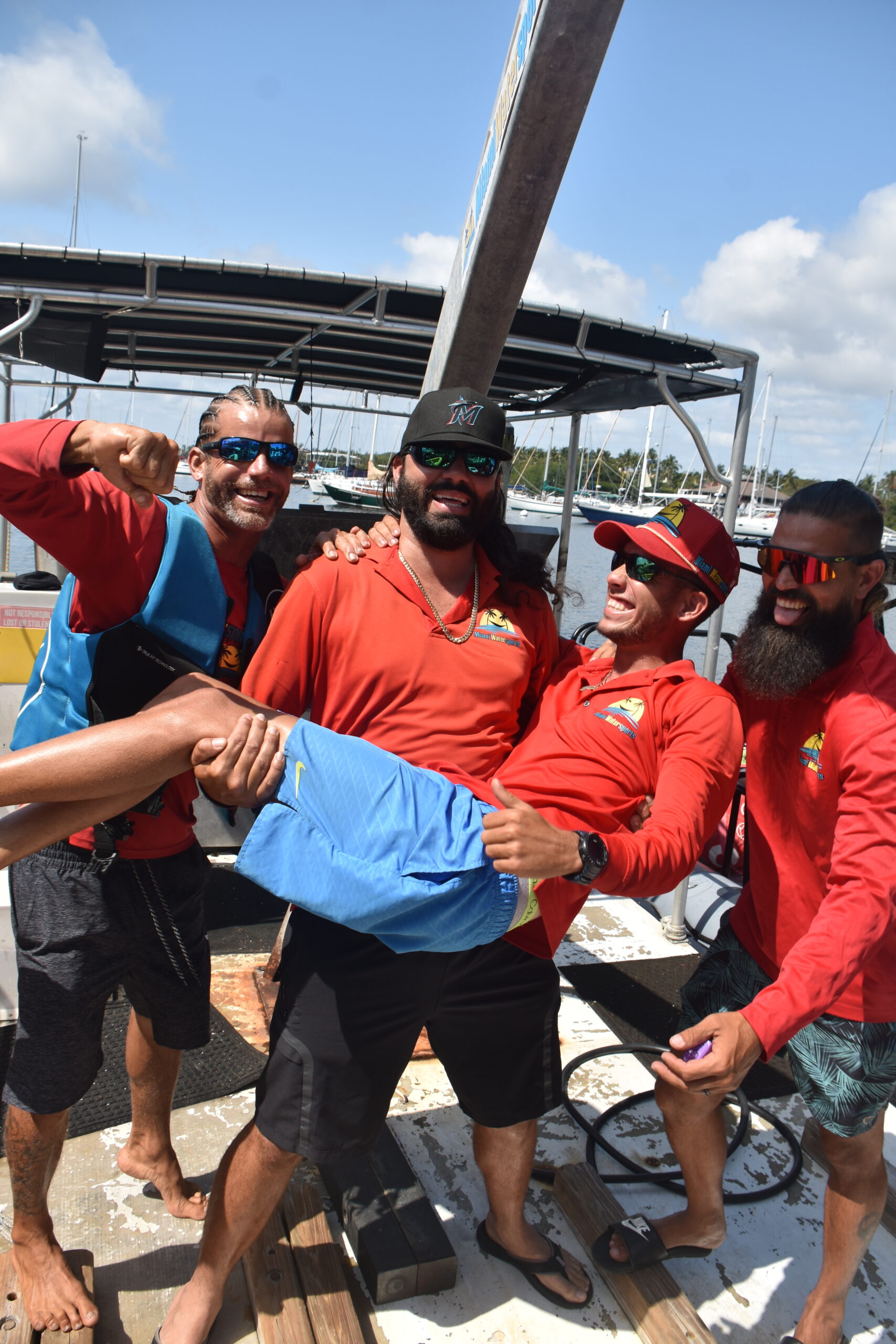
The Miami Watersports crew has run parasailing, jet ski, flyboard, and boat trips from Pier 9 at Dinner Key Marina in Coconut Grove since 2007.