How fast can jet skis go? The short answer
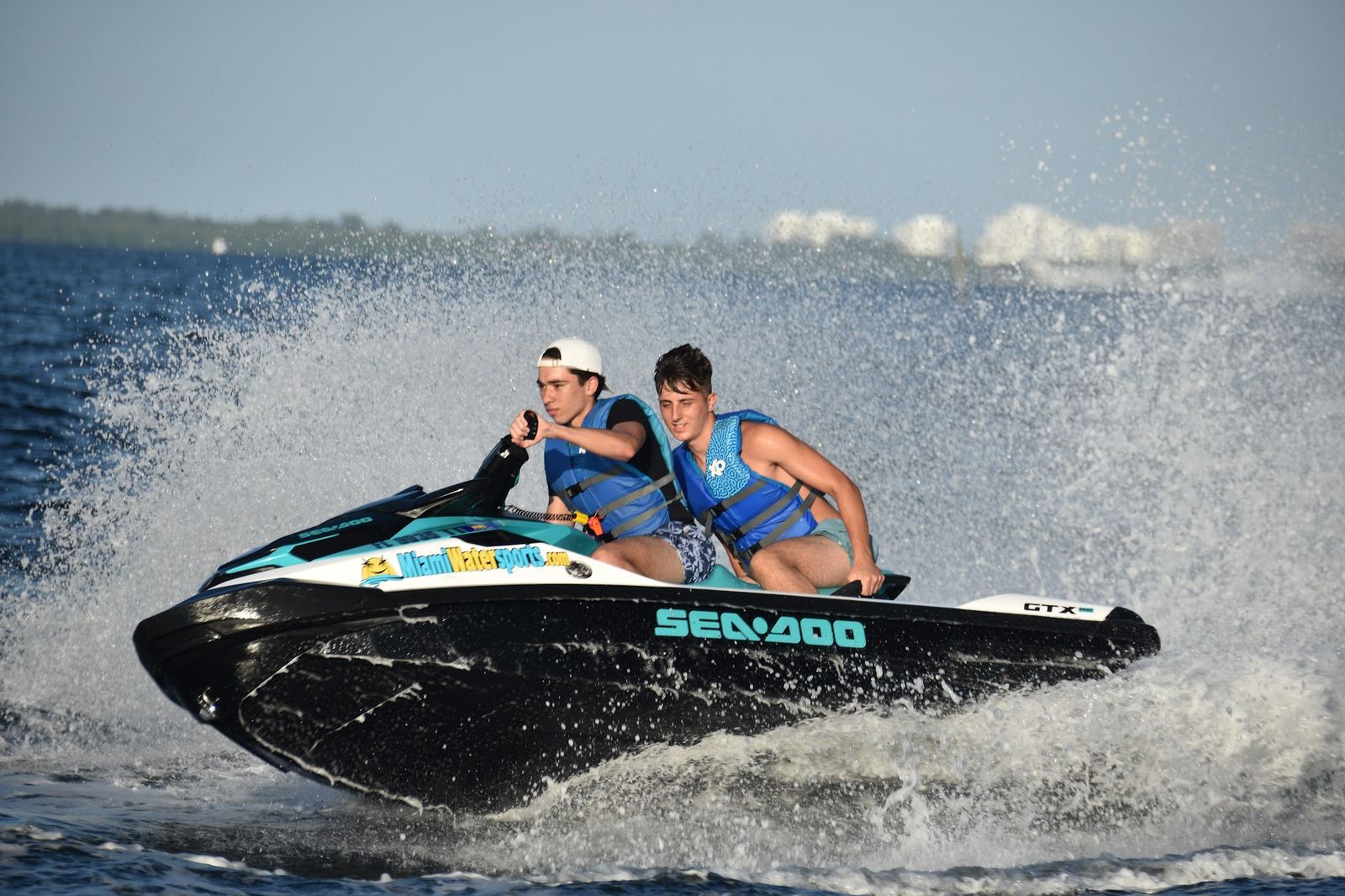
How fast can jet skis go? A 2006 industry report describes a voluntary cap of 65 mph for new stock jet skis, agreed between manufacturers and the U.S. Coast Guard in 1999, with a small allowance for production variance. That is the background number for the machines. On our Miami jet ski rental at Dinner Key, the speed you actually ride is set on the water by your guide, matched to the conditions that day and to how comfortable you are on the throttle.
Our own pages do not publish a top speed for the skis we rent, so this post will not give you one. What our FAQ says is that jet skis can reach high speeds inside the ride zone, and that during your guided ride the guides make sure you run at safe and appropriate speeds for the conditions and your experience level. Our jet ski page puts it in five words: beginner friendly, fast for those who want speed.
So the honest answer has two halves. The machines themselves are quick. The ride you book is one hour on Biscayne Bay from Pier 9, inside a marked riding zone, with a lead guide who decides how hard the group can push.
The rest of this guide covers where the big speed numbers come from, what changes how fast a ski feels under you, how the hour runs from check-in to the dock, and worked examples for couples, a parent with a child, friends and solo riders. Every rule about our ride comes from our jet ski rental page, our policies and our FAQs. The general speed background comes from outside sources, listed at the bottom and clearly marked as background.
Where the big speed numbers come from
When you search this question you will see a lot of numbers, and most of them trace back to one piece of history. A Powersports Business article from December 2006 describes a gentlemen's agreement between personal watercraft makers and the U.S. Coast Guard. It was set out in a November 1999 letter from the Coast Guard's boating safety chief at the time, and it capped new stock watercraft at 65 mph, with up to 2 mph more allowed for production variances. If speed is what makes you nervous, our guide to whether jet skis are dangerous covers the risks and the rules on our ride.
The same article says that agreement was voluntary, and that no official version was ever signed by every manufacturer. It also describes how the Coast Guard tested one supercharged model: two runs averaged, a standard 200-pound rider, full fuel. That test found the ski ran no better than 63 mph, even though magazine tests had reported it going faster.
Manufacturers today tend to sell on horsepower and handling. Sea-Doo's current RXP-X page, for example, leads with a 350 hp supercharged engine and race-inspired handling, and talks about carving buoys. The page we read lists no top speed in miles per hour.
There is also an engineering standard for measuring this. SAE International publishes a recommended practice called Maximum Velocity of Personal Watercraft (J2882), issued in its current form in September 2022, which sets a uniform test procedure for finding a personal watercraft's top speed.
| Number you may see | What it actually describes | Does it describe our ride? |
|---|---|---|
| About 65 mph | The voluntary 1999 industry cap for new stock watercraft (background) | No. Our pages publish no top speed for our skis |
| Up to 2 mph over the cap | The allowance for production variances in the same letter (background) | No |
| 63 mph | One Coast Guard test of one model, 200-pound rider, full fuel, 2006 report (background) | No |
| 350 hp | Engine output on a current high-performance Sea-Doo model (background) | No. Our pages do not name the models we rent |
| Safe and appropriate speed | What our guides set for the conditions and your experience | Yes, from our FAQ |
Read the first four rows as general information about jet skis as machines. The last row is the only one that tells you about the hour you book with us.
What speed means on our Miami ride
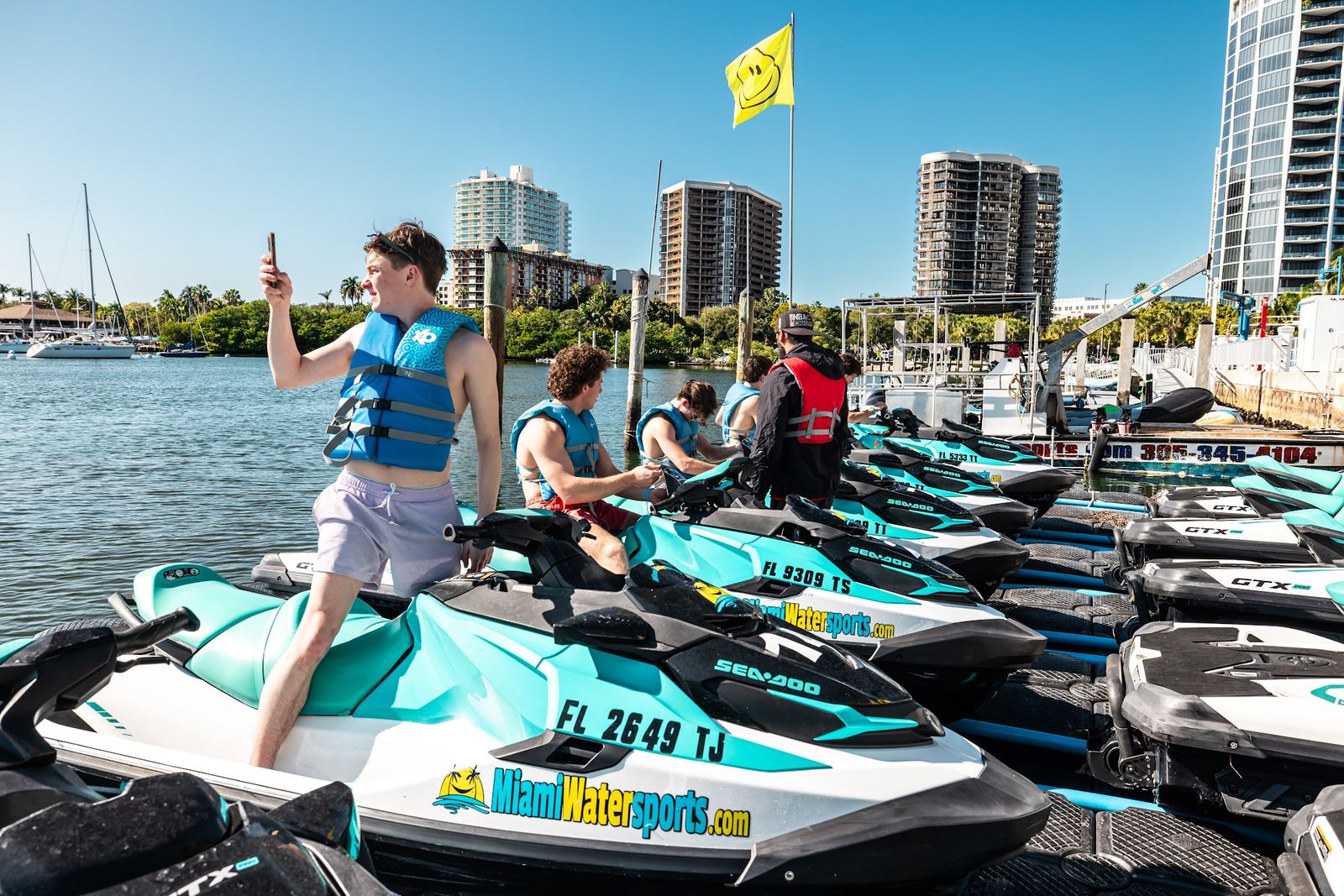
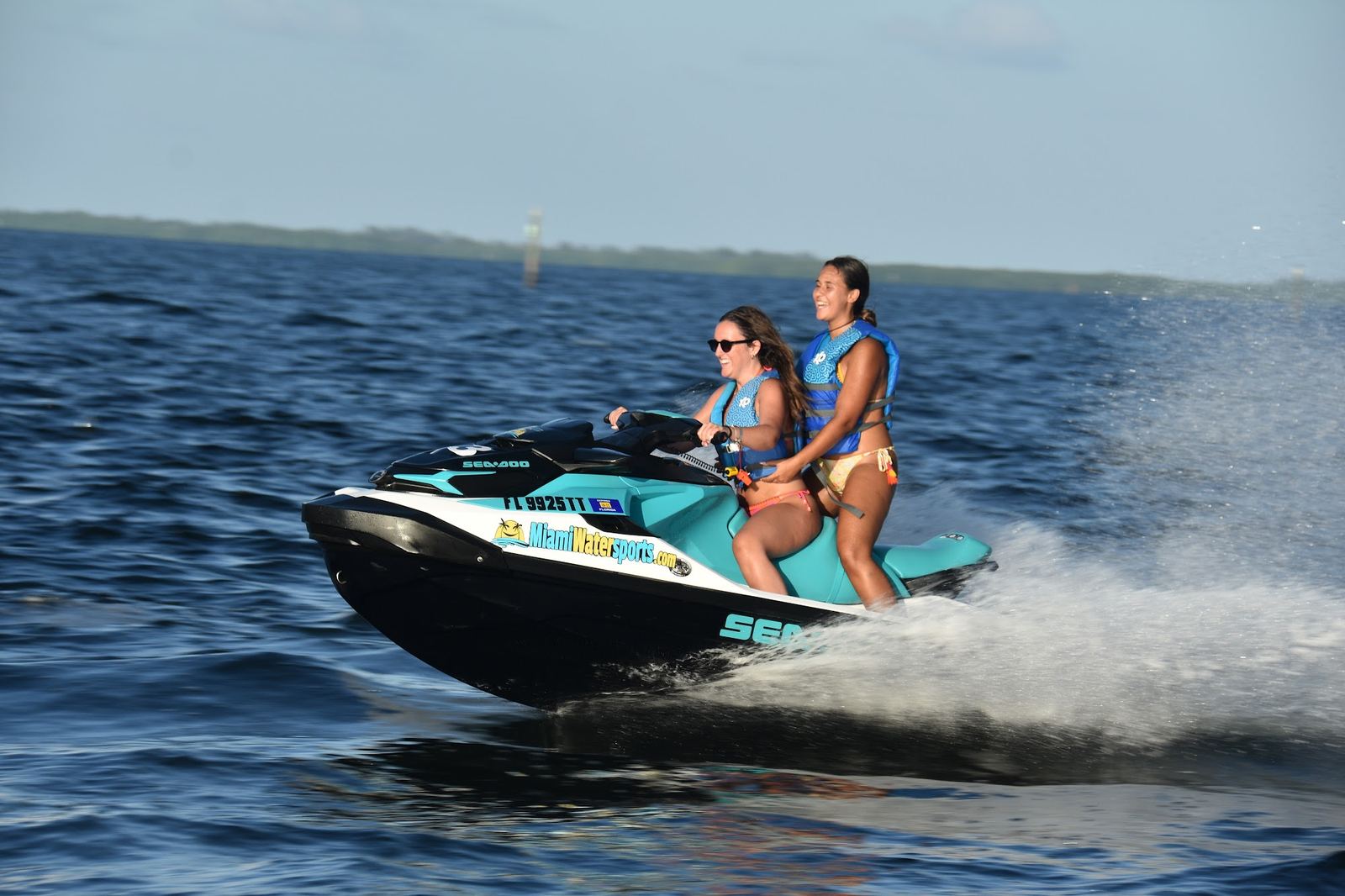
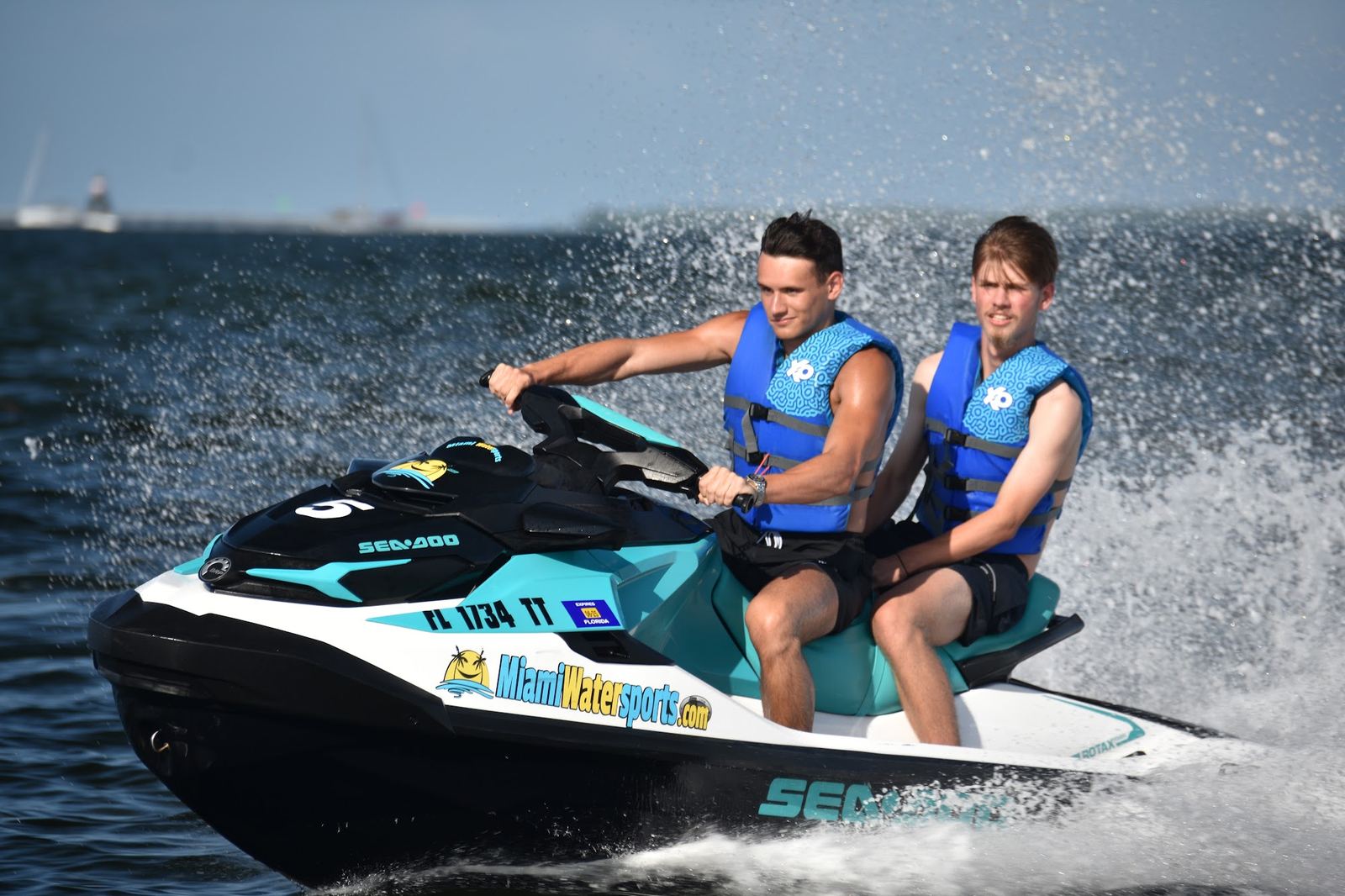
Our jet ski rental is a guided free-ride. You get your own ski (or share a 2-seater), a safety briefing at the dock, and then a lead guide takes the group out into a marked riding zone on Biscayne Bay. Inside that zone you drive your own machine. The guide watches the group and sets the limits on pace.
“Raine was a great guide. I felt safe and confident riding jet skis after he taught us.”
Two sentences from our own pages frame the whole question:
- From the jet ski page: the ride is "beginner friendly, fast for those who want speed."
- From our FAQ: jet skis can reach high speeds inside the ride zone, and the guides make sure you operate the ski "at safe and appropriate speeds for the conditions and your experience level."
In practice that means the speed you get depends on three things you can see on the day: how the water looks, how many other riders share the zone, and how steady you are on the controls. A calm morning with a confident rider leaves more room to open up the throttle than a choppy afternoon with a nervous first-timer.
It also means speed is something you earn during the hour. The first minutes are for getting used to how the ski turns and slows. Once the guide sees you holding a line and keeping your spacing, the open stretches of the zone are where the ride feels fast. If you want the full picture of the ride itself, our Miami jet ski rental page lists what is included and how the hour is set up.
What changes how fast a jet ski feels
Two people on the same model of ski, on the same morning, can come back with very different stories about how fast it felt. These are the things that make the difference.
Weight on the ski. The Coast Guard test in the background section used a standard 200-pound rider for a reason: load changes how a watercraft performs. On our skis the limits are fixed. A 1-seater carries one rider up to 250 lb. A 2-seater carries two riders up to 350 lb combined. A ski near its limit will feel heavier out of a turn than one carrying a single light rider.
One seat or two. On a 2-seater the driver is also carrying a passenger who has to hold on. Our FAQ says child passengers must be able to hold on independently. A good driver eases into speed with someone behind them.
The water. Flat water lets a ski run smoothly. Chop makes the hull bounce, and the same throttle feels faster and rougher. Kawasaki's owner's manual, as quoted on Wikipedia, tells riders to slow down before crossing waves and warns that high speed operation in choppy or rough water may cause back injuries.
Your eye level. You sit close to the water with spray coming off the hull and wind in your face. Speeds that feel calm in a car feel lively on a jet ski, which is why most riders find the open stretches plenty fast.
Traffic in the zone. Our FAQ explains that stopping to swim is not recommended during the ride because of the high traffic of other riders in the zone. More skis nearby means more spacing and more attention, and the guide sets the pace with that in mind.
| Factor | On our ride | What it does to the feel of speed |
|---|---|---|
| 1-seater | One rider, max 250 lb | Lightest load, quickest response to the throttle |
| 2-seater | Two riders, max 350 lb combined | More load; the driver eases in with a passenger aboard |
| Calm water | Rideable most mornings, weather permitting | Smooth, steady, easiest place to open up |
| Light rain | We ride | Spray and rain on your face; the guide may ask for a gentler pace |
| Lightning | We never ride | No speed at all; you reschedule or take a credit |
| Busy zone | Guide manages spacing | More caution, shorter bursts |
Picking a 1-seater or a 2-seater for the ride you want
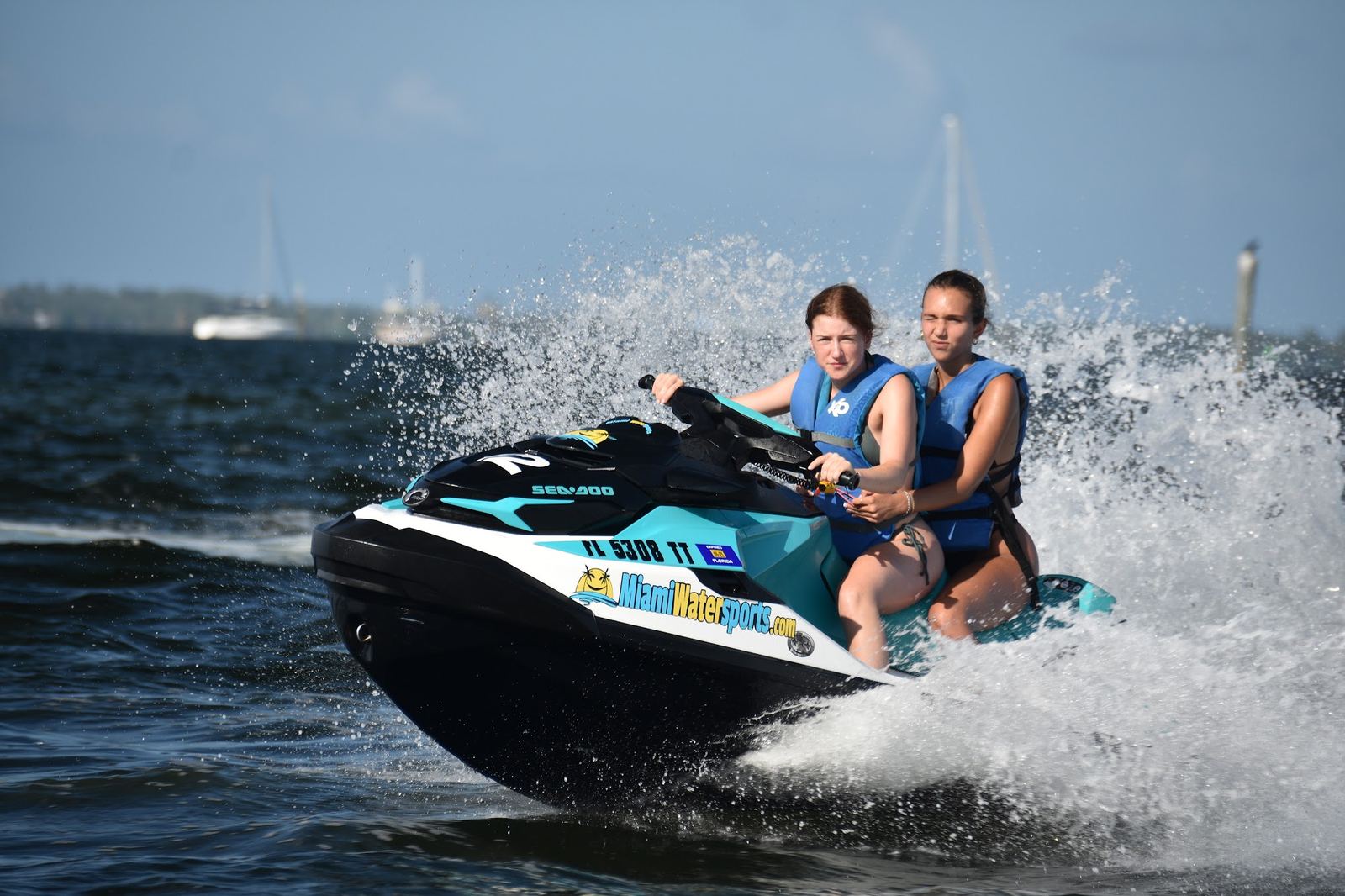
You choose the ski type at booking on the jet ski rental page for Miami, and that choice shapes how the hour feels more than anything else you control.
The 1-seater is one rider on one ski. If the reason you searched this question is that you want to feel the throttle, this is the ski for you. All the steering and all the pace decisions inside the guide's limits are yours, and there is nobody behind you to think about.
The 2-seater is two riders sharing one ski. The driver is 18 or older with valid government photo ID, and the passenger is 6 or older. Our FAQ describes it simply: same ride zone, same briefing, same guide, different ski. It suits couples who want to share the hour, a parent riding with a child, or a friend who would rather sit back than drive.
Some groups book a mix. Two adults who both want to drive can take two 1-seaters and ride side by side. A family can put one parent on a 1-seater and the other on a 2-seater with a child. Our 2 person jet ski guide goes deeper into riding as a pair.
One thing to plan for: once the ride starts, swapping skis is not allowed. Our FAQ says switching back and forth between jet skis during the ride is not allowed for safety reasons, and once the ride starts you do not come back to shore until the end. Decide who drives which ski before you leave the dock.
Worked examples: how fast it will feel for your group
These are typical groups that book the standard hour. The rules in each one come from our jet ski page, policies and FAQ; the feel of the ride is how the setup plays out on the water.
“Marcus, Ohio, and France were awesome and helpful. Will definitely be back jet skiing.”
A couple sharing a 2-seater. One of you drives, the other rides behind. Your combined weight has to be 350 lb or less. The driver should expect a little more caution from the guide in the first minutes, because a passenger is aboard. Once you are steady, the open water is where you will feel the ski run. If both of you want to drive, book two 1-seaters instead, since you cannot swap mid-ride.
A parent and a 9-year-old. The parent drives a 2-seater (18 or older, photo ID) and the child rides passenger, which our pages allow from age 6, as long as the child can hold on independently. A parent or guardian signs the waiver for the minor. Plan on a smooth, steady pace. Hard bursts and sharp turns are harder on a small passenger holding the grab handles.
Three friends who all want speed. Each takes a 1-seater, each driver is 18 or older with ID, and anyone born after January 1, 1988 passes the short online state boating exam before the ride. Weight per rider is capped at 250 lb on a 1-seater. Expect the guide to watch spacing between your skis. Riders who stay predictable and keep their gaps get the most freedom on the throttle.
A solo first-timer. One 1-seater, ID, the exam if your birth date calls for it. Our FAQ says the guides give thorough instructions before your ride, even if it is your first time. Your first ten minutes will feel quick even at modest speed. That is normal, and it settles.
A family of four with two kids. Two 2-seaters, one parent driving each, one child as passenger on each. Both kids must be 6 or older and able to hold on. Check each pair against the 350 lb combined limit before you book.
How the hour runs, step by step
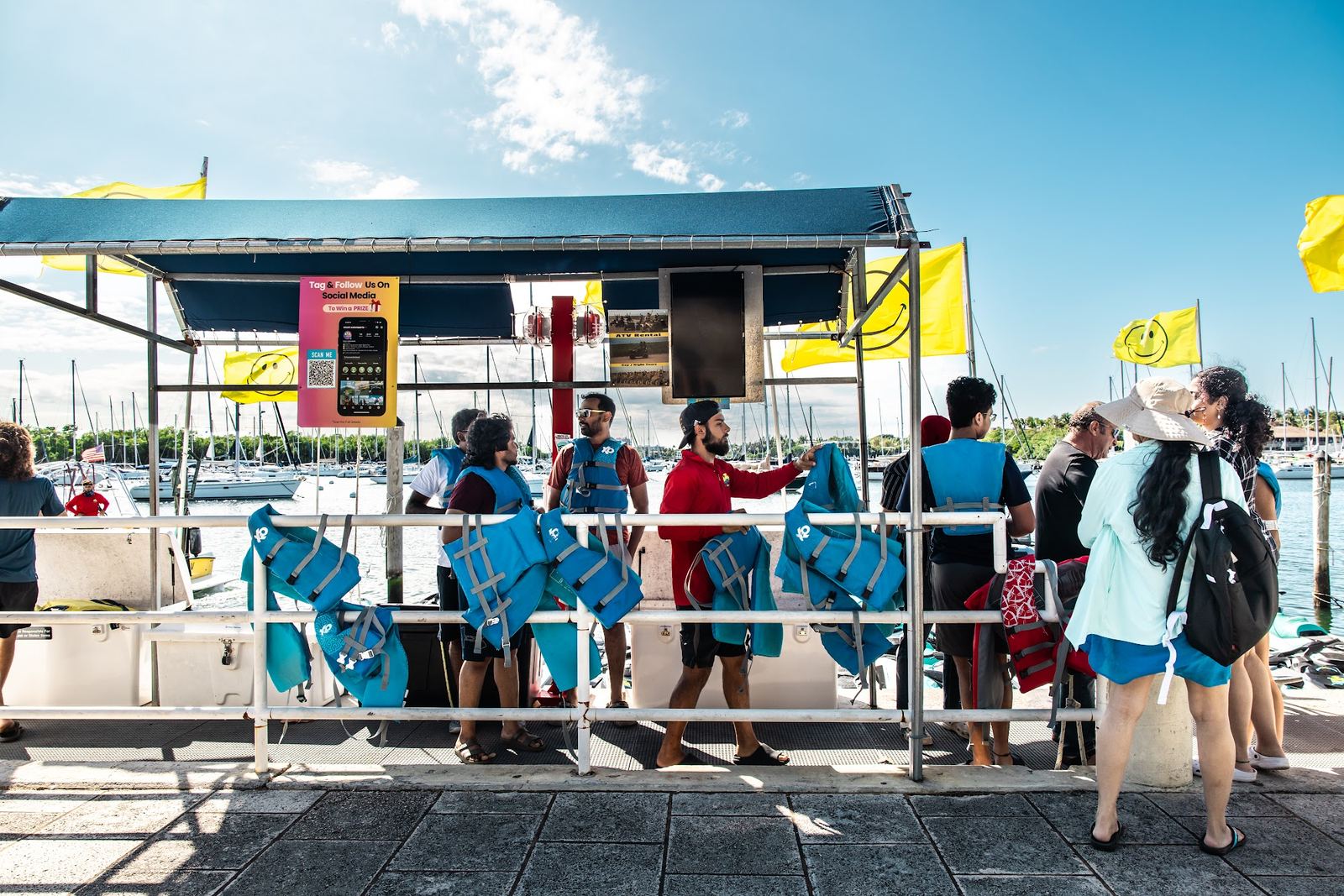
Here is the order of the day for a standard ride, built from our jet ski page and policies. The short checklist first, then the detail.
- 1Book your time online.
- 2Finish the waiver, and the state exam if you need it, at home.
- 3Park in Lot 62 with the Pay By Phone app.
- 4Check in at Pier 9 15 minutes before departure.
- 5Show photo ID and the card you booked with.
- 6Put on your life vest and listen to the safety briefing.
- 7Ride out with your guide into the marked zone.
- 8Stop only in the break and photo areas.
- 9Ride back to the dock at the end of the hour.
Booking. Reservations come first, and walk-ins are welcome when there is room. Our policies recommend reservations for large groups so the group stays together. You book on the Miami jet ski rental page.
Paperwork. Our FAQs ask you to complete the online waiver, and the jet ski exam if it applies, before arrival to validate a reservation. The exam applies to drivers born after January 1, 1988.
Getting there. Lot 62 is a short walk from Pier 9 at Dinner Key Marina, 3400 Pan American Drive. Our policies say missing your time results in a no-show; the crew will try to fit you into a later slot that day if there is space, otherwise you rebook.
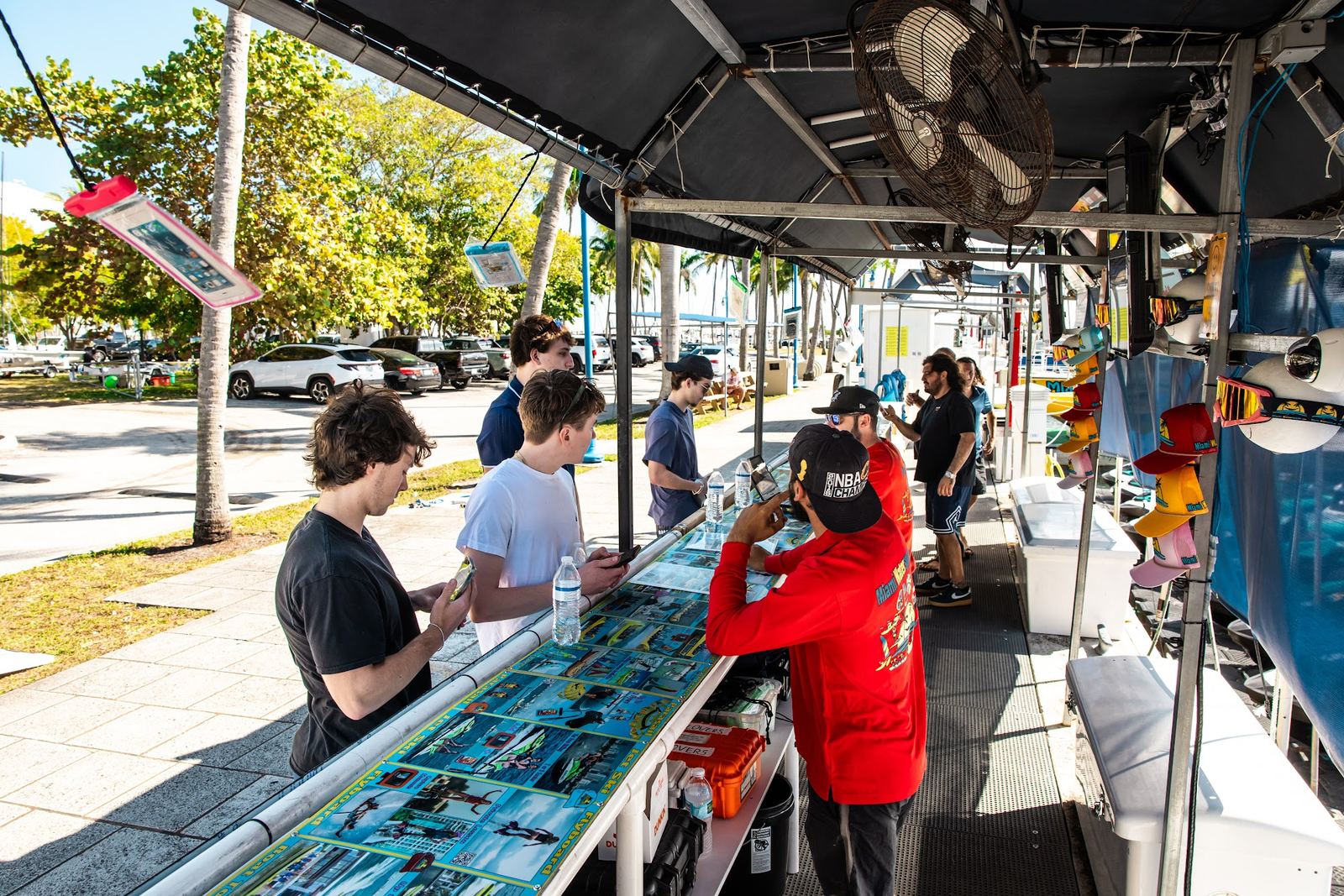
At the desk. Drivers need valid government photo ID. The cardholder must be present with the card used for the booking and a matching photo ID.
On the water. Life vests are included, and the briefing happens at the dock before you leave. Our FAQ says the guides point out the designated break and photo areas during that briefing. The ride is 60 minutes. Fuel is included in the rate, and tax and the marina fee are added at check-in.
Weather, chop and the days the ski runs fastest
Weather is the single biggest reason one ride feels faster and smoother than another. Our jet ski page is clear about where the line sits: light rain is normal and we ride; lightning, never.
On a rainy day the ride still goes, and the spray and drops on your face make even moderate speed feel quick. On a breezy afternoon the chop can make the guide hold the group to a gentler pace, for the reason Kawasaki gives in its manual: high speed in choppy or rough water can hurt your back. On a flat morning the water is at its most forgiving, and that is usually when riders feel the ski run cleanly.
Our policies say certified staff monitor the weather using radar apps and industry-standard judgment, and that the crew can reschedule based on weather. When conditions stop the ride, you get a credit voucher valid for 2 years, usable toward any activity we offer. Our jet ski page adds that you can reschedule to any future date or take that credit, with no fee.
| Conditions | Do we ride? | How fast it will likely feel |
|---|---|---|
| Calm, sunny | Yes, weather permitting | Smoothest water, most room to open up |
| Light rain | Yes | Lively, wet, guide may keep a steadier pace |
| Wind and chop | Staff decide on the day | Bouncier; slower and more careful in rough patches |
| Lightning | Never | No ride; reschedule or take the 2-year credit |
Our post on how weather affects your Miami jet ski ride goes further into wind, rain and the bay.
Riding fast and riding safely at the same time
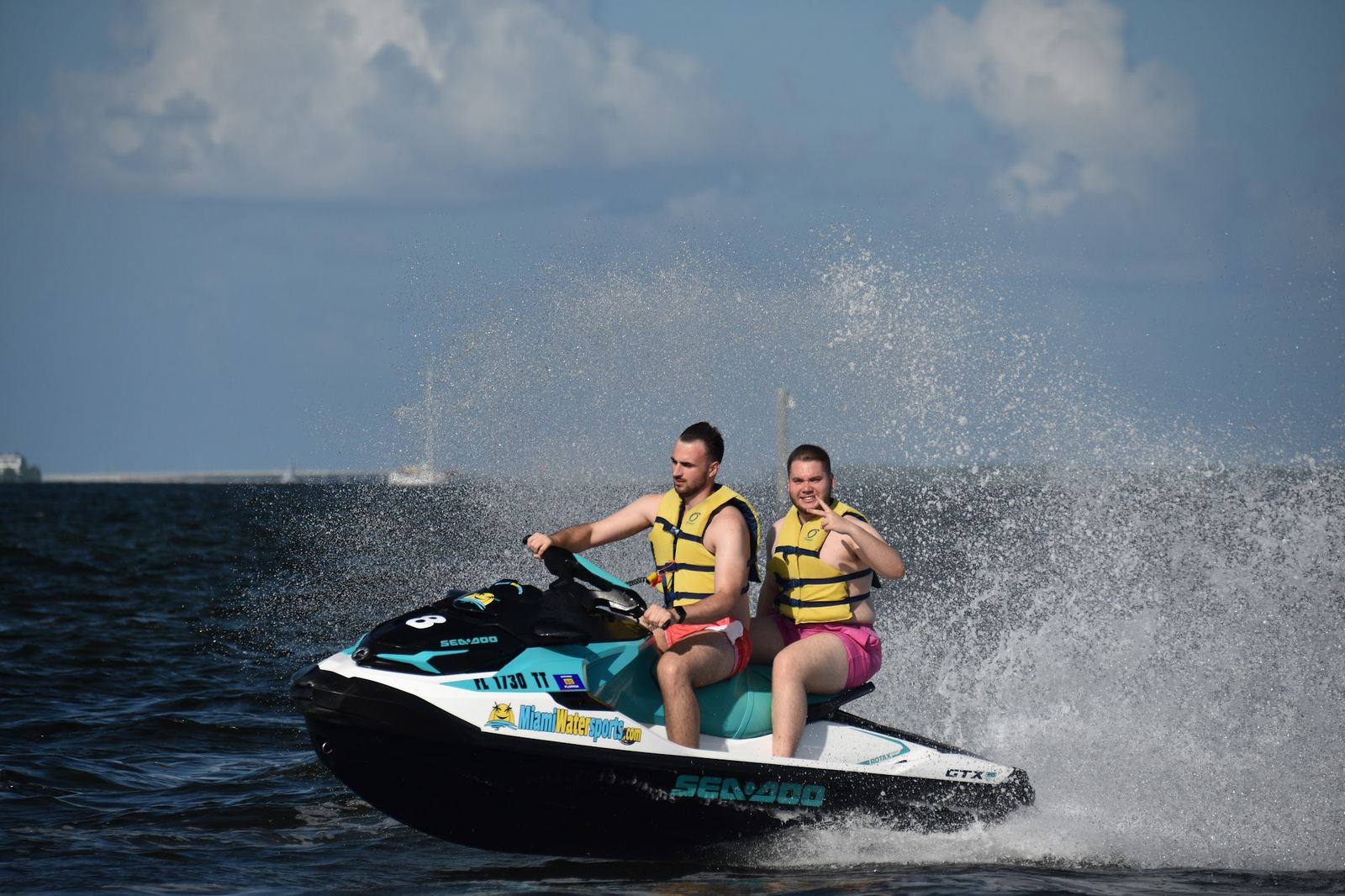
Speed on a jet ski is fun because you are close to the water and in control. A few habits keep it that way, and most of them come straight from our rules.
- Stay sober. Our policies require every participant to avoid drugs and alcohol before and during activities.
- Wear the gear we give you. Our policies require wearing the provided safety gear, and life vests are included.
- Stay in the zone and follow the guide. The riding zone has marked boundaries, and a guide supervises it.
- Stop only where the guide shows you. Swimming mid-ride is not recommended with other riders in the zone.
- Slow down for waves. That is the manufacturer's own advice in the Kawasaki manual quoted on Wikipedia.
- Hold on properly as a passenger. Child passengers must be able to hold on independently.
Falling off at speed is the main thing riders want to avoid. Wikipedia's article on personal watercraft notes that injuries can happen from falling into the water at speed, and that the major manufacturers warn about the jet of water at the back of the ski and recommend wet suit bottoms or similar protection for passengers. That is general background about jet skis; on our ride the guide and the pace are there to keep falls rare.
If you have never driven one, read how to drive a jet ski before your day. Knowing how the throttle and steering work is what lets you ride faster sooner, because the guide can see that you are in control.
What to bring for a fast, wet hour
At speed you get wet, and anything loose can end up in the bay. Pack light and pack for spray.
| Bring | Leave in the car |
|---|---|
| Government photo ID for the driver (and every participant who has one) | Bags and extra valuables |
| The card you booked with, plus matching photo ID | American Express, digital wallets, prepaid and gift cards |
| Swim attire, worn on arrival | Clothes you need to change into at the dock |
| Reef-safe sunscreen | Anything you cannot afford to get wet |
| A water bottle | Extra electronics beyond your phone |
A few notes from our policies. There are no private changing rooms or lockers, so arrive dressed for the water. A group locker dock box is available for shoes and bags, though the crew is not responsible for lost, stolen or damaged items. Only cell phones may be brought on activities, and waterproof phone cases are for sale at check-in. The company is not responsible for lost or damaged phones, case or no case.
If you want to film your run, our post on capturing footage while jet skiing in Miami has ideas, and our jet ski rental requirements post lists every rule about ID, the exam and weight in one place.
Standard ride or a guided tour if you want a set route
Everything above is about the standard hour: free-riding in the marked zone. If you would rather cover distance on a set route, we also run private guided jet ski tours with a lead guide, starting and finishing at the Jet Ski Zone at Dinner Key Marina.
The tour page lists three routes: Route A, a 1-hour Sandbar loop; Route B, a 1-hour extended loop past Vizcaya, the Island Stop and the Sandbar; and Route C, a 90-minute grand tour out to Virginia Key, Fisher Island and Key Biscayne. Tours run with a minimum of 2 skis and a maximum of 5, up to 2 riders per ski, and they are booked by text, in advance.
The same rider rules apply on both: 18 or older to drive, 6 or older to ride, valid photo ID, the online exam for drivers born after January 1, 1988, and a refundable damage deposit per ski. If your question is simply how fast the ride feels, the standard free-ride zone is where the open-water riding happens.
Booking your ride
To recap the speed question one last time: jet skis as machines are fast, and the 65 mph voluntary cap from 1999 is the number most often quoted as background. On our ride, the guide sets a safe and appropriate pace for the water and for you, inside a marked zone on Biscayne Bay. Our pages publish no top speed for our skis.
A few booking details from our pages. A refundable damage deposit is taken by card only, and it comes back unless there is a crash, damage or a policy violation; refunds can take up to 3 days for your bank to process. Fuel is included, and tax and the marina fee are added at check-in. For the current rate and what it includes, check the live price box on the booking page. If you want a second activity the same day, our combos pair the jet ski with parasailing, flyboard or the speed boat at the same marina, with one waiver and one parking spot.
Pick your ski, your date and your boarding window, and come ready to ride. Book a Miami jet ski rental at Dinner Key Marina and feel the speed for yourself.
Book your Miami jet ski
Member rates apply on every booking. Tax & marina fee added at check-in.
Frequently asked questions