Are jet skis dangerous? The straight answer
Are jet skis dangerous? They can be. A jet ski is a small, fast boat that you drive yourself, and most of the jet ski accidents Florida records each year are collisions. Most of that risk comes from how the ski is ridden: how much experience the driver has, whether anyone is keeping a lookout, how fast they go in traffic and whether they have been drinking.
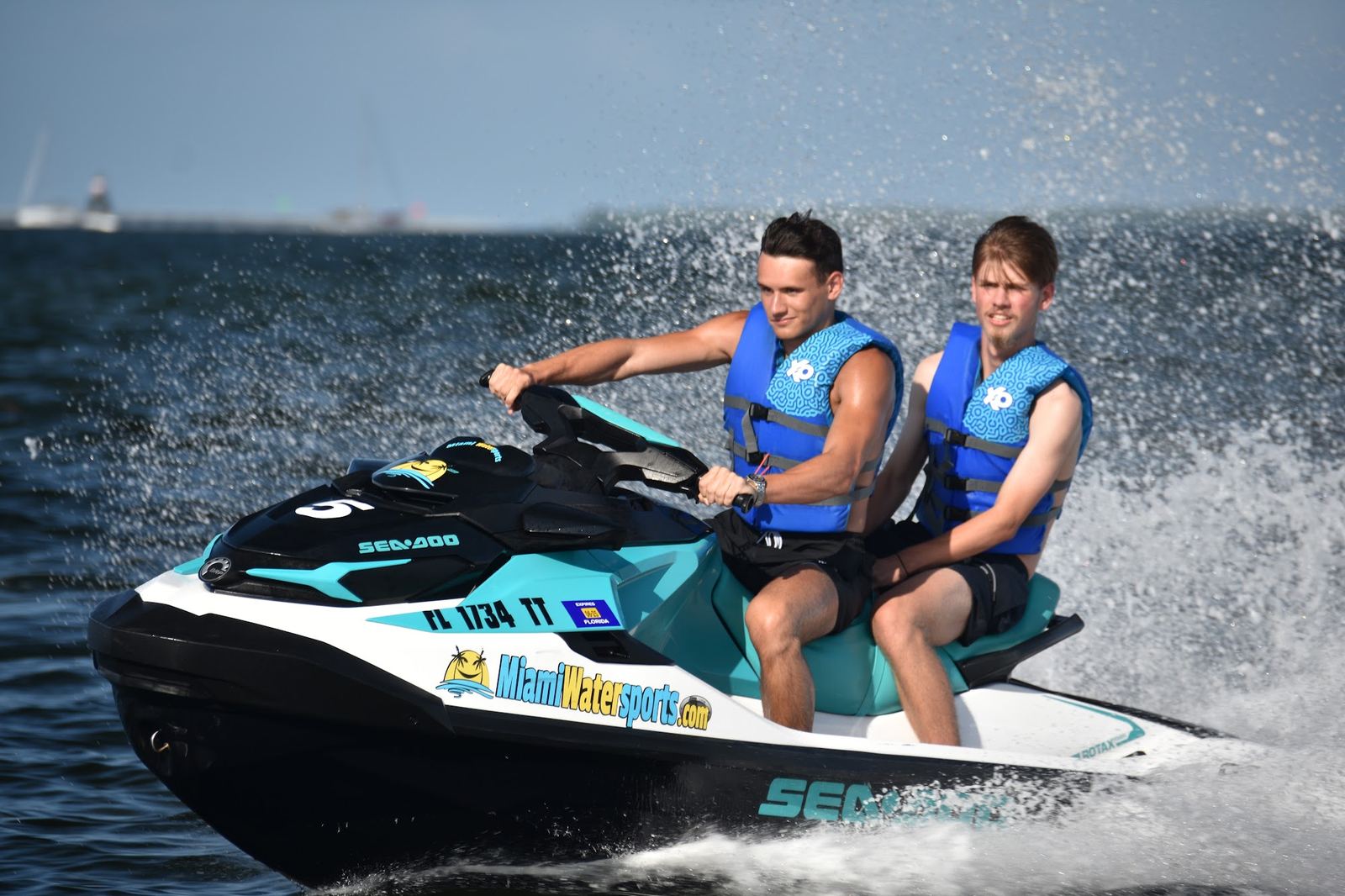
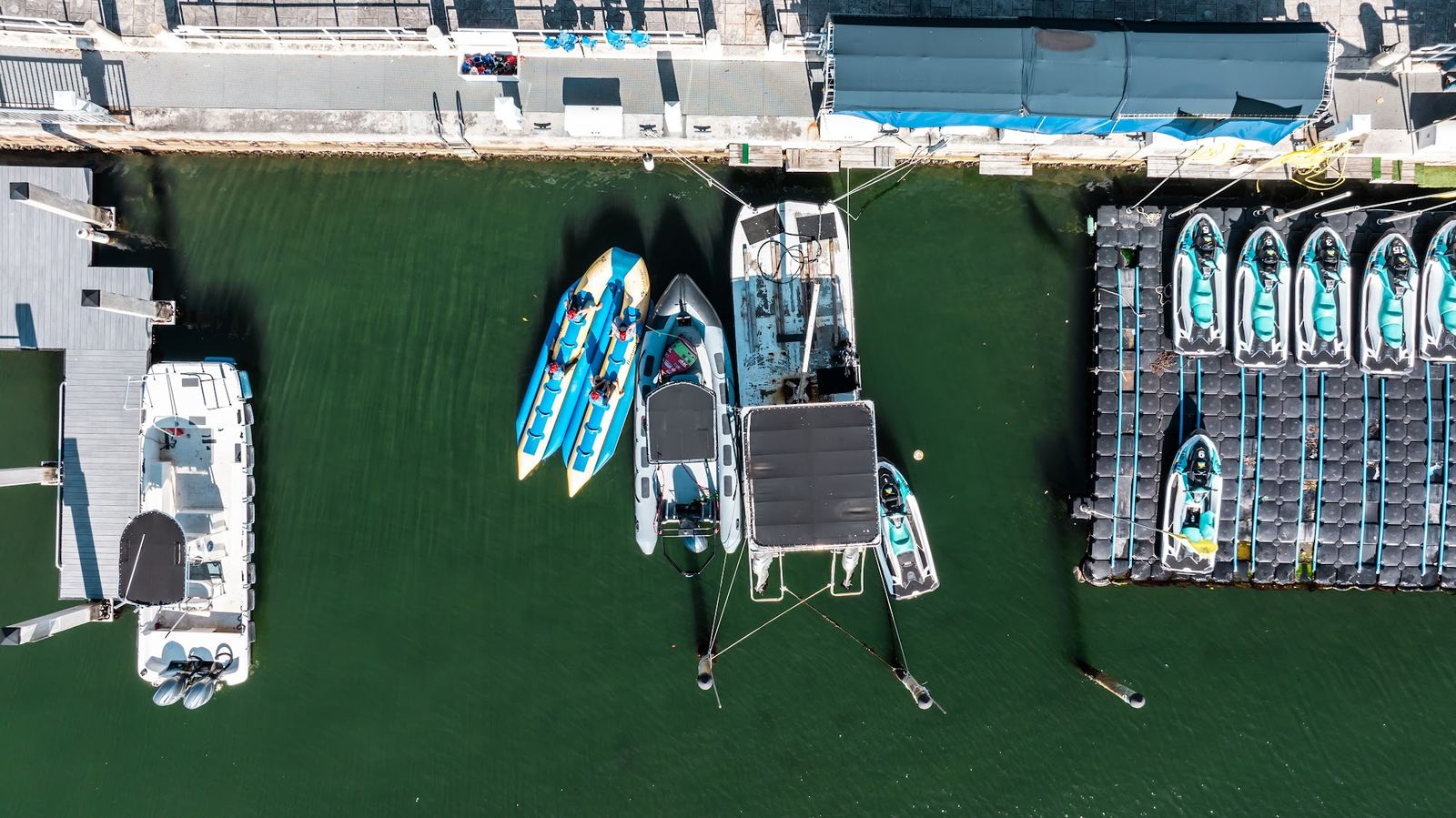
That is why the Miami jet ski rental we run from Pier 9 is set up the way it is. Every ride is 60 minutes of guided free-riding on Biscayne Bay. Before anyone leaves, there is a safety talk on the dock and a life vest for every rider. After that, a lead guide brings the group out to a marked riding zone and watches the water while you drive. Our FAQ says the guides keep each rider at a speed that is safe for the conditions and for that rider's experience.
So the honest answer is that jet skis carry real risk in the wrong setting, and our rules are written around the biggest pieces of that risk.
This guide goes risk by risk. It starts with Florida's own accident report as background, then shows which of our rules answers each risk, who should think twice before riding, how kids ride, when weather stops us, and what happens if you fall in. It ends with a checklist and worked examples for real groups.
Every rule about our ride in this post comes from our jet ski page, our FAQs and our policies. Age, ID, exam and weight rules are all collected in the requirements for a Miami jet ski rental, so this post stays on safety.
What Florida's accident numbers say about jet ski risk
The Florida Fish and Wildlife Conservation Commission (FWC) publishes a boating accident report every year, with a chapter on personal watercraft, the official name for jet skis. We use the 2025 chapter here as background. It is useful because it shows where the danger sits.
Florida had 175,165 registered personal watercraft in 2025 and 161 reported accidents involving them, with 12 deaths statewide. Miami-Dade County had 20 of those accidents, tied with Monroe County for the most of any county.
The report also records what kind of accident each one was and what the reviewing officer judged to be the main cause:
| From the FWC 2025 report (background) | Count | What it points to |
|---|---|---|
| Collision with another vessel | 72 of 161 accidents | Spacing and traffic |
| Collision with a fixed object | 37 | Knowing where you are heading |
| Person thrown from the ski | 16 | Speed, sharp turns, holding on |
| Main cause: operator inexperience | 48 | Instruction before you ride |
| Main cause: no proper lookout | 34 | Someone watching the water |
| Main cause: operator inattention | 19 | Eyes up while driving |
| Main cause: excessive speed | 17 | Speed matched to the day |
| Main cause: alcohol use | 3 | Riding sober |
Two more lines from the same report are worth knowing. Of the 213 operators involved in those accidents, 84 had less than 10 hours of experience. And of the 211 skis involved, 105 were simply cruising when it happened; only 3 were jumping wakes or surf.
Put together, the picture is plain. Collisions cause most of the harm, and the most common causes are people new to driving, nobody keeping a lookout, attention drifting, too much speed and, in a few cases, alcohol. The rest of this post shows how our ride deals with each of those.
How our ride is built around those risks
Here is the same list of risks, matched to what our own pages say we do about each one. Nothing in the middle column goes beyond what those pages state.
“First time on a jet ski, Elijah saved me when I fell off. Great staff and excursions.”
| Risk | What our pages say | Page |
|---|---|---|
| New drivers | Instructions from the guides before the ride; no experience needed | Jet ski page, policies |
| No lookout | A lead guide supervises a marked zone | Jet ski page |
| Too much speed | Guides set a safe pace for the day and the rider | FAQs |
| Crowded water | Riding stays inside set boundaries | Jet ski page |
| Swapping drivers | No changing skis during the ride | Jet ski page |
| Falling in | Life vests provided and worn | Jet ski page, policies |
| Alcohol | None before or during any activity | Policies |
| Storms | Staff watch radar; no riding in lightning | Policies, jet ski page |
A few things in that table are worth spelling out.
The zone is the big one. Our FAQ describes a guided free-riding zone as an area where renters freely explore the water within designated boundaries under the supervision of a knowledgeable guide. You drive your own ski, so it feels like your ride, but you are never out alone on open water picking your own route through boat traffic.
The hours matter too. We run 7 days a week from 10am to sunset, weather permitting, so every ride happens in daylight.
And the first-timer question has a direct answer in our Miami jet ski rental details: no worries, because the guides walk you through everything before you start, so the hour is safe and fun even if you have never sat on a jet ski.
The safety briefing and the guide on the water
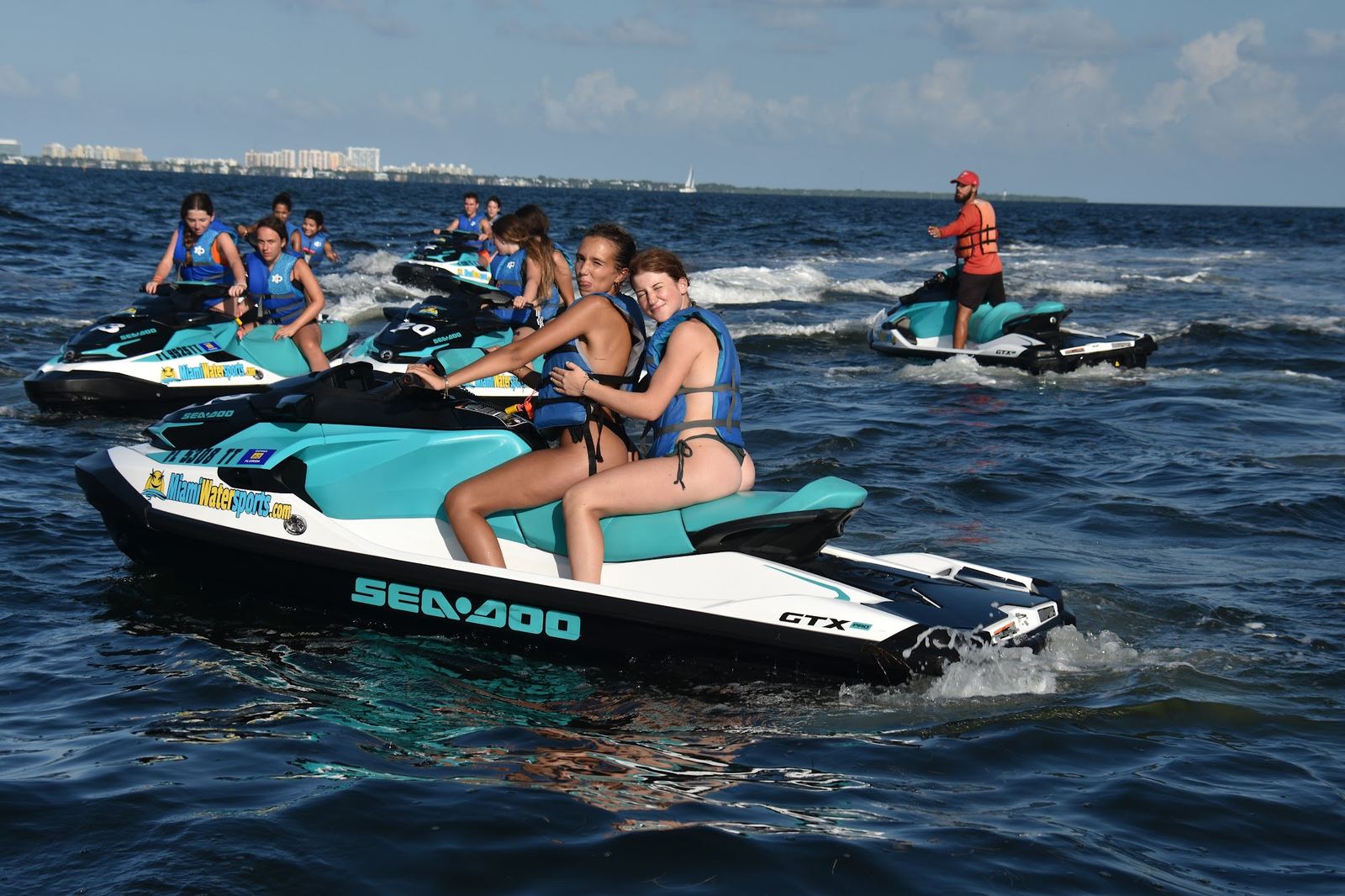
The safety talk takes place on the dock, before any engine starts. Our policies ask you to check in 15 minutes before departure, and that time is what lets the crew fit you with a vest and walk you through the ride without rushing.
During the briefing the guides show you where the break and photo spots are. Our FAQ says this is part of the briefing on purpose: those are the places where stopping is safe, away from the riders still moving through the zone.
Once you are on the water, the lead guide's job is to watch the group. That is the lookout the FWC numbers say is missing in so many accidents. The guide also decides the pace, judging how much speed the water and your driving can handle that day.
One piece of background about the machines explains why the briefing matters. As background, the Wikipedia entry on personal watercraft describes a risk called off-throttle steering: on certain models, the ski loses its ability to steer once the rider lets go of the throttle. A new driver's instinct is to let go when something is in the way, and on some skis that is exactly when they stop turning. Our first-ride post on how to steer and use the throttle explains how the two work together, and it is worth reading before your day.
If speed itself is your worry, the jet ski speed guide covers how fast the ride can feel.
Life vests and what to wear for the ride
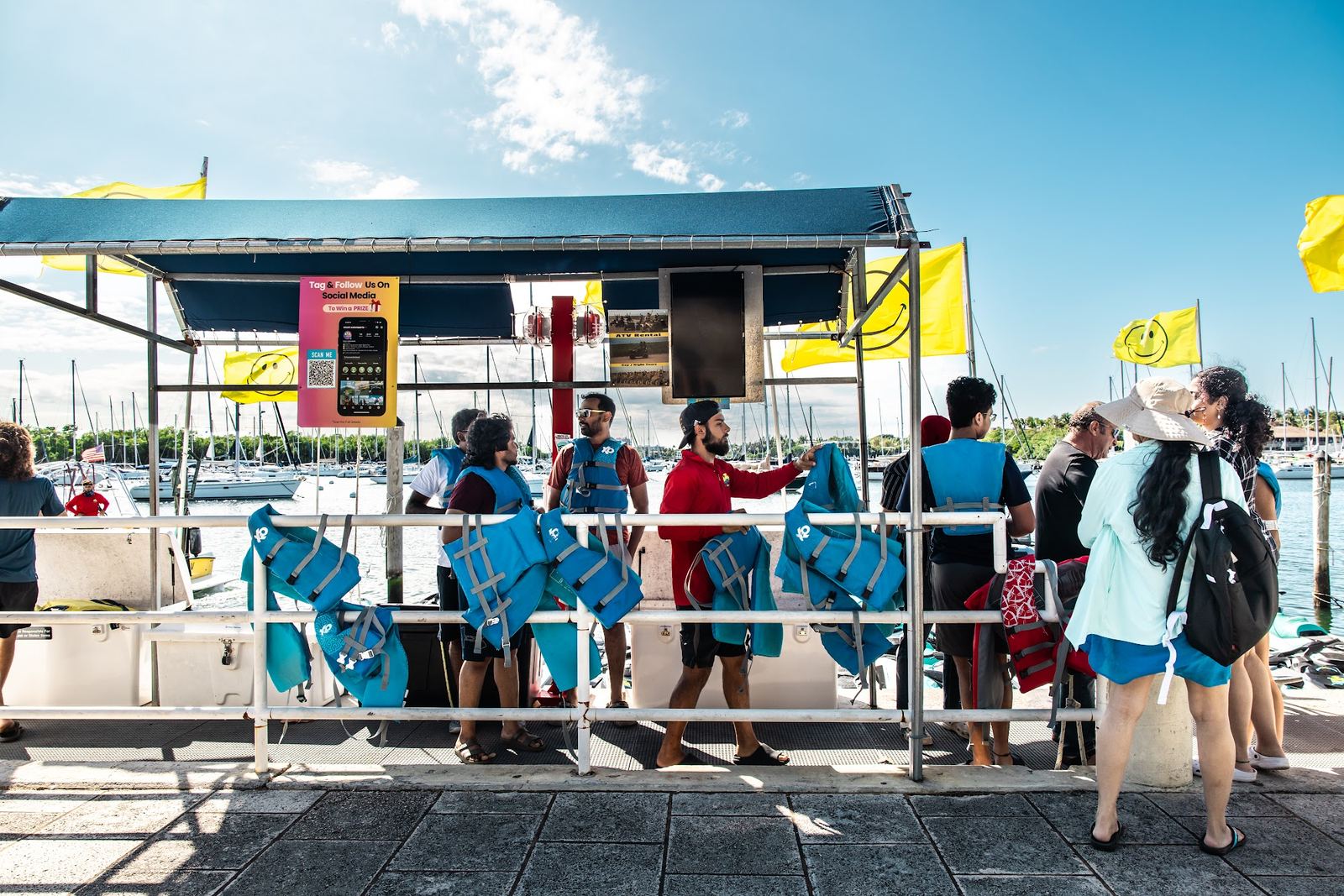
Every jet ski rental comes with life vests, and our policies make wearing the safety gear we give you a rule for every participant. You will pick yours up at the dock before the briefing.
Our policies also ask everyone to be comfortable in the water without panic. That matters on a jet ski, because getting wet is part of the ride and a fall into the bay is something every rider should be ready for, calmly.
What our jet ski page tells you to bring is short:
- A government photo ID (the driver must have one)
- Something to swim in
- Reef-safe sunscreen
- A bottle of water
Come dressed to get wet, because there is nowhere private to change at the dock. Leave valuables in the car: shoes and bags go in a shared dock box, and a phone is the only thing allowed on the ride. Waterproof phone cases are sold at check-in.
Background from the machines themselves: Wikipedia quotes current on-product warnings telling riders to keep away from the intake grate while the engine is on, because long hair, loose clothing or vest straps can be caught in moving parts. Tie long hair back, wear swimwear that fits snugly and keep your vest straps fastened.
The jet ski safety gear checklist goes item by item through gear and packing if you want the longer version.
The rules on the water that keep the zone safe
Most of our on-water rules exist because many people share one marked zone at the same time. Each one lines up with a risk from the FWC report.
“10/10. My sister and I went jet skiing, Ohio and Eric were amazing instructors.”
- Stay inside the zone. It has set boundaries, and the guide supervises inside them.
- Ride at the guide's pace. Our FAQ puts speed in the guides' hands, matched to the water and your skill.
- Keep the ski you started on. Our FAQ rules out changing skis once the ride is under way, for safety reasons.
- Plan for the full hour. Nobody heads back to the dock before the ride is over.
- Rest only where the guide showed you. Swimming mid-ride is not recommended, since the zone is busy with other riders.
- Stay sober. Our policies rule out drugs and alcohol before and during every activity.
- Keep the vest on. It stays fastened from the dock and back.
The swap rule surprises people more than any other. Couples and friends often picture handing the handlebars over halfway through. Stopping two skis side by side in a busy zone so people can climb across is the kind of close contact the collision numbers above warn about. So settle who drives each ski while you are still on the dock.
The no-swim rule works the same way. A person in the water is hard to see from a moving ski. The break areas the guide shows you during the briefing are where you rest, take photos and catch your breath.
Our older post on jet ski etiquette on the bay covers general manners around other boats, and it makes good background reading.
Who should think twice before riding
No prior experience or qualifications are needed for our activities, according to our policies. A few people should still check with us first, and in two cases our own pages say slightly different things, so read this section carefully.
Swimming. Our jet ski page lists swim ability as required. Our general policies, written for every activity, say swimming skills are not required if you are comfortable in the water. Those two lines do not match. For a jet ski, go by the Miami jet ski rental page, and text us at (786) 713-8006 before you book if you are unsure.
Pregnancy. Our jet ski page lists no pregnancy for this ride. Our general policies say pregnant participants may have activity restrictions and should ask by phone first. For the jet ski, the activity page is the rule to plan around.
Medical conditions. Our policies say medical conditions warrant prior consideration. If you have one, ask the crew before you book.
Back problems. Our jet ski page does not list a back rule. As background, Wikipedia quotes a Kawasaki owner's manual that advises easing off ahead of waves, says not to ride with a back condition, and warns that fast riding on rough water can injure your back. If your back is a concern, talk to us first.
Weight. One rider up to 250 lb fits a 1-seater; two riders up to 350 lb together fit a 2-seater. Check your numbers before booking.
Age and ID. Drivers must be at least 18 and carry valid government photo ID. Our jet ski page asks for valid government-issued photo ID for all participants, and our policies list a driver's license or passport.
Kids on a jet ski: how passengers ride
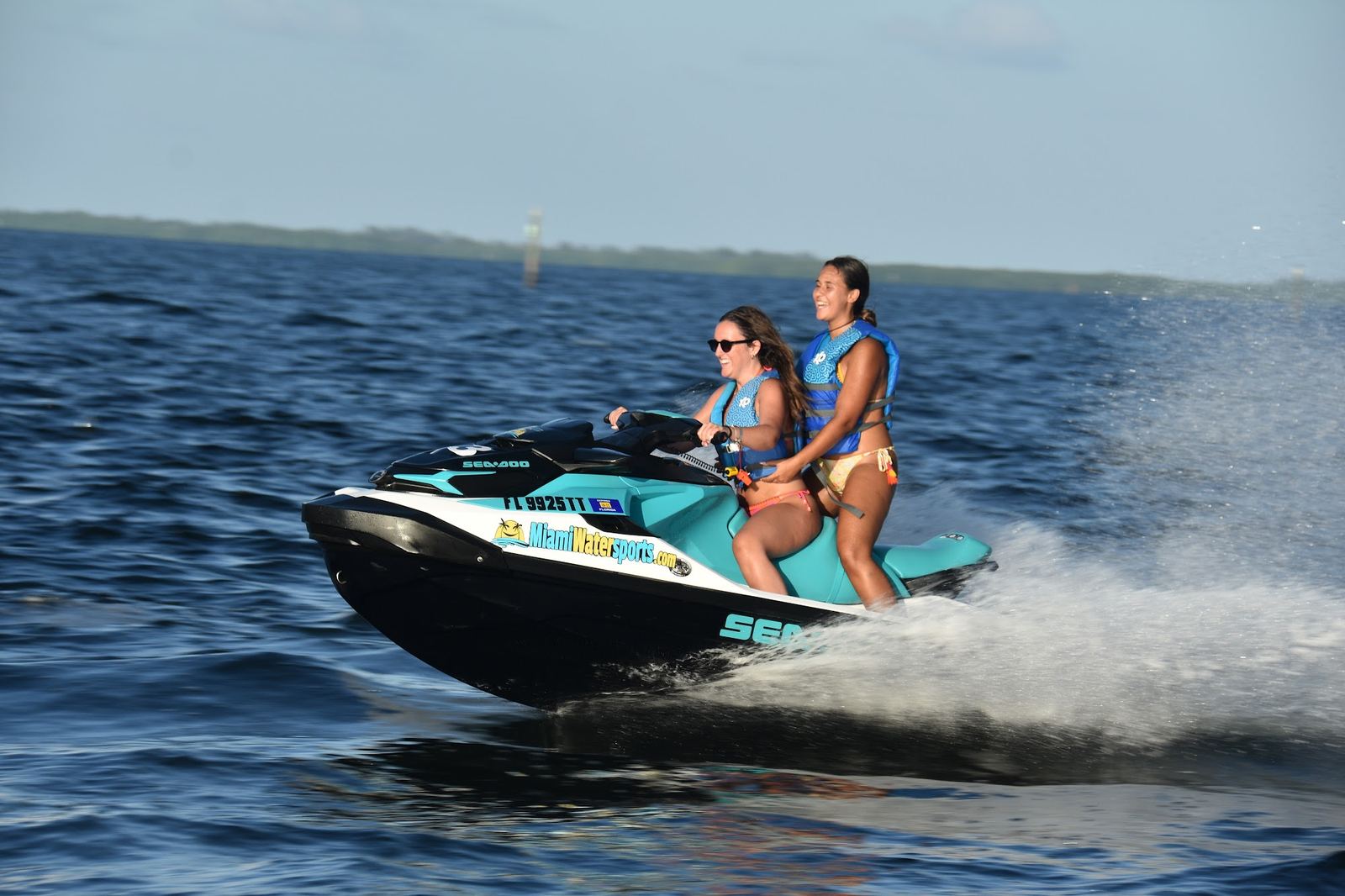
Children can ride with us as passengers. Our jet ski page sets the rules:
- Passengers are 6 or older and ride on the 2-seater.
- The adult driving is at least 18, with photo ID.
- The child has to hold on by themselves.
- A parent or guardian signs the minor's waiver.
- Driver and child together weigh 350 lb at most.
The hold-on rule is the one parents should think hardest about. A passenger sits behind the driver and holds on through every turn and every bump. Of the 161 accidents in the FWC report, 16 started with a person thrown from the ski, and the passenger is the one with the least control over what happens next. If your child cannot keep a firm grip for a full hour yet, it is better to wait until they can.
For the driver, carrying a child changes the job. Smooth throttle, wide turns and an easy pace through other riders' wakes make the hour comfortable for a small passenger. As background, Wikipedia says the major makers all warn riders about the water jet that shoots out the back of the ski, and suggest passengers wear wet suit bottoms or something like them. That is one more reason to drive gently with a child aboard.
Riding two-up is covered in more depth in our guide to the 2 person jet ski, including the weight math for two.
Weather: when we ride and when we stay at the dock
Weather is the one risk no rider can manage alone, so the call is made by the crew. Our policies say certified staff track conditions on radar apps all day and use standard industry judgment to decide when it is safe to operate, and the company keeps the right to reschedule for weather.
Our jet ski page draws the line clearly. Light rain is normal, and the ride goes ahead. Lightning stops everything.
| Conditions | Do we ride? | What it means for you |
|---|---|---|
| Sunny and calm | Yes, weather permitting | The easiest water to learn on |
| Light rain | Yes | Wet and a little harder to see; follow the guide closely |
| Wind and chop | The crew decides on the day | A bouncier ride; expect a gentler pace |
| Lightning | Never | Rebook or take the 2-year credit |
When weather cancels a ride, our jet ski page says you can move to any later date or take a credit instead; both last 2 years and cost nothing extra. Our policies add that weather credit vouchers can be used toward any activity we offer.
Choppy water is where speed gets uncomfortable fast. On a windy afternoon, expect the guide to hold the group to an easier pace than on a flat morning, and ease off yourself before you cross another rider's wake.
Wind, rain and the bay get their own post: how weather changes a jet ski day in Miami.
If you fall in or bump something
Falling off is the moment most first-time riders worry about. Here is what our pages say, and what general background adds.
If you fall in. You are wearing a life vest, which our policies require, and you are inside a marked zone with a guide watching the group. As background, Wikipedia notes that hitting the water at speed can hurt, and that a rider who comes off the back can end up in the path of the ski's water jet. Both are good reasons to keep your speed sensible and to hold on properly through turns.
If you bump another ski or anything else. Every jet ski rental carries a refundable damage deposit. Our jet ski page says it is card only, and it comes back to you unless the ski is crashed or damaged or a policy is broken. The bank can take up to 3 days to show the refund. The deposit gives every driver one more reason to keep their spacing and ride at the guide's pace.
If a rule is broken. A policy violation is one of the reasons the deposit can be kept. Our pages do not list every possible violation, so treat the rules in this post and the guide's instructions on the water as the ones to follow.
For the current deposit and the rate, see the booking box on the jet ski page. We leave numbers out of posts because they can change.
Four groups and how each one rides safely
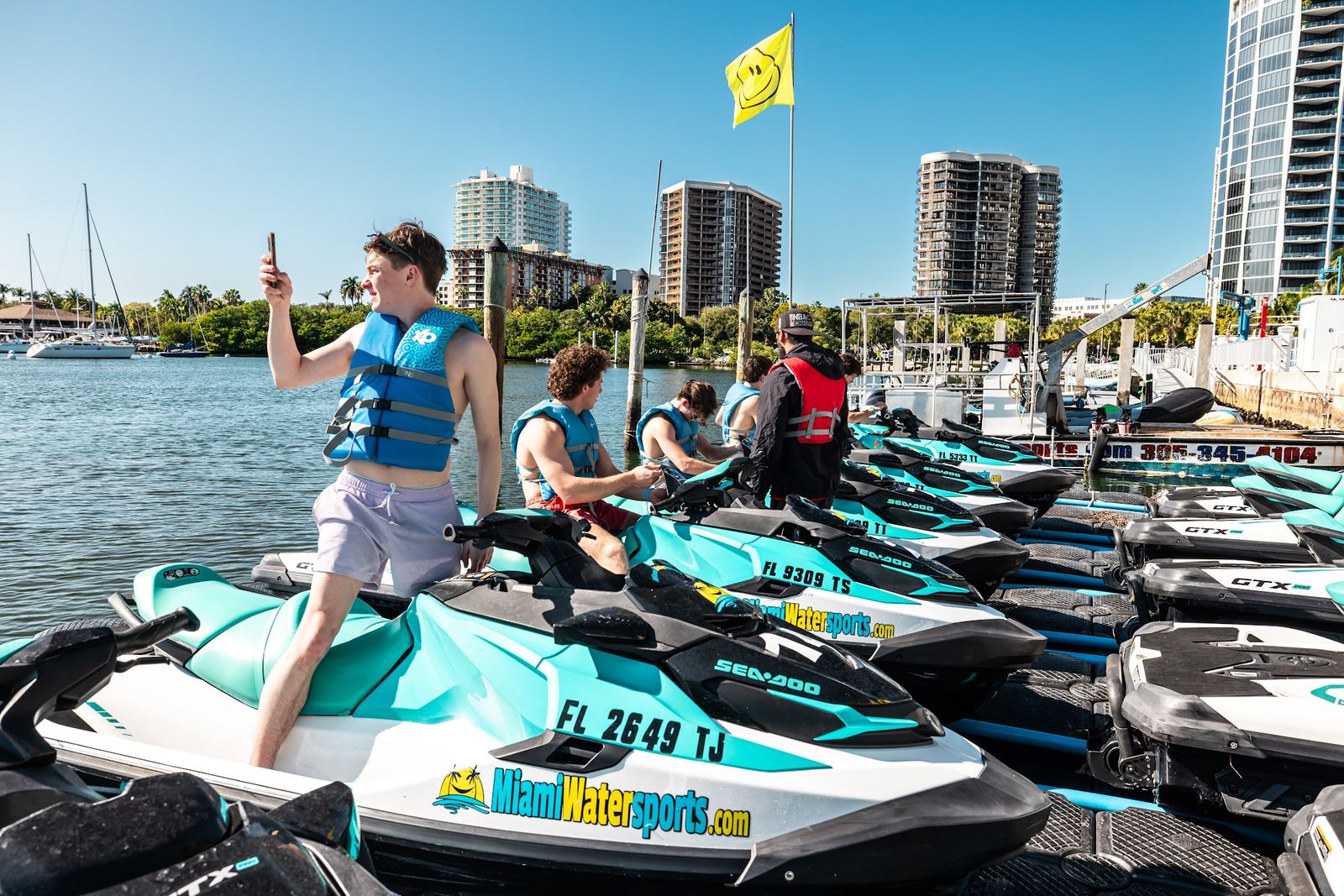
Below are four common bookings for the standard hour. Each rule mentioned comes from our own pages; the advice shows how those rules work out once you are on the bay.
Two partners sharing a 2-seater. Pick one driver for the whole hour, since nobody changes places once the ride starts. Together you weigh 350 lb or less. Whoever drives is in charge of spacing: leave a clear gap from every ski nearby and slow before each wake so the person behind is not thrown around. If you both want the handlebars, two 1-seaters are the answer.
A mother or father with an 8-year-old. The adult drives the 2-seater with photo ID in hand and signs the child's waiver. The child needs a firm grip, on their own, for 60 minutes. Gentle throttle, wide turns and a pause in the break areas the guide shows you keep it comfortable. A parent born after January 1, 1988 completes the state boating exam online before arriving.
Three friends, three 1-seaters. All three drivers are adults with ID, nobody is over 250 lb, and the exam is done at home by anyone whose birth date requires it. Groups like this are where showing off creeps in. Give each other room, never cut across a friend's line and stay with the guide's pace. Drinks wait until after.
One rider, first time out. A single 1-seater, a photo ID and the exam if it applies. The FWC report shows how many accidents involve drivers with very little time on the water, and the briefing and guide are there for exactly that. Listen closely on the dock, ask questions, and spend your first minutes learning how the ski turns before you add speed.
Your safety checklist from booking to the dock
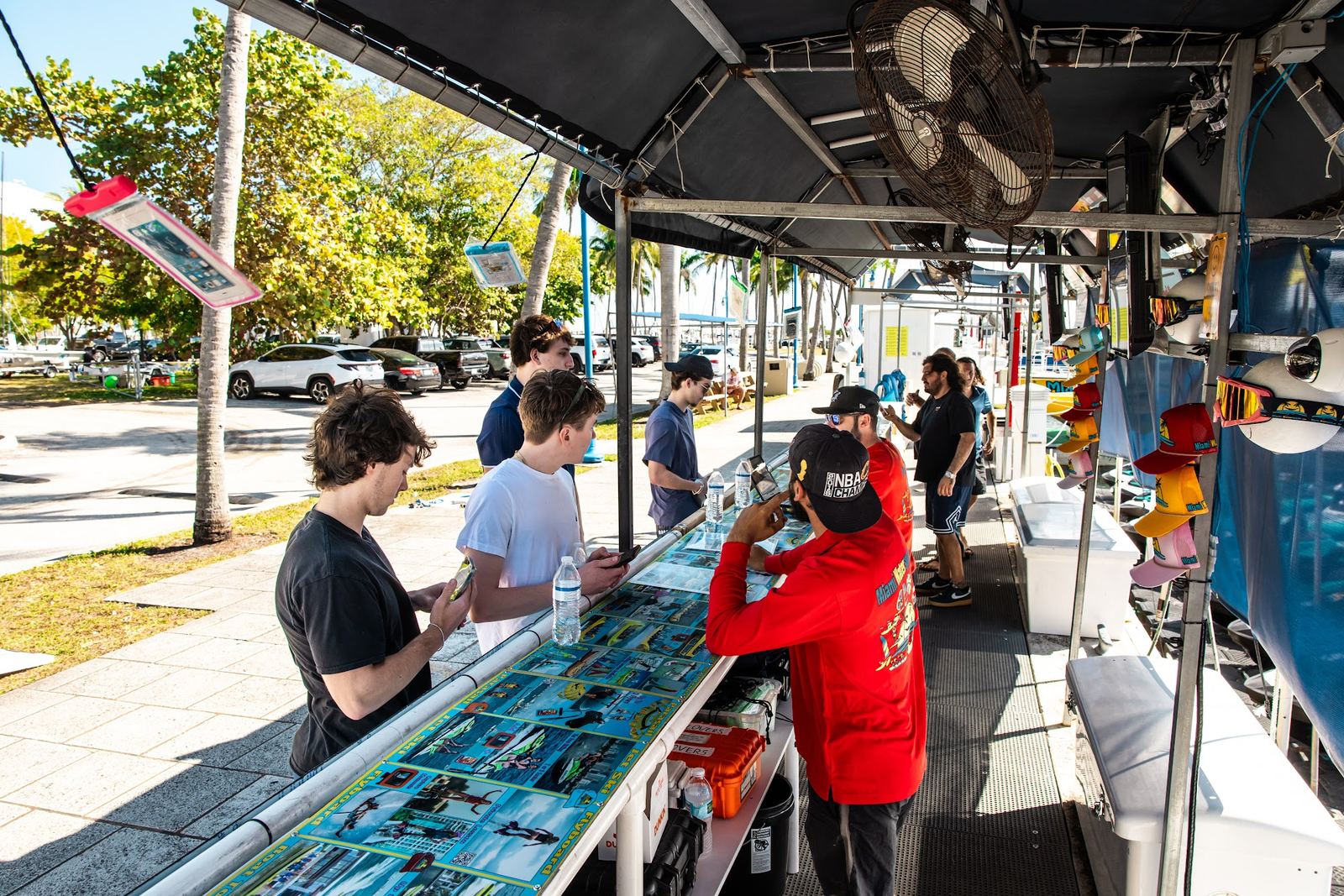
Run through this list once when you book and again the night before. Each step comes from our jet ski page, policies or FAQs.
Before the day
- 1Match every rider to the age and weight limits for their seat.
- 2Read the swim and pregnancy lines on the jet ski page, and text (786) 713-8006 if anything is unclear for your group.
- 3Ask the crew first about any medical condition, as our policies suggest.
- 4Reserve your time online, since bookings get priority over walk-ins.
- 5Complete the online waiver at home, plus the state exam for any driver born after January 1, 1988.
- 6Agree on who drives which ski, because swaps are not allowed once you leave.
On the day
- 1Skip alcohol entirely before the ride.
- 2Put your swimwear on at home, tie back long hair and pack reef-safe sunscreen and water.
- 3Use the Pay By Phone app to park in Lot 62, then walk over to Pier 9.
- 4Be at the check-in stand 15 minutes before departure with photo ID and the booking card.
- 5Get your vest on, then listen through the full briefing, including where the break and photo spots are.
- 6On the water, stay in the zone, keep your spacing and follow the guide's pace until the hour is over.
The check-in step has one detail people miss. Our policies say whoever paid must come to check-in with the same card used to book and a government photo ID in the same name, or the booking cannot be redeemed.
Book a safe Miami jet ski rental at Dinner Key
So, are jet skis dangerous? They can be, and Florida's accident report shows the risk comes mostly from collisions, inexperience, poor lookout, speed and alcohol. Our ride is built around those exact risks: a briefing before you start, a life vest on every rider, a marked zone, a lead guide watching the group and setting the pace, a no-swap rule, daylight hours and a crew that keeps everyone at the dock when lightning is around.
What the price includes, according to our jet ski page: the 60-minute guided ride, the safety briefing and lead guide, life vests, the designated photo and break zones, and fuel. Tax and the marina fee get added when you check in. The live rate is in the booking box on the activity page.
For a set route across the bay in place of the free-ride zone, ask about our private guided jet ski tours: a lead guide takes you to the Sandbar, Vizcaya or the islands of Virginia Key, Fisher Island and Key Biscayne. To add something else the same day, our combo packages keep everything at one marina on one day, with one waiver, one parking spot and one weather credit rule.
Choose your ski and your time, then arrive ready to listen at the briefing. Book a Miami jet ski rental on Biscayne Bay from Pier 9 at Dinner Key Marina, and ride with a guide watching the water.
Book your Miami jet ski
Member rates apply on every booking. Tax & marina fee added at check-in.
Frequently asked questions