How to drive a jet ski, in plain terms
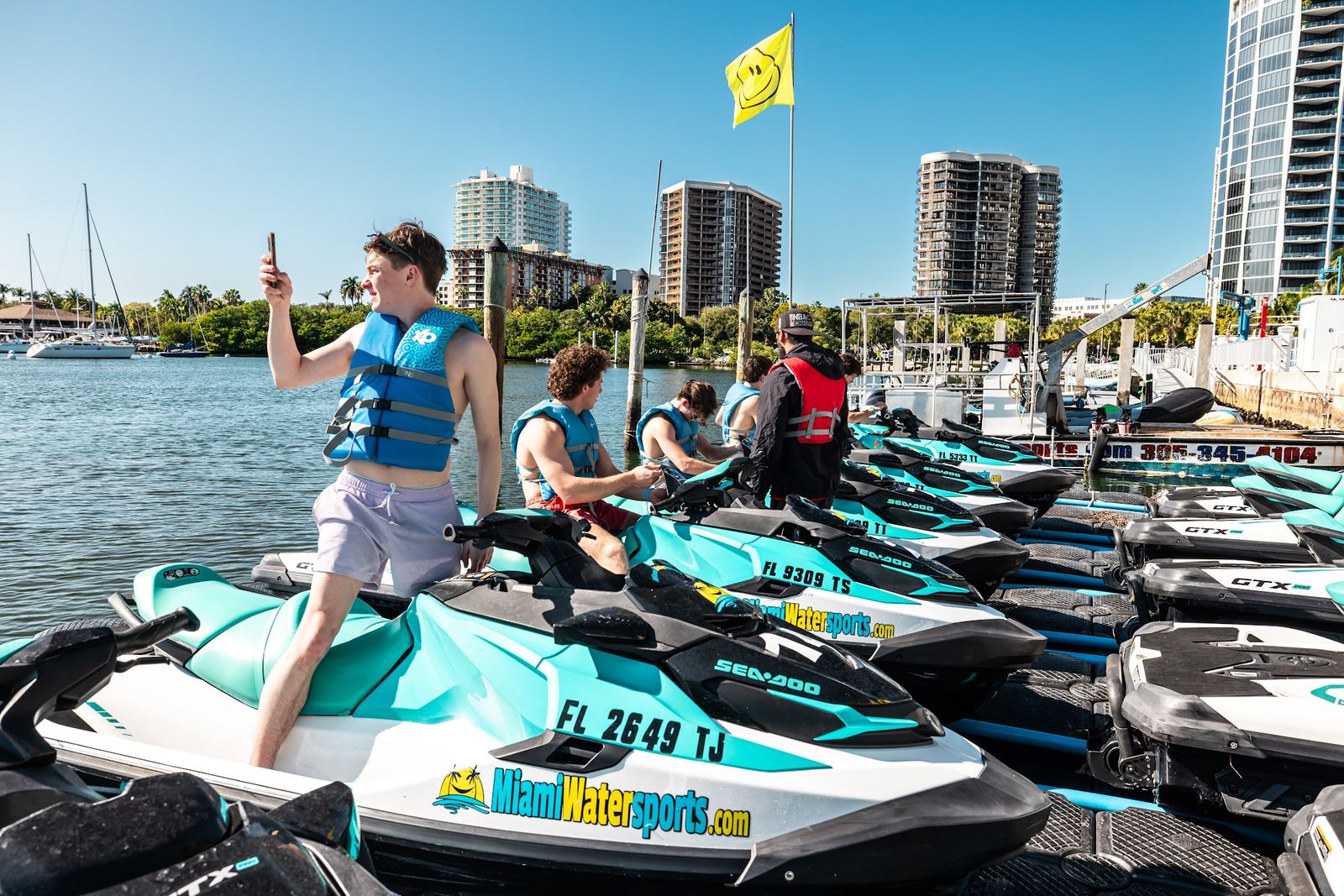
Here is how to drive a jet ski on your first ride: sit centered with both hands on the handlebars, squeeze the throttle gently to move, keep some throttle on whenever you want to turn, and ease off early when you want to slow down, because a jet ski has no brakes. Look where you want to go, keep your knees soft over chop, and follow your guide. That is most of it.
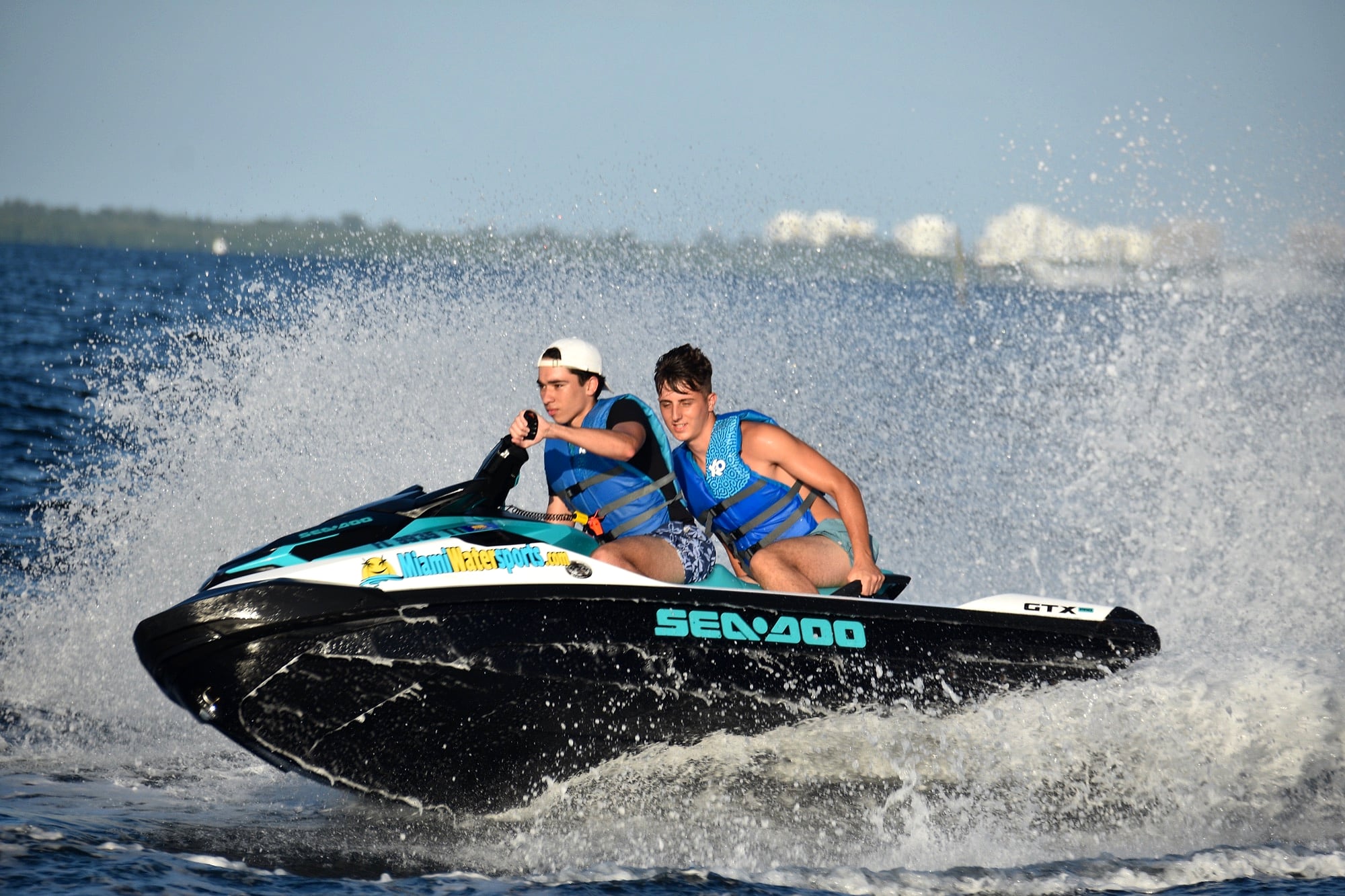
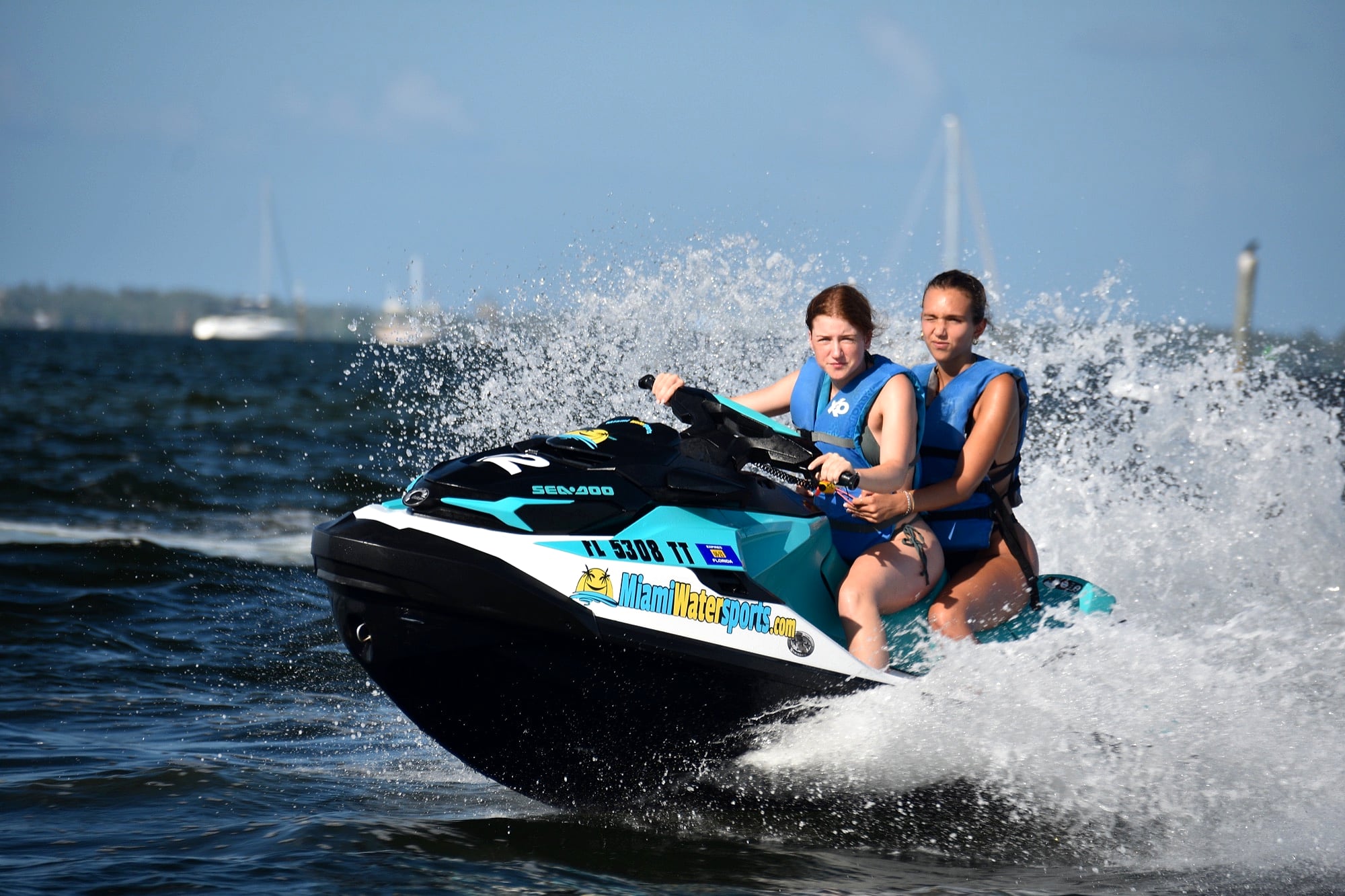
On our Miami jet ski rental, you learn all of this at the dock before you ever leave Pier 9. The hour is 60 minutes of guided free-riding inside a marked zone on Biscayne Bay, and it starts with a safety briefing from the guide who then leads your group out. Our jet ski page describes the ride as beginner friendly and fast for those who want speed, and that matches how the hour is set up: the guide sets a pace that suits the group and the conditions.
This guide walks through the whole first drive in order. First the paperwork that lets you take the handlebars, then check-in, then the controls, then what the first few minutes on the water feel like. After that come the habits that make the rest of the hour easy: turning, slowing down, handling a little chop, getting back on if you slip off, and carrying a passenger.
Every rule about our rides here comes from our own pages: the jet ski page, our policies and our FAQs. How a jet ski steers and stops is general equipment knowledge, and for that we point to public boating education sources listed at the bottom.
Who is allowed to drive
Before anyone learns the throttle, the driver has to qualify. The rules for the person holding the handlebars on our standard rental are short, and all of them are on the jet ski page.
The driver is 18 or older. Riders under 18 can come along, but only as a passenger on a 2-seater, and passengers must be at least 6.
The driver carries valid government photo ID. A driver's license or a passport works. The jet ski page asks for valid government photo ID for every participant, so pack ID for anyone old enough to have one.
Drivers born after January 1, 1988 pass a short online state exam. Our FAQs ask you to finish the online waiver, and the jet ski exam if it applies to you, before you arrive, so the reservation counts as valid. Doing it the night before saves you from taking a test on your phone at the dock.
Everyone signs a waiver. A parent or guardian signs for anyone under 18.
No experience is needed. Our policies say no prior experience or qualifications are required, and the jet ski FAQ answers first-timers directly: the guides give thorough instructions before the ride.
| Driver | Passenger | |
|---|---|---|
| Minimum age | 18 | 6, on a 2-seater |
| Photo ID | Valid government photo ID | Required for all participants |
| Online state exam | If born after January 1, 1988 | Not listed for passengers |
| Waiver | Signs their own | Parent or guardian signs for a minor |
| Job on the water | Throttle, steering, spacing | Holds on independently |
One point to check yourself: the jet ski page lists swim ability as required, while the general section of our policies says swimming skills are not required if you are comfortable in water. For the jet ski, go by the jet ski page, and ask the crew at booking if you are unsure. Our full jet ski rental requirements guide covers each rule in more detail.
Check-in at Pier 9, step by step
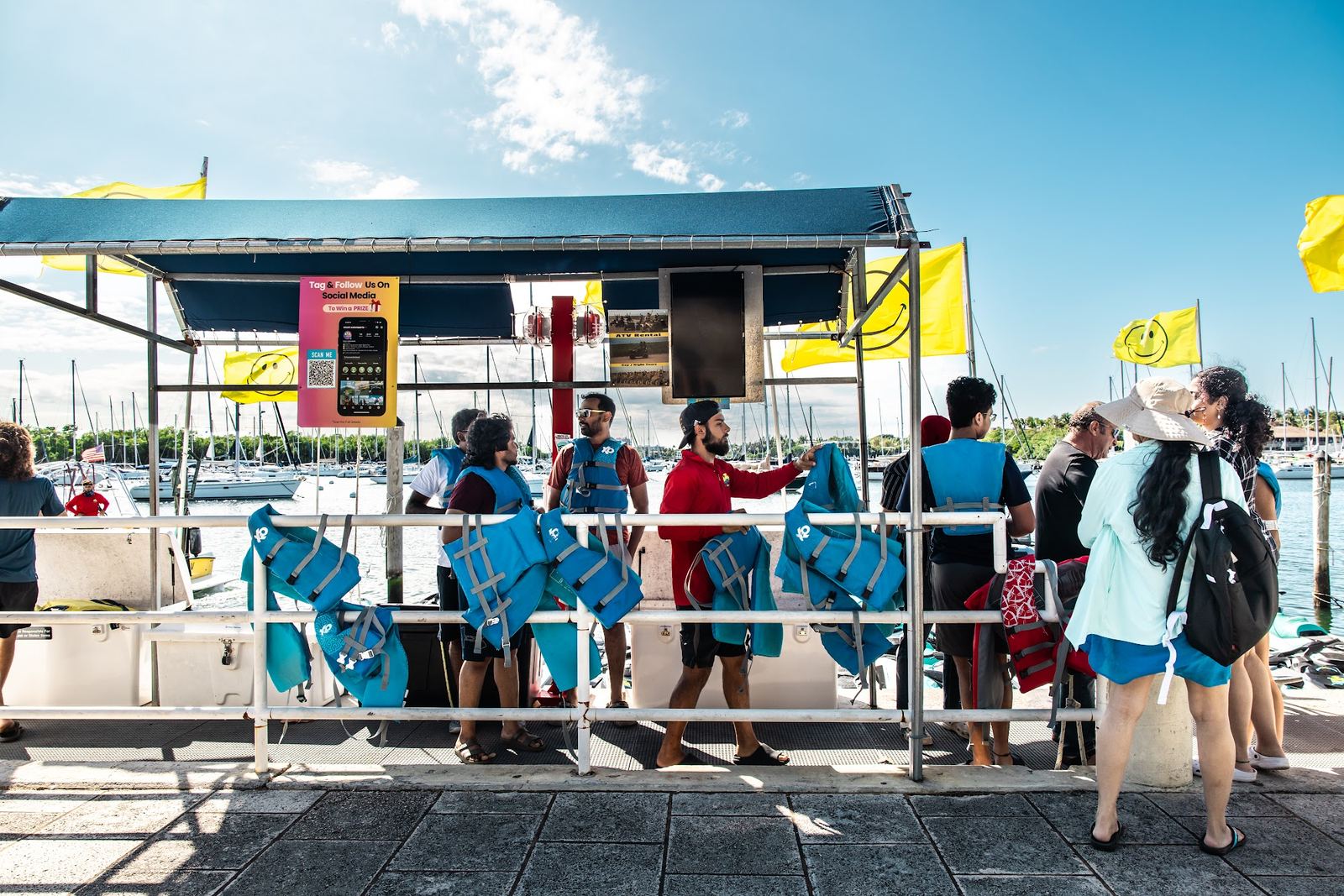
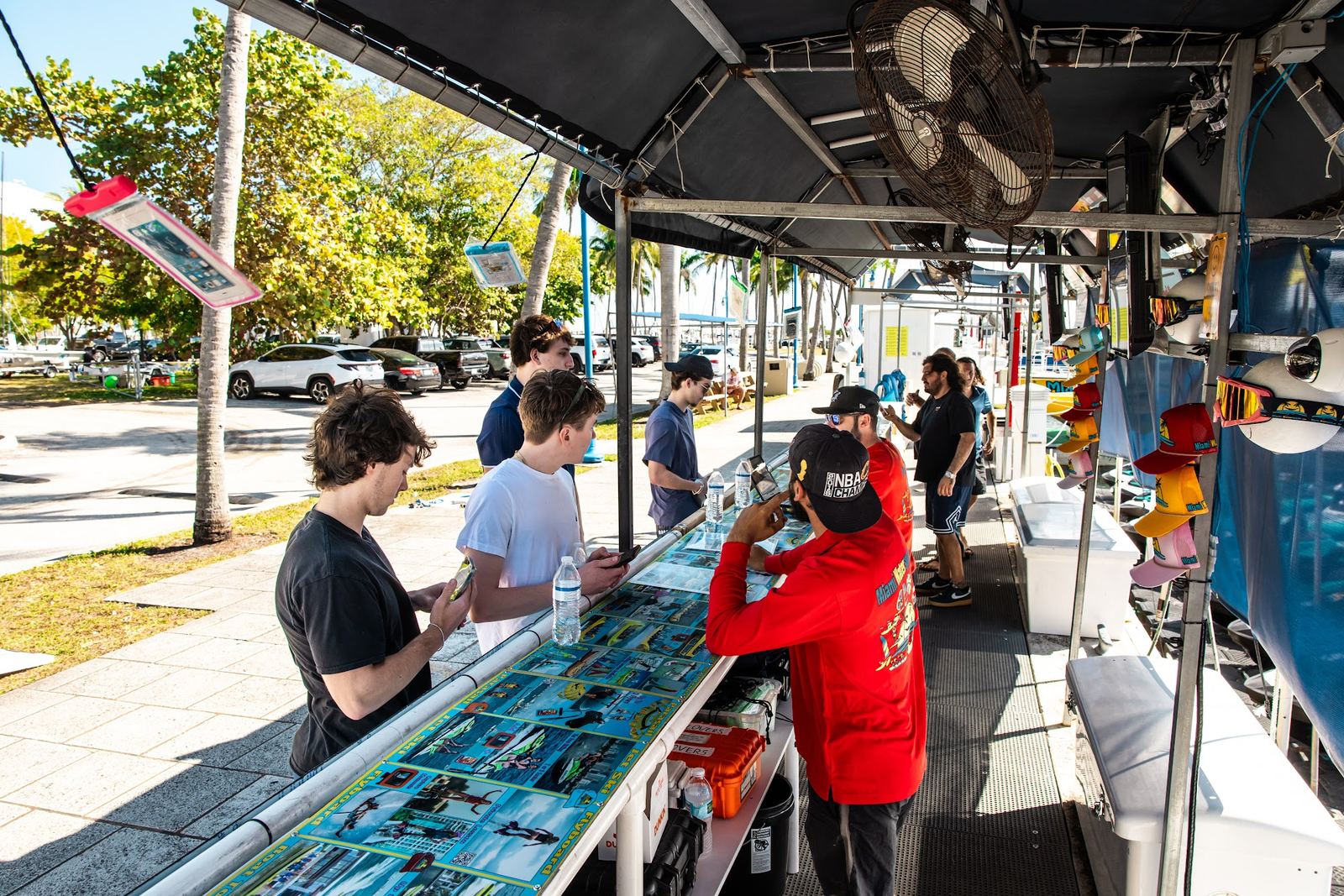
Your first drive really starts at the check-in stand. Here is the order things happen in, built from our policies, FAQs and jet ski page.
“Raine taught us everything we should know and made sure we were safe. Definitely coming back.”
- 1Finish the online waiver and, if you need it, the state exam before you leave for the marina.
- 1Park in Lot 62 using the Pay By Phone app. It is a short walk from our dock at 3400 Pan American Drive, Pier 9, Dinner Key Marina.
- 1Arrive 15 minutes before your departure. Our policies treat a missed time as a no show. The crew will try to fit you into a later slot that day if one is open; otherwise you rebook.
- 1Show your ID and the card you paid with. The cardholder must be there in person with the card and matching photo ID. American Express, Apple Pay and other digital wallets, prepaid and gift cards, and cards without a chip are not accepted.
- 1Complete the card authorization form. A refundable damage deposit goes on a card. It comes back unless there is a crash, damage or a policy violation, and your bank can take up to 3 days to process it.
- 1Pay the balance. Booking online holds your seat with a small per-seat amount, and the balance is paid at the marina. Fuel is included in every rate; tax and the marina fee are added at check-in.
- 1Store your bags. There are no private lockers. A group locker dock box holds shoes and bags while you ride, and only phones go out on the water.
- 1Put on your life vest and listen to the safety briefing. This is where you learn the controls on the exact ski you will ride.
Steps 4 to 6 are where first-timers lose time, usually over a card that does not match the ID. Sort that out at home and the line moves quickly.
The controls, without the jargon
A jet ski has very few controls, which is why first-timers pick it up quickly. The briefing covers the setup on our skis; here is what each part does in general terms.
Handlebars. You steer with them, much like a bicycle. Turning the bars changes the direction of the water jet that pushes the ski, and that is what turns you.
Throttle. A lever on the handlebar controls engine speed. The Virginia Department of Wildlife Resources notes that an operator can accelerate quickly with a slight movement of the throttle. Treat it as a dial you turn up slowly, and give it small, steady inputs.
Engine cut-off lanyard. Personal watercraft are commonly fitted with a lanyard cut-off switch that attaches to the ski at one end and to the rider at the other, so the engine stops if the rider falls off. The safety briefing covers the setup on the ski you ride.
Jet pump. The Virginia page notes that personal watercraft run on a jet pump instead of a propeller. The state page warns that the jet intake is powerful and will suck in anything near it, so keep hands, feet and loose straps away from it.
What is missing: brakes. As the same state boating page puts it, boats don't have brakes. You slow down by letting off the throttle and giving yourself room, which is why spacing matters so much.
| Control | What it does | First-ride habit |
|---|---|---|
| Throttle | Sets speed and powers the steering jet | Small, smooth squeezes |
| Handlebars | Aim the water jet to turn | Turn with a little throttle on |
| Cut-off lanyard | Stops the engine if you come off | Keep it attached the whole ride |
| Seat and footwells | Where your weight sits | Centered, knees soft |
| Brakes | None | Ease off early and leave space |
Why you need throttle to turn
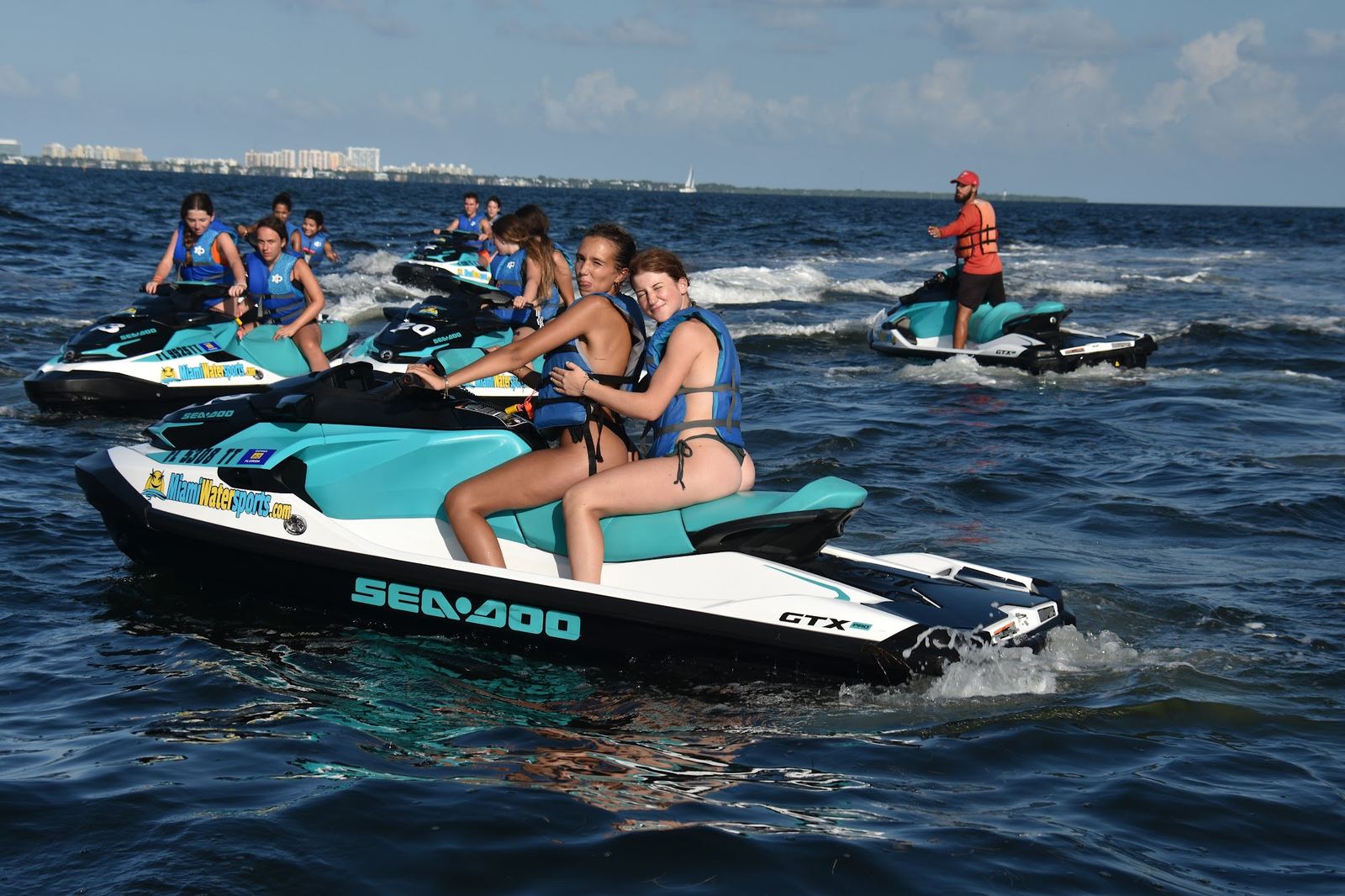
This is the one idea that separates a smooth first drive from a nervous one. The water jet that pushes you forward is also what steers you. The Virginia Department of Wildlife Resources explains that steering control is lost when the throttle is released or when the engine is turned off, and that it is important to keep the engine running if you need to turn, even slightly.
New drivers tend to do the opposite. Something appears ahead, they let go of the throttle in surprise, turn the handlebars hard, and the ski keeps sliding straight. The same page notes that some models add rudders to help steer when there is no propulsion, but plan your riding as if you need power to turn.
What to do instead:
- Keep a little throttle on through every turn. Gentle and steady works better than a burst.
- Turn early. At low speed a jet ski needs more room to change direction than most people expect.
- Look at the spot you want to reach. Your hands follow your eyes, so keep your head up and pick a point on the water.
- Lean slightly into the turn with your knees bent, and let the ski move under you.
Practice a few wide, slow turns early in the hour. Once those feel natural, everything else on the bay gets easier.
Your first five minutes on the water
Most first drives go the same way. Here is what to expect once the briefing ends and you climb on at the dock.
“Raine was a great guide. I felt safe and confident riding jet skis after he taught us.”
Pulling away. Sit down, center your weight, check that the lanyard is attached, and wait for the guide's signal. Give a light squeeze of throttle and let the ski creep forward. The marina area is no place for speed, so go slowly until the guide leads you out.
Following the guide. On our standard rental the guide leads the group into a guided free-riding zone, which our FAQs describe as an area where renters explore freely within designated boundaries under the supervision of a guide. You ride inside those boundaries for the hour.
Building speed. Once you are in the zone, ease the throttle up in small steps. The jet ski FAQ says the skis can reach high speeds inside the ride zone, and the guides make sure you operate at speeds that suit the conditions and your experience. Let your comfort set the pace for the first few minutes.
Settling in. By the time you have made a few turns, your shoulders drop and your grip relaxes. That is the point to try a bit more speed in open water, still inside the zone.
If something feels off, slow down early and keep some throttle on so you can still steer away. The Miami jet ski rental is built around a guide who is out there with you the whole time, which takes most of the pressure off a first-time driver.
Speed, chop and wake on the bay
Biscayne Bay is open water, so the surface changes with wind and with other boats. A few habits make bumps easy to handle.
Stand up slightly or brace with your legs over chop. Let your knees absorb the bumps instead of your back. Keep a firm grip without locking your elbows.
Cross a wake at an angle and at a moderate speed. Hitting a wake straight on at full throttle is what lifts the front of the ski. A slight angle and steady throttle keeps the ride smooth.
Watch the other skis. The zone has other riders in it, which is one reason our FAQ advises against stopping to swim during the ride. Keep space on all sides and check over your shoulder before you turn.
Let the weather call wait for the crew. The jet ski page is clear: light rain is normal and the ride goes on; lightning never. If the weather cancels your ride, you can reschedule to any future date or take a credit, both valid for 2 years, with no fee. Our policies add that certified staff watch the weather on radar and make the call. Our guide to how weather affects your jet ski ride explains the bay in more detail.
Speed is part of the fun, and the guide keeps it within what the day allows. A driver who can hold a steady line at moderate speed through a bit of chop is doing everything right.
Slowing down, stopping and keeping space
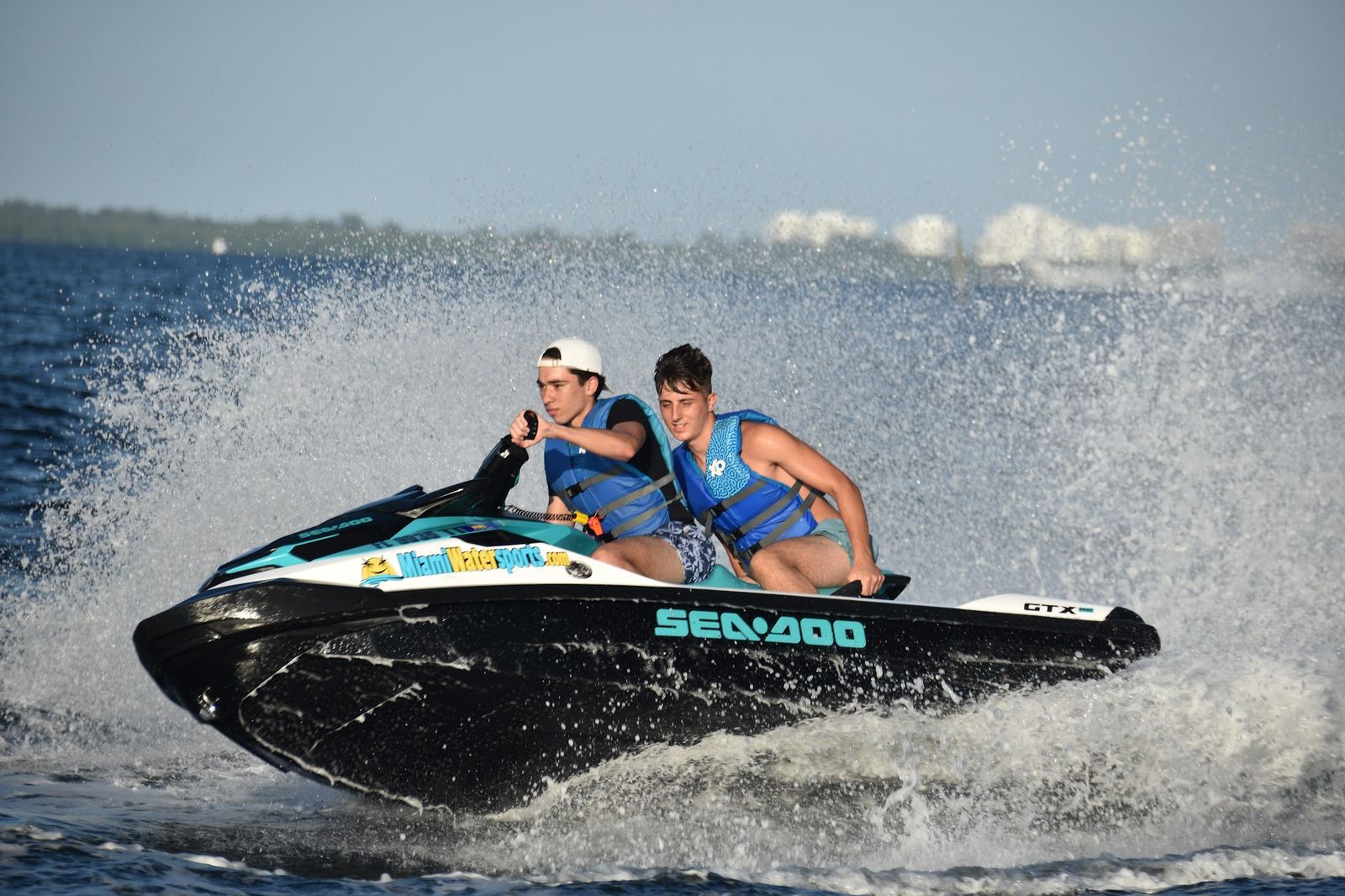
With no brakes, slowing down is about planning. Letting go of the throttle cuts the push, and the ski glides to a stop on the water's own drag. How far it glides depends on how fast you were going.
Simple rules that cover almost every situation:
- Start slowing well before you need to stop. Ease the throttle down instead of letting go all at once, so you keep some steering.
- Leave more room than feels necessary behind the guide and the ski ahead of you.
- Do not aim straight at anything while slowing. Turn slightly away, with a touch of throttle, so a misjudged stop becomes a gentle curve.
- Stop where the guide shows you. We have designated photo and break zones, and the guides point them out during the safety briefing.
Two rules from the jet ski page apply here. Switching back and forth between jet skis during the ride is not allowed for safety reasons, so the ski you leave on is the ski you ride all hour. And once the ride starts, the group does not return to shore until the end of the ride, so use the restroom and sort out sunscreen before you leave.
If you fall off: getting back on
Coming off the ski can happen to anyone, and everyone wears the life vest we provide. Knowing the steps ahead of time keeps it calm.
- 1Let go and float. The cut-off lanyard stops the engine when you come off.
- 1Raise a hand so your guide can see you and swim calmly to the ski.
- 1Climb on from the back. Boat-Ed's study guide says you should know how to reboard from the rear of the craft. Pull yourself onto the rear platform, then crawl forward to the seat.
- 1Reattach the lanyard before you start the engine again, and follow the guide's directions to restart.
- 1Take a breath and start slowly. Pick up where you left off.
Boat-Ed also notes that reboarding is harder when you are very tired and in strong currents or wind. It is one more reason to ride within your comfort level and take the breaks the guide offers.
If a jet ski ever turns over, leave the righting to the crew. Boat-Ed points out that rolling a ski the wrong way can damage it, and our deposit is refunded unless there is a crash, damage or a policy violation.
Driving with a passenger on the 2-seater
Many first-time drivers carry someone. The 2-seater holds two riders up to 350 lb combined, and the passenger must be 6 or older and able to hold on independently. The driver must still be 18 or older with photo ID.
A passenger changes the drive in small ways:
- The ski feels heavier. It takes a bit more throttle to get going and a bit more room to turn and stop.
- Smooth inputs matter more. A sudden burst of throttle can unsettle the person behind you. Build speed in steps.
- Agree on signals before you leave the dock. A tap on the shoulder for slower and a thumbs up for faster are easy to remember.
- Tell your passenger to lean with you and keep their feet in the footwells.
For a child passenger, keep the speed modest and check in with them often. A parent or guardian signs the waiver for any minor.
If you would rather each person drive their own ski, book two 1-seaters for drivers 18 and up. Each 1-seater takes one rider up to 250 lb. Our solo jet skiing guide covers the 1-seater.
Four first-time drivers and how their hour goes
The same rules play out differently depending on who is riding. Here are four common groups.
A couple, both new. One 2-seater is the simple choice if their combined weight is 350 lb or less. The driver should take the first part of the hour slowly while both get used to the feel. If both want to drive, two 1-seaters let each person learn the throttle, since switching between skis during the ride is not allowed.
A parent with an 8 year old. The parent drives a 2-seater with the child behind them. The parent signs the child's waiver, packs ID, and keeps the speed easy. The child needs to hold on without help.
Three friends, one experienced. Each friend can take a 1-seater, with a driver's license or passport and the exam done ahead of time for anyone born after January 1, 1988. The experienced rider will be tempted to race; the guide sets the pace for the group.
A solo traveler who is nervous. A 1-seater with a slow first ten minutes works well. Stay near the guide, practice wide turns with steady throttle, and build up only when it feels natural.
| Group | Ski choice | Thing to sort out first |
|---|---|---|
| Couple, both new | One 2-seater, or two 1-seaters | Who drives the whole hour |
| Parent and child (6+) | One 2-seater | Parent signs the child's waiver |
| Friends, mixed experience | 1-seater each | Exam done for each driver who needs it |
| Nervous solo rider | 1-seater | Slow start, wide turns |
Our first-timer jet ski tips add more on choosing a time of day.
What to bring and wear
The jet ski page lists four things to bring, and our policies add a few practical notes.
- Government photo ID for the driver, plus ID for every participant.
- Reef-safe sunscreen, put on before you leave the dock.
- Swim attire. There are no private bathrooms or changing rooms at the dock, so arrive already dressed.
- A water bottle.
- The card you booked with, in the cardholder's name, with matching ID.
Leave behind what you would not want in the bay. Only cell phones may be brought on activities, and waterproof phone cases are sold at check-in. Our policies say the company is not responsible for lost or damaged phones, even in one of its cases, so keep the phone secured or leave it in the dock box.
One rule for the driver above all: no drugs or alcohol before or during the ride. Our policies require it, and the throttle demands a clear head.
Book your first drive at Dinner Key
Learning how to drive a jet ski takes about as long as the safety briefing. Keep a little throttle on to turn, ease off early to slow down, look where you want to go, and follow the guide. The rest of the hour is practice on the bay.
Before you book, check the details on our jet ski page: driver 18 or older with photo ID, the online exam for drivers born after January 1, 1988, a 1-seater for one rider up to 250 lb or a 2-seater for two riders up to 350 lb combined. We are open 7 days a week from 10 AM until sunset, weather permitting, with departures every 30 to 60 minutes.
If you want a set route with a private guide instead of the free-ride zone, see our guided jet ski tours, which are booked by text in advance.
When you are ready, book your Miami jet ski rental at Dinner Key Marina and pick a boarding window online.
Book your Miami jet ski
Member rates apply on every booking. Tax & marina fee added at check-in.
Frequently asked questions