Jet ski goggles on a Miami rental: the short answer
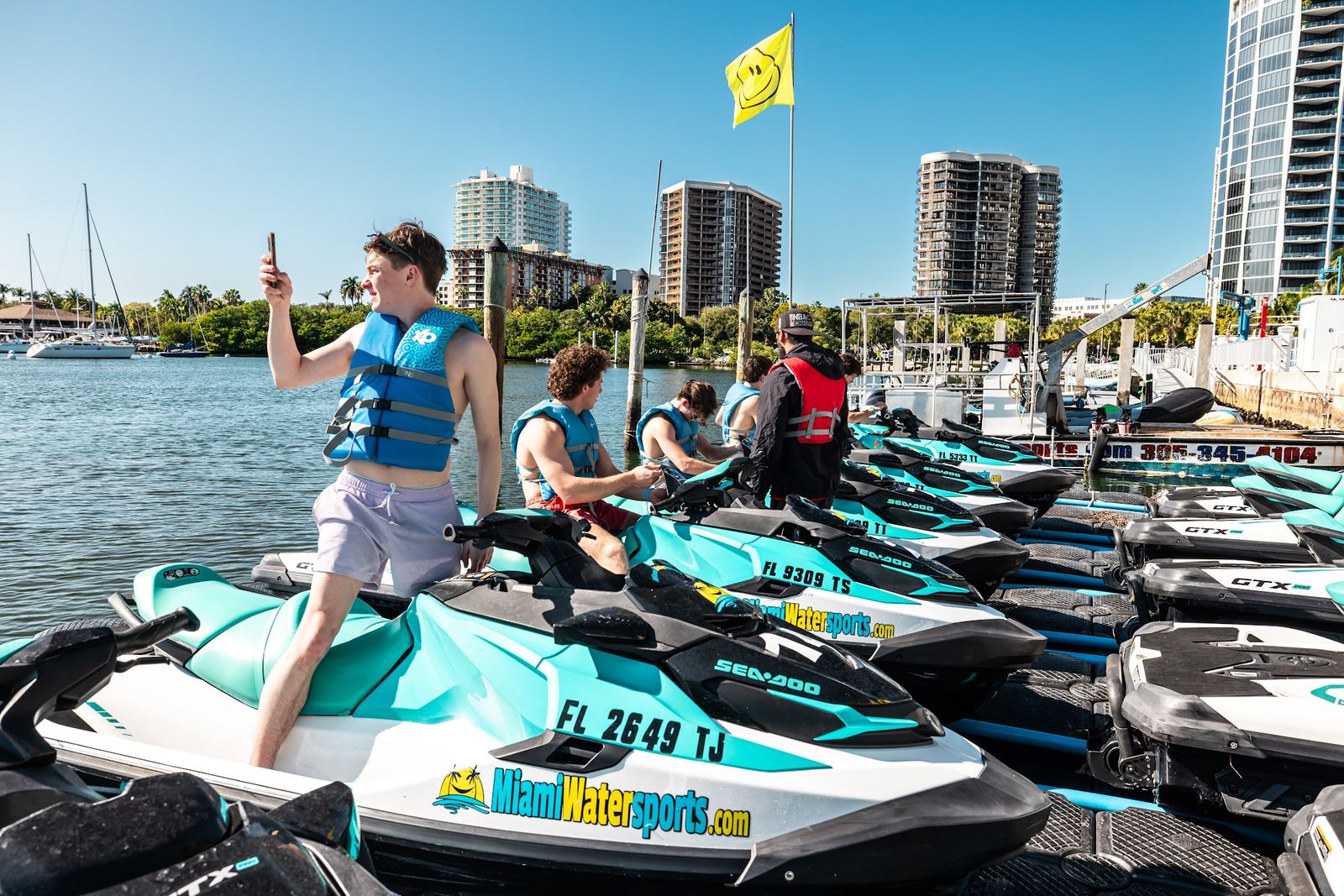
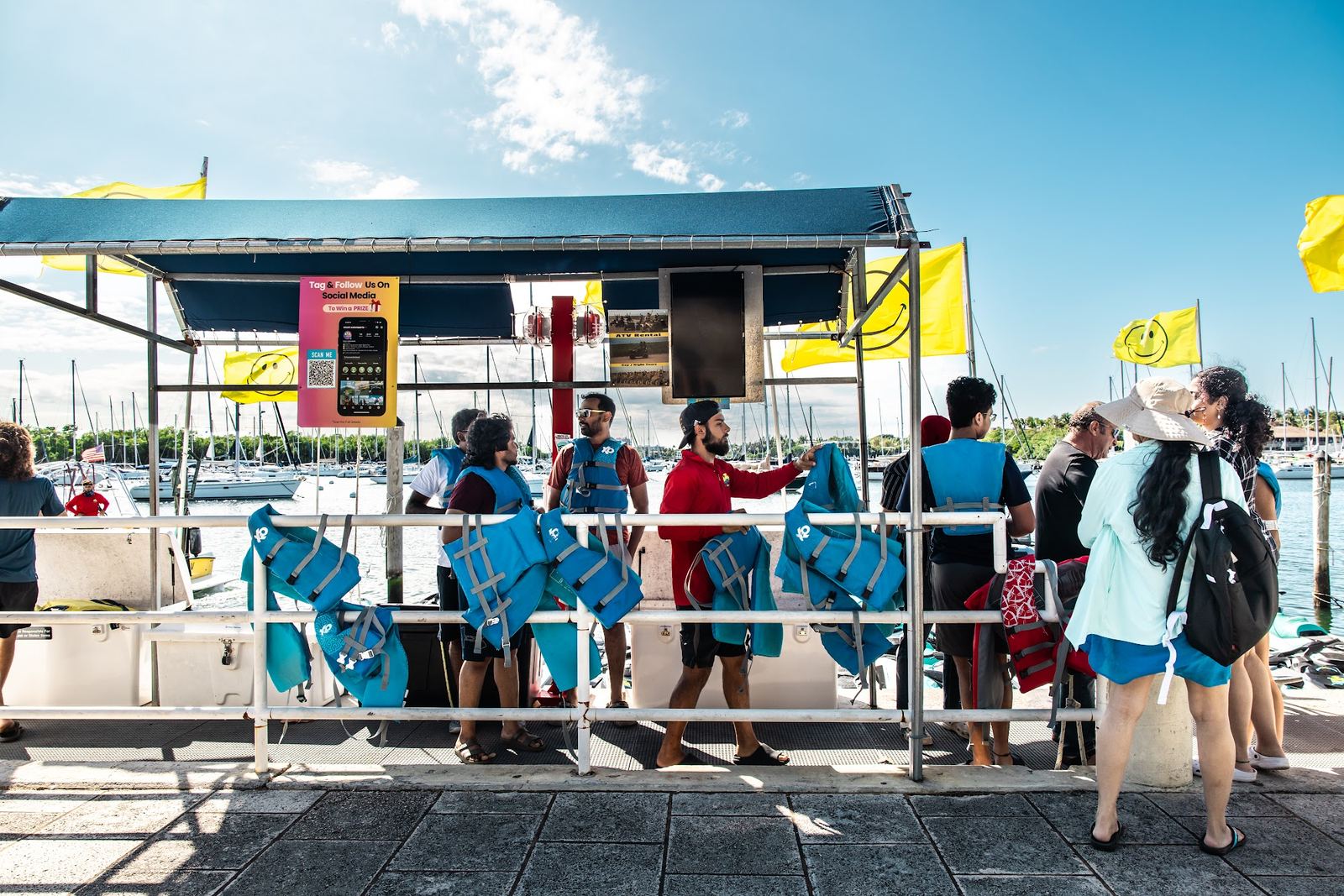
You do not need jet ski goggles to ride with us at Dinner Key Marina. The packing list on our Miami jet ski rental page has four lines: the driver's government photo ID, a water bottle, reef-safe sunscreen and swim attire. Goggles are not on it, and sunglasses are not on it either. What the ride does include is a life vest for every rider, the safety briefing at the dock and a lead guide on the water.
That leaves the real question most people searching for jet ski goggles are asking: should I wear something over my eyes for an hour on the bay, and if so, what? This guide answers it with what our own pages say about the ride and what the American Academy of Ophthalmology and the CDC say about eyes, sun and water.
One thing up front, because it shapes everything below. Our policies say only cell phones go out on activities. The jet ski page does not mention eyewear at all, while our speed boat and boat tour pages list sunglasses with a strap. If you plan to ride in glasses or goggles, tell the crew at check-in and follow what they say for that day. Everything else here helps you decide what to bring to the dock in the first place, so you can book your jet ski rental at Dinner Key Marina knowing what to expect.
What our pages say about eyewear
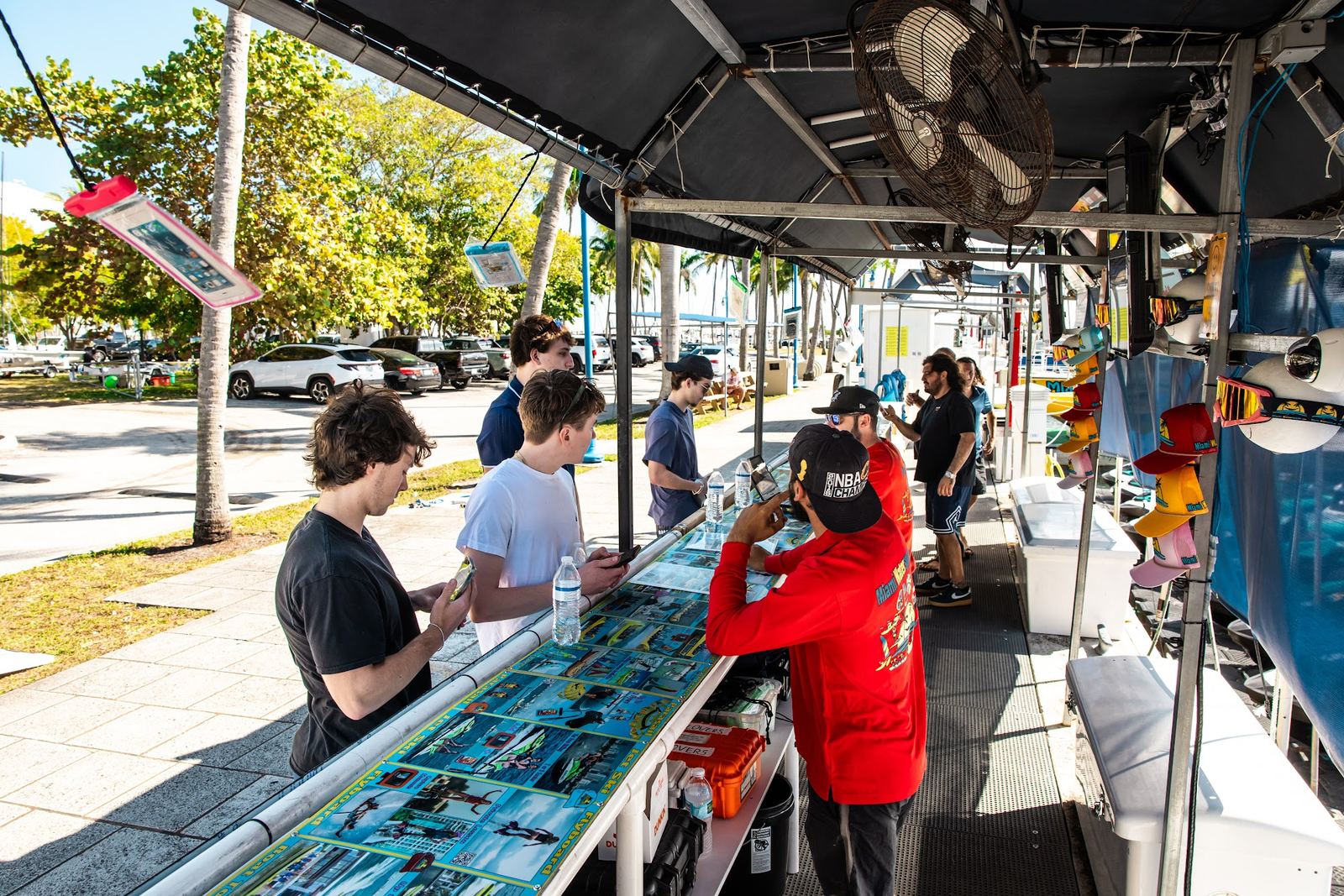
Here is every line on miamiwatersports.com that touches eyewear or loose items, side by side, so you can see exactly where the jet ski stands next to our other rides.
| Page | What it says | What it means for your eyes |
|---|---|---|
| Jet ski rental | Bring photo ID for the driver, reef-safe sunscreen, swim attire, a water bottle | Eyewear is not on the jet ski list |
| Policies | Only cell phones may be brought on activities; bring the minimum | Loose items stay on the dock |
| Policies | A group dock box holds shoes and bags | Cases can wait there |
| Speed boat | Bring sunglasses with strap | Strapped sunglasses listed |
| Boat tour | Sunglasses with strap, hat with strap | Same idea, plus a hat |
| Banana boat | Bring a strap for sunglasses | A strap is the one eyewear item listed |
| Parasailing | Bring sunscreen, sunglasses, a hat | On the parasail list |
Two things stand out. First, every time one of our pages mentions sunglasses for a ride where people get wet, it pairs them with a strap. Second, the jet ski page is silent, and the policies page limits what goes out on the water. That is why the advice in this guide always ends at the same place: if you want to wear eyewear on the ski, secure it and confirm with the crew at check-in.
At check-in, mention the eyewear you plan to wear, follow the crew's call for that day, and leave the case, spare pair and anything else you carry in the group dock box or your car. The policies call the dock box unsecured storage for shoes and bags and say we are not responsible for lost, stolen or damaged items, so valuables are safer in the car. For the rest of what the driver needs at the stand, our jet ski rental requirements guide covers ID, age and the state exam.
If you are packing for the whole day, our what to pack for a jet ski day guide covers the rest of the bag, and our wetsuits for jet skiing guide covers clothing.
Goggles, sunglasses or nothing: how they compare
Jet ski goggles, sports sunglasses and riding with bare eyes each solve a different problem. The American Academy of Ophthalmology (AAO) explains what to look for in any lens you wear outside, and those points carry straight over to an hour on open water.
“14-member group with 8 adults and 6 kids. Dylan, Alex and Raine made it perfect.”
| Option | Strength | Watch for | What AAO or CDC says |
|---|---|---|---|
| Strapped sunglasses | Cut brightness | Need the strap | Look for 100% UV or UV400 |
| Polarized lenses | Less glare off water | No UV by itself | Check for a UV-blocking finish |
| Wraparound frames | Cover the sides | Fit varies | Block UV from the sides |
| Sealed goggles | Keep water out | Fit and comfort | Prescription goggles may suit contact wearers |
| Nothing | Nothing to lose | Full sun on your eyes | Sunlight is stronger off water |
A few more lens details from the AAO are worth knowing before you buy anything for the ride:
- Darker lenses do not mean more protection. Only lenses with 100% UV protection give you what you need.
- Colored and mirrored lenses are mostly style. Brown or rose tints add contrast, and mirror coatings cut some light, but neither adds UV protection on its own.
- Polycarbonate lenses stand up to stronger impacts than regular plastic, which makes them a sensible pick for sports. Get a scratch-resistant coating, because uncoated polycarbonate scratches easily.
For most riders, that adds up to one practical answer: a pair of plastic or polycarbonate sunglasses with full UV protection, polarized if you like, on a strap. Goggles make the most sense for people who wear contact lenses, which has its own section below.
Why sun and water are hard on your eyes
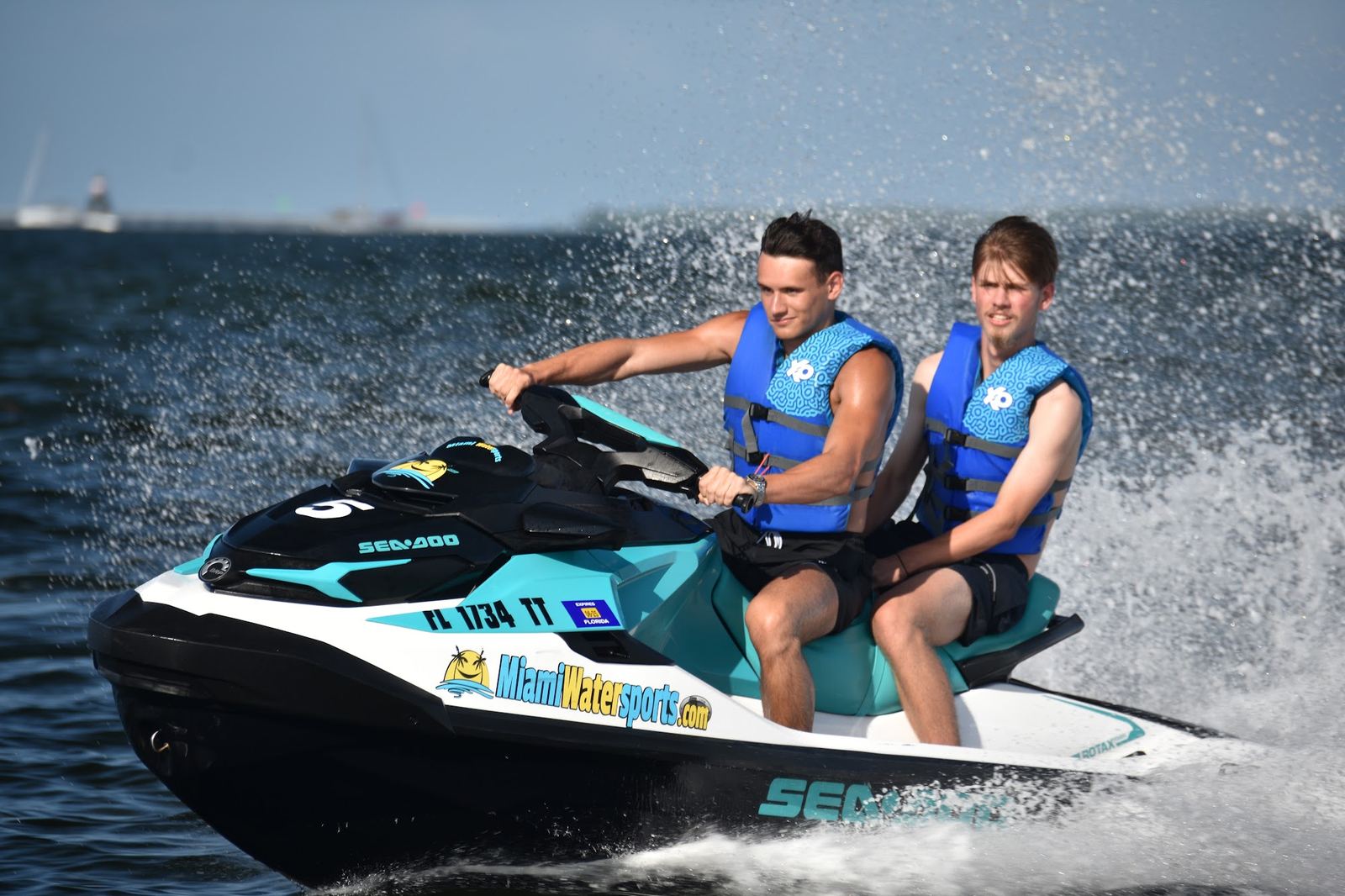
The reason eyewear comes up at all is light. The AAO says ultraviolet rays, including UV-A and especially UV-B, damage the surface of the eye and are linked to eye conditions that can harm your sight over time. It also points out three things that matter on the bay:
- 1Sunlight is strongest from midday to early afternoon.
- 2Sunlight is stronger when it reflects off water, ice or snow.
- 3Clouds do not block UV light. The rays pass through haze and cloud cover.
Our jet ski boarding windows run 10 AM to 12 PM, 12 to 2 PM and 2 to 4 PM, according to the booking box on our jet ski rentals in Miami page. The middle window sits right in the hours the AAO calls the strongest. That does not make it a bad time to ride. It does make it the window where a good pair of UV-blocking sunglasses earns its place.
There is also glare. The AAO describes polarized lenses as reducing the glare that bounces off reflective surfaces such as water, and lists boating as one of the activities where they help. On a bright morning, the bay can throw back a lot of light, and reading the water ahead is easier when that glare is cut down.
The AAO also says people who spend long hours near oceans and rivers are among those at risk from UV, and recommends a hat along with sunglasses. On a moving ski, anything loose can blow off, which is why our boat tour page asks for a hat with a strap. The same logic applies to anything you wear on the ski: if it can blow off, secure it or leave it on the dock.
Contact lenses and jet skiing
This is the one area where the advice is firm, and it comes from the CDC rather than from us. The CDC says contact lenses and water are a bad combination, and that people who wear contacts should remove them before water activities such as swimming. If water touches your lenses for any reason, the CDC says to take them out as soon as possible, then throw them away or clean and disinfect them overnight before wearing them again.
A jet ski ride on the bay puts water near your eyes, so plan for it before you leave home:
- If you can see well enough without lenses, leave them out and wear sunglasses on a strap if the crew agrees at check-in.
- If you need correction to see, the CDC says prescription goggles may be a good option for people involved in water sports who worry about seeing well without lenses. Bring them and ask the crew before your ride.
- If you decide to ride in contacts anyway, bring your case, solution and a spare pair so you can follow the CDC's advice and take them out after the ride if water reaches them. Those supplies stay in your car or the dock box, because only phones go out on activities.
The driver needs to see the guide, the other skis and the edge of the riding zone clearly. If your vision without correction makes that hard, think about riding as the passenger on a 2-seater and letting someone else drive.
Prescription glasses on the ski
Prescription glasses raise the same question as sunglasses, with a higher cost if they go overboard. Two lines on our Miami jet ski rental page matter here:
“Raine taught us everything we should know and made sure we were safe. Definitely coming back.”
- Stopping to swim during the ride is not recommended because of the traffic of other riders in the zone. The guides point out set areas for breaks and photos instead.
- Once the ride starts, you do not come back to shore until the end of the ride.
Put those together and the advice is simple. Anything you wear on the ski has to stay on your face for the full ride. A strap or retainer that runs behind your head is the usual way to do that, and it is the same idea our boat ride pages use when they list sunglasses with a strap.
If you own prescription sunglasses, they solve two problems at once: you see clearly and you get the UV protection the AAO recommends. If your only glasses are clear everyday frames, consider whether you need them to drive, or whether the passenger seat suits you better for this ride.
Two practical tips for glasses wearers:
- 1Bring a soft cloth in the car to dry the lenses after the ride.
- 2Leave the hard case in the dock box with your shoes. You will not have anywhere to put it on the ski.
If you are unsure, ask at check-in. The crew sees the conditions on the water that day and can tell you what works.
Kids riding as passengers
Children are the one group where the eyewear choice changes. Passengers ride from age 6 on our 2-seater, with a driver who is 18 or older, and our jet ski page says a child passenger must be able to hold on independently. Both hands stay on the grips for the whole ride, so whatever the child wears has to stay in place with no help.
The AAO says children need hats and sunglasses for UV protection, and that it is important to start wearing proper eye protection at an early age. For a child on the back of a ski, that points to a pair sized for a child's face, with a label for 100% UV protection and a strap that sits snug behind the head.
A few things to check at home before you come:
- Fit. Put the strap on and have your child shake their head. If the glasses move, tighten the strap or pick a smaller frame.
- Comfort. A child who keeps fiddling with their glasses is a child with one hand off the grip. If they will not keep them on, it may be simpler to ride without.
- A spare. Leave a second pair in the car so a lost pair does not end the day's sun protection.
If you are riding with a child, our guide to riding a 2 person jet ski covers the seat itself.
Checking a pair of sunglasses before the ride
You do not need to buy anything special for the bay, but it is worth checking the pair you already own. The AAO gives a simple test and a few points about lens material.
- 1Read the label. Look for a sticker or tag that promises 100% UV protection, or UV absorption up to 400nm. Without it, you do not know what the lenses block.
- 2Test the lenses. Hold the glasses at a comfortable distance and look through them at something with straight lines, such as a door frame or tiled floor. Move the glasses slowly. If the lines stay straight, the lenses are fine. If they wave or wiggle, especially in the middle of the lens, the AAO says to discard them and find a better pair.
Next, the lens material:
- 1Check the material. The AAO says all sunglasses sold in the U.S. must meet FDA impact safety standards, and that plastic lenses are less likely than glass to shatter. Most nonprescription lenses are already plastic.
Then two steps for the water itself:
- 1Consider polycarbonate for sports. It withstands stronger impacts than regular plastic. Pick one with a scratch-resistant coating.
- 2Add the strap. A strap that runs behind your head is the piece our boat ride pages ask for, and it is the piece most riders forget.
A pair that passes all five is ready for the ride.
Rainy days, cloudy days and your sunglasses
Our jet ski page says light rain is normal and we ride, and that we never ride in lightning. That matters for eyewear in two ways.
First, a grey sky is not a reason to leave sunglasses behind. The AAO says clouds do not block UV light, and that the sun's rays pass through haze and clouds. On an overcast morning, glare off the water can still be strong.
Second, a light shower puts water on your lenses, so a strap matters as much on a wet day as a sunny one, and a soft cloth in the car helps you dry them afterward.
Our policies say certified staff watch the weather on radar and decide when it is safe to go out, so the call on a rainy day is theirs. Pack for sun either way.
A quick eye checklist before you ride
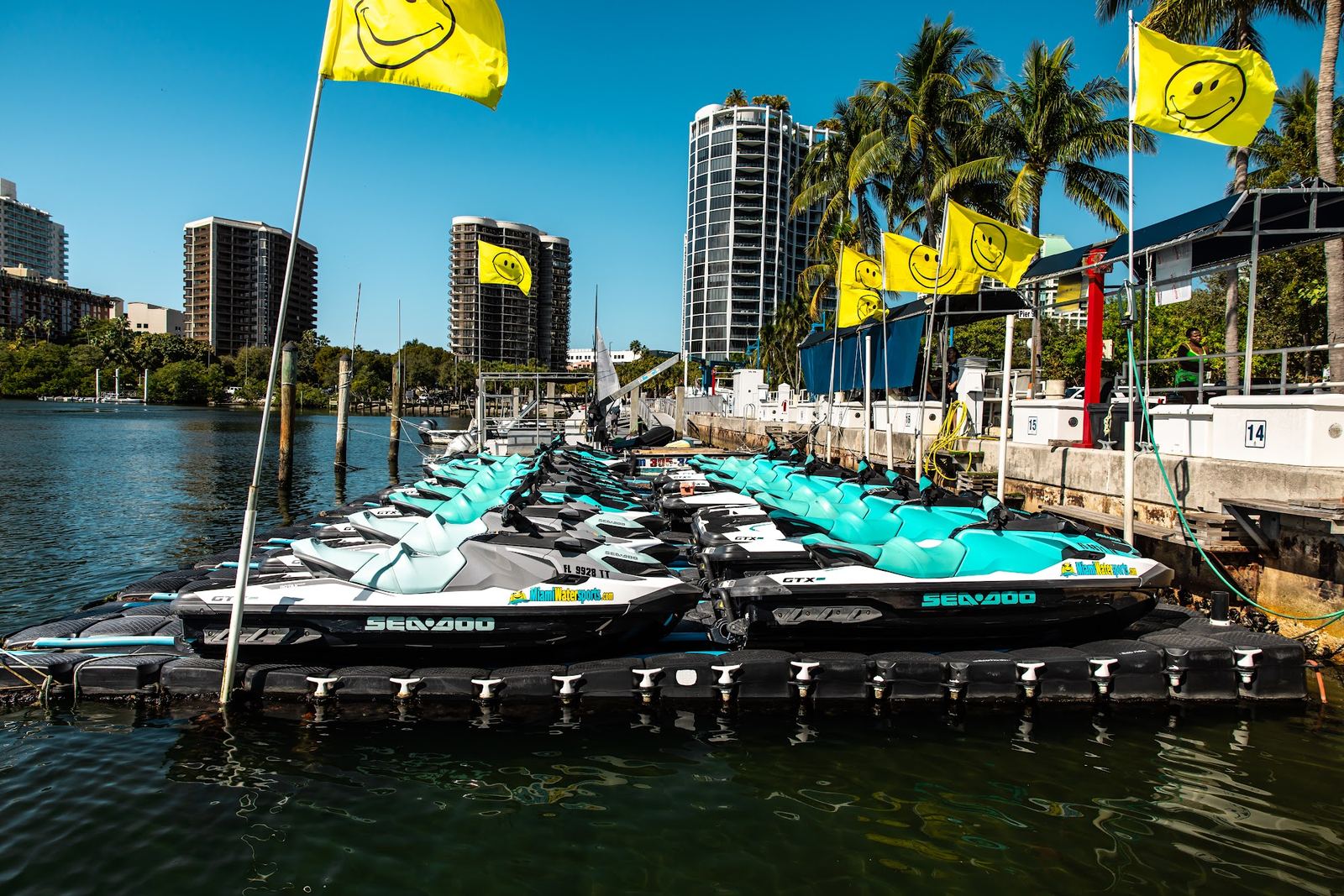
Run through this the night before. It takes two minutes.
- 1Sunglasses with a label for 100% UV protection or UV absorption up to 400nm.
- 2A strap or retainer that fits snugly behind your head.
- 3Polarized lenses if you want less glare off the water, with UV protection confirmed on the label.
For riders with special needs:
- 1Contact lens wearers: lenses out, or prescription goggles, plus a case and solution in the car.
- 2Prescription glasses wearers: a strap, a soft cloth in the car and the hard case left in the dock box.
- 3Kids riding as passengers: their own UV sunglasses on a strap.
- 4A spare pair and a soft cloth left in the car.
For more on gear for the ride itself, read our jet ski safety gear checklist, and if this is your first time on a ski, how to drive a jet ski walks you through the controls.
Book your jet ski rental at Dinner Key
Jet ski goggles are your call, and the ride does not ask for them. Bring the four items on our list, add UV-blocking sunglasses on a strap if you want them, follow the CDC on contact lenses, and tell the crew at check-in what you plan to wear. We ride 7 days a week from 10 AM to sunset, weather permitting, from Pier 9 at Dinner Key Marina in Coconut Grove.
Pick a 1-seater or a 2-seater, a date and a boarding window, and book a jet ski rental at Dinner Key Marina to hold your time.
Book your Miami jet ski
Member rates apply on every booking. Tax & marina fee added at check-in.
Frequently asked questions