Wetsuits for jet skiing on Biscayne Bay: the short answer
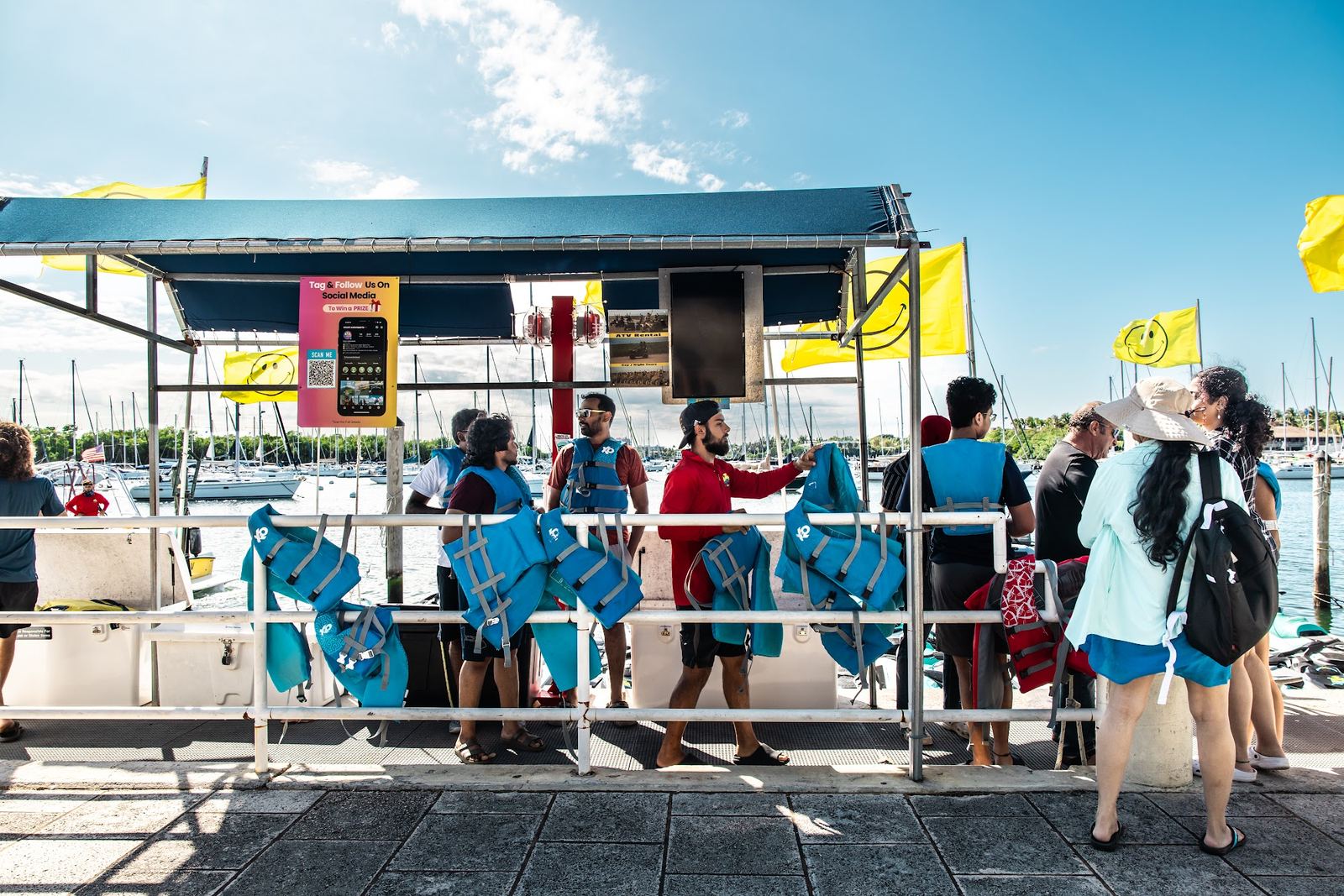
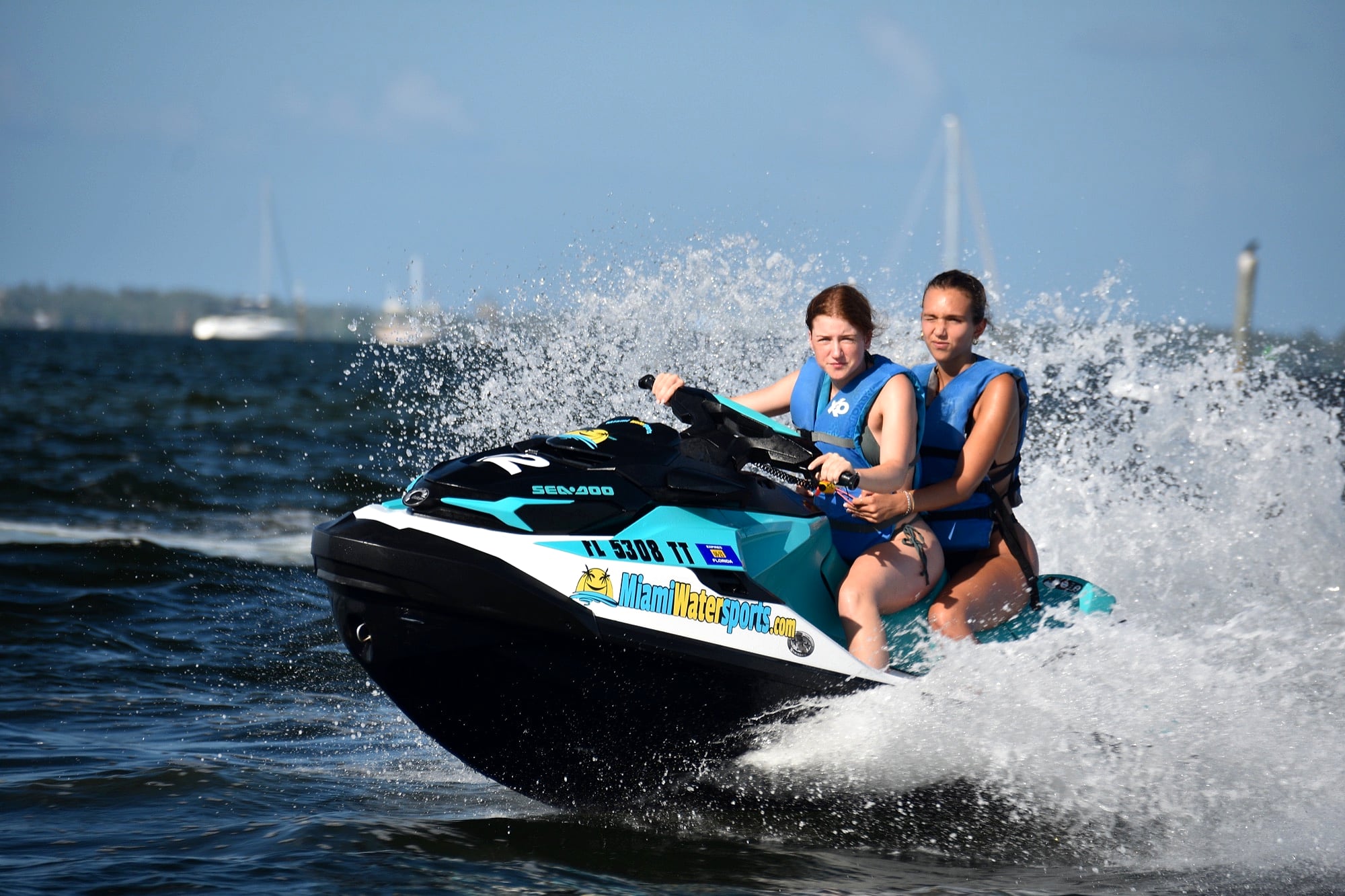
Most people asking about wetsuits for jet skiing in Miami can leave the wetsuit at home. Our Miami jet ski rental lists four things to bring: a government photo ID for the driver, reef-safe sunscreen, swim attire and a water bottle. A wetsuit is not on that list, and it is not on the list of what the ride includes either. What we do include is a life vest for every rider, a safety briefing at the dock and a lead guide on the water.
So the real question is what kind of swim attire suits the day you ride. Biscayne Bay is warm water for most of the year, and the coolest months are where people start to wonder. This guide walks through the water temperatures NOAA publishes for the bay, the clothing choices that fit our list, why manufacturers talk about wetsuit bottoms for passengers, and how to dress for a marina that has no changing rooms.
Every rule below comes from our own jet ski rental at Dinner Key Marina page, our policies and our FAQs. The water temperatures come from NOAA and the background on jet ski design comes from a public encyclopedia article, both cited at the end.
What our jet ski page tells you to wear and bring
The jet ski page keeps the packing list short on purpose. Here is everything it asks for, plus the rules from our policies page that change how you dress.
| Item | What our pages say | Where it comes from |
|---|---|---|
| Swim attire | On the what-to-bring list for the jet ski | Jet ski page |
| Reef-safe sunscreen | On the what-to-bring list | Jet ski page |
| Water bottle | On the what-to-bring list | Jet ski page |
| Government photo ID | Required for the driver, and every participant shows valid ID | Jet ski page and policies |
| Life vest | Provided for every rider; all participants wear the safety gear we provide | Jet ski page and policies |
| Phone | The only item allowed on activities; bring the minimum | Policies |
| Clothes for the dock | Arrive already dressed in water attire; there are no changing rooms or lockers | Policies |
Two things stand out. First, swim attire is the clothing line, and nothing on the page asks for more than that. Second, the policies page asks you to arrive dressed for the water, because there is nowhere at our dock to change.
If you read our what to pack for a jet ski day guide, you will see the same idea from the packing side: keep it light, keep it wearable, and leave the rest in the car.
How warm Biscayne Bay is, month by month
Whether a wetsuit even crosses your mind depends on the month. NOAA's National Centers for Environmental Information publishes a Coastal Water Temperature Guide with long-term monthly averages for stations along the coast. One of its stations is listed as Virginia Key, Biscayne Bay, on the same bay we ride.
“Went jet skiing and our instructor Elijah was amazing.”
| Month | Average water temperature at Virginia Key, Biscayne Bay (°F) |
|---|---|
| January | 71.6 |
| February | 72.9 |
| March | 75.1 |
| April | 78.3 |
| May | 82.1 |
| June | 85.2 |
| July | 87.1 |
| August | 87.3 |
| September | 85.8 |
| October | 82.2 |
| November | 77.3 |
| December | 74.0 |
Read the table as a guide to the bay in general. These are monthly averages at one station, so the water off Dinner Key on a given afternoon can sit a little above or below them, and a cold front can change how the air feels on the ski.
What the numbers show is the shape of the year. From May through October the averages sit in the 80s. January is the coolest month on the list, at 71.6, and February, March and December sit in the low to middle 70s. November, the month this guide was written, averages 77.3.
For timing your ride around the seasons in general, our best seasons for jet ski rentals in Miami guide covers crowds and daylight as well as weather.
Wetsuit, rash guard or swimsuit: picking your layer
Our list says swim attire, and that leaves you some room to choose. Here is how the common options line up against what our pages actually say.
| What you wear | How it fits our rules | Worth knowing |
|---|---|---|
| Swimsuit | This is swim attire, the line on our list | The life vest goes on over it at the dock |
| Swimsuit plus a rash guard or swim shirt | Still swim attire | A swim layer covers more skin, and you still add reef-safe sunscreen from the list |
| Wetsuit bottoms or a short wetsuit you own | Not on our list of things to bring or things included | Text us before you come if you plan to ride in one |
| Street clothes | Our policies ask you to arrive dressed in water attire | There are no changing rooms at the dock, so plan the outfit at home |
For most of the year, a swimsuit is the simple answer. If you feel the cold, a swim layer you already own is an easy step up for the cooler months, with no need to buy a wetsuit for one hour on the bay. That choice is yours; the rule that matters is the one on our list, swim attire.
If you own a wetsuit and want to wear it, the quickest way to a person is a text to (786) 713-8006, the number on our FAQ page. Ask before the day so the answer does not hold up check-in.
The ride itself is 60 minutes of guided free-riding inside a marked zone, so you are dressing for one hour on the water, plus the walk to the dock and the briefing. You can see the full ride details on the Miami jet ski rental page.
Why the back of a jet ski matters for what you wear
There is one wetsuit question with nothing to do with temperature, and it comes up most for passengers. Jet skis are pushed along by a pump that throws a strong jet of water out of the back.
As background, Wikipedia's article on jet skis says a rider who falls off the back can land in the path of that jet, and that all the major makers warn about this and recommend passengers wear wet suit bottoms or equivalent protection. It names neoprene, the material most wetsuits are made from, as the kind of strong, thick fabric that protects against it.
The same article quotes the warning labels that makers put on current skis about the intake grate underneath. Those labels say to keep away from the intake grate while the engine is on, because long hair, loose clothing and life vest straps can get caught in moving parts.
That gives you three practical takeaways for the outfit:
- Tie back long hair before the briefing.
- Skip loose, flapping layers and anything with long ties or cords.
- Fasten the life vest properly so no straps hang free.
On our ride, the guide and the marked zone are there to keep the pace sensible for the conditions and your experience. Our jet ski FAQ says stopping to swim during the ride is not recommended because of traffic in the zone, and that the guides point out designated areas for breaks and photos during the briefing. If you are riding two-up, our 2 person jet ski guide explains how the passenger seat works.
The life vest goes over everything
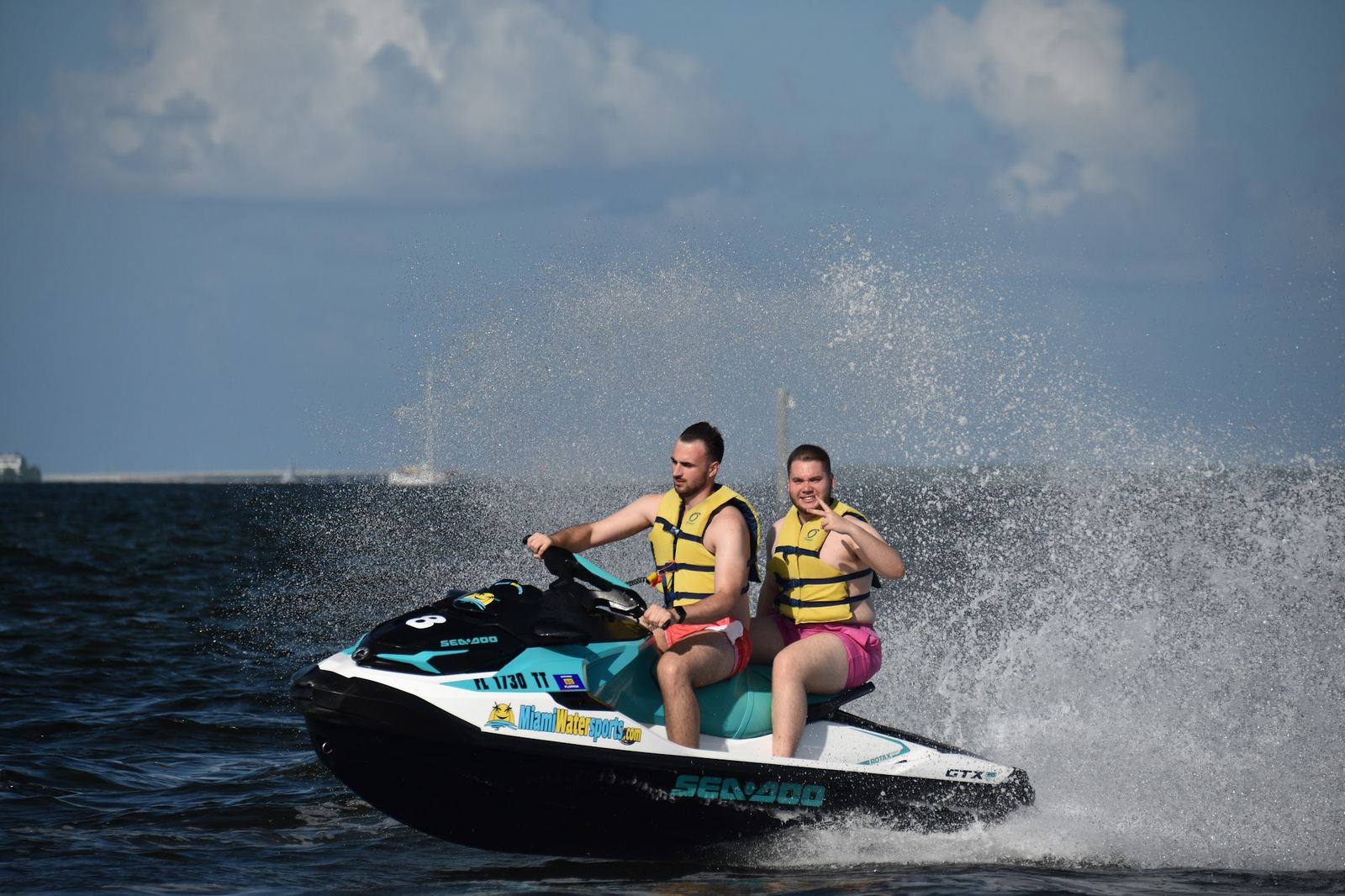
Whatever you choose to wear, the outer layer is the same for everyone: the life vest. The jet ski page lists life vests as provided with every ride, and our policies list wearing the safety gear we provide as a requirement for all participants.
“Had a fun time on the jet ski. Ohio and Dylan were friendly and helpful.”
That has a few knock-on effects for your outfit:
- Thin layers work best underneath. A swimsuit or a fitted swim shirt sits flat under the vest.
- Bulky tops are a poor fit. A thick hoodie or jacket under a vest is awkward, and our policies ask for water attire anyway.
- Pockets do not matter much. Our policies allow only cell phones on activities, so there is little to carry.
Our jet ski safety gear checklist covers the vest and the other safety items in more detail. For this guide, the point is simple: dress for comfort under a vest, because the vest is not optional.
Dressing for the dock: no changing rooms, one dock box
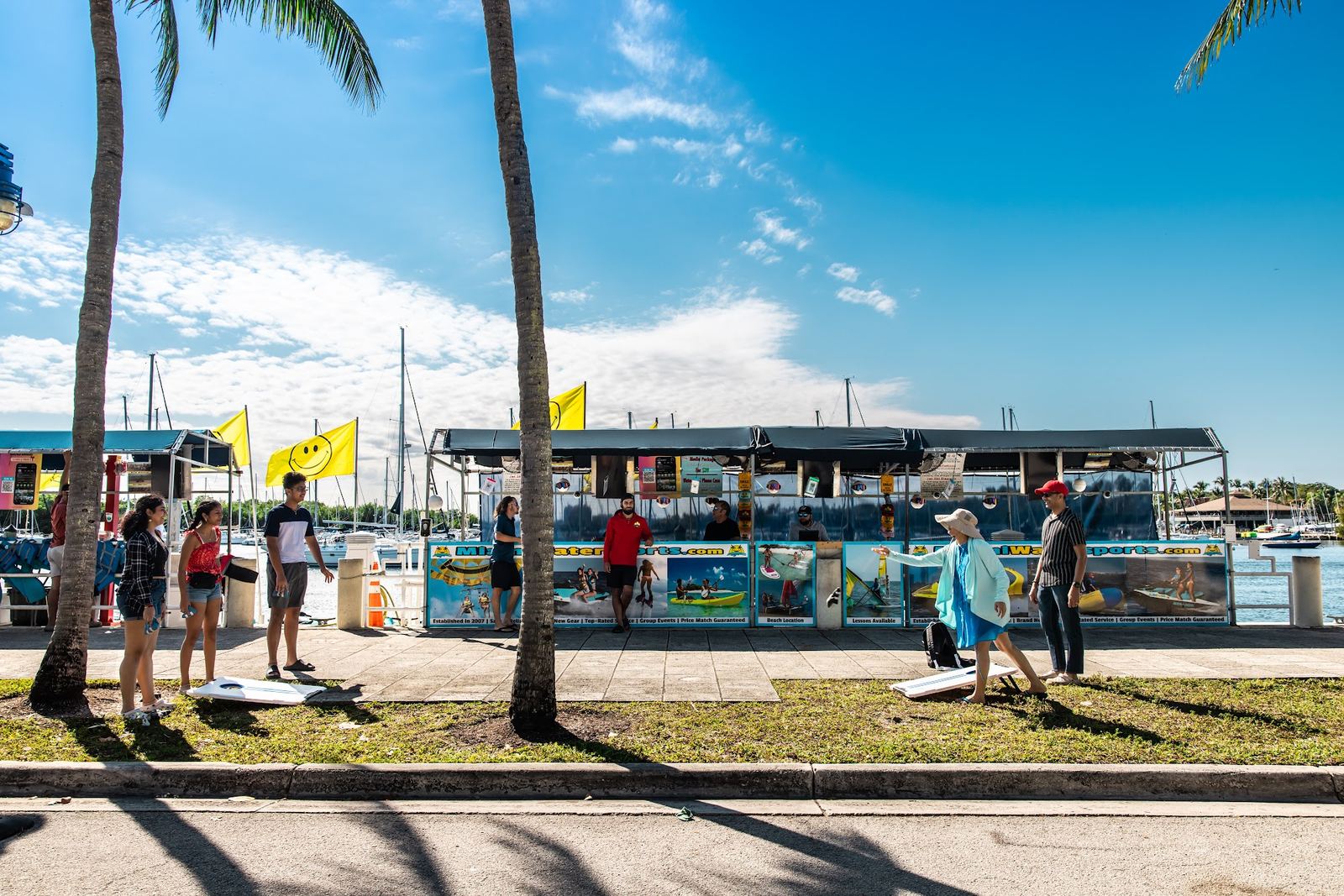
The marina side of the day shapes your clothes as much as the water does. Our policies page is direct about it: there are no changing rooms or lockers at our dock, and we recommend arriving already dressed in appropriate water attire.
Before you leave home:
- Wear your swimsuit from home. Put your swim attire on before you leave, with your dry clothes over it or in the car.
- Sunscreen before you arrive. Reef-safe sunscreen is on the bring list, and putting it on at home saves time at check-in.
Once you reach the dock:
- Shoes and bags go in the dock box. Our policies describe a group locker dock box for shoes and bags while you are on the water. It is unsecured storage, and we are not responsible for lost, stolen or damaged items, so leave valuables at home or locked in the car.
- Phones only on the water. Our policies allow only cell phones on activities and ask you to bring the minimum. Waterproof phone cases are sold at check-in, and we are not responsible for lost or damaged phones, case or no case.
- Rinse after. Our FAQ page mentions a water hose for rinsing off after your ride.
A dry towel and a change of clothes waiting in the car make the drive home far more pleasant. Parking is in Lot 62 with the Pay By Phone app, a short walk from the dock.
Four riders, four outfits: worked examples
Real groups make this easier to picture. Each example below sticks to our rules; the clothing choices are the kind riders make for themselves.
A couple on a 2-seater in January. January is the coolest month in NOAA's table for the bay, with an average of 71.6. They share a 2-seater, which takes two riders up to 350 lb combined, with a driver 18 or older. Both arrive in swimsuits with a long-sleeve swim shirt on top, sunscreen already on, and a towel and sweatshirts waiting in the car. The passenger, who sits behind, wears longer swim shorts. Nobody buys a wetsuit for the hour.
A parent and a 9-year-old in April. Passengers from age 6 ride on the 2-seater with an adult driver, and the child must be able to hold on independently. A parent or guardian signs the waiver for the minor. The parent drives, and both wear swimsuits under rash guards. The child's long hair is tied back before the briefing, and the parent checks that the vest straps are fastened with nothing hanging loose.
Two friends on 1-seaters in August. The August average in NOAA's table is 87.3, the warmest month on the list. Each friend takes a 1-seater, which carries one rider up to 250 lb. They ride in swimsuits, carry one phone in a waterproof case bought at check-in, and leave their sneakers in the dock box.
A family pairing a jet ski with parasailing. Our combos are same-day and same-marina, with one waiver and one parking spot. For the parasail half, our parasailing page suggests sunscreen, sunglasses, a hat and a camera secured to you, plus a swimsuit and towel if you want the dip. For the jet ski half, the list is swim attire, sunscreen, a water bottle and the driver's photo ID. Swimsuits under easy cover-ups handle both. Book the jet ski part on our Miami jet ski rental page or as a combo.
Check-in, step by step, with your clothes in mind
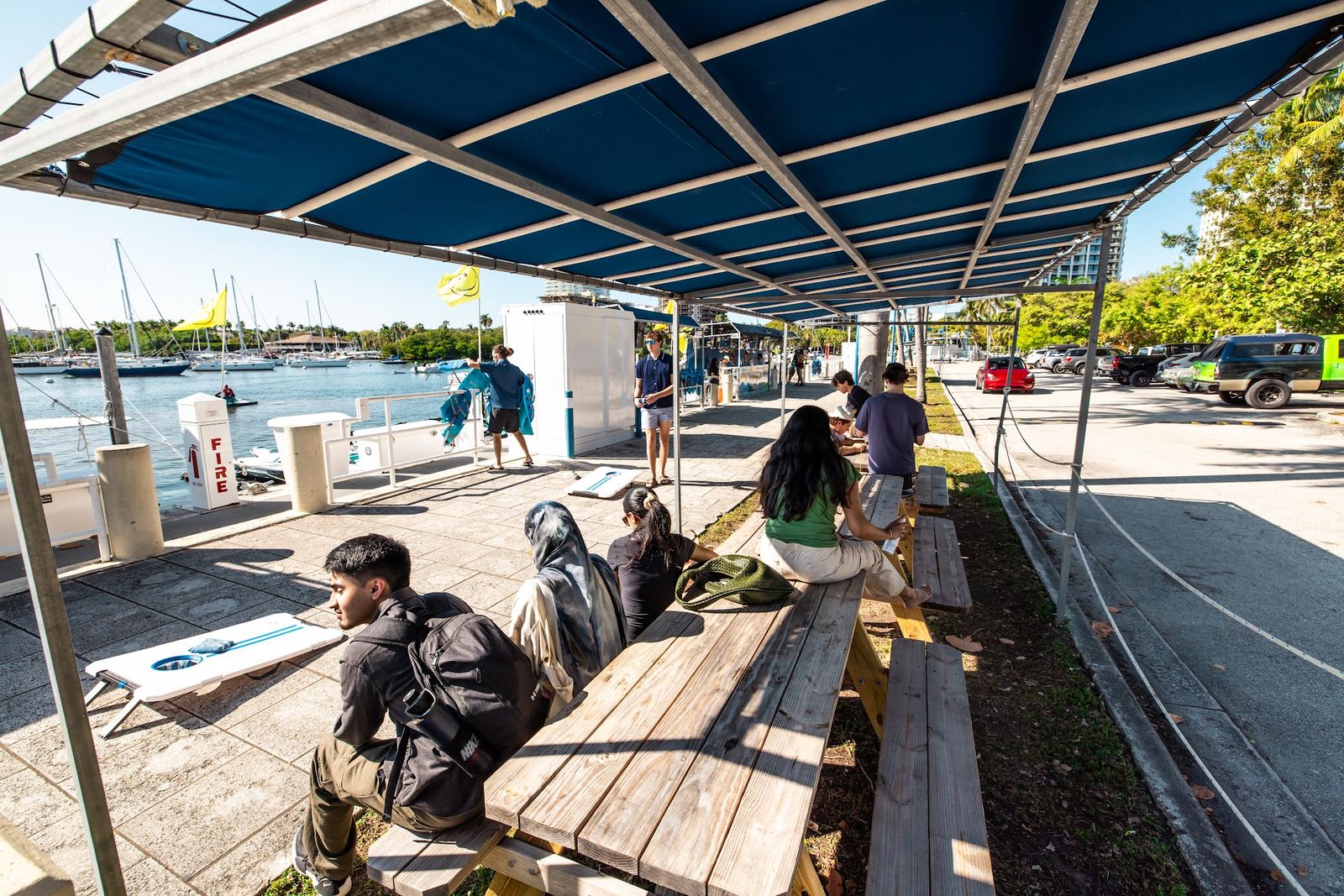
This is the order things happen on the day, from your front door to the bay. First, at home:
- 1Paperwork. Complete the online waiver. If the driver was born after January 1, 1988, they also pass the short online state boating exam. Our FAQ page says both must be done before arrival to validate a reservation.
- 2Get dressed for the water. Swim attire on, sunscreen on, long hair tied back, dry clothes packed for later.
- 3Park in Lot 62. Pay with the Pay By Phone app and walk over to Pier 9 at Dinner Key Marina, 3400 Pan American Drive.
Then, at the dock:
- 1Check in 15 minutes before departure. Bring the driver's photo ID and the card used to book, held by the cardholder. American Express is not accepted.
- 2Drop your things. Shoes and bags go in the group dock box. Keep your phone only if you want it, ideally in a waterproof case.
- 3Life vest and briefing. Put on the life vest we provide and listen to the safety briefing.
- 4Ride for 60 minutes. Your lead guide takes you into the marked riding zone on Biscayne Bay.
- 5Back at the dock. Rinse off with the hose, collect your things and head to the car for dry clothes.
If you are new to riding, our how to drive a jet ski guide covers what the briefing and the first few minutes on the throttle feel like.
Weather days: rain, wind and what changes
A cool, grey day makes people think about wetsuits more than any number in a table. Here is what our pages say about weather.
Our certified staff watch the weather with radar apps and industry-standard judgment to decide whether conditions are safe, and we reserve the right to reschedule based on weather. The jet ski page puts it plainly: light rain is normal and we ride, but lightning never.
If the weather does stop the ride, you can reschedule to any future date or take a credit, both valid for 2 years, with no fee. Our policies describe these as credit vouchers usable toward any activity we offer.
For clothes, a light-rain day changes very little. You are already dressed to get wet, and a swim layer on top is the same choice you might make on any cooler day. The thing to plan for is the drive home, so keep a dry layer in the car.
Our weather guide for Miami jet ski rides explains how wind and storms affect the bay in more depth.
Book your ride and dress for the bay
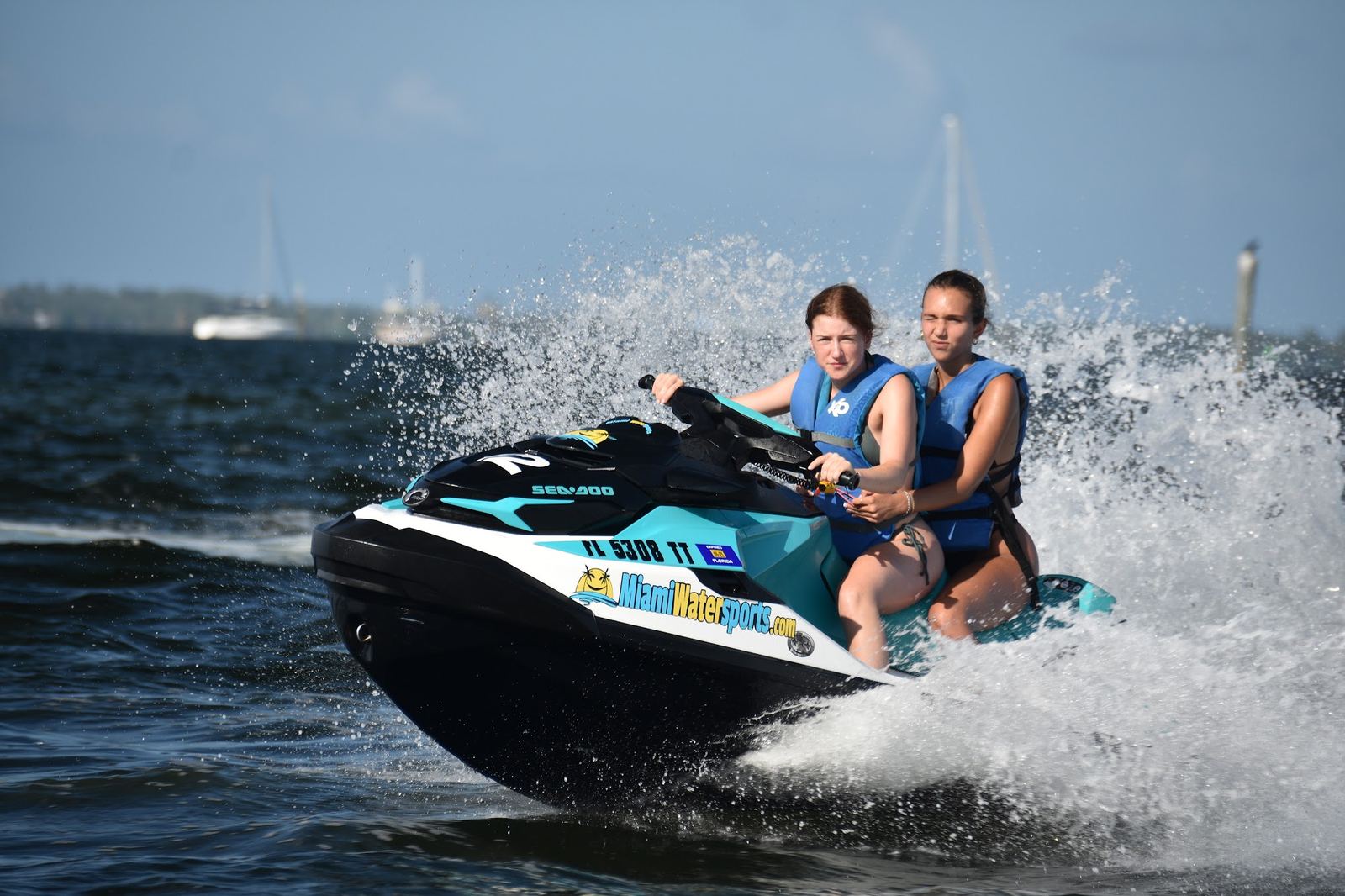
Wetsuits for jet skiing are rarely needed on Biscayne Bay at our dock. Our list asks for swim attire, reef-safe sunscreen, a water bottle and the driver's photo ID, and every rider gets a life vest. NOAA's averages for the bay run from 71.6 in January to 87.3 in August, so most riders choose between a swimsuit alone and a swimsuit with a swim layer on top.
Arrive dressed, tie back long hair, keep loose straps and cords out of the way, and leave everything but your phone in the dock box or the car. If you own a wetsuit and want to wear it, text us first.
Book a jet ski rental at Dinner Key Marina on our Miami jet ski rental page, and pick a 1-seater or 2-seater for your group.
Book your Miami jet ski
Member rates apply on every booking. Tax & marina fee added at check-in.
Frequently asked questions