Jet ski shoes for a Miami rental: what to wear
Anyone looking up jet ski shoes wants one thing settled before leaving the house: what goes on their feet for an hour on the water. For a Miami jet ski rental from Pier 9 at Dinner Key Marina, start with the rules we publish. The jet ski page sets no footwear rule. Its packing list has four items: the driver's government photo ID, reef-safe sunscreen, swim attire and a water bottle. Shoes are not on it.
What the page does describe is the ride. You get 60 minutes of free-riding inside a marked zone on Biscayne Bay, after a safety briefing at the dock, with life vests and fuel included. You choose a 1-seater for one rider up to 250 lb, or a 2-seater for two riders up to 350 lb combined. For that hour your feet sit on a wet ski, take spray, and stay in the sun.
So our footwear advice comes down to three lines, built from our pages and from the foot doctors at the American Podiatric Medical Association (APMA):
- Arrive in footwear that can get wet and stays on: water shoes, or sport sandals with a strap behind the heel.
- At check-in, ask the crew whether to keep them on for the ride or leave them in the dock box, and go with their call for the day.
- Put sunscreen on the tops of your feet and the fronts of your ankles before you leave the car.
The rest of this guide explains each line, compares the usual options side by side, and walks through three groups, from a couple sharing a 2-seater to friends on their own skis.
What our pages say about feet, shoes and the dock
These are the lines on our site that deal with footwear, storage or what you carry, gathered in one place.
| Source | The line | For your feet |
|---|---|---|
| Jet ski rental | Bring the driver's photo ID, sunscreen, swim attire, water | No footwear listed |
| Policies | No changing rooms or lockers; arrive dressed for the water | Arrive in your riding shoes |
| Policies | A group locker dock box holds shoes and bags while you are on the water | Your shoes have a place to wait |
| Policies | Only cell phones may be brought on activities; bring the minimum | No spare pair rides with you |
| FAQs, banana boat | Water shoes or sandals recommended for boarding and getting off | Our one written footwear tip |
The banana boat line is written for that ride, so treat it as a hint about how the crew thinks about feet on a wet dock: something secure for the steps on and off.
Our policies page and our FAQ page describe the dock box a little differently, so treat it as a spot for shoes and a towel, and keep your wallet and car keys in the car. Both pages put the risk of a lost, stolen or damaged item on its owner.
If you are still unsure about a pair, text the dock at (786) 713-8006 before you come.
Where your feet are during the ride
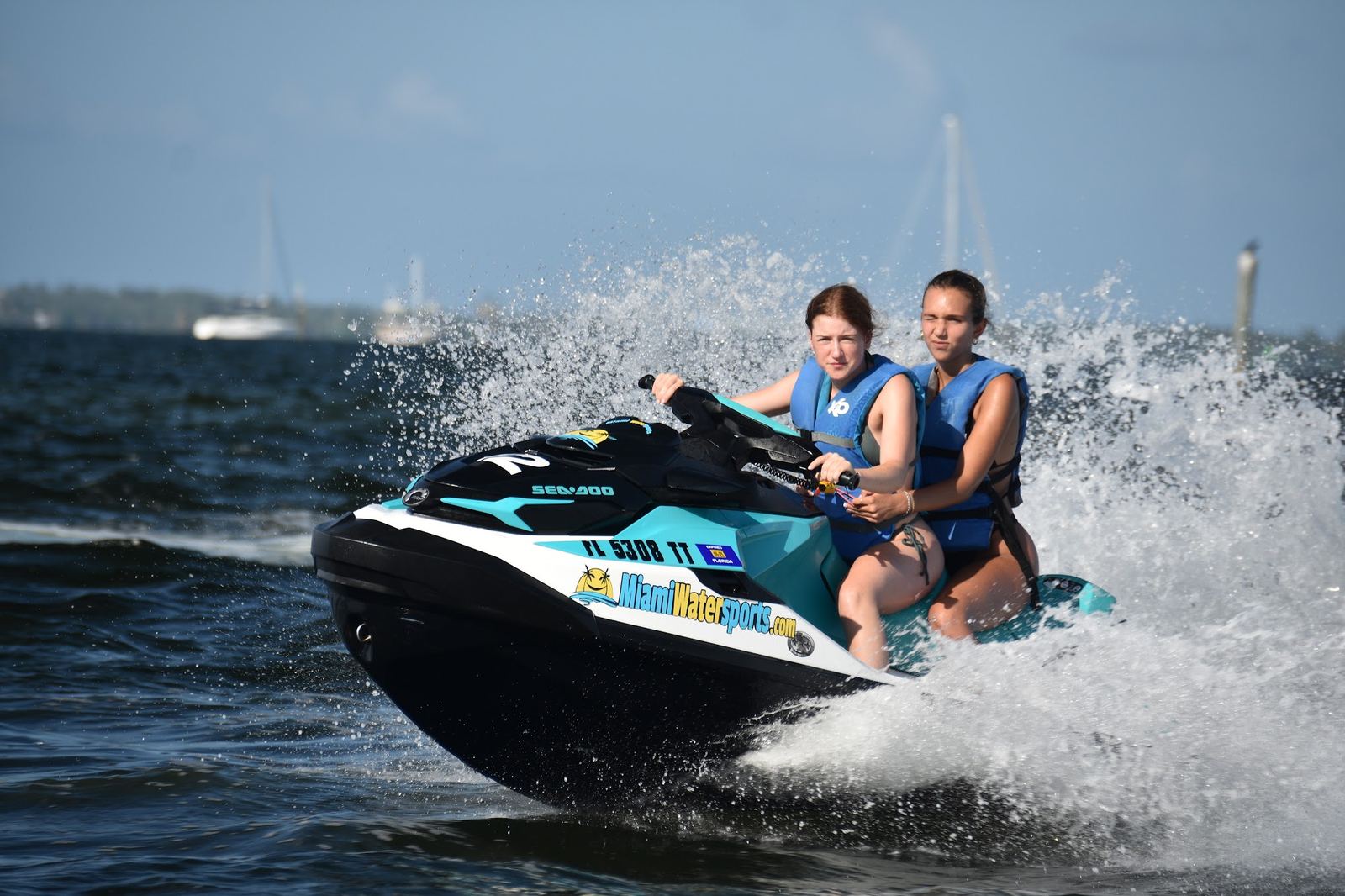
On a sit-down jet ski, the driver and the passenger sit astride the seat with a foot in the well on each side. Those footwells take spray for the whole ride, so whatever you wear will be wet within the first minute.
“Raine was a great guide. I felt safe and confident riding jet skis after he taught us.”
Your feet have three jobs out there:
- Bracing. In a turn you press into the footwells to stay centered on the seat.
- Balance. When the ski crosses a wake, your feet steady you while your hands stay on the grips.
- Stepping on and off. At the start and end of the ride you step between the dock and the ski, both of them wet.
Two lines on our jet ski rentals in Miami page decide how secure your footwear needs to be. Swimming in the middle of the ride is discouraged, since other skis are moving through the zone; at the briefing the crew shows you where the break and photo areas are. And once the ride starts, you stay out until the end, with no switching between skis.
Put those together and the rule of thumb is simple. Anything on your feet has to stay there for the full 60 minutes with no help from your hands. A shoe that only stays on while you are standing still on dry ground is the wrong shoe for this ride.
Passengers on the 2-seater need the same thinking. A passenger has to hold on unaided, so their hands are busy for the hour and their feet do the rest.
Water shoes, sandals, flip-flops, sneakers or barefoot
These are the five usual choices. Here is how each one does from the parking lot to the ride and back.
| Option | Walk to the dock | On the ski | After the ride | Our take |
|---|---|---|---|---|
| Water shoes | Cover toes and soles | Snug and made to get wet | Rinse and dry | The easiest pick |
| Sport sandals with a heel strap | Open and cool | Stay on if the strap is tight | Dry fast | A good second choice |
| Flip-flops | Fine on the walkway | Slide off a wet foot | Nothing to dry | Leave them in the dock box or the car |
| Sneakers | Comfortable | Heavy once soaked | Slow to dry | Keep them in the car for later |
| Barefoot | Feet exposed on the walk | Nothing to lose | Nothing to dry | Ask the crew first |
Water shoes are the closest thing to a jet ski shoe. They are built to get wet, they hug the foot, and a rubber sole gives your foot something to push against in the footwell. If you already own a pair for the beach, bring them.
Sport sandals work when the strap runs behind the heel and you can tighten it. A slide or a sandal with only a toe strap behaves like a flip-flop once it is wet.
Flip-flops are fine for the walk from the car. On the ski, a wet flip-flop has nothing holding it to your foot, and the ride does not stop for you to chase one. Wear them to the dock and leave them with your bag.
Sneakers soak up water and stay heavy. Keep a dry pair in the car for after the ride; the APMA suggests always packing an extra pair of sneakers or protective water shoes for activities near the water.
Barefoot is the option to check with the crew. The APMA advises limiting how much you walk barefoot, since it exposes feet to sunburn, infections and injury. If you plan to ride barefoot, wear something for the walk and ask at check-in.
Checking the pair you already own
A one-hour ride rarely calls for a shopping trip. The pair you already own for the beach is usually enough, as long as it has these:
- A heel that stays put. A closed back or a strap behind the heel keeps the shoe on when your foot is wet.
- A snug fit. Wet material stretches a little, so a pair that feels loose on dry feet will feel looser in the footwell.
- A thin sole with grip. You want to feel the footwell under you and still have some hold on wet surfaces.
- Material that drains. Mesh and neoprene let water out; canvas and leather hold it.
If you are buying, the names on the shelf vary (water shoes, aqua socks, neoprene booties, water sneakers), but the same four points decide it. For children, buy their current size: a pair with room to grow into is the pair that slips off a wet foot.
A quick test at home takes five minutes and saves a bad surprise on the dock:
- 1Put the shoes on with wet feet, straight out of the shower.
- 2Walk across a wet floor and turn sharply in both directions.
- 3Sit on the edge of a chair and press your feet down hard, the way you will in a turn.
- 4Tug the heel of each shoe. If it slides off with one hand, it will slide off on the ski.
If a pair passes all four, it is ready for the ride. If it fails the heel test, it becomes your walking pair for the dock box. The APMA suggests asking the contact at each activity whether specific shoes are needed, and our jet ski page names no type, so bring your choice and confirm it with the crew at check-in.
What goes in the dock box, the car or on your feet
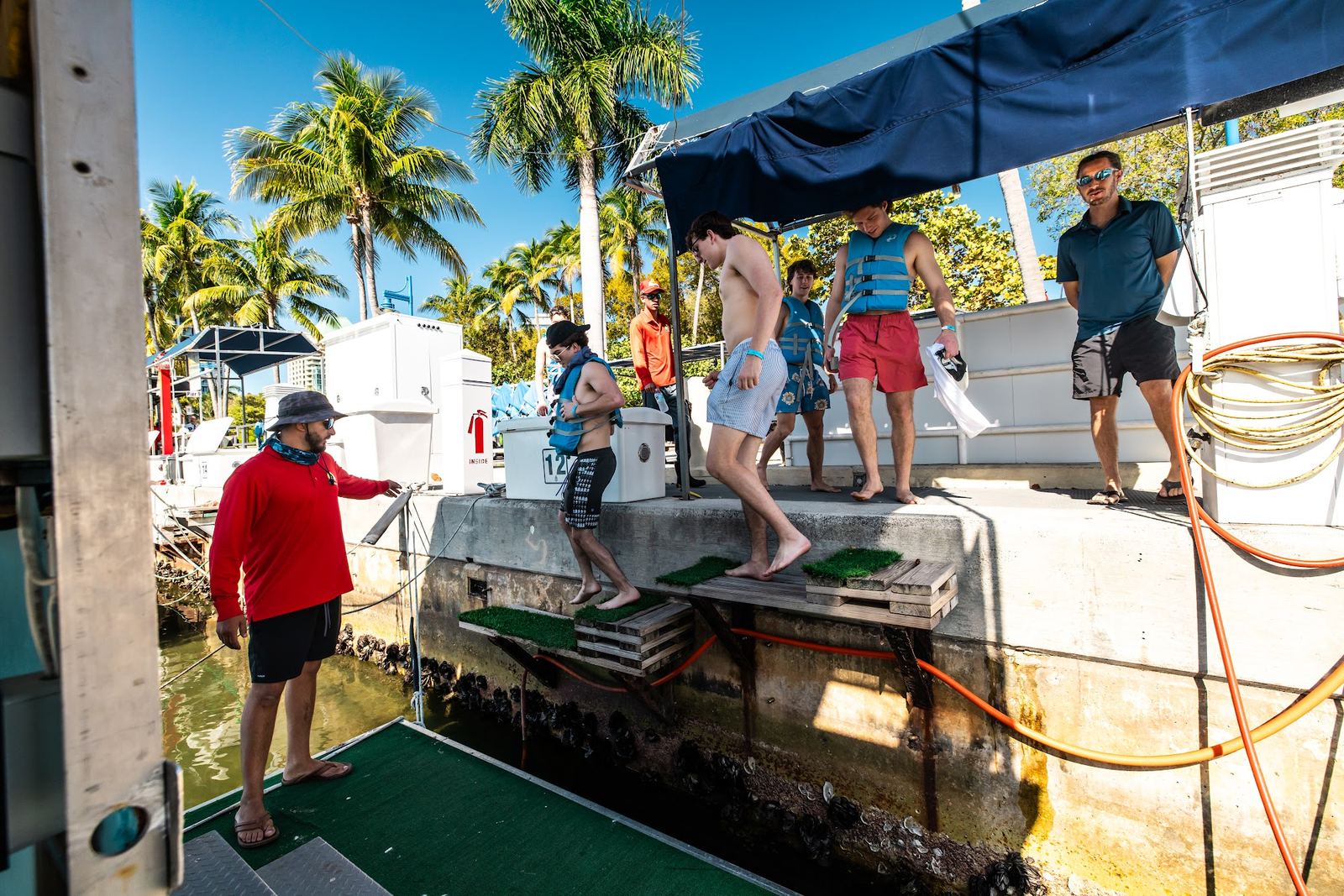
With only phones allowed on the water, every other item needs a place before the ride. This is how a typical bag splits up:
“The best time ever. Ohio, Joel and the main jet ski instructor were awesome.”
| Item | Where it goes | Why |
|---|---|---|
| Shoes you ride in | On your feet, if the crew agrees at check-in | Secure footwear for the steps on and off |
| Flip-flops or walking sandals | The group locker dock box | The box is there for shoes and bags |
| Dry sneakers and socks | Your car | For the drive home |
| Towel | The dock box or the car | For drying off when you come back in |
| Wallet and car keys | Your car | Lost or stolen items are the owner's risk |
The one call to make on the day is the first row. If the crew would rather you ride barefoot, your riding shoes join the walking pair in the box.
If a shoe comes off during the ride
It happens most with flip-flops and loose slides, which is why this guide keeps steering you toward a heel strap. If something slips off your foot anyway, here is how to handle it.
- Keep your hands on the grips. Reaching down for a shoe while the ski is moving is how a small problem becomes a fall. A passenger especially should hold on and say something to the driver.
- Do not jump in after it. Our jet ski page says stopping to swim during the ride is discouraged because other skis are moving through the zone.
- Wait for a break area. The crew points out set break and photo areas at the briefing. Mention the lost shoe to the crew there, or when you come back to the dock.
- Finish the ride barefoot. The ride does not end early for a shoe, and you stay out until the end of your 60 minutes, so settle in and enjoy the rest of it.
The simplest fix is upstream: a pair that passed the wet-foot heel test at home rarely ends up in the bay.
Riders with diabetes or sensitive feet
For most riders, footwear on a jet ski is about comfort and grip. For riders with diabetes, it is about protecting feet that may not send the usual warning signals. Our policies say medical conditions warrant prior consideration, so call or text before you book if you have questions about your own situation.
The American Diabetes Association's foot advice is worth reading before a day on the water. It says peripheral neuropathy can be one of the first complications of diabetes, and that it can leave you unable to feel whether pavement is too hot, or whether you have stepped on something sharp. In the warmer months, it advises against going barefoot, wearing flip-flops or other open shoes.
For a rider with diabetes, that points to closed water shoes over sandals, and never barefoot on the walk to the dock. The ADA also says to check your feet daily for sores, cuts, cracks, blisters or redness, which makes a quick look at your feet after the ride a sensible habit. If your doctor or podiatrist has given you footwear advice, follow it over anything in this guide, and tell the crew at check-in what you plan to wear.
Sunscreen on your feet
On a jet ski the tops of your feet face the sky for the full hour while spray keeps washing them. The APMA says to apply sunscreen all over your feet, especially the tops and the fronts of your ankles, and to reapply after time in the water. Our packing list already asks for reef-safe sunscreen, so add your feet to the places it goes, including the skin between sandal straps, and put it on in the car so your soles are not slippery when you step onto the ski.
Three groups, three footwear plans
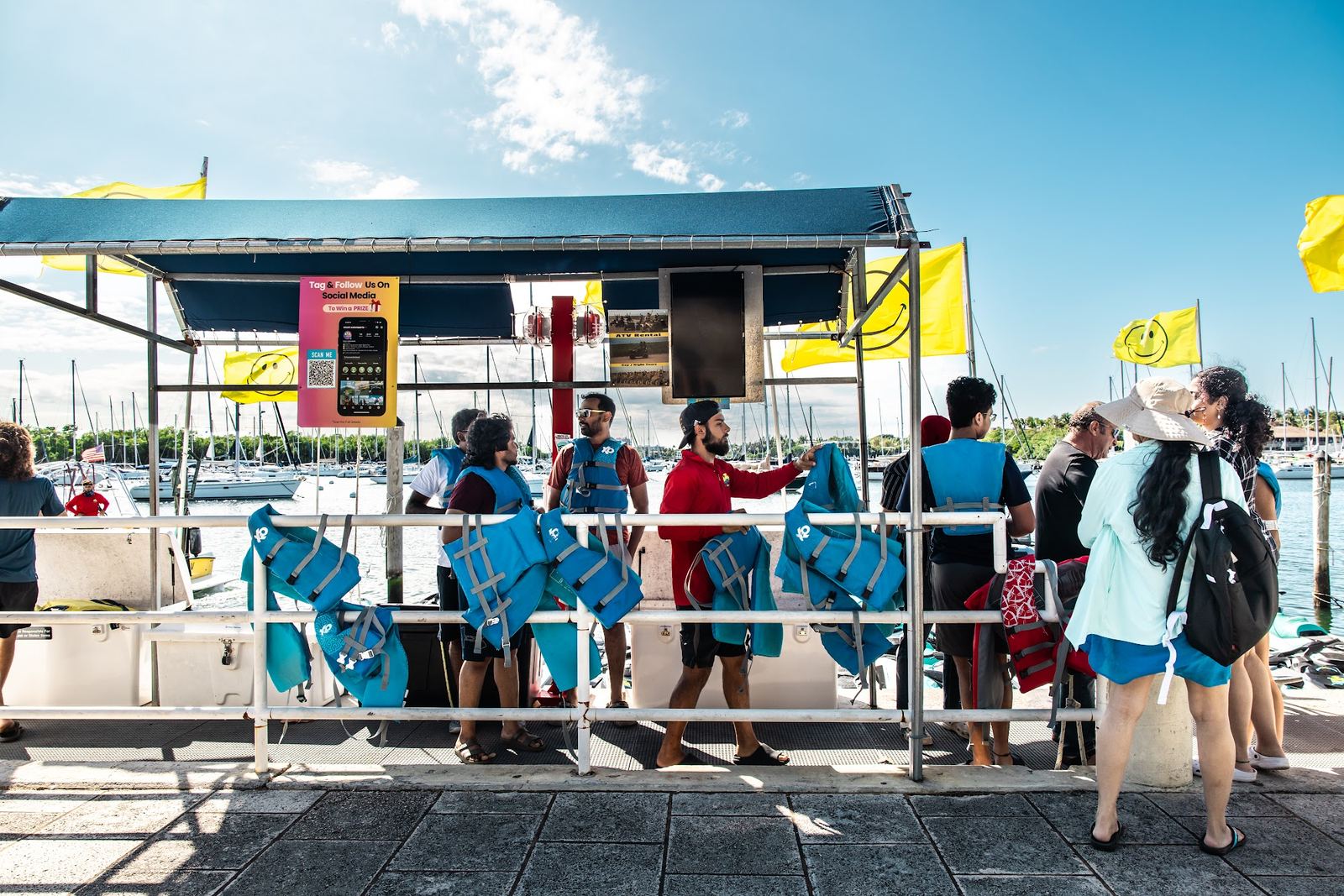
The right shoes depend on who is riding and where they sit.
A couple on one 2-seater. The driver, 18 or older with a government photo ID, steers and works the throttle, so their feet brace hardest in the turns, and a snug water shoe helps most there. The passenger rides behind, hands on the grips, and takes the same turns through their feet. Two pairs of riding shoes and one bag of walking sandals for the dock box covers you both. For who sits where, see riding a 2 person jet ski in Miami.
A parent with a child passenger. Children ride from age 6 on the 2-seater behind an adult driver, and they have to hold on unaided. With both hands on the grips, a child cannot fix a shoe that slips. Pick kids' shoes in their current size with a closed back or a heel strap, and do the wet-foot test together at home. If your child will not keep shoes on, ask the crew at check-in what they suggest for that day.
Friends or family on several skis. On 1-seaters every rider drives, up to 250 lb each; on 2-seaters each pair shares a ski within 350 lb combined. With four or more people, agree on footwear before you leave, since one person in loose flip-flops can hold up the whole group at the dock. One shared bag for the walking shoes keeps the dock box tidy.
First-time drivers can read how to drive a jet ski for the controls and the opening minutes, and the Miami jet ski rental requirements explain ages, ID and the state exam.
After the ride
Our FAQ says a water hose is available if you want to rinse off after the ride, so run your shoes under it too. The APMA says shoes that got wet should dry out completely before you wear them again, so open the straps and leave them somewhere airy rather than sealed in a bag.
For clothing on a cool or windy morning, wetsuits on the bay explains what to ask the crew first, and jet ski goggles covers your eyes. Packing the rest of the bag? See what to pack for a jet ski day in Miami.
Book your jet ski rental at Dinner Key
Jet ski shoes are your choice, and the ride does not require them. Come dressed for the water in shoes that stay on when wet, put sunscreen on your feet, leave the spare pair in the dock box or the car, and ask the crew at check-in what to wear on the ski that day.
The dock at Pier 9 in Coconut Grove is open every day, 10 AM until sunset, when the weather allows. Pick your ski, how many you need and a boarding window, then book a jet ski rental at Dinner Key Marina.
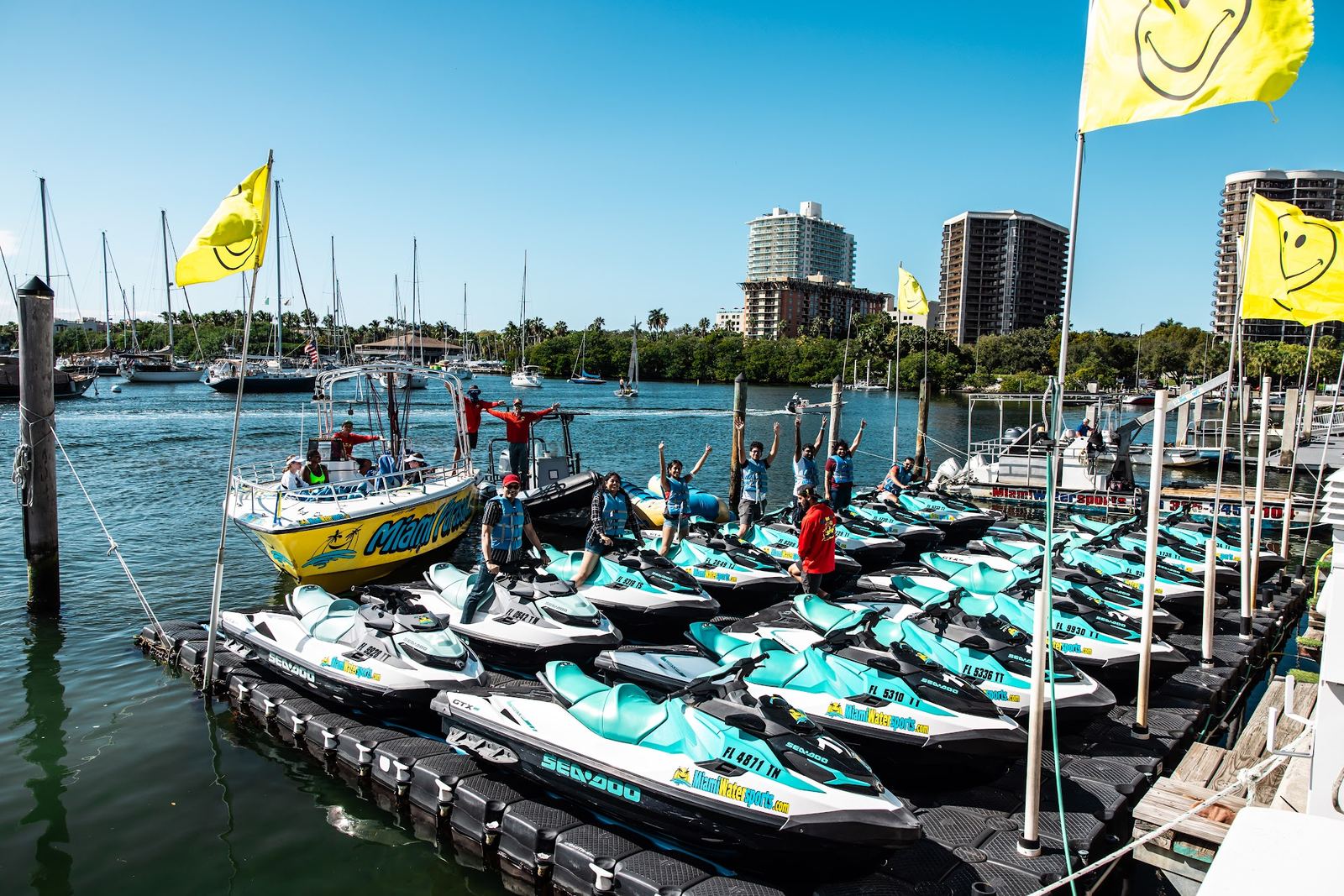
Book your Miami jet ski
Member rates apply on every booking. Tax & marina fee added at check-in.
Frequently asked questions